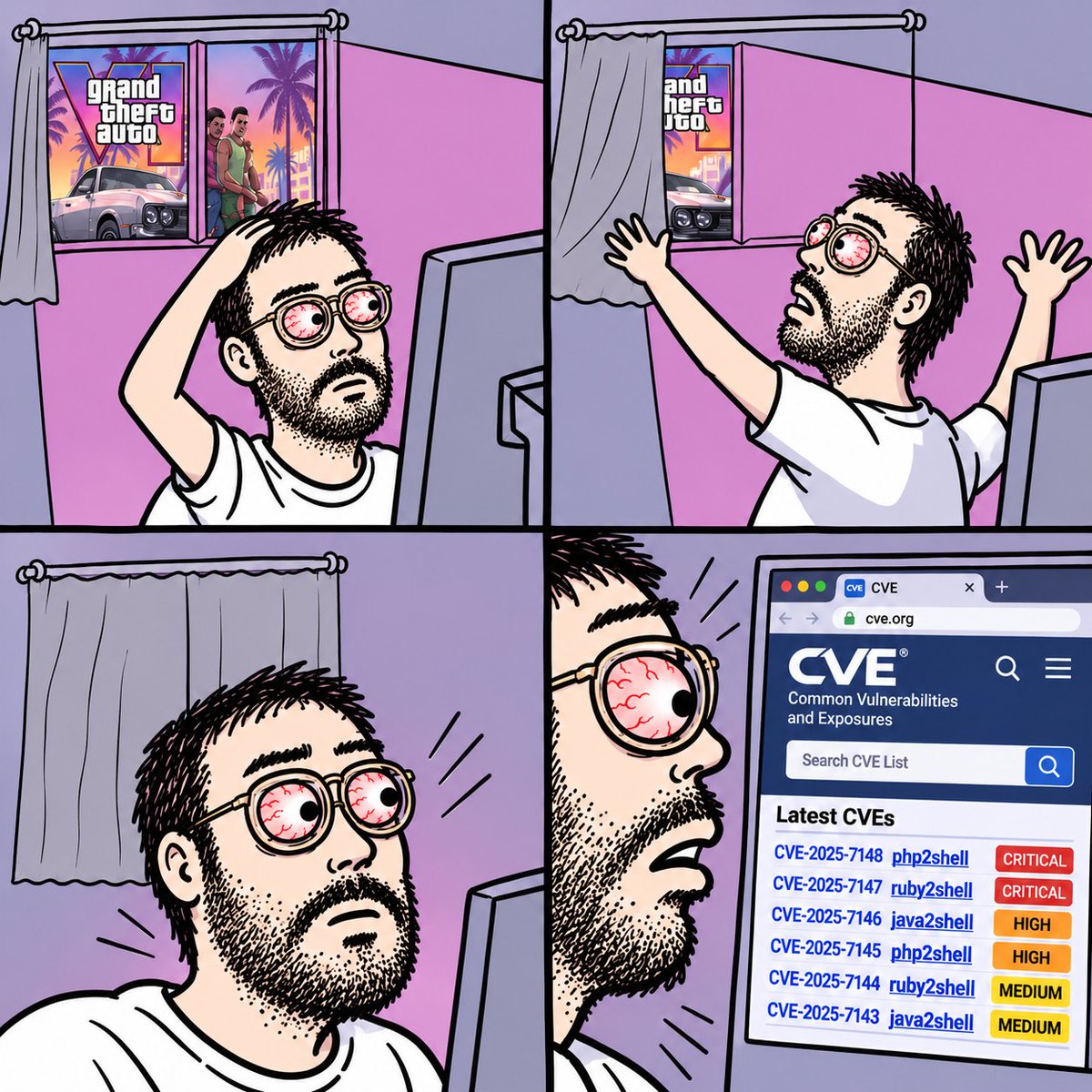
@VadimStrizheus Cheaper runners
https://t.co/UQPNlSMvAJ
Multiple concurrent streams that can benefit run // on different runners
Fast fail for obviously broken commits
Make the implementation agent run an inner loop that includes already some good ROI coverage
reflecting on this, it was in august where deepseek 4.1's success and price hike destroyed our economics
we talked to every inference company that existed. startups and massive companies as well
none of them could deliver what we needed. we owned no hardware. had zero leases. had never managed a GPU directly
and 3 months later we got GPUs melting and serving deepseek and glm at the exact same quality as the labs that make them
if you're a hater (or worse a ceo that's likes to subtweet us) find a new target unless you particularly enjoy pain
Grok Bot tip that saves usage 👇
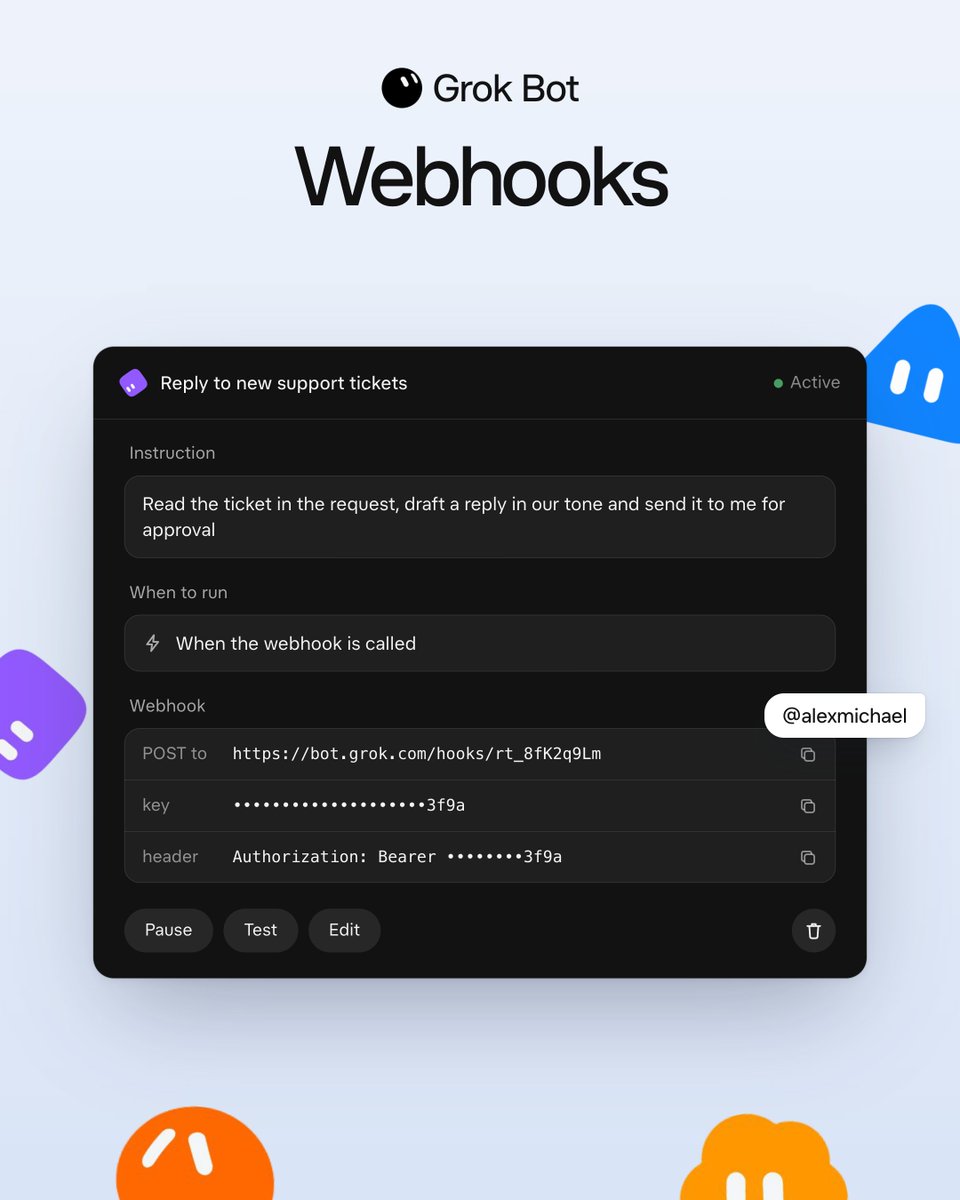
Switch your routines from schedules to webhooks so your Bot only wakes up when something actually happens
> Ask your Bot to add a webhook trigger to the routine
> Open the routine on desktop and copy the URL and key from the Webhook section
> Have your other app POST to that URL with the key in the header
> Send a JSON body and the Bot gets it along with the routine’s instruction
@PR0GRAMMERHUM0R I would add a good section of reviews on automated tests in terms of data strategy / maintainability and coverage + CI strategy etc which is how I trust all of that code
Over the past week, I’ve been overwhelmed by the love and support of friends, industry colleagues, and people I've never met. Thank you to everyone who has shown kindness to my family and me. It means the world to me.
I came to the United States 53 years ago, and becoming an American citizen is one of the greatest gifts and proudest moments of my life. NVIDIA has been my life’s work. Building it into the company it is today alongside my colleagues has been a privilege and an honor. Nowhere but in America could a company like NVIDIA be possible. I love our country, and I love NVIDIA.
I did not live up to the standards expected of everyone at NVIDIA, and I have made serious mistakes in my personal life. I created problems for the Board that I deeply regret. I own my mistakes completely, and I am committed to cooperating with the Board’s independent investigation.
Since my departure, I’ve seen an outpouring of calls from NVIDIA’s employees, investors, business partners, and customers for me to return as CEO. Many continue to reach out to me directly as the company navigates complex technology, market, competitive, and geopolitical dynamics. NVIDIA is a once-in-a-generation company. If the Board of Directors decides that my return is in the best interest of our shareholders, our employees, the company, and America, I would be honored to answer these calls and return as CEO.
Thank you again to everyone who has shared their good wishes. I am profoundly humbled by your support. To my family: I love you, and I will spend the rest of my life being worthy of yours.
Jensen
AI will own the boilerplate: Terraform, Dockerfiles, K8s manifests, basic pipelines, common log debugging.
What’s left is judgment under constraints—designing for failure modes AI hasn’t seen, cost/security tradeoffs that hit real budgets, incident ownership when the model hallucinates, and deciding which AI suggestions to trust.
The commodity layer shrinks. The skill ceiling rises. You’re paid for outcomes and systems thinking, not YAML.
Yes. Each added layer fixed real gaps Docker left open, but the cumulative load is now the bigger cost for many teams. Platform engineering exists to hide that stack behind golden paths so app teams stop babysitting the managers. Kubernetes still simplifies large-scale production when you invest in the right abstractions. For everything smaller, managed runtimes often win. The worry is justified only if your org treats the full surface as mandatory.
I see tweets that imply setting up a software factory can be done simply with a string of prompts tying together cloud agents. My experience working with a large number of customers is that this is false. Companies start with this approach and then regret it because it doesn’t scale.
They want resilient, improvable, low-latency factories that integrate deeply with their existing tools. They also want a high level of configurability and measurement, audit logs, and security guarantees.
In short, they want the same level of production quality for their factories as they do for their products, because they are betting on software factories as the future of how they ship those products more quickly.
Kubernetes pod Graceful Shutdown a must know concept in Kubernetes.
When a pod shuts down in Kubernetes,
It sends a SIGTERM signal to the container.
If your app does not handle SIGTERM properly, it might stop in the middle of serving a user request, saving data or processing a file etc
To handle it, you can write custom logic in your application code.
Also, you can slow down your apps shutdown a bit using a preStop hook.
This hook runs before Kubernetes sends the SIGTERM, giving your app a buffer to clean up or finish tasks.
If you want to learn more about pod graceful shutdown, read our blog that covers the following.
- What are SIGTERM and SIGKILL
- How Kubernetes handles SIGTERM and SIGKILL
- How applications can handle SIGTERM for graceful shutdown
- The role of PreStop hooks and why it matters
- The link between SIGTERM and container PID 1
→ 𝗥𝗲𝗮𝗱 𝗶𝘁 𝗛𝗲𝗿𝗲: https://t.co/qzXsMMApRI
Also, Kubernetes sends SIGTERM to the process with PID 1 inside the container.
If your app is not running as PID 1, it will not receive the signal, and the code to handle graceful termination will not execute.
For example, if the Dockerfile runs a shell script that starts your app as a child process, the script becomes PID 1, not your app.
Over to you…
How are you handling graceful pod shutdown in your apps?
𝗡𝗼𝘁𝗲: The label “10 sec PreStop + 20 sec for SIGTERM” in the image is just an example.
In real setups, PreStop could run longer or shorter depending on what you configure and how long it takes.
#devops #kubernetes
AI agents sit idle most of the time. You're still paying for every second.
Agent Substrate solves this: an open-source, zero-trust runtime, now in the @CloudNativeFdn Sandbox, running millions of agents at 10x the density of standard containers.
See what workloads suit Agent Substrate: https://t.co/mgWVCUxGEh
@CloudNativeFdn That egress terminates TLS, so it can inspect HTTP, enforce allowed methods, and catch leaks in requests. DNS is controlled too, so nothing sneaks out through lookups. Short-lived credentials are requested through an MCP tool but delivered out of band, never in the reply.
@CloudNativeFdn Prompt allowlists act as scaffolding, and the next model may reason around them. I'd put the boundary below what the agent can read: virtualization, plus an egress the guest can't bypass.