AI data centers use lots of electricity. Who benefits from structurally higher natural gas prices?
Expand Energy $EXE controls some of the highest-quality, undeveloped acreage in the Haynesville Shale.
Range Resources $RRC has a similar setup in Appalachia. Low-cost, highly productive drilling locations with decades of inventory.
Utility-scale solar XPLR Infrastructure $XIFR & Clearway Energy $CWEN. Nat gas sets the market price for electricity. Big solar operators don’t pay for fuel. Higher electricity prices flow straight to their margins. Cost of generating power stays the same while the price they receive increases.
Cameco $CCJ, through its ownership stake in Westinghouse, and BWX Technologies $BWXT, a major supplier to the nuclear industry, stand to benefit as the U.S. turns more to nuclear to meet energy demand.
For the past twenty years, software created enormous wealth with relatively little physical investment. American industry underinvested in power assets because electricity demand stayed mostly flat.
AI data centers depend on reliable power. A data center is really an electricity refinery. Power goes in. Intelligence comes out. Of course, chips matter, but they can’t do anything without electricity.
Power plants take years to build. Even with unlimited capital, new generation requires permits, transmission, equipment, and skilled labor. Supply cannot respond quickly enough, which makes existing generation valuable.
Talen $TLN already owns a large fleet of power plants (natural gas, nuclear, and oil), many located in the PJM market, one of the fastest-growing regions for AI data centers. Thinking in terms of replacement cost, existing infrastructure has a huge advantage over future infrastructure.
In other words, given that electricity is the scarce resource behind AI, the companies that already generate reliable power stand to benefit big time. This is especially true for Talen, whose fleet includes a meaningful amount of merchant generation.
Unlike regulated utilities that earn fixed returns set by regulators, merchant generators can sell electricity at market prices. If power demand outpaces supply, higher wholesale prices will likely give companies like Talen substantial upside thanks to a supply-constrained power market and skyrocketing demand.
Constellation Energy ($CEG) and Vistra Energy ($VST), two other merchant power generators, have market caps of $90 billion and $50 billion. Talen’s is $17 billion.
Newest out on $GEO.
EMS brought in $213m in operating income in 2023.
GEO’s U.S. prisons business brought in $270m.
2019-2023, EMS rev and op income grew 66% and 104% while U.S. Secure Services rev and op income shrank 5% and 16%.
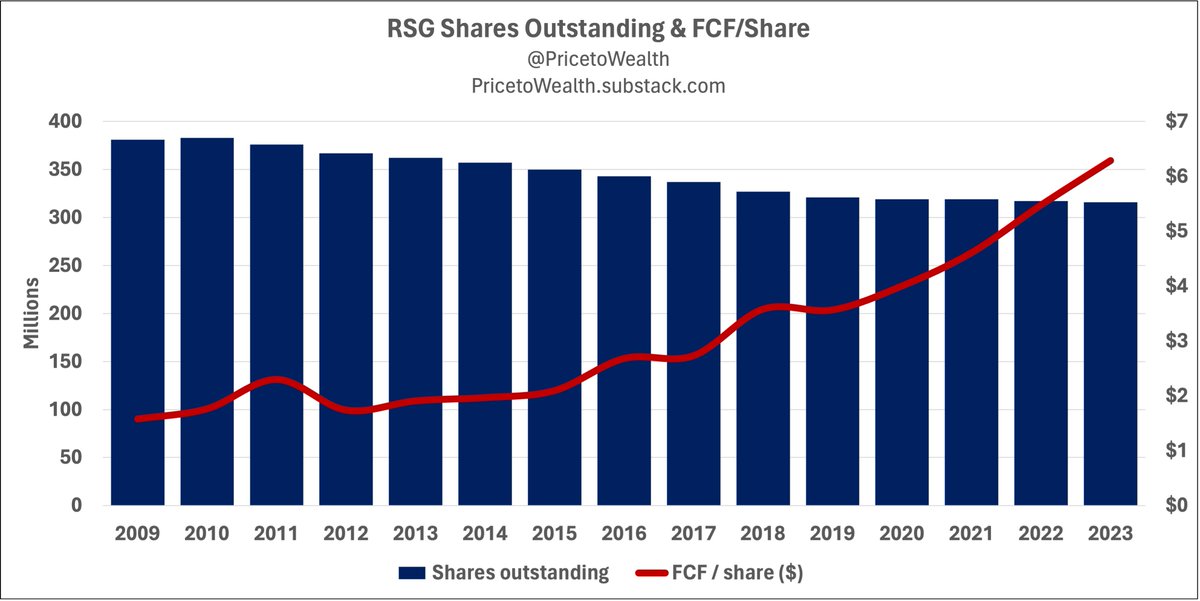
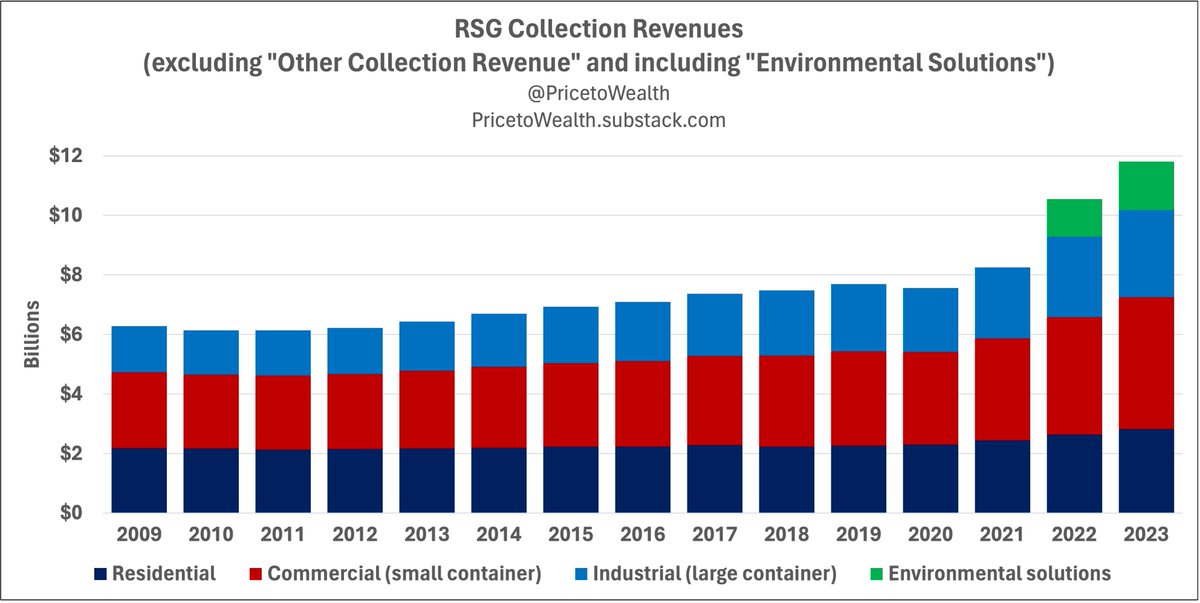
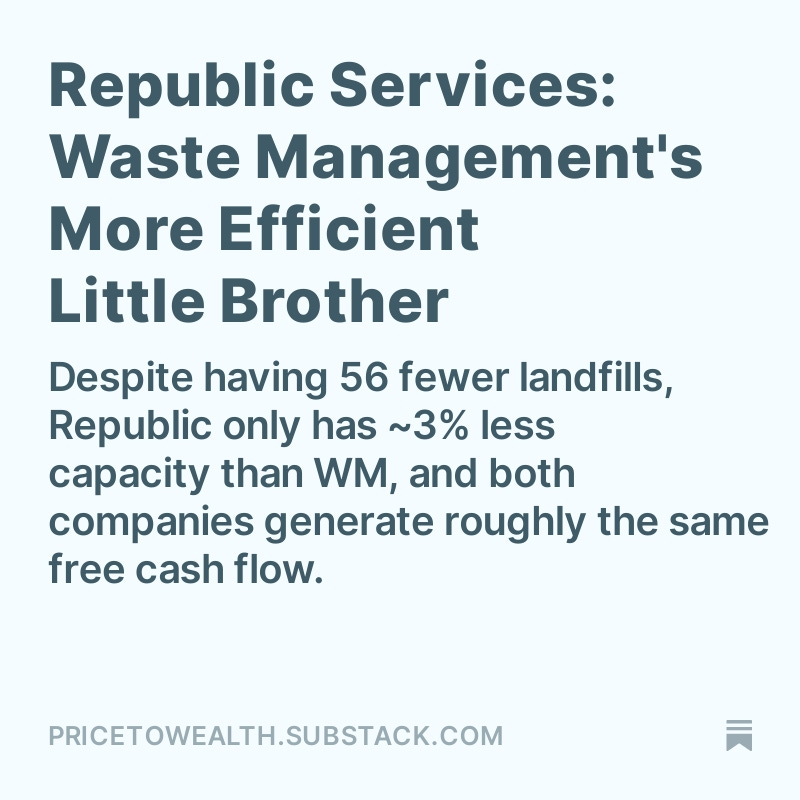
Newest out on $RSG.
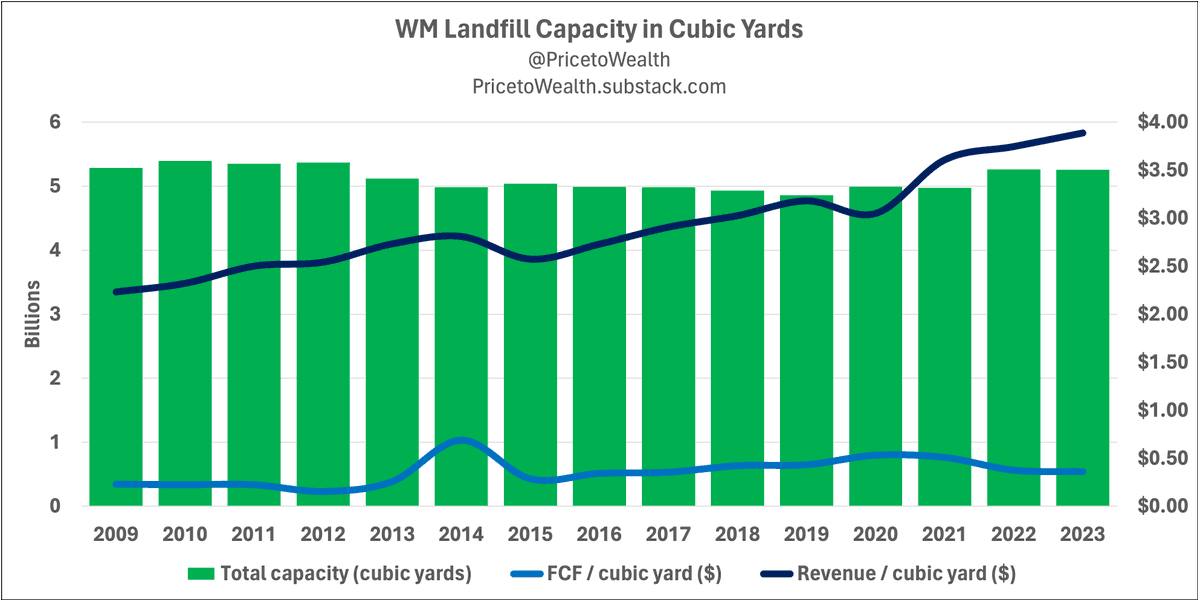
1) Between 2009 and 2023, $RSG fcf/cubic yard grew almost 200%. $WM's grew 60%.
2) $RSG increased fcf/share by almost 300% compared to $WM's 90%.
3) In 2023, $RSG converted almost 14% of rev to fcf. By contrast, $WM converted about 9% of its rev to fcf.
In the U.S., there are about 16,000 golf courses and 13,000 $MCD locations.
"You can have a golf course in an area where there aren’t that many people, because people will travel to play golf. Few people are going to travel specifically for McDonald’s."
From @flowingdata
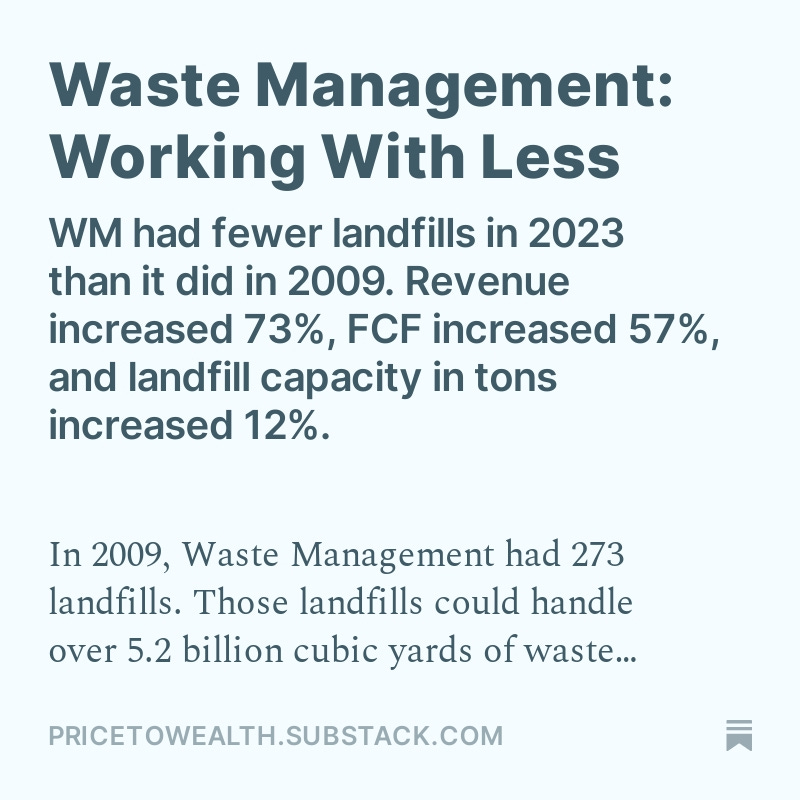
New piece out about $WM.
1) Even though $WM had fewer landfills in 2023 than it did in 2009, tonnage capacity, rev, and FCF increased.
2) FCF/share increased 90% thanks to buybacks.
3) $WM's fastest growing collections biz is industrial waste. Up 93% 2009-2023.