@blknoiz06 would you say a key part of onboarding people to the crypto space is having a figure they can trust in to negate the pr it currently has? Btw HOLDLING $ANSEM to we’re in dexs!
“Now that’s a motherfu*king shot!”
— LeBron James is having the time of his life on the golf course with his 2016 Cavs teammates. 🤣🔥
(h/t @Ballislife, @ClutchPoints)
THE UK JUST MADE PRIVACY A CRIME.
The government wants a scanner built inside every phone in the country.
Scanning every citizen becomes the law. Refusing becomes 5 years in prison.
- The scanners would inspect every photo, message and video on your device before encryption
- Signal threatened to leave the UK entirely rather than build the backdoor
- Europe's age verification app built to "keep children safe" was hacked in under 2 minutes
- Another verification system leaked 70,000 IDs and selfies in a single breach
Orwell wrote 1984 as a warning. His own country turned it into law
This person just gave you the neuroplasticity recovery protocol most people pay therapists $200/hour to discover.
The core mechanism here is dopamine baseline depletion. When you scroll, each interesting post spikes dopamine 100-200% above baseline. The problem is what happens next. Your dopamine drops 40-60% BELOW baseline for 2-4 hours. This means the homework, the book, the focused thinking you try to do afterward feels neurologically impossible. You’re not lazy. Your prefrontal cortex is literally running on empty.
Here’s the thing about that “I used to be sharp” feeling. Working memory capacity correlates directly with dopamine available in the prefrontal cortex. Lower dopamine, shorter working memory span. D’Esposito and colleagues at Berkeley showed this with neuroimaging. The people who can hold longer strings of information have more dopamine available for release. So when you’ve been chronically depleting your dopamine reservoir through high-stimulation activities, your working memory atrophies. You feel dumber because, neurochemically, your prefrontal cortex is operating at reduced capacity.
The “three days” recommendation in this article maps onto clinical literature. Anna Lembke’s research at Stanford’s Addiction Medicine clinic shows dopamine system resets require approximately 30 days for severe cases, but meaningful restoration begins within 72 hours of removing the stimulus. That’s why day three of any detox feels qualitatively different. Your neurons are beginning to upregulate dopamine receptors.
The boredom piece is where most people fail. Your brain interprets boredom as a signal to seek stimulation. That discomfort you feel when you’re unstimulated? That’s withdrawal. The reaching for your phone is your brain trying to bring dopamine back above baseline. Sitting with it trains the system to tolerate lower stimulation and still function. This is called raising your distress tolerance threshold.
What the article calls “rehabilitate,” the neuroscience literature calls neuroplasticity. Your brain is continuously rewiring based on what you repeatedly do. Chronic scrolling strengthens attentional circuits optimized for novelty-seeking and rapid task-switching. Sustained reading strengthens circuits for linear focus and deep processing. You’re not permanently damaged. You’ve just trained your brain for the wrong environment.
Two protocols actually accelerate the restoration. First: non-sleep deep rest. NSDR scripts (free online, 10-20 minutes) increase dopamine in the basal ganglia by up to 60%. Second: brief cold exposure. One to three minutes in cold water spikes dopamine 250% above baseline and sustains it for 2-4 hours afterward. Both of these replenish the reservoir without creating the crash cycle.
The real work is what she described: tolerating the discomfort of being understimulated long enough for your system to recalibrate to normal dopamine dynamics. The girl who used to read voraciously is still in there. The neural circuits are dormant, not dead. Plasticity works in both directions. Start with 10 minutes of focused reading a day. Your prefrontal cortex will adapt. Give it six weeks and measure the difference.
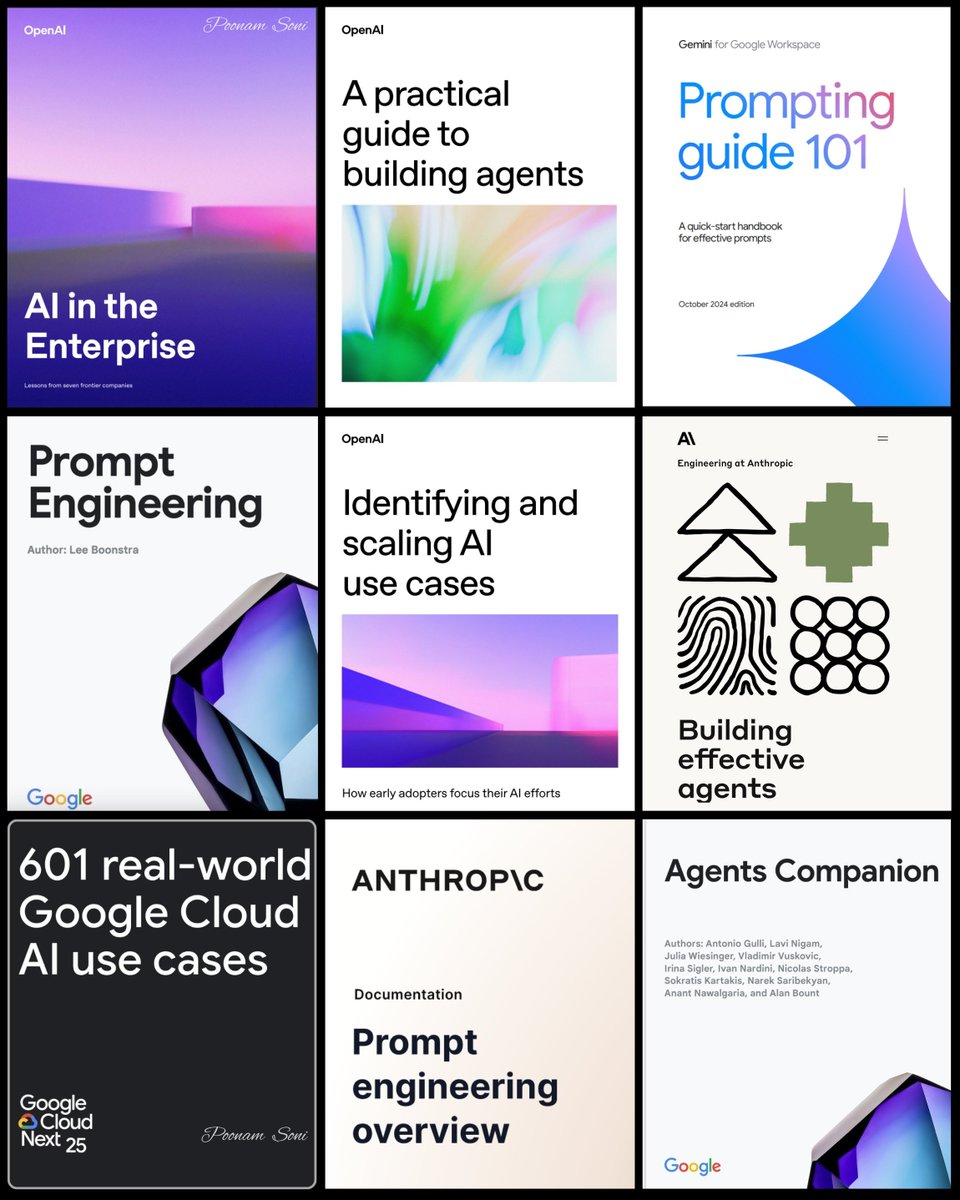
OpenAI, Google, and Anthropic just published guides on:
• Prompt engineering
• Building agents
• AI in business
• 601 AI use cases
9 of the best guides you can't miss:
JUST IN🇬🇧🇬🇱🇺🇸 UK could transfer the first ‘Dragon Fire’ laser weapon of unmanned aerial vehicles to Greenland, it can destroy American Warplanes and Navy if US strikes UK and Danish Army.
🚨 NEXT WEEK COULD SHAKE THE ENTIRE MARKET.
Stocks and crypto are about to face one of the most dangerous combinations of news we’ve seen in months.
Two huge events are hitting at the same time:
1) New Trump tariffs on Europe
2) A Supreme Court ruling on tariffs
Both land together when markets reopen.
That is a recipe for extreme volatility.
Over the weekend, Trump announced a fresh 10% tariff on the EU.
This is the first major tariff escalation in almost three months.
The last time we got a big tariff shock, on October 10:
- The S&P 500 dumped hard
- Crypto saw its biggest crash in five years
This is not small news, as these EU tariffs threaten trade flows worth nearly $1.5 trillion.
And here's why it could get worse.
There is now serious talk that Europe could retaliate.
If the EU starts building trade deals with countries that the US is also sanctioning, the US risks being pushed out of key trade routes.
That would be:
- Bearish for US stocks
- Bearish for the dollar
- Bearish for global risk sentiment
Now add the second bomb.
On Tuesday, the Supreme Court is expected to rule on whether Trump’s tariffs are legally valid.
They have already delayed it twice, but now a ruling is expected.
Markets currently believe there is a strong chance the Court rules against him.
That creates two dangerous paths:
If the Court rules AGAINST Trump:
- It means his tariffs are legally weak
- It breaks confidence in policy stability
- The stock market has been rallying on tariff optimism
- That optimism could collapse fast
- A violent sell-off becomes very likely
If the Court rules IN FAVOR of Trump:
- Then markets must fully price the damage of the EU tariffs
- Trade disruption becomes real
- Growth risk increases
- Stocks and crypto still face heavy pressure
Both are bad for risk assets.
This is why next week is so dangerous.
Markets are walking into:
- A major tariff shock
- A legal ruling that can change policy credibility
And you need to be prepared for some insane volatility.
If you're in the UK, open a stocks and shares ISA.
Do it today. Here's why:
It allows you to invest £20k per year TAX FREE. No taxes on gains, forever.
It's one of the best long term vehicles for tax-efficient investing in the UK. I can't stress how great it is.
Whatever disposable monies you can afford to kiss goodbye to each month, chuck em in. Doesn't have to be a lot. £100, £20, £10 a month, it all adds up long term.
Investing is not just for rich ppl or for ppl with money. EVERYONE should invest, doesn't matter how much. The goal is to beat inflation and protect/grow your money. Doesn't matter if its just £10 a month. It adds up. Your fiat currency is being debased year after year. You must protect yourself.
Personally, I buy S&P500 and Nasdaq100 index funds with a 30+ year time horizon. It's up to each individual person what they buy. To each their own.
Short term, you shouldn't care if price up/down. Be a robot with no brain. Robot invest every month. Robot know number go up long term. Robot know mechanical investing will make money grow.
S&P500 average yearly return since inception: +10%
Nasdaq100 average yearly return since inception: +14%
Some large/liquid ETF options:
S&P500 unhedged:
$VUAG (dividends automatically reinvested)
$VUSA (dividends distributed to u in cash)
S&P500 hedged:
$IGUS (dividends automatically reinvested)
$GSPX (dividends paid to u in cash)
Nasdaq100 unhedged:
$CNX1 (dividends reinvested)
$EQQQ (dividends distributed to you in cash)
Nasdaq100 hedged:
$EQGB (dividends reinvested)
FX hedged ETF's take away fx risk (for the most part). Example: if GBP strengthens against USD, it will negatively impact ur unhedged holdings beyond the instrument's performance. Nasdaq can be +10% for the year, but if GBPUSD also rose +5%, your return would be ~ +5% (napkin math).
Vice versa, if GBP weakens against USD, it will positively impact your unhedged holdings beyond the instrument's performance. Nasdaq can be +10% for the year, but if GBPUSD dropped -5%, your return would be ~+15% (napkin math).
Upside: fx risk is taken away and therefore your investment is a pure bet on the instrument's performance
Downside: higher fees
I personally hold a mixture of both hedged and unhedged. Good to note that long term over decades, fx fluctuations tend to iron out / mean revert anyway but can be painful year to year (like in 2025: GBPUSD rose a lot).
I'd include crypto exchange traded products in here however the wonderful UK government are banning them from stocks and shares ISA from April.
Worth noting too, ppl are too afraid of timing the market. 'What if price goes down?' - if you're just chucking spare change in there every month, price going down is good, you get cheaper price. Investing a lump sum is another discussion entirely whereby timing does matter, that's a discussion for another day. If you're dollar cost averaging every month with a long term time horizon: the early you start the better.
Long term example: £100 invested every month for 30 years with a +10% yearly return: ~£230k+ (with only £36k invested). Rough math, not including fees etc. All tax free when you want to sell within a S&S ISA. This is assuming the UK government doesn't abolish or fundamentally change the S&S ISA btw.
Disclosure: this is not financial advice. Investing can be volatile/risky, focus long term, always.