@ADCNig Dear ADC
My name is Princewill Chigozie Chijioke, and I am writing to formally resign my membership from the party, effective immediately.
My membership card number is EB-ABA-TI-2987644. I request that all my personal details be permanently removed from your databases.
65 FREE SURGERIES FOR 65 CHILDREN
Yesterday, I attended the final follow-up clinic and appreciation programme at Mother Mary Hospital, Isolo, Lagos, following the successful completion of 65 free surgeries for children to mark my 65th birthday.
I am deeply grateful to God Almighty for guiding the medical team throughout the process and for granting all 65 children safe and successful surgeries.
The surgeries, led by Dr Folaseye Adebayo and her dedicated team, included adenotonsillectomy. This procedure removes enlarged or chronically infected tonsils and adenoids, which can cause breathing difficulties, recurrent infections, and sleep-related problems in children.
What made the occasion particularly touching was listening to parents share their testimonies and hearing how these procedures have improved their children’s health and quality of life.
My profound appreciation goes to @DrFolaseye Adebayo and her entire team, the hospital management, the parents, and everyone who contributed to making this initiative possible.
For me, birthdays are not merely occasions for celebration. They are opportunities to give back, touch lives, and make a meaningful difference in the lives of others.
I thank God for the privilege of being part of this initiative and, most importantly, for the gift of 65 healthy and hopeful children.
May God continue to bless all those who dedicate their lives to saving and improving the lives of others.
A New Nigeria is POssible. -PO
A President and the Endless Question of His Past
As a citizen of no other country, who has never sought foreign citizenship even when doing so became fashionable, my loyalty to Nigeria and my faith in her destiny remain unshaken.
Yesterday, 30th of August, being Sunday, I fervently prayed for our nation and for those entrusted with the solemn responsibility of leadership. I found myself deeply saddened by the direction in which our country is heading.
It is profoundly embarrassing that we have reached a point where a sitting President is asking a foreign court to withhold records concerning his past, particularly records relating to matters of legitimate public interest.
Leadership, in my humble view, demands the courage and humility to confront one’s history — to acknowledge mistakes, provide candid explanations where questions arise, and, where necessary, apologise and seek forgiveness. True authority is strengthened, not diminished, when a leader accepts responsibility rather than seeks to shield uncomfortable aspects of the past from legitimate scrutiny.
This becomes particularly important when questions concern educational credentials. Issues surrounding foundational schooling — primary and secondary — should not remain unresolved or be addressed primarily through legal proceedings. Nigerians deserve clear, credible, and verifiable explanations, especially when such had been submitted in the past.
My deepest concern is the example this sets for more than 200 million Nigerians, particularly the over 30 million young people in schools. The nation’s highest office should exemplify integrity, accountability, transparency, and ethical leadership.
An imperfect past is part of the human condition. What matters is the willingness to confront it with humility, honesty and deep apology, to make amends where necessary and, when circumstances so demand, to place the interests of the nation above personal ambition.
When will our political class fully appreciate that individual ambitions are temporary, while the nation endures? The Presidency is an office held for a season; the moral standards established by those who occupy it can influence generations.
Nigeria is greater than any one person, and the integrity of the Republic must always come before the interests of the individual.
A New Nigeria is POssible. -PO
PRESIDENT TINUBU GOES ON HOLIDAY AGAIN
President Bola Ahmed Tinubu has once again left Nigeria for another holiday, this time beginning a three-week vacation in Europe.
Nigeria is in deep crisis. Nigerians can barely afford food and transportation. Insecurity is ravaging communities, and thousands of children are unable to access education because of insecurity.
Just days ago, about 600 Nigerians, predominantly women, children, and the elderly, were reportedly abducted during Juma’at prayers in Niger State.
Yet, at this critical moment, the President has left the country for another holiday.
According to reports, government expenditure on presidential trips and related travel expenses between June 2023 and April 2026 amounted to about ₦37.64 billion, with the President spending approximately 261 days outside Nigeria.
Meanwhile, only ₦36 million was reportedly released to the Federal Ministry of Health in 2025, despite a capital allocation of ₦218 billion, in a country of over 230 million people.
This is the calamity befalling our country today.
A government that can spend tens of billions on presidential travel while critical sectors remain starved of funds, and Nigerians are asked to endure worsening hardship, must not be allowed to continue.
Leadership is about priorities.
When citizens cannot feed their families, move safely, access healthcare, send their children to school, or sleep peacefully in their homes, the President should be more concerned about fixing the country than repeatedly leaving it.
I look forward to a Nigeria where our President can vacation in Kano, Katsina, Sokoto, Cross River State, Bauchi, Ebonyi, and many other destinations across our country.
The President of Nigeria should be the chief marketer of Nigeria as a tourism destination, as other comparable countries do.
Imagine the economic possibilities if our leaders, celebrities, business communities, and citizens travelled within Nigeria more frequently.
Tourism creates jobs. It supports hospitality, transportation, agriculture, entertainment, crafts, and small businesses. It brings investment and foreign exchange and allows communities to benefit directly from their natural and cultural assets.
We cannot continue to export our wealth and import our pleasures while our own enormous potential remains neglected.
We deserve leadership that puts Nigeria first; leadership that cares and plans for a better Nigeria. That is the kind of leadership that the partnership between H.E. Rabiu Musa Kwankwaso and me will bring.
A New Nigeria is POssible. -PO
My Vision for a Productive and Prosperous Nigeria
Today, being the 1st of July, 2026, I wish to humbly recall that when I decided to contest for the office of President of Nigeria, I pledged to place Nigeria on the path of unity and national transformation. Now, as the Nigeria Democratic Congress (NDC) candidate, I will, in the coming weeks and months, provide insights into the roadmap that I am confident will help curb abuse in government, halt the decline in the quality of life of Nigerians at all levels, and usher in an era of unity, peace, sustained progress, and prosperity.
This vision is anchored on a commitment to unity, inclusion, social justice, equity, and the freedom of every citizen to pursue lawful dreams.
Central to this proposed roadmap are significant reforms in education and healthcare, which are at the core of human capital development.
Robust human capital is indispensable infrastructure for national progress. It serves as the fundamental capital upon which daily life, economic expansion, and the delivery of essential public services depend.
These are foundational areas that we must reform with energy and determination if we are to reap the demographic dividend of our youthful population.
From the outset of my presidency, we will establish a task force dedicated to drastically reducing the menace of out-of-school children. We will place greater emphasis on Technical and Vocational Education and Training (TVET) to support our drive for massive industrialisation, anchored on our agricultural endowments and value addition across value chains organised around industrial parks to be located in development zones across the geopolitical regions of the country.
Funding and improving the equipment of TVET institutions, through partnerships among government, the private sector, and social entrepreneurs such as faith-based educators, will facilitate apprenticeship opportunities in the private sector, similar to the German dual education system.
The situation in which unemployment remains high while Nigerian entrepreneurs establish businesses elsewhere because skilled labour is scarce must be confronted decisively. Doing so is essential for the common good and for facilitating our transition from a consumption-driven economy to a production-driven one.
Character and civic education, emphasising the values that foster trust - an essential ingredient for enterprise and leadership - as well as shared national values, will receive significant attention within the tripartite approach to governance that we propose.
A New Nigeria is POssible. -PO
Media Framing of Crime Along Ethnic Lines: Divisive.
As an Igbo man, I have endured stereotypes, judgment, and labelling solely based on my ethnic origins. This is not an isolated Igbo experience. Most Nigerians have, at some point, been reduced to their ethnicity rather than recognised for their true character.
I understand the pain of the ordinary Fulani man today, often unfairly judged by the actions of criminals he does not support, has never met, and who are not representative of his people.
Even in America, such unjust labelling fueled the civil rights movement and prompted Martin Luther King Jr. to declare that people should be judged by the content of their character, not the colour of their skin.
Every Nigerian ethnic group is known for its unique traditions, occupations, skills, and strengths. Crime, however, has no ethnicity. A thief is a thief. A terrorist is a terrorist. A kidnapper is a kidnapper. They are bad actors, not representatives of any people. They must be identified, arrested, and punished according to the law.
We must decisively abandon the dangerous practice of blaming entire ethnic groups for the actions of a few criminals. It is unjust, it breeds hatred, and it damages our national unity.
Let us proudly celebrate our diverse cultures, talents, and contributions, rather than falling prey to stereotypes and prejudices that politicians and divisive interests exploit for their gain.
A new Nigeria must emerge—one where no citizen is condemned because of tribe, religion, or birthplace. We can cherish our cultural roots while standing united by justice, mutual respect, and hope for a better future. We are capable of this.
A new Nigeria is within our reach. -PO
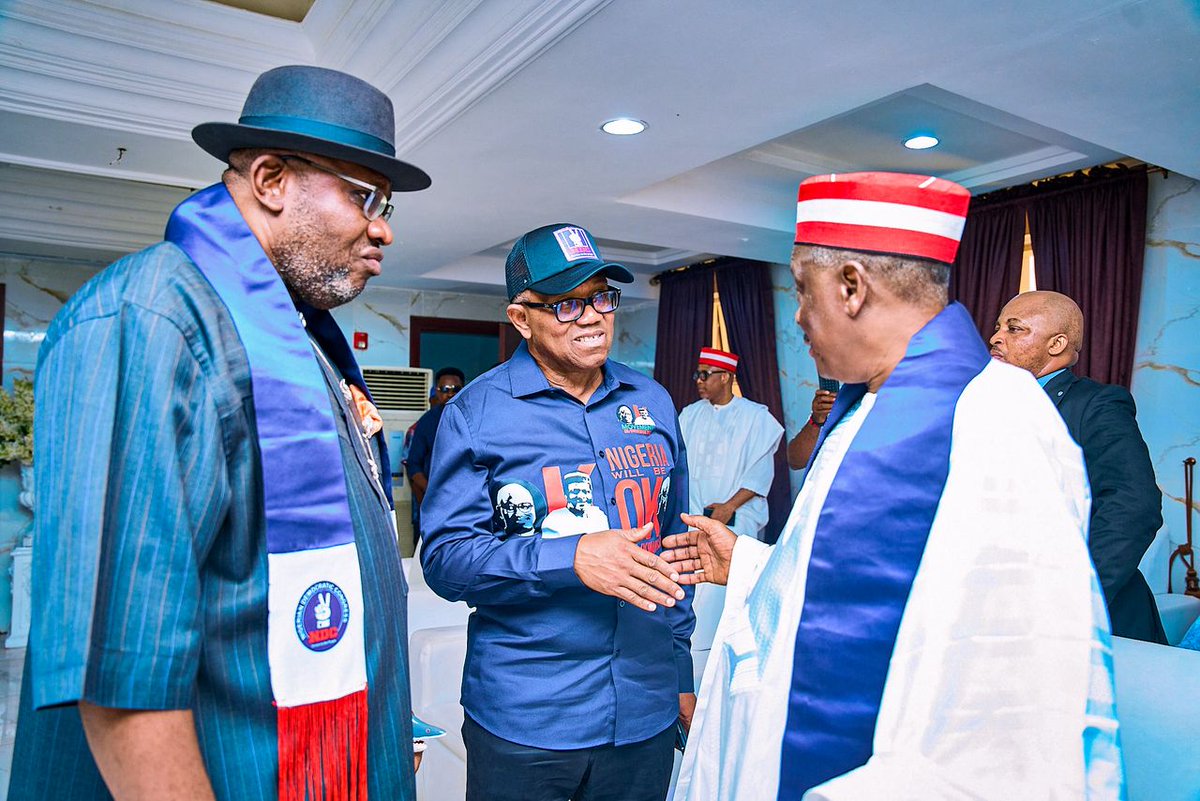
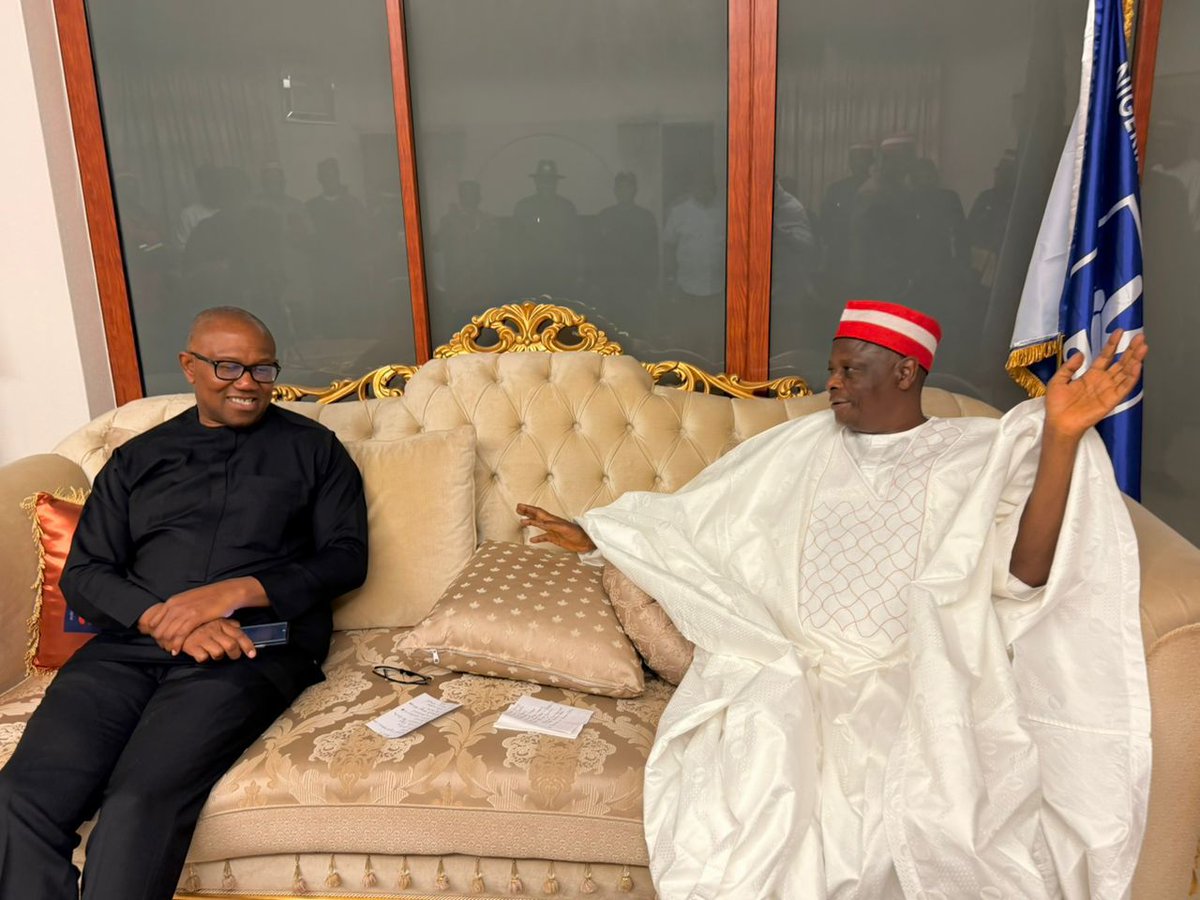
Last night, I received a courtesy visit from my brother, His Excellency Peter Obi, shortly after his successful screening as the presidential aspirant of our party, the NDC.
The future is bright and full of promise. - RMK
Yesterday, May 19th, in Abuja, I attended the Presidential screening organised by our party, which took over two and a half hours. They carefully reviewed all my documents, including my degree certificates, NYSC credentials, and age declarations.
During the process, I also addressed questions regarding my vision for a new Nigeria and the type of leadership our nation urgently needs right now. Following this, I was cleared and received the presidential nomination form I had previously paid for.
I would like to commend the screening committee, led by former governor Sam Egwu, for their thorough and professional approach. Additionally, I appreciate our party's leadership for upholding the democratic process.
A New Nigeria is POssible. - PO
"Some men change their party for the sake of their principles; others change their principles for the sake of their party." Winston Churchill
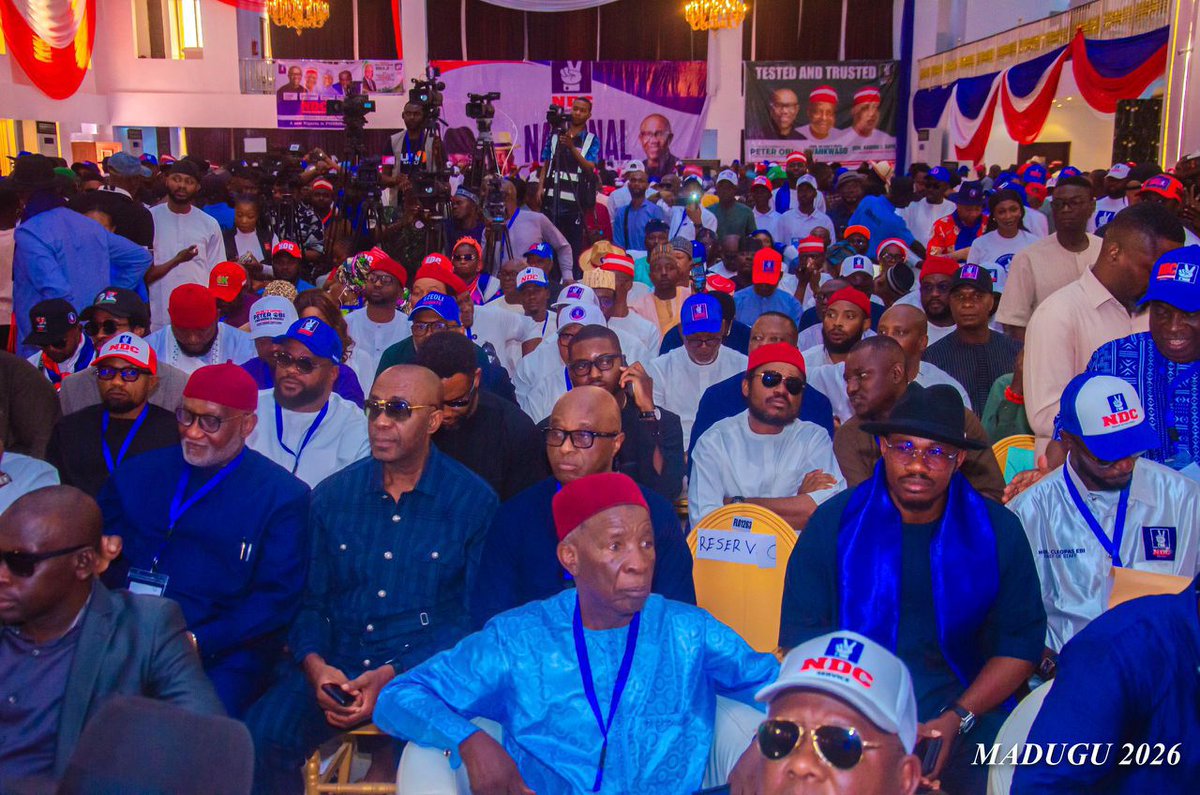
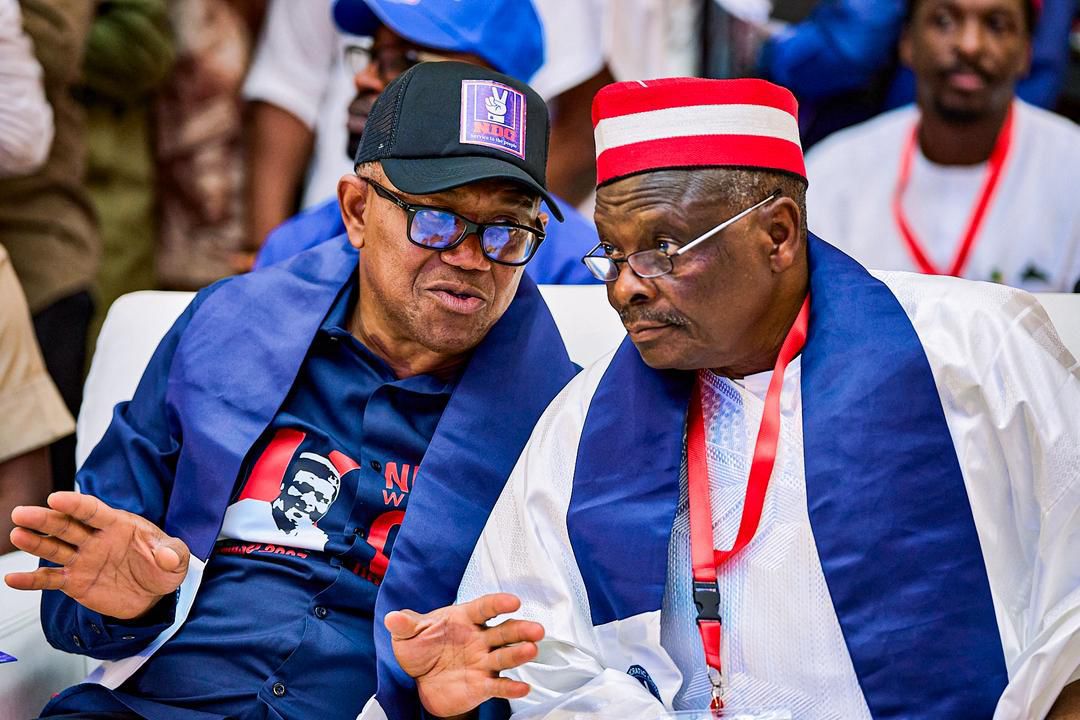
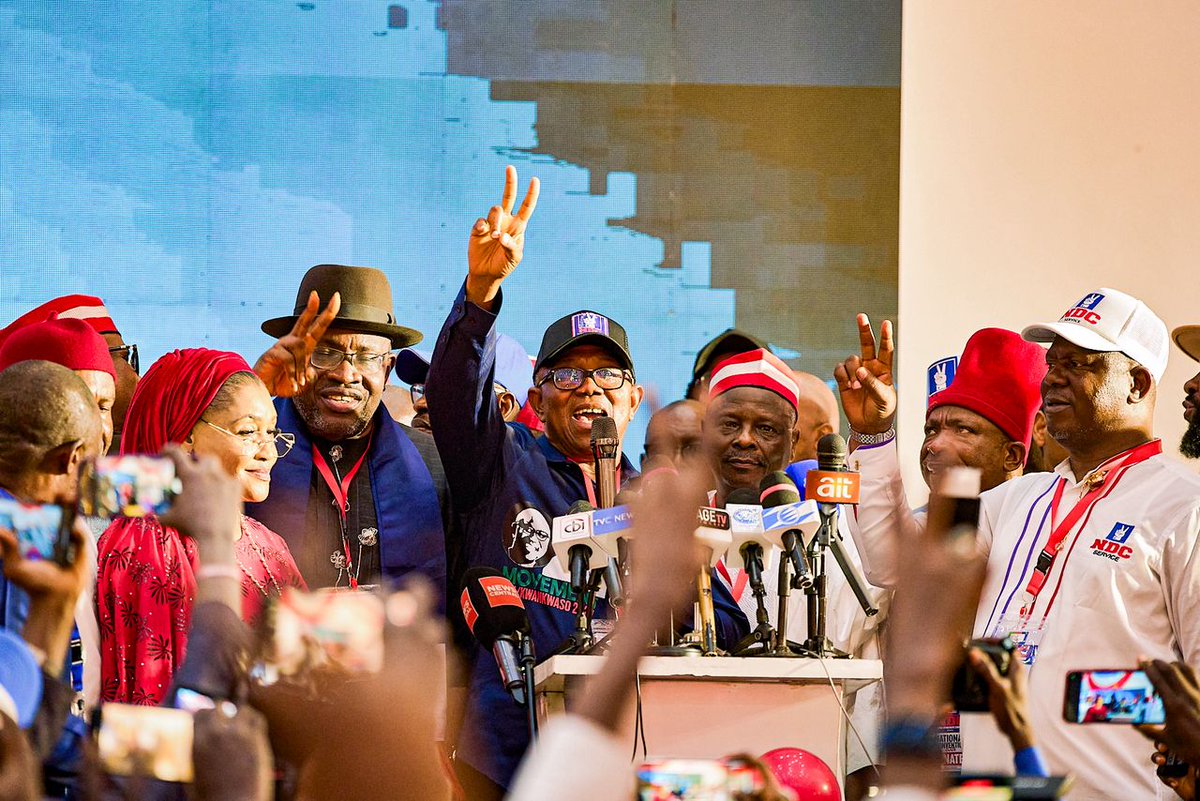
Today, May 9th, I attended the 1st convention of my latest party, the Nigeria Democratic Congress (NDC) in Abuja, Nigeria. The convention was successful and continued to show the resilience of Nigerians to change
I express my sincere appreciation and gratitude to the NDC family, led by the distinguished Senator Henry Seriake Dickson, for inviting us and for the generosity of spirit with which they have accommodated us at this critical moment in our national journey.
I also wish to express profound gratitude to the African Democratic Congress(ADC), particularly Distinguished Senator David Mark, for providing a democratic platform and showing uncommon understanding when the ongoing litigation forced us out of the Labour Party and the New Nigeria People's Party, NNPP respectively. That spirit of solidarity must remain the foundation upon which a better Nigeria will be built.
Today, the most painful aspect of our political existence is that many who once benefited from democratic governance have now become willing accessories to the destruction of democracy itself. Those who once fought for justice now openly celebrate electoral injustice. Those who once spoke against impunity now defend coercion, manipulation, intimidation, and outright political gangsterism, especially against opposition voices. What we are witnessing is not politics; it is a systematic assault on democracy and the will of the people.
Nigeria today stands at a dangerous crossroads. Our democracy is under severe threat. Our nation is drifting without direction, and our people are passing through immense suffering. Across the world, Nigeria is increasingly described as a failing and disgraced nation. This is not the destiny God ordained for our great country. It was not always so, and it must never be allowed to remain so.
Across virtually every recognised indicator of good governance - accountability, political stability, rule of law, control of corruption, government effectiveness, regulatory quality, and the separation of powers - Nigeria continues to record alarming failures. The institutions that should protect the people are weakening daily, while the burden on ordinary citizens grows heavier with each passing moment.
Today, over 140 million Nigerians live in multidimensional poverty. Tens of millions of young people remain unemployed or underemployed. Inflation continues to crush families. Businesses are shutting down. Farmers can no longer safely access their farms. Communities live in fear. In this month alone, hundreds of innocent Nigerians have lost their lives to insecurity, while many others have been kidnapped, displaced, or thrown deeper into poverty.
The most heartbreaking question confronting us is this: Who consoles the grieving mother whose child was abducted on the way to school? Who speaks for the father who can no longer feed his family despite working every day? Who defends the young Nigerian whose dreams have been destroyed by a nation that rewards connections over competence and corruption over character?
Our present tragedy is not accidental. It is the direct consequence of years of deliberate sabotage by a political class that prospers by dividing the people and weakening the nation. Nigeria is not a poor country; rather, we are being looted into poverty. We have abundant human and natural resources, yet we remain trapped in deprivation because leadership has failed to place the common good above personal interest.
Our choice as a people is therefore clear: whether to surrender to despair and national decline, or to summon the courage to rescue our country and rebuild it on the foundations of unity, equity, justice, competence, and productivity.
I was delighted to participate in the historic maiden national convention of the Nigeria Democratic Congress (NDC).
The event brought together party members from across the country in a powerful display of unity and a shared commitment to deepening democracy in Nigeria.
I wholeheartedly endorsed the party’s bold decision to zone its presidential ticket to Southern Nigeria for a four-year term, a move that strengthens national cohesion and equity.
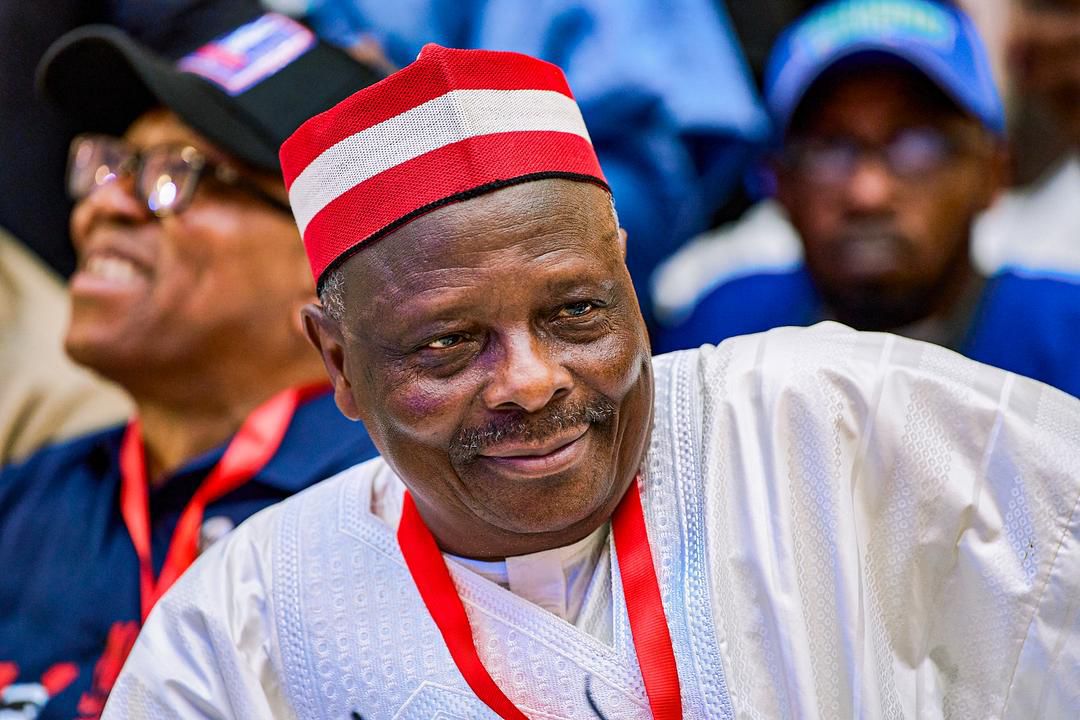
I commend the National Leader, Senator Seriake Dickson, for delivering a well-organised and impactful convention. I also extend my sincere appreciation to fellow party members, particularly my brother, His Excellency Peter Obi, and the Obidient Movement, for adding colour and enthusiasm to the occasion.
Together, we will restore hope, promote unity, and deliver a better future for our nation. - RMK
"The condition of our nation and the urgent need to rescue Nigeria, informed my decision to leave ADC for NDC."
Yesterday, I formally joined the Nigerian Democratic Congress (NDC), alongside my dear brother, Engr. Dr Rabiu Musa Kwankwaso, with one clear purpose: to continue the struggle for a new Nigeria built on justice, competence, accountability, and compassion for the ordinary Nigerian.
As I stated yesterday, this decision was not made out of anger, personal ambition, or convenience. It came after deep reflection on the present condition of our nation and the urgent need to rescue Nigeria from the dangerous path it is currently heading.
Over the years, I have remained steadfast in my conviction that politics should never be about individuals, positions, or personal gain. It must be about the people, especially the millions of Nigerians who today can no longer afford necessities, whose businesses are collapsing, whose children are losing hope, and whose future is becoming increasingly uncertain.
I left the ADC for the same reason I left the Labour Party: the severe, orchestrated litigation and internal crises deliberately designed to ensure that I, alongside many other notable individuals, do not effectively participate in the electoral process. I sincerely appreciate and remain deeply grateful to the Leadership of ADC for the opportunity to work together in pursuit of a better Nigeria. I am particularly grateful to ADC Chairman Senator David Mark for his exceptional Leadership. I also deeply appreciate my Leader and elder brother YE, Atiku Abubakar, as well as other respected leaders within the party.
As we join the NDC, I sincerely appeal to the Nigerian Government against the encouragement of unresolved litigations and the infusion of crises within political parties. Democracy must never become a weapon against the people. A healthy democracy thrives on strong institutions, credible alternatives, and the freedom of citizens to make choices without intimidation, manipulation, or fear. Opposition parties must not be weakened or destroyed, because when democracy loses balance, the people ultimately suffer.
Nigeria today is passing through one of the most difficult periods in its history. Poverty is rising. Hunger is widespread. Insecurity continues to threaten lives and livelihoods. Businesses are shutting down daily. Our young people are becoming discouraged, and many citizens have lost faith in the system. At a time like this, leadership must be driven not by propaganda or division, but by competence, capacity, character, and compassion.
Our decision to join the NDC is therefore not an abandonment of values, but a continuation of the same mission we have always stood for: building a Nigeria where leadership is about service, where public resources are managed responsibly, where institutions function independently, and where every Nigerian, regardless of tribe, religion, region, or social status, can live with dignity, security, and hope.
I remain committed to working with all Nigerians of goodwill across political, ethnic, and religious lines. The task before us is bigger than any individual or political party. It is about the future of our children and the survival of our dear nation.
I thank Nigerians, especially our youths and women, for remaining peaceful, resilient, and hopeful despite the enormous challenges confronting the country. I urge you not to lose faith in Nigeria. Nations do not change because people surrender to hopelessness; they change because people continue to believe, continue to sacrifice, and continue to stand for what is right.
A new Nigeria is still POssible. -PO
Fellow Nigerians, good morning.
I woke up this morning after my church service with a deeply reflective heart, and despite every constraint, I felt compelled to share these thoughts with you.
Many people do not truly understand the silent pains some of us carry daily—the private struggles, emotional burdens, and quiet battles we face while trying to survive and serve sincerely in difficult circumstances.
We now live in an environment that has become increasingly toxic, where the very system that should protect and create opportunities for decent living often works against the people—a society where intimidation, insecurity, endless scrutiny, and discouragement have become normal.
More painful is when some of those you associate with, believing you would find understanding and solidarity among them, become part of the pressure you face. Some who publicly identify with you privately distance themselves or join in unfair criticism.
We live in a society where humility is mistaken for weakness, respect is seen as a lack of courage, and compassion is treated as foolishness—a system where treating people equally is questioned simply because you refuse to worship status, tribe, class, or power.
Personally, I have never looked down on anyone except to uplift them. I have never used privilege, position, or resources to oppress others, intimidate the weak, or make people feel small. To me, leadership has always been about service, sacrifice, and helping others rise.
Let me state clearly: my decision to leave the ADC is not because our highly respected Chairman, Senator David Mark, treated me badly, nor because my leader and elder brother, Alhaji Atiku Abubakar, or any other respected leaders did anything personally wrong to me. I will continue to respect them.
However, the same Nigerian state and its agents that created unnecessary crises and hostility within the Labour Party that forced me to leave now appear to be finding their way into the ADC, with endless court cases, internal battles, suspicion, and division, instead of focusing on deeper national problems and playing politics built more on control and exclusion than on service and nation-building.
Even within spaces where one labours sincerely, one is sometimes treated like an outsider in one’s own home. You and your team become easy targets for every failure, frustration, or misunderstanding, as though honest contribution has become a favour being tolerated rather than appreciated.
And when you choose to leave so that those you are leaving can have peace, and you step out into the cold, you are still maligned and your character is questioned. Despite all your efforts to continue working for a better Nigeria and engaging people with sincerity and goodwill, those who do not wish you well continue to attack your character and question your intentions.
There are moments I ask God in prayer: Why is doing the right thing often misconstrued as wrongdoing in our country? Why is integrity not valued? Why is the prudent management of resources, especially when invested in critical areas like education and healthcare, wrongly labelled as stinginess? Why are humility and obedience to the rule of law often taken to be weakness rather than discipline?
Let me assure all that I am not desperate to be President, Vice President, or Senate President. I am desperate to see a society that can console a mother whose child has been kidnapped or killed while going to school or work. I am desperate to see a Nigeria where people will not live in IDP camps but in their homes. I am desperate for a country where Nigerian citizens do not go to bed hungry, not knowing where their next meal will come from.
Yet, despite everything, I remain resolute. I firmly believe that Nigeria can still become a country with competent leadership based on justice, compassion, and equal opportunity for all.
A new Nigeria is POssible. -PO
FISCAL RECKLESSNESS
With the announcement that the Nigerian Senate is likely to approve the 2026 National Budget on March 17, every Nigerian is asking an important question: which budget will Nigeria use this year? Will it be the budgets for 2023, 2024, 2025, or 2026, or some combination of all these years? It is worth noting that as of last year, in our government, implementation of budget items from the 2023, 2024, and 2025 budgets was in a unique approach to budgeting, which continues to perpetuate a trend of fiscal recklessness.
President Tinubu inherited a legally signed N21.83 trillion budget for 2023. A few months after taking office, he presented a N2.17 trillion supplementary budget that faced widespread criticism for prioritising benefits for public office holders at a time when Nigerians were enduring painful economic reforms without a credible social protection framework. Instead of restoring fiscal discipline, the President repeatedly expanded the 2023 budget without a clearly defined end date.
The pattern persisted with the passage of a N35.06 trillion budget for 2024 and a N54.99 trillion budget for 2025. In less than three years, President Tinubu has exercised appropriation powers over more than N114 trillion in public spending. Yet, the government has failed to achieve even fifty per cent budget implementation, exposing a profound crisis of budget credibility. Alarmingly, until mid-2025, Nigeria was effectively operating with about three overlapping budgets, without clear legal or fiscal guidance on when each one expired or began. No serious country manages its budgets or fiscal operations in such a manner.
Even more troubling is the government’s opaque decision to repeal the 2024 and 2025 budgets and re-enact them with extended implementation timelines. Nigerians have not seen these re-enacted budgets, and there is no public information regarding the specific capital projects included or their associated costs. This is not reform; it represents fiscal obscurity elevated to the level of state policy.
The proposed 2026 budget, despite still lacking critical details, indicates that the administration has no intention of addressing the structural weaknesses at the core of Nigeria’s public finance system.
This lack of transparency is not accidental; it reflects a deliberate pattern of undermining public scrutiny and debate. The Federal Government has stopped publishing treasury reports on the https://t.co/5LPWiKwodE portal, dismantling a vital transparency framework inherited from the previous administration. In 2025, no budget implementation report was released, regardless of how poor the performance was!
No nation can operate with such recklessness and succeed.
Every effort must be made to quickly return Nigeria to the January-December budget cycle that was inherited and mismanaged by the current government. This change would enhance effective planning and tracking, promote transparency and accountability, and foster sustainable growth and development.
A new Nigeria is POssible! -PO
Vote Buying Must Be Stopped at the Roots
Just yesterday, Nigerians hoped that the House of Representatives would finally take a decisive stand against the cancer of vote-buying. This practice has long undermined our democracy and tarnished our nation's credibility. Unfortunately, that hope was quickly extinguished.
By refusing to criminalise vote buying at the foundational stage of party primaries, the House has chosen to protect a broken system rather than safeguard the nation's future. Credible elections cannot be built on corrupt foundations, and national progress cannot be achieved while inducement and bribery are legitimised in the democratic process.
Any effort to stop vote buying must begin at the primaries. Without addressing the problem at its roots, any measures taken later will lack the strength to endure.
A democracy where votes are bought is not a true democracy; it is a criminal marketplace. Nigeria deserves better. We must prioritise reform. The future of our democracy must not be for sale.
Disturbingly, the culture of vote buying has now trickled down even to town union, village union, Clubs and associations, as well as even student elections, emulating fraudulent politicians. How long will we allow our society to be corrupted when the solution lies in addressing the roots of the problem?
A New Nigeria is possible, but only if we confront these practices boldly and insist that integrity begins at the very start of our electoral process.
A New Nigeria is POssible. -PO
The Farouk Controversy and the Question of Public Responsibility
One of the most talked-about public controersies in recent times is the allegation surrounding Farouk Ahmed. Alhaji Aliko Dangote, President of the Dangote Group, alleged that Mr. Farouk, Chief Executive Officer of the Nigerian Midstream and Downstream Petroleum Regulatory Authority (NMDPRA), spent about $5 million on the secondary school education of his four children in Switzerland. He called for a full investigation and public explanation.
At current exchange rates, $5 million is approximately ₦7.5 billion. In a country with over 18 million out-of-school children — the highest number in the world — this revelation inevitably raises questions of proportionality, public trust, and moral responsibility.
Education is one of the greatest legacies a parent can give a child. No reasonable person begrudges parents for investing in their children’s future. Plato, in The Republic, reminds us that “education and upbringing are what make good human beings,” warning that neglect of education harms not just individuals but the entire constitution of society.
The issue here, therefore, is not education itself, but scale, context, and moral consequence, especially when such spending is attributed to a public official in a country with extreme inequality.
What ₦7.5 Billion Could Do at Home
With ₦7.5 billion, it would be possible to build 25 school blocks, at ₦35 million per block, fully covering construction, furnishing, and basic learning infrastructure. This amounts to ₦875 million in capital expenditure.
Each block contains 6 classrooms.Each classroom accommodates 40 students.
That means:
240 students per block
25 blocks × 240 students = 6,000 students educated every year
Each block would employ 18 teachers, giving a total of 450 teachers. At a monthly salary of ₦125,000, each teacher earns ₦1.5 million per year, bringing the total annual wage bill to ₦675 million. After construction (₦875 million) and one full year of teacher salaries (₦675 million), total expenditure is ₦1.55 billion. This leaves ₦5.95 billion from the original ₦7.5 billion.
Making the System Self-Sustaining
If the remaining ₦5.95 billion is invested in Nigerian government bonds at 19%, it would yield approximately ₦1.13 billion annually.
From this yield, allocating ₦10 million per school block per year for libraries, laboratories, utilities, learning materials, meals, and maintenance would cost:
₦250 million annually (₦10m × 25 blocks)This still leaves ₦880 million per year. From this balance:
₦675 million comfortably pays teachers’ salaries every year
Over ₦200 million remains as surplus, ensuring reserves, expansion, and long-term stability
In effect, the system becomes permanently self-funding, without touching the original capital.
A Moral Contrast (Corrected)
In simple terms, the amount allegedly spent on the education of four children could establish a self-sustaining education ecosystem that:
Educates 6,000 Nigerian children every year
Employs 450 teachers.
Ironically, Nigerian children educated abroad would benefit even more if those who remain at home were educated to comparable standards to work for them and with them when they return. An educated society produces better governance, safer communities, stronger institutions, and a more dignified nation. It is a win-win.
The Larger Question Nigeria has a population of about 240 million people. In a system described by former British Prime Minister David Cameron as “fantastically corrupt,” and by the U.S. President Donald Trump as “a now disgraced country,” it is reasonable to assume that there are at least 2,400 individuals - just 0.0001% of the population - who, like the Farouks, have access to extraordinary resources largely derived from public office.
If 2,400 individuals each sacrificed $5 million, it will achieve the following:
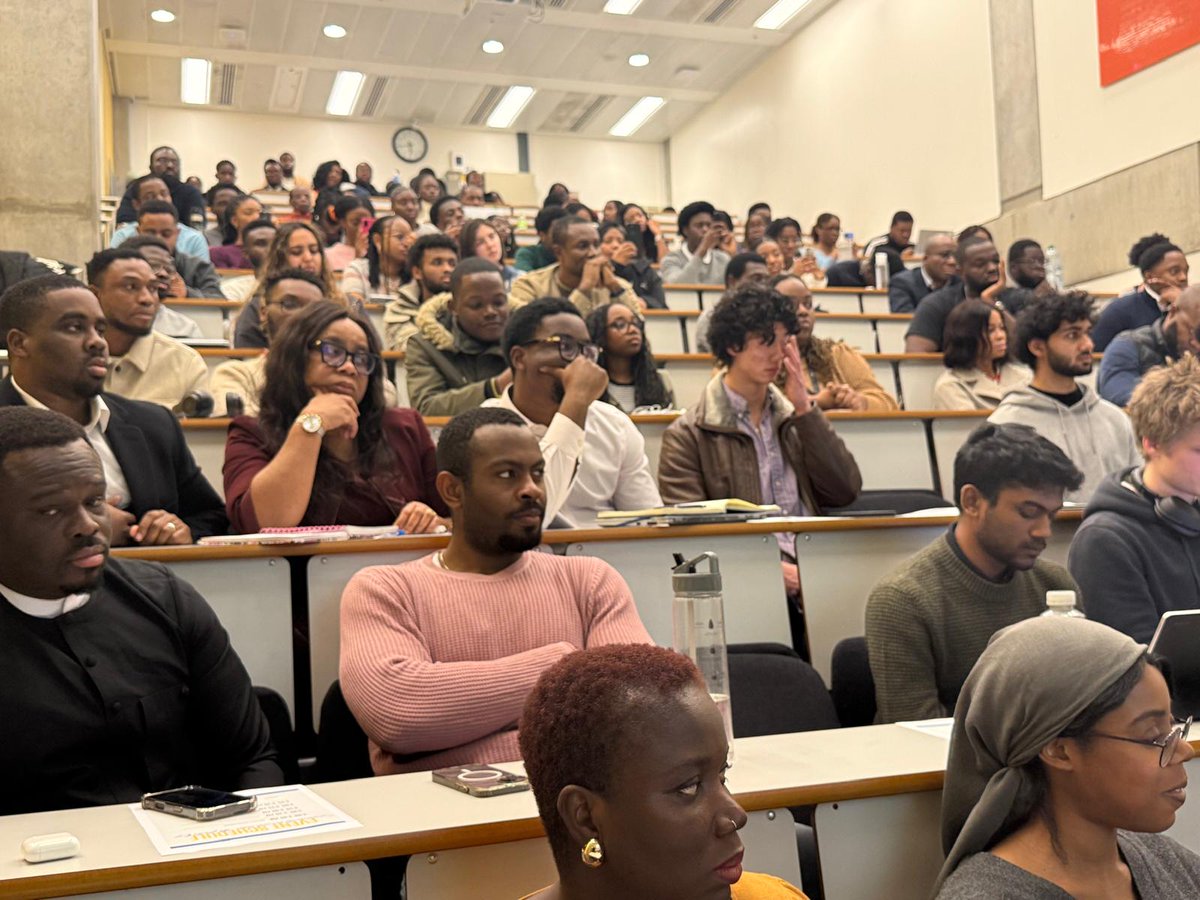
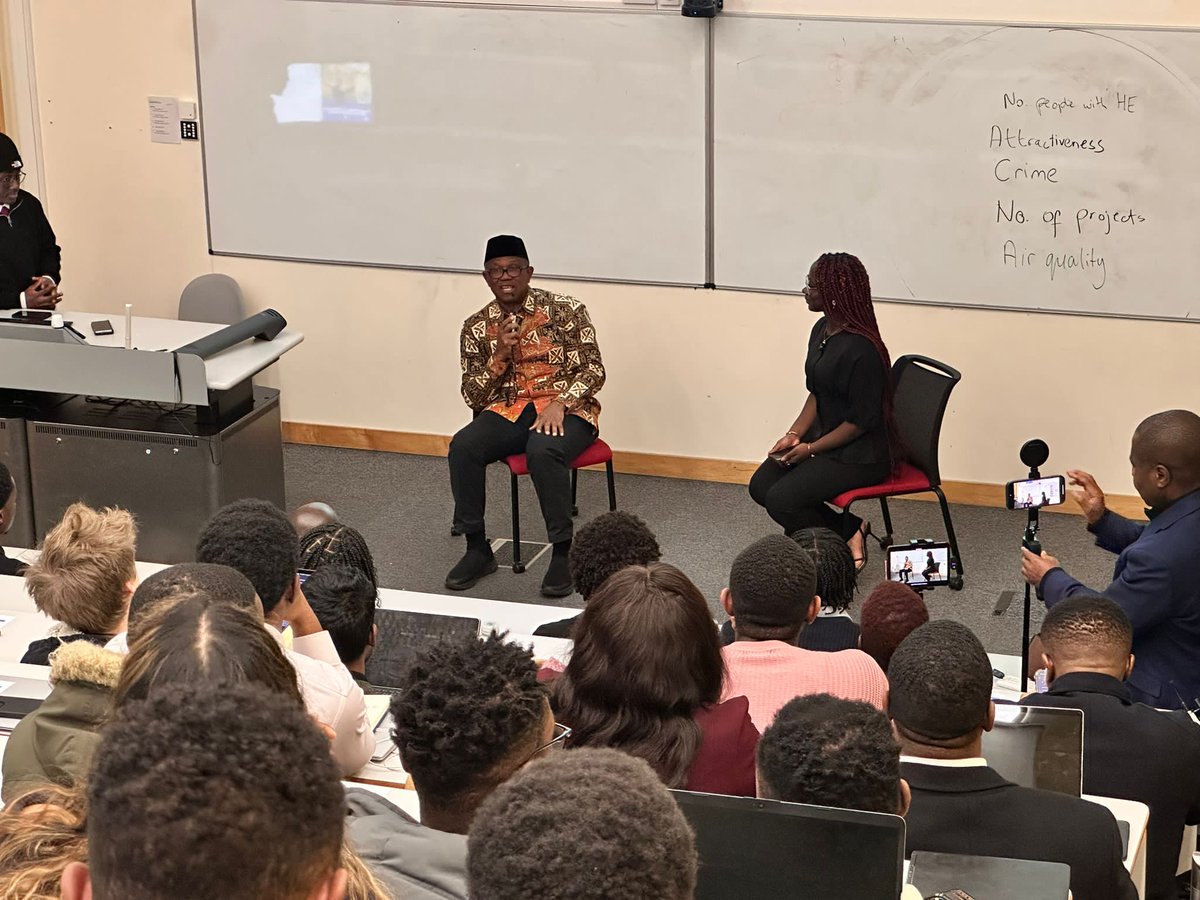
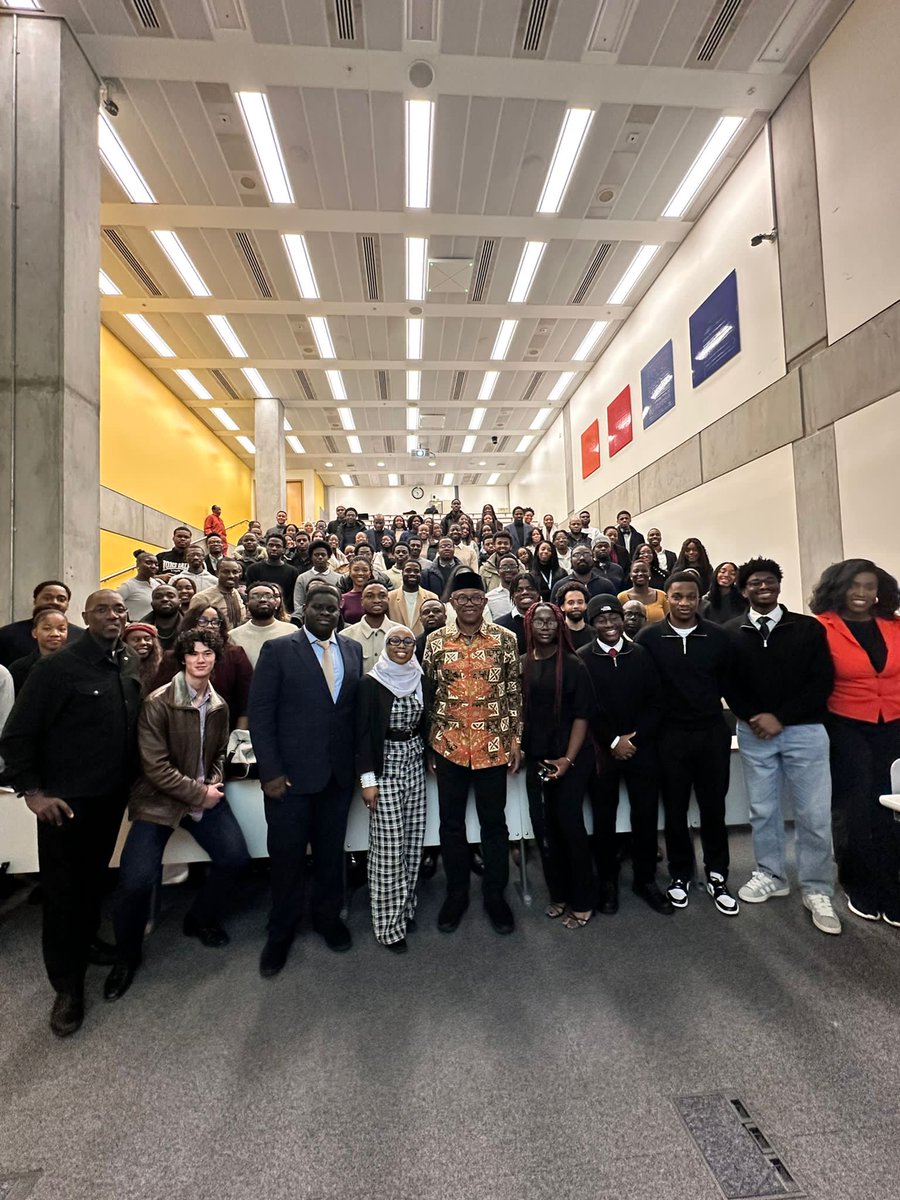
Yesterday, I was a Guest Speaker at Imperial College London on the theme “Bridging Worlds: Leadership and the Power to Inspire Change.”
At the event, I met talented Nigerian students abroad, who always remind me of the resilience and brilliance that our nation continues to produce. I told them that they live daily as a bridge between two contrasting realities: the Nigeria that nurtured them and the functional systems they now experience abroad.
The real question before us is how to take the innovation, discipline, and efficiency they see abroad and channel them meaningfully into rebuilding our nation.
For me, leadership begins with character, with who you are when no one is watching. When people ask how we were able to save money or cut waste during my time in office, the answer remains the same: I treated public funds as a sacred trust, because that is what they are. Integrity is not something you switch on when convenient; it is a way of life. Every leader must first build a bridge between their private values and their public actions.
Nigeria is a challenging system, but no system transforms simply because we talk about its failures. They change when men and women with competence, courage, and integrity step forward and insist on doing things differently. Real change is not driven by noise; it is driven by example. When you choose to act differently, you shift expectations. When you refuse to cut corners, you raise the standard. You cannot transform a system you have already given up on, transformation begins with demonstrating that better is not only possible, but achievable.
Your education here is a privilege, one that millions of Nigerians may never have. The critical question is: What will you do with what you have learned? Whether you return home or contribute from abroad, Nigeria needs your creativity, your discipline, your global exposure, and your belief in what is possible. Functional societies are not accidents; they emerge from deliberate, consistent choices made by people who value progress.
“This is how things are done in Nigeria.” Do not accept it. Wrongdoing is not culture. Corruption is not identity. If you lose your values, you lose your power to inspire change. Stand firm. Lead by example. You may be surprised by how many others are waiting for someone, anyone to show that integrity is still possible.
You are the bridge between Nigeria’s potential and its present reality; between what you experience here and what you know is achievable back home. And remember: bridges do not argue, they connect. Your task is to connect Nigeria to a brighter future through your ideas, your discipline, your values, and your leadership.
I remain confident that Nigeria is always in your heart, but I urge you to carry your values in your actions. That is how nations are rebuilt.
A new Nigeria is POssible. -PO
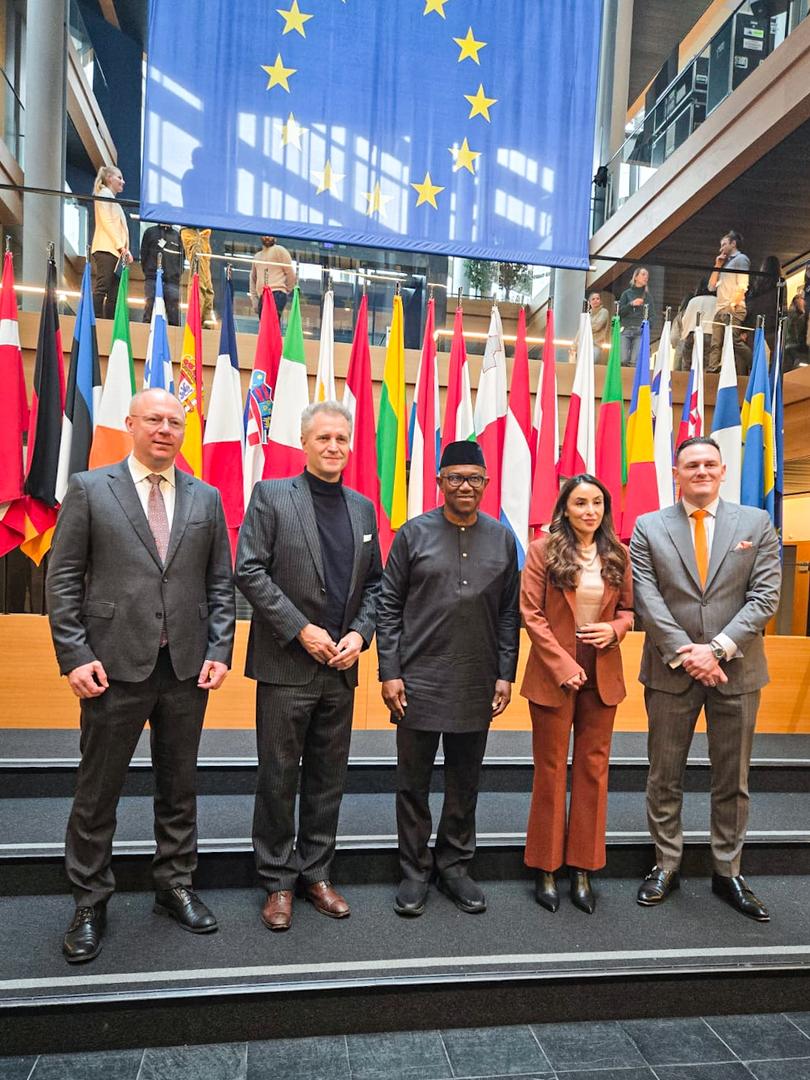
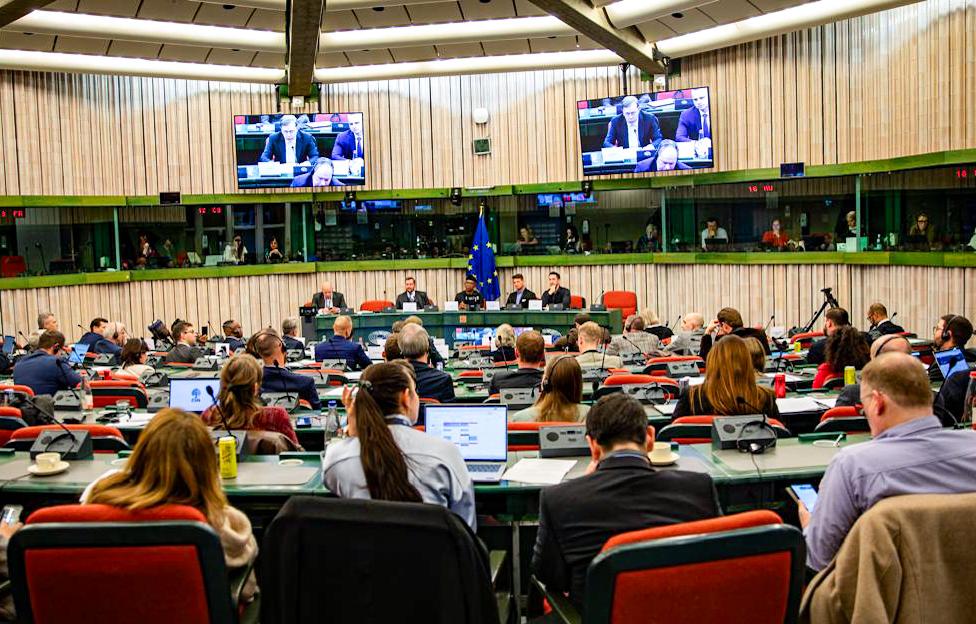
Yesterday, I was in Strasbourg, France, to attend sessions at the European Parliament.
While there, I spent the day holding a series of constructive meetings with several members from various committees, from the Committee on Foreign Affairs, to the Committee on Civil Liberties, Justice and Home Affairs, to the Members of the Africa-EU Delegation Committee, to the Committee on Transport and Tourism, and Development, amongst others.
I appealed to them to strengthen their relationship with Africa, especially Nigeria, which stands as a key frontier for global development. Africa, as I reiterated, is a continent of immense potential, the second-largest in size and population, richly endowed with natural resources, and powered by a vast, youthful demographic. Yet it remains the face of global poverty, largely because of bad leadership and entrenched corruption, a reality clearly reflected in Nigeria.
I urged them to support the development of Africa, particularly Nigeria, by advancing good governance. This includes supporting our democratic processes in ways that promote the emergence of competent leaders with the capacity and integrity to transform our nations.
I also highlighted how they can support us in addressing insecurity, improving power generation and distribution, strengthening education and healthcare, and lifting our people out of poverty. This is necessary because our success as a nation and the success of Africa have a direct benefit to Europe.
I also underscored the need to invest in and support Nigerian youths who have an immense desire and drive for entrepreneurship and productivity, if well supported, but are now facing despair due to limited opportunities.
Africa and indeed Nigeria can and must work for all and contribute to global developments.
A New Nigeria is POssible. -PO
Is Nigeria cursed, or are we the curse?
The past 10 days in Nigeria have witnessed unprecedented negative news, a level of chaos, insecurity, and institutional decay that should trouble the conscience of all the leaders.
Our country is now going through troubling times, not by fate, but by our collective leadership failures that allow insecurity, lawlessness, and institutional decay to thrive. Each day confronts us with a new tragedy and a new reminder that our beloved country is drifting amid a clear absence of competent, compassionate, responsive and responsible leadership.
We have all watched a nation blessed with people of strength and resilience drift into avoidable disorder. We should be asking ourselves: Are we cursed, or are we the curse?
The past 10 Days in Nigeria
1.11/11/25 – 6 senior directors from the Ministry of Defence were kidnapped along the Kogi axis, reminding us that even those tasked with securing our nation are no longer safe.
2.15/11/25 – A senior military officer, a Brigadier General, was brutally executed, a grave signal of the danger engulfing both civilians and security personnel.
3.16/11/25 – 64 civilians, including women and children, were abducted in Zamfara, with innocent lives also lost in the attack.
4. 17/11/25 – 25 schoolgirls, young children with dreams and innocence, were abducted in Kebbi and their Vice Principal was killed, adding to the heartbreaking list of attacks on our nation’s future.
5. 18/11/25 – Worshippers praying peacefully in a church in Kwara State were violently disrupted, with some killed and about 38 abducted. A place of worship, meant to be a sanctuary, became a scene of fear.
6. 18/11/25 – A disturbing crisis unfolded at the PDP Wadata Plaza headquarters. Instead of de-escalation, elements within the security agencies worsened the situation and further instigated it. Rather than focusing on protecting citizens, the government watched with amusement, encouraging the destruction of political parties and the weakening of our democracy.
7. 18/11/25 – During the All Nigeria Judges’ Conference, judges who should embody neutrality and integrity were seen standing as the APC partisan song “On Your Mandate We Shall Stand” played ahead of the President’s address. This troubling moment further eroded public trust in institutions expected to protect the rule of law.
8. 19/11/25 – Soldiers heading to rescue the Kebbi State abducted schoolgirls were ambushed, showing once again how undersupported our security forces have become.
9. 21/11/25 – Nigerians awoke to the devastating news that over 300 schoolchildren and 12 teachers were abducted from a Catholic school in Niger State.
10.22/11/25 – Bandits opened fire on farmers in Kaduna killing one of them.
23/11/25- Terrorists Ambush, Gun Down 5 Police Officers, Injure 2 in Sabon Sara, Darazo LGA, Bauchi State
November 23, 2025
And just as I was speaking about this, I received yet another devastating report about the abduction of 13 female farmers in Askira-Uba LGA of Borno State today by suspected Boko Haram/ISWAP Terrorists.
No serious nation survives on excuses, indifference, or absentee leadership. What we are witnessing is not inevitable, it is the direct consequence of we the leaders not valuing human life. Nigeria is bleeding because those elected to protect the nation have chosen comfort over courage, politics over people, and power over purpose.
We the leaders must remember that governance is not a title, it is a duty to protect every child, every community, and every citizen. We need competence, compassion, and a government that shows up when it matters the most.
To every Nigerian shaken in these past 10 days, my heart is with you.
You deserve safety, you deserve peace.
We deserve a government that values our lives above politics.
Nigeria must rise again.
A New Nigeria is POssible. -PO