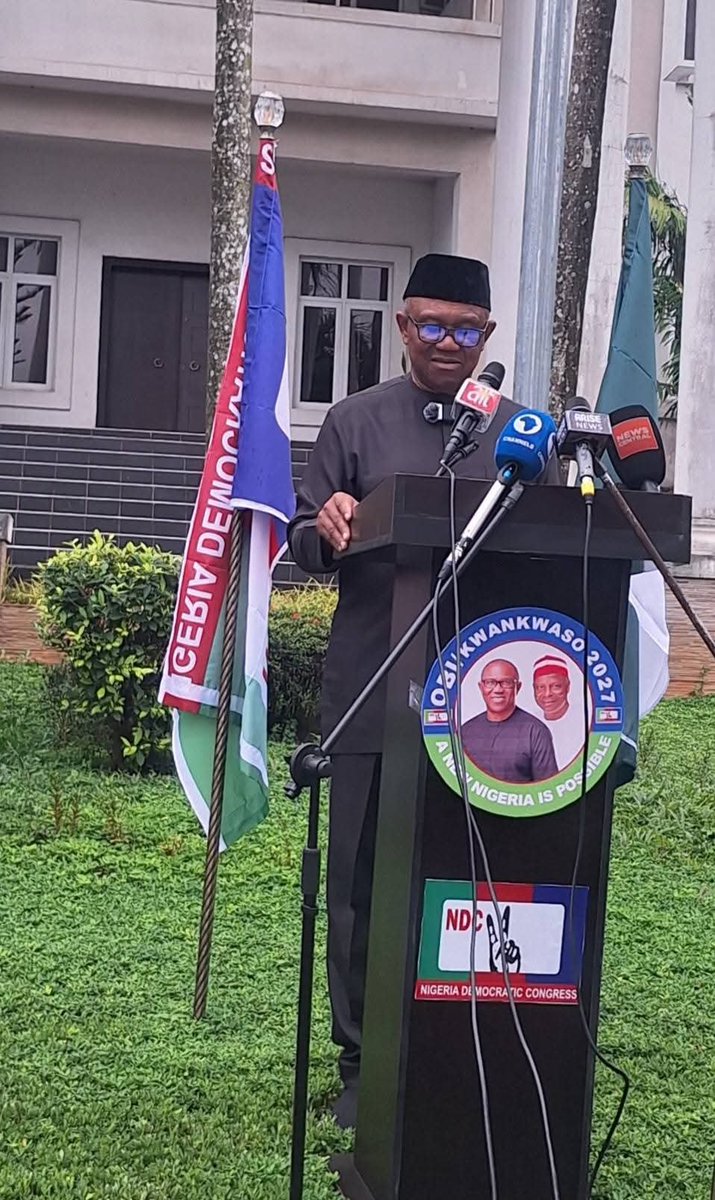
INEC INEC INEC. They distrust technology when it comes to uploading results to the IREV but they trust to use it to confuse the voters register. The people are angry everywhere. I cannot walk through an airport without people surrounding me and saying this is advance rigging and that they may have to take the laws into their hands. To avert anarchy I am calling on all the political parties to come together and demand a fully clean and transparently displayed register. I would also like the international community. especially those who support elections in Nigeria to alert INEC to consequences. It is also important to alert that this is the moral equivalence of genocide and that the International Criminal Court( ICC) be prepared to put on trial INEC officials from clerical levels to the Chairman.
They may have read Stalin that it is not those who vote but those who count the vote that determine elections but they may be about to learn that those who miscount the votes may be statistics of revolutions stoked by the anger of the people.
BAYELSA STATE: WARM CONGRATULATIONS TO SENATOR HENRY SERIAKE DICKSON
Yesterday, 30th October 2026, I travelled from Enugu to Yenagoa, Bayelsa State, to attend the homecoming ceremony honouring my dear brother and our Party’s National Leader, His Excellency, Senator Henry Seriake Dickson, while continuing our engagement with the people.
During the grand event, I reminded the good people of Bayelsa State that, after more than three years in office, President Bola Ahmed Tinubu has not considered it appropriate to spend even one night in Bayelsa State, despite spending over 260 days abroad.
I assured our numerous supporters and the people of Bayelsa State that this will not happen under my leadership. I will visit Bayelsa to hear directly from our people and respond to their concerns.
In Bayelsa, I pledged that we would begin efforts to upgrade ports throughout the Niger Delta, including those in Warri, Port Harcourt, and Calabar. We will also begin construction of the long-delayed Ibaka seaport in Akwa Ibom State and establish a new port in Bayelsa State to serve our riverine communities and the broader Niger Delta more effectively.
I reaffirmed our commitment to unite and secure the country, fight corruption, and make substantial investments in healthcare and education while lifting our people out of poverty.
The visit concluded with my joining Senator Seriake Dickson, for a traditional canoe war game and boat regatta in his hometown of Toru-Orua, Sagbama Local Government Area.
I congratulate my dear brother, Senator Henry Seriake Dickson, on his successful return home. I appreciate our party’s national and state leadership, members as well as the good people of Bayelsa for good organisation, warm reception and successful event.
A New Nigeria is POssible, and Nigeria will be OK!. -PO
A NEW AND PRODUCTIVE NIGERIA IS POSSIBLE, AND NIGERIA WILL BE OK
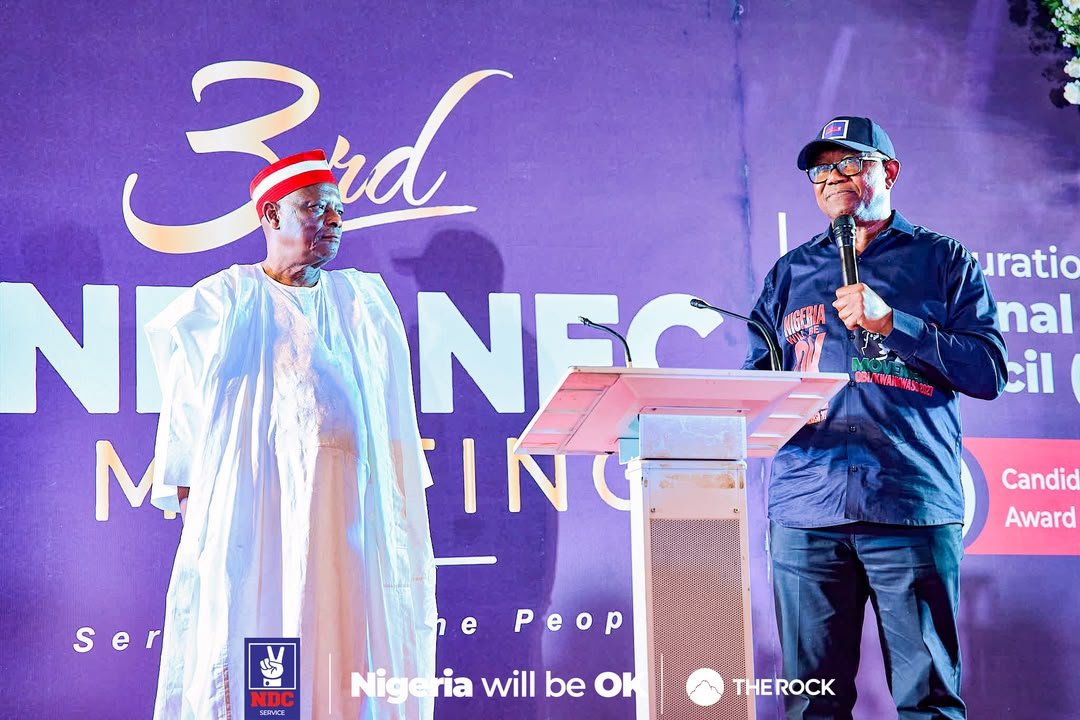
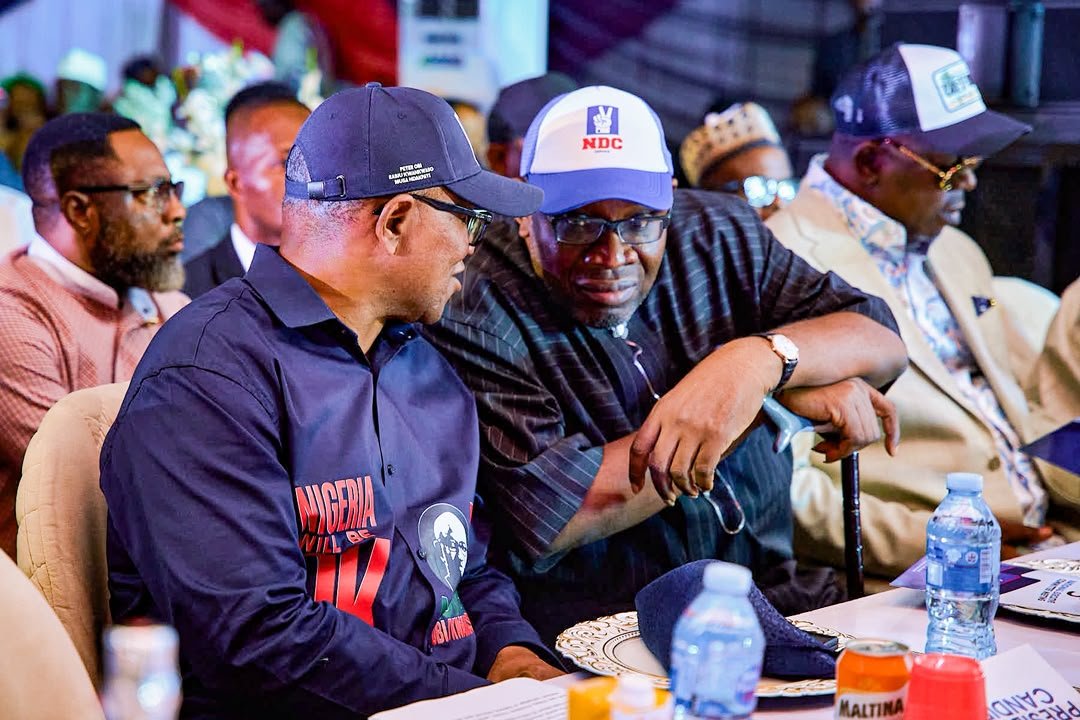
Yesterday, 26th of October, our Party, the NDC Campaign council was inaugurated in Abuja.
As part of my remarks, I told Nigerians how our richly endowed nation, the giant of Africa, is now the world’s poverty capital. Regrettably, over 140 million Nigerians are multidimensionally poor, representing more than 60% of the population.
Corruption remains widespread, while insecurity affects every part of our country. Unemployment and inequality are at record levels, and Nigerians face severe and avoidable hardship. Even with the removal of the fuel subsidy and reckless borrowing, with a debt of over ₦165 trillion, there has been little or no corresponding increase in productivity.
In the last three years, President Tinubu has foisted on Nigeria a reign of corruption and duplicity, resulting in extreme poverty. Today, President Tinubu has made history as the leader who has created the largest number of poor people in the world. This year, he has made about 16 million Nigerians extremely poor.
Just last Saturday, President Tinubu, while launching his re-election campaign in Kaduna, blamed past and opposition leaders for the hunger and poverty that have ravaged Nigerians.
What is clear is that President Tinubu does not have the competence, the capacity, the character, compassion or the commitment to solve the problems he created. He lacks the energy and the resolve to get Nigeria out of the current worsening crisis.
Under President Tinubu, despite his promise to fix electricity, Nigeria now has the lowest consumption of electricity. Without reliable power, businesses cannot expand efficiently, hospitals cannot provide dependable services, schools struggle to operate effectively, and households face additional financial burdens.
We will pursue an electricity reform programme focused on reliability, affordability, investment, and accountability.
We will work with relevant federal and state institutions, regulators, operators, and investors to address the weaknesses affecting generation, transmission, and distribution.
Under President Tinubu, Nigeria is more divided than ever, more terrorised than ever and more insecure than ever.
Under President Tinubu, Nigeria has fallen into a crisis of values, such that our budgets are no longer credible and our laws are forged. Nothing is sacred. Nothing is spared from degradation, not budgets, not laws, not institutions.
From our engagements with Nigerians across the country and all segments of society, the message is clear: Nigerians want and deserve a better, more productive nation, one in which good governance is visible, firmly established, effectively practised and embraced as part of our national culture.
I, Peter Obi, with my very dear elder brother, Rabiu Musa Kwankwaso, implore and beckon all of you, committed members of our great party, the NDC, and all Nigerians, to join us in this crusade of rebuilding our dear and most endowed nation, Nigeria.
Today, we begin a renewed journey towards a New Nigeria, united by shared purpose, founded on fairness, justice and equity, and committed to productivity, inclusion and development.
We envision a nation where government prioritises the security and welfare of its people, good governance prevails, and public officials remain accountable.
It will be a law-abiding society of healthy, skilled and educated citizens, where every child attends school and learns to read and write.
No Nigerian should live in a displaced-persons camp, and corruption must no longer weaken our institutions or the fabric of our nation.
A New Nigeria is our vision. A New Nigeria is our mission.
Corruption today has become more pervasive under President Bola Ahmed Tinubu’s APC-led government. No state institution has been spared, and since 2023, its effects have spread throughout national life.
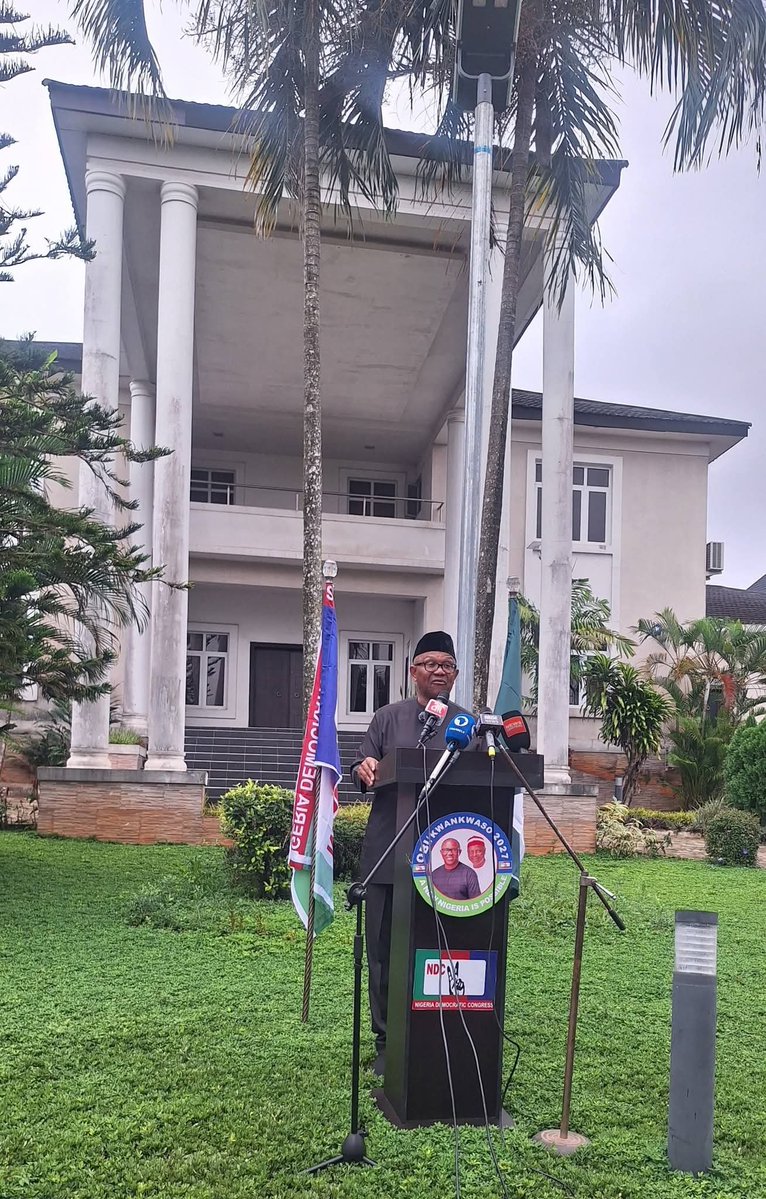
I have noted with deep concern the conduct of the ADC campaign team. The attacks directed at me, our presidential candidate His Excellency Peter Obi, and our party, the Nigeria Democratic Congress (NDC), are unnecessary and unhelpful.
Rather than focusing on presenting the competence, credibility, and capacity of their own candidate as we have consistently done by placing our credentials and record of achievements before Nigerians, the ADC Presidential Campaign Council appears intent on creating mischief against our party and ticket. This includes attempts to portray us as working for the ruling party or to suggest that we may withdraw from the race in favour of the ADC candidate at the last minute.
The ADC-PCC would be better served directing its energy toward rebutting the serious allegations levelled against their candidate by the Vice President, His Excellency Kashim Shettima, instead of targeting me and His Excellency Peter Obi.
We are aware that the ADC-PCC may try to mislead our supporters on the eve of the election by claiming that we intend to withdraw in their favour. Let me state clearly and unequivocally: we will not withdraw our candidature for the ADC or any other party. We remain confident in our capacity, competence, and readiness to lead Nigeria.
The OK ticket is neither working for nor acting on behalf of the APC or any of its candidates. We see no possibility or reason to withdraw from the presidential race in favour of the ADC candidate or any other. These claims are unfounded and should be treated as such.
The APC-led government has failed Nigerians. The ADC offers no better alternative. We believe the OK ticket presents a credible and viable option, backed by proven capacity, a strong track record, credibility, and broad support across both Northern and Southern Nigeria. It is a healing ticket committed to uniting our country and tackling critical challenges in security, education, agriculture, infrastructure, healthcare, the economy, and other key sectors.
We believe the NDC remains the most formidable and viable opposition party in the country. I therefore urge all our supporters and well-meaning Nigerians to continue working toward the victory of our great party.
Nigeria will be OK. - RMK
The Infinite Possibilities of Sport
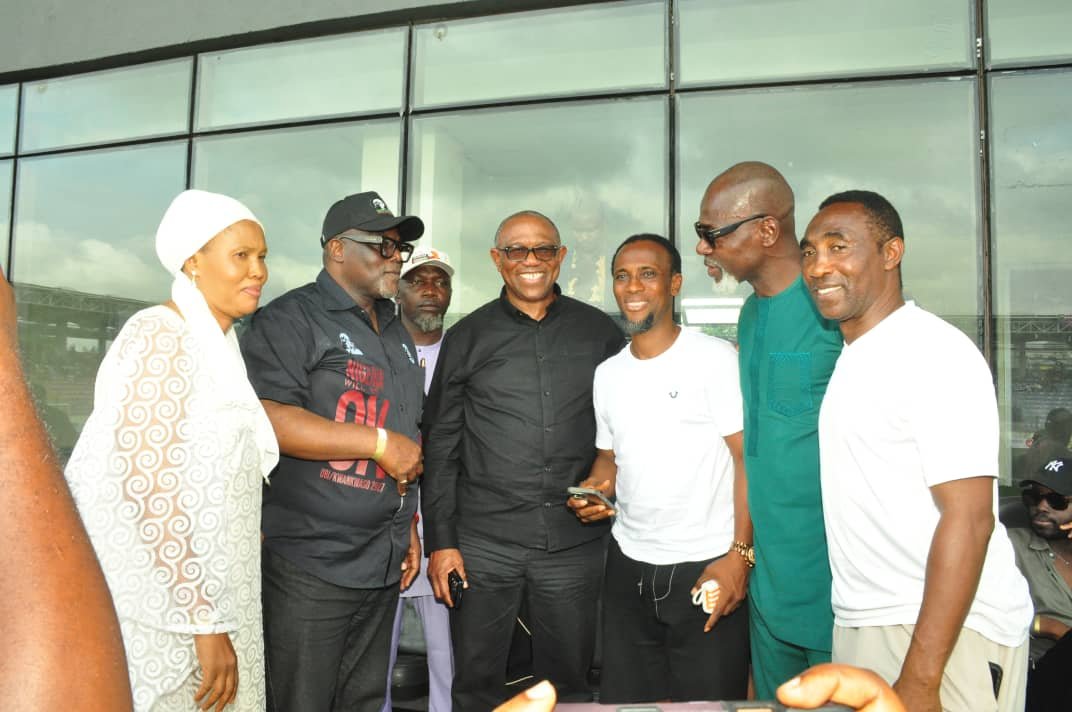
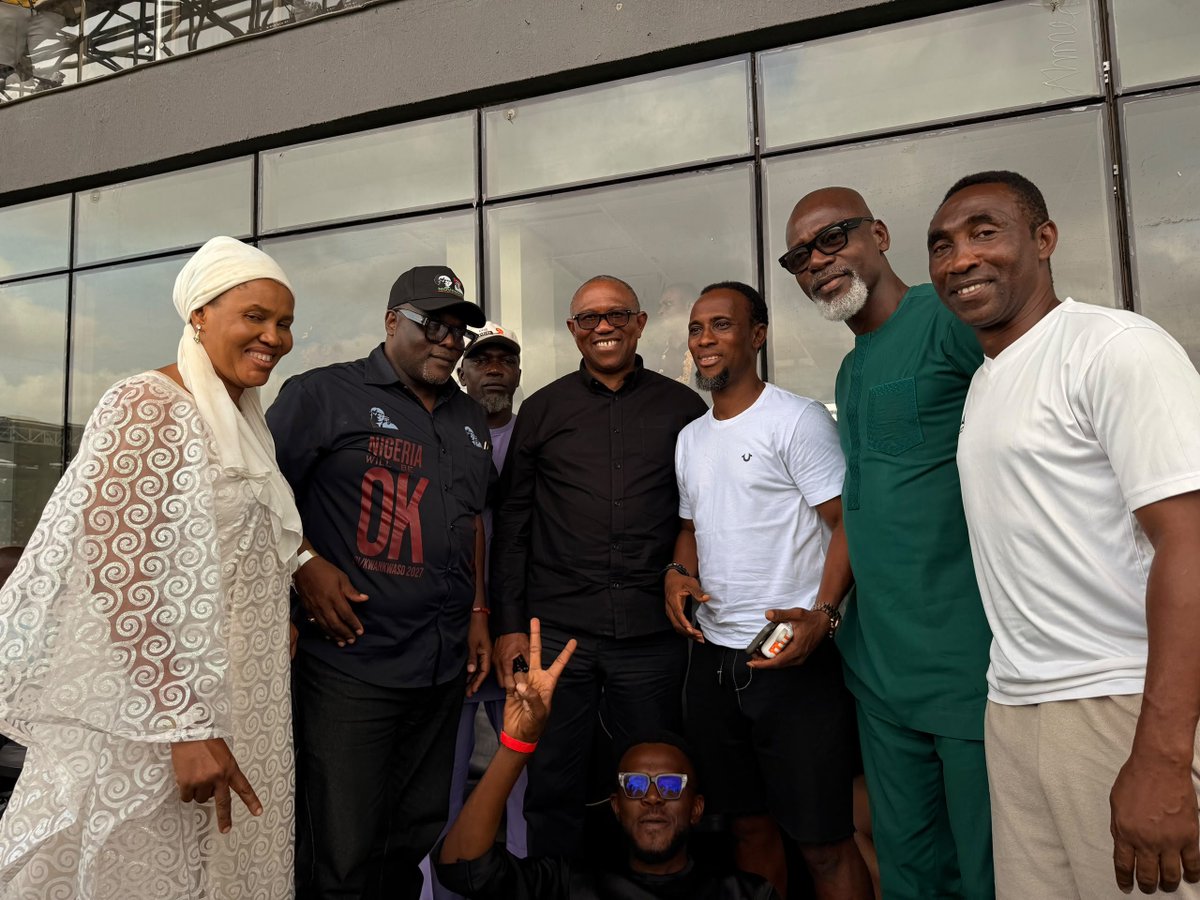
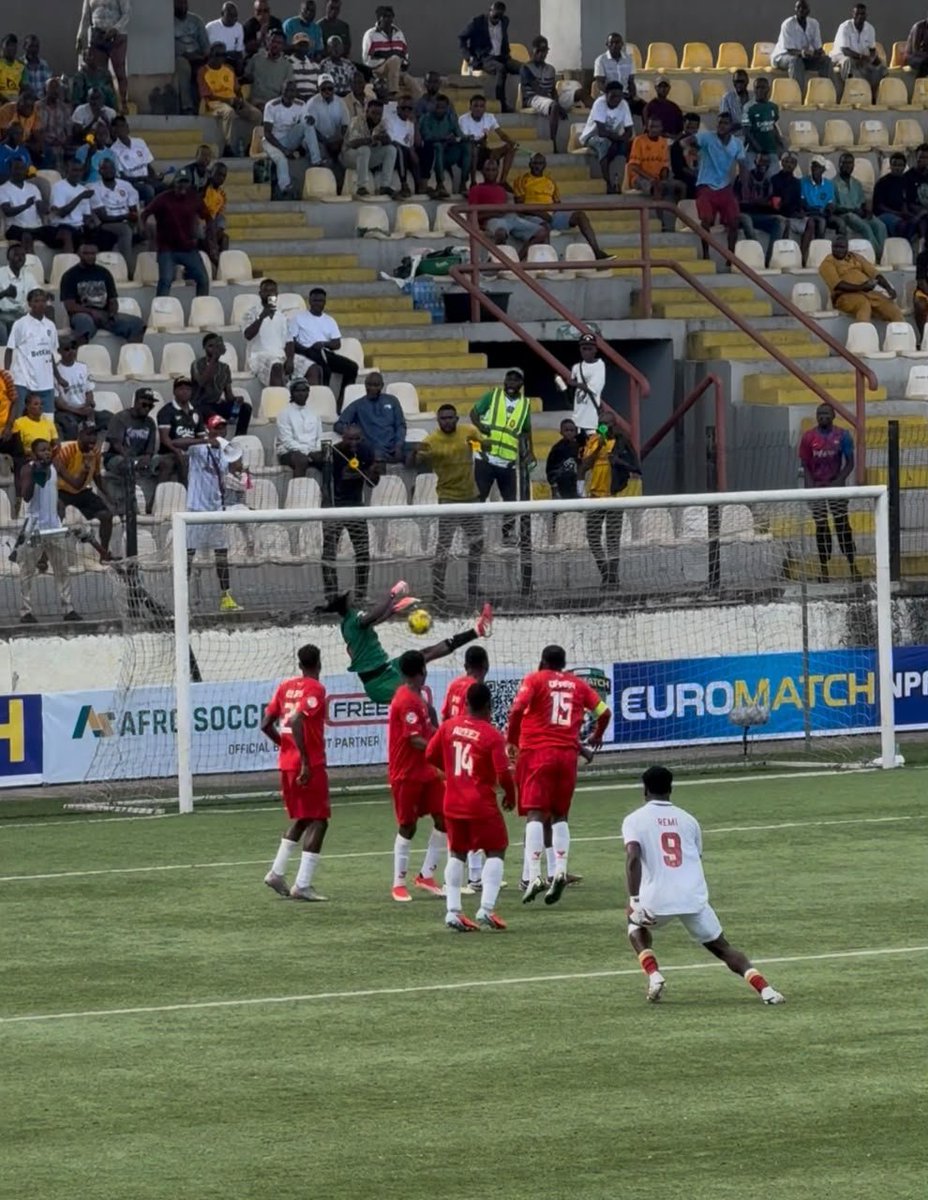
Today, accompanied by Ladipo Johnson, the NDC candidate for Lagos Central Senatorial District, and Aisha Jimoh, the NDC candidate for the House of Representatives, Lagos Island Constituency II, we went to the Onikan Stadium to watch the local league match between Enugu Rangers FC and Ikorodu City FC.
As the match unfolded, I thought about the enormous possibilities of sport and how countries such as Brazil and Jamaica have used it to engage young people, fight crime, and create opportunities.
It pained me to see how poorly we are developing sports in Nigeria. A stadium with a capacity of about 10,000 had fewer than 2,000 spectators.
Nigeria has no shortage of sporting talent. What we lack is the vision and commitment to turn that talent into opportunities for our young people.
Sport is not merely entertainment; properly developed, it can be a powerful tool for youth development, employment, and social transformation.
A new Nigeria is POssible. -PO
Yesterday, I spoke with ARISE News on the Anambra debt question and other issues affecting our nation.
In the interview, I clarified the facts surrounding the multilateral development funds accessed by Anambra State, the financial position I left behind in 2014, and the urgent need to focus on the hardships confronting Nigerians rather than on political distractions. I am Sharing this interview to correct factual details, clear all doubts, and put the issues in their proper perspective.
A new Nigeria where leaders are proud of their past is POssible. -PO
https://t.co/kvURszM91q
On the day I left office, I left more than US$150 million as the dollar component of my investment in Anambra State as governor. I hereby provide documents that can be verified with the various banks. Had it remained untouched, this investment was expected to provide Anambra State with approximately US$10 million in annual income.
Even if their assertion were accurate—which it is not—that Anambra owed US$123 million, the government could have used the US$10 million generated annually from my savings to reduce the debt. It has now been 13 years since I left office, which would amount to US$130 million. The debt should have been fully settled by now.
Had they retained the funds I left in the bank, including the compound interest on the principal and the additional income, the total would be approximately US$335 million today. If they had chosen to repay the US$92.35 million funding, the entire amount would have been covered, leaving approximately US$242 million to be reinvested. That sum would have generated about US$20 million annually for Anambra State.
Let me reiterate that, when I left office, I left Anambra State in a strong financial position—the strongest of any state in Nigeria—and I stand by that position.
Through this clarification, I wish to state categorically that I will neither engage nor trade words with anyone regarding my tenure in Anambra State. My focus will now be on issues affecting the suffering Nigerian masses, which is the reason for my presidential ambition.
A new Nigeria is POssible. -PO
ON THE ANAMBRA DEBT QUESTION
I have remained silent over the past few days because I have been grieving the loss of my very dear elder brother and friend, Chief Okey Ezeibe. However, the time has come for me to address some of the matters that have occupied public discussion in recent days.
I respectfully urge everyone to concentrate on the existential challenges confronting Nigeria and the hardships endured by its citizens, rather than on the needless distractions that have become widespread in our politics.
I wish to assure the public that I have no disagreement with my dear elder brother, Governor Soludo, or with any governor in Nigeria. I am not seeking the office of governor in any state, and I will not seek that position again, even if the Constitution is amended.
Accordingly, I appeal to governors to support whichever presidential candidate they choose while also permitting and assisting other presidential candidates and contenders for other offices to campaign freely and without interruption in their states. Ultimately, voters should be allowed to determine whom they wish to serve them.
Regarding the multilateral funding inaccurately described as “debt owed by Peter Obi” in Anambra State, I wish to state unequivocally:
As Governor of Anambra State, I did not approach any financial institution to borrow funds or issue a bond on behalf of the state. Indeed, at his farewell ceremony, the then Director-General of the DMO, Abraham Nwankwo, appointed me chairman and declared that, during his 10 years in office, I was the only state governor who had not approached him for a loan facility.
When I left office, the Anambra State Government owed no unpaid salaries, gratuities, or pensions. Neither did it owe any contractor or supplier who had completed work that the government had verified and certified.
Regarding development financing from the World Bank, these are concessionary development-support funds secured by the Federal Government for states selected by it to address specific needs. Repayment is spread over 25 to 30 years.
The Anambra State Government must therefore differentiate among three separate figures: the total amount approved for the multiyear development program; the amount Anambra State actually drew during my tenure; and the funding balance outstanding when I handed over on 17 March 2014.
The government has combined these distinct categories, added them together, and described the resulting US$123.77 million as “loans left by Peter Obi.” That is an incorrect application of public-sector accounting.
The eight facilities identified were primarily World Bank and IFAD development programs negotiated by the Federal Government, with participating states receiving access to the funds through subsidiary arrangements. They were not conventional commercial loans that I personally secured during my tenure.
This does not suggest that Anambra had no repayment responsibilities; rather, each facility must be examined in light of its approval, effectiveness, drawdown, and repayment record.
The clearest contradiction appears in the government’s own figures. It states that the original facilities amounted to approximately US$123.77 million and that US$92.35 million remained outstanding in June 2026. However, the DMO’s published records showed Anambra’s total external debt at approximately US$18 million when I began my tenure in March 2006, about US$30 million in March 2014, when I left office, and approximately US$45.15 million as of 31 December 2014, nine months after my departure.
The Anambra State Government must therefore clarify how a state whose recorded external debt was about US$30 million in March 2014 and US$45.15 million in December 2014 could supposedly have inherited US$123.77 million from Peter Obi, who left office in March of that same year.
Debunking the Phantom Debts and Ecological Loan Fallacy
My attention has been drawn to trending claims by the Anambra State Government that my administration left behind inherited debts, including a ₦2 billion ecological loan, contractor liabilities, and unpaid salaries, gratuities, and pensions. This is completely false.
We systematically liquidated historical gratuities and arrears dating back several years, amounting to over ₦35 billion. At the point of handover, the state owed nothing in salaries, gratuities, or pensions, nor did we owe anything to any contractor for projects duly executed and certified.
The ₦2 billion ecological fund in question was released barely three months before the end of my tenure for the Oko/Umuchiana erosion crisis. Despite pressure to spend the money, I refused, insisting that it should be left for my successor because government is a continuum and the funds were tied to a specific project.
The money was therefore left 100 per cent intact in First Bank, in Account No. 2018779464, with a balance of over ₦2.13 billion.
It is important to stress that funds tied to specific projects or set aside for particular purposes were not even included in the over ₦75 billion in savings we left behind.
If anybody can establish anything to the contrary, I will stop campaigning. -PO
How Hired Thugs Obstructed My Visit to Benue State
Yesterday, I attended the opening of the national campaign office of an opposition presidential candidate, Governor Seyi Makinde in Abuja. My presence was intended to demonstrate that politics can and should be conducted in an atmosphere of mutual respect and civility. As Governor of Anambra State, I made it a point during electioneering to welcome visiting opposition members personally, provided they acted within the ambits of the law.
Guided by that same commitment to decency over partisanship, I travelled to Benue this morning, arriving at approximately 9:00 a.m. on a purely humanitarian mission: to visit the grieving families affected by the horrific killings in Yelwata, where over 270 people were massacred.
Regrettably, our convoy was prevented from proceeding to the community by thugs chanting, “Peter Obi, go back.” It was deeply distressing to witness such hostility. I came to Benue not for partisan politics, but to mourn with our people, to listen to families who have lost loved ones, and to offer comfort at a moment of unimaginable sorrow. That a mission intended purely to show solidarity, compassion, and support could be obstructed in this manner is deeply alarming.
At a time when our nation should be united in grief and resolute in preventing further bloodshed, we must reject any action capable of deepening our divisions. The people of Benue - and all Nigerians - deserve to sleep without fear. They deserve to travel without fear. They deserve to cultivate their land without fear. Above all, they deserve a country where the state places the protection of human life far above political expediency.
Although we were unable to reach the community today, our thoughts and prayers remain steadfastly with the victims, their families, and the entire Yelwata community. We shall continue to work until the primary responsibility of government - the safeguarding of every Nigerian life - is restored. Until then, we cannot truly say we have built the nation our people deserve.
A New Nigeria is POssible. -PO
MY ADDRESS TO MARK THE COMMENCEMENT OF THE 2027 PRESIDENTIAL AND NATIONAL ASSEMBLY CAMPAIGNS
21 August 2026
Dear Compatriots,
Members of the Press,
Distinguished ladies and gentlemen,
Wednesday, 19 August 2026, marked the official start of the campaign period for the 2027 Presidential and National Assembly elections.
There is no doubt that this is a defining moment for our democracy. This moment gives Nigerians the opportunity to assess the records, ideas, and plans of those seeking their mandate to lead their country at a time of grave uncertainty in our rapidly changing world.
I consider myself quite privileged to be one of those seeking your mandate to deal with these challenges facing our country.
I enter this contest with one firm conviction: Nigeria can work, and Nigeria must work.
Nigeria faces several serious challenges. Some of them are indeed of existential proportions.
According to the IMF, 63%, or over 140 million Nigerians, live at or below the national poverty line, while humanitarian agencies estimate that 35 million people will need food assistance during the 2026 lean season. About 3.6 million Nigerians remain internally displaced, largely because of conflict and insecurity. Each year, millions of young people enter the labour market, yet too many struggle to find productive opportunities. Weak infrastructure, unreliable power, insecurity, and the excessive cost of doing business continue to burden households and constrain enterprise.
These are more than statistics. They reflect the daily realities of Nigerian families, farmers, workers, students, and businesses.
Yet I do not believe Nigeria lacks the ability to overcome these challenges. We have the people, resources, market, talent, and enterprise. What we must do now is turn these strengths into security, productivity, and shared prosperity.
LEADERSHIP MUST DELIVER RESULTS
My successful private-sector experience, studies in institutions of repute on policy and business matters, and my service as Governor of Anambra State have shaped my understanding of public leadership. Government must manage resources responsibly, set clear priorities, and measure the outcomes of its decisions. Public office is not a reward; it is a responsibility to the people.
In Anambra, I prioritised the foundations of long-term development: education, healthcare, infrastructure, fiscal discipline, and institutional capacity. I do not present that record as perfect, but as an experience from which Nigerians can draw their own conclusions.
Senator Rabiu Musa Kwankwaso brings a different but complementary governing experience.
As Governor of Kano State, he focused strongly on education, technical training, scholarships, infrastructure, and human-capital development. His administration’s investments in education and skills showed an understanding that the people are a state’s most important long-term resource.
Our experiences are different, but our conclusion is the same: Nigeria must invest in its people and manage public resources with discipline.
BUILDING AN ECONOMY THAT WORKS
Nigeria needs more than reactive reforms. We must focus on the questions that matter:
Are Nigerians better off than they were four years ago? Can they afford food, education, and healthcare? Can businesses produce, expand, and create jobs? Can young people find productive work? Can farmers work safely and get their produce to market?
Those Seeking to be Addressed as “His Excellency” Must Behave Excellently
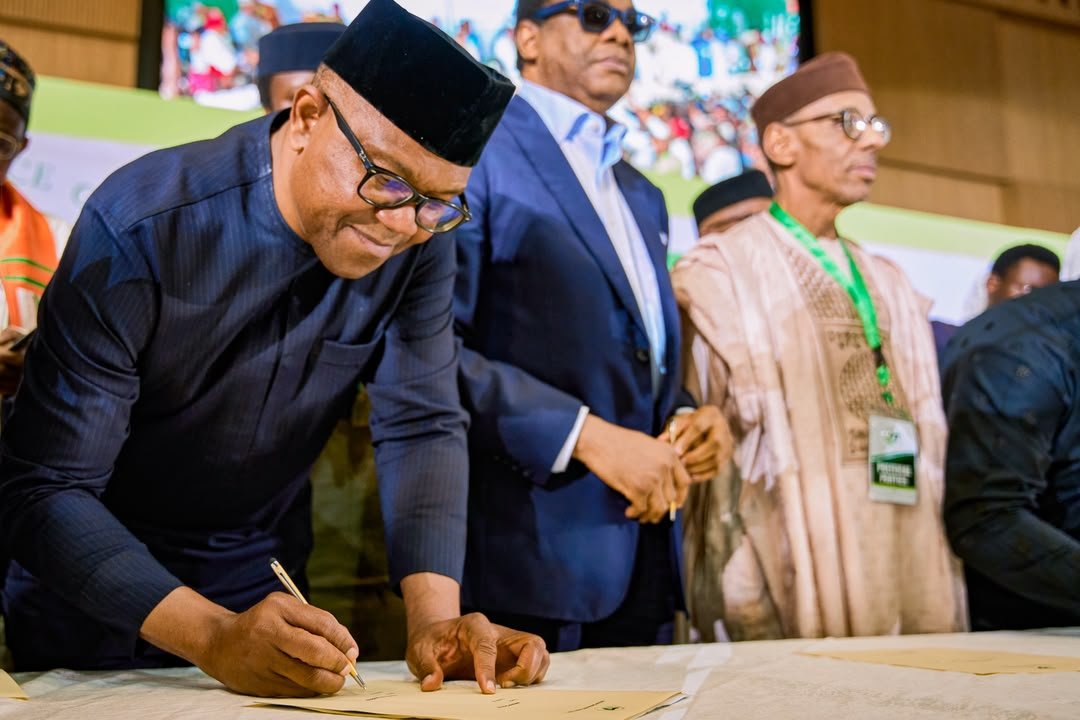
Yesterday, I joined other presidential candidates to sign the first National Peace Accord for the 2027 Presidential Elections.
My signing of the accord is a reinforcement of my continued commitment to insisting that we, as candidates, must conduct ourselves in a way that reflects the office we aspire to. Leaders must eschew all forms of violent rhetoric and rein in their followers to do the same.
The next elections must be strictly based on the issues that matter to Nigerians: unity, insecurity, pulling people out of poverty, reducing the number of out-of-school children, and restoring hope to the long-suffering people of our country.
Our supporters must see that we have all committed to free, fair, and credible elections based on issues and devoid of rancour.
Those of us wishing to be addressed as “His Excellency” must behave excellently, and, more importantly, the process of attaining public office must be excellent.
We take very seriously the commitment of INEC to free, fair, and credible elections, as well as the pledge by law enforcement agencies to remain unbiased throughout the electioneering process.
I call on my supporters to remain firm, determined, and peaceful.
A New Nigeria is POssible. -PO
Osun: While celebrating, let us also remember those who paid the ultimate price for democracy
Once again, I congratulate Governor Ademola Adeleke and the good people of Osun State on the outcome of the election and, more importantly, on safeguarding the democratic process. The people have spoken through the ballot, reaffirming the fundamental principle that power belongs to the people.
As we celebrate this success, let's not forget those who made the supreme sacrifice for our democracy during the Osun election. Our thoughts and prayers are with the families of those who lost their lives under different circumstances during the electoral period. I believe these families deserve our collective compassion, solidarity, and support. I therefore hope that the families of those who lost their loved ones will be identified and reached through visits, condolences, and appropriate compensation, irrespective of the political side to which they belonged.
Elections should be about the people, their choices, and their aspirations — not about the loss of precious lives. No political victory is worth the blood of a Nigerian.
My prayer is that our democracy will continue to mature to a point where elections no longer come at the cost of human lives, and where political differences can always be settled through issue-based campaigns and the rule of law.
May God comfort all the families who have lost loved ones and grant the departed eternal rest.
With the right conduct of elections, a New Nigeria is POssible. -PO
Osun: When the People Stand, Democracy Wins
I warmly congratulate Governor Ademola Adeleke on his re-election and the good people of Osun State on this important democratic victory. They - Osun people - have spoken with courage and clarity, reaffirming that the power to choose their leaders belongs to the people. Through his commitment to the people, compassion for their needs, and the strength of his work and achievements in office, Governor @AAdeleke_01 has earned their renewed confidence and been entrusted once again with their mandate.
I particularly commend the courageous youths of Osun who rose to the occasion and peacefully defended their democratic mandate. Their vigilance and determination demonstrate that when citizens stand firmly to protect their votes, the forces of good can overcome the forces of darkness.
The lesson from Osun is clear: democracy is strongest when citizens are alert, conscious of their civic responsibility, and determined to ensure that their votes count. Every genuine vote must be respected, and every lawful mandate must be protected.
This is also a clarion call as we approach 2027. Nigerians must remain informed, participate actively, vote, and protect their votes. The Nigerian people are the ones experiencing hunger, deprivation, insecurity, and hardship; therefore, they are also the ones with the power, through their votes, to bring about the change that will end these conditions.
I urge all political actors to place the interests of the people above partisan considerations and to embrace peace, unity, and the rule of law. Elections should never be battles of violence, but contests of ideas, competence, character, and service.
May the Osun experience strengthen our confidence in the democratic process and inspire Nigerians everywhere to remain vigilant and committed to building a just, secure, prosperous, and truly people-centred nation.
A New Nigeria is POssible. -PO
Standing with the Victims of Insecurity in Benue
Yesterday, I travelled to Otukpo-Nobi in Benue State, one of the communities recently attacked by non-state actors, where over 10 persons were either killed or went missing. In contrast, several others were injured and are currently hospitalised.
Alongside Otukpo-Nobi was another community, Efeyi-Ugboju, where over 13 persons were reportedly killed and several others injured. While we were there, we were also informed that earlier in the morning, 14 persons had been kidnapped along Ankpechi Road.
I joined the community in praying for the repose of the souls of the departed at the site of the mass burial of the victims. We also visited the hospital to empathise with the injured, show our support, and pray for their quick recovery.
Having visited, seen, and spoken with those affected, I urge the Federal Government to demonstrate a greater commitment to securing the lives and property of citizens and to closing the ungoverned spaces that have become breeding grounds for insecurity.
The primary purpose of government is the security and welfare of its citizens. When government fails in this responsibility, as it has with the people of Otukpo-Nobi, Efeyi-Ugboju, and other troubled communities, it must be reminded of that sacred obligation.
May the souls of the departed continue to rest in perfect peace. Amen. -PO
Here is a man who had the best Higher School Certificate result in the old Northern Region in 1962 and who rose through the ranks of the Catholic Church to become a Cardinal, a position that places him among those eligible to be considered for the papacy. Yet he is no ordinary cleric. He is one of Africa’s most respected churchmen, known for decades of service to peace, dialogue, scholarship, and national unity. Resorting to personal attacks against him weakens public discourse and reveals an unhealthy intolerance of criticism in today’s Nigerian political space.
Throughout history, religious leaders have challenged political authorities. Biblical prophets confronted kings, and modern faith communities continue to hold governments accountable. Nigeria has a similar tradition. The Catholic Church criticised military governments and successive civilian administrations, including those of Obasanjo, Yar’Adua, Jonathan, and Buhari. Muslim organisations have done likewise. Governments respectfully disagreed at times, but they generally recognised the right and responsibility of religious bodies to speak. Why, then, does the truth provoke such anger today?
The problem often begins when leaders surround themselves with voices that tell them only what they want to hear. Napoleon Bonaparte was reputed to have preferred hearing bad news because problems were where leadership was required. During my tenure as Governor of Anambra State, I maintained a similar philosophy. I expected cabinet members to bring me problems, not compliments, because only honest feedback could lead to solutions.
Good governance depends on truth. When governments punish truth-tellers and reward sycophants with appointments, honest advisers withdraw, sycophancy thrives, and leaders become disconnected from reality. This is our situation today.
The CBCN did not insult the President and can never do so, given the calibre of the people who make up the Conference, some of the finest among Nigerians. It gave voice to the suffering of Nigerians. The proper response was to thoughtfully address the issues raised, not attack those who raised them. When respected figures like Cardinal Onaiyekan are vilified for speaking the truth, the message sent to citizens is that silence is safer than honesty. No democracy can flourish under such a culture.
Religious leaders should continue to speak because silence in the face of suffering would betray their moral responsibility. The greatest service those around President Tinubu can render him is an honest appraisal of the situation. A leader who hears only praise will never fully understand the pain of his people or find the clarity needed to correct what is wrong.
A New Nigeria is POssible. -PO
When a Government Declares War on the Truth
President Donald Trump of America recently described Nigeria as “a now disgraced country.” The painful reality is that Nigeria’s challenges continue to deepen. Each passing day reveals deeper signs of decline, especially when a government becomes increasingly intolerant of truth and hostile to those who speak about the suffering of the people.
The Catholic Church has never functioned as an opposition party in Nigeria. Across military regimes and successive democratic administrations, the Catholic Bishops’ Conference of Nigeria (CBCN) has maintained a principled voice on national issues and the nation’s conscience, commending governments when they deserved commendation and speaking the truth whenever national conscience demanded it. Its interventions are driven by a moral obligation, rooted in Christian social teaching, to defend truth, justice, and the common good.
The same applies to Nigeria’s major religious organisations. Bodies such as Jama’atu Nasril Islam (JNI), the Supreme Council for Shari’ah in Nigeria (SCSN), the Christian Association of Nigeria (CAN), and the Nigerian Supreme Council for Islamic Affairs (NSCIA) have repeatedly raised concerns over economic hardship, inflation, and insecurity. Living among the people, religious leaders often encounter the suffering of citizens firsthand. They speak because they witness families struggling with rising food prices, unemployment, and the fear created by kidnappings and insecurity.
As leaders, we should be gracious enough to listen to people and organisations that speak the truth to us and genuinely criticise us when things are not going in the right direction. As Governor, I had the opportunity of working with a very strong Council of Traditional Rulers, led by the Obi of Onitsha, and religious bodies that consistently criticised me and offered suggestions. This contributed greatly to our success in Anambra State, especially in critical areas like education and health.
Against this background, the attacks on the CBCN, and especially on His Eminence, John Cardinal Onaiyekan, are deeply troubling. Even in 1998, when Pope John Paul II visited Nigeria and told General Abacha some hard truths, including about the incarceration of Chief Moshood Abiola, nobody vilified him.
During the inauguration of Pope Leo XIV in Rome, to demonstrate his purported commitment to and respect for the Catholic Church, President Bola Tinubu arrived in Rome days before the event, ahead of most other visiting dignitaries, including Catholics such as the U.S. Vice President, JD Vance. He participated in the liturgy, queued with other world leaders to greet the Holy Father, and displayed deep respect for the moral authority of the Church. Back in Nigeria, however, that posture has now changed completely.
What is playing out today also reveals how political leaders sometimes exploit religion and ethnicity to divide the people. Even when it was obvious that the CBCN was speaking on issues affecting Nigerians across religious and ethnic boundaries, aides to the President immediately reduced it to a “religious affair.” The question is: are insecurity, poverty, inflation, unemployment, and hardship problems exclusive to a particular faith? Do these challenges recognise religious or tribal boundaries?
The bishops merely expressed what millions of Nigerians experience daily: insecurity has worsened, poverty is deepening, inflation is crippling families, businesses are struggling, and hope is fading. These are realities echoed by religious leaders across the country, to whom successive governments gave thanks and promised to look into their observations.
Rather than address these concerns or explain the measures in place to ameliorate them, President Bola Ahmed Tinubu’s aides and supporters responded with vicious attacks, particularly against Cardinal John Onaiyekan, with little regard for his age, stature, and accomplishments.
Hunger and the Insensitivity of Mr. President
I watched with deep concern the statement made by President Bola Tinubu to the Catholic Bishops who visited his office, that there has always been hunger in Nigeria, even before he was born.
While it is true that hunger has been a part of human life and has existed in our country for decades, such a statement appears insensitive to the plight of the millions of Nigerians who face worsening economic hardship today. More importantly, we must focus on the facts and the measurable outcomes of governance.
Before the present administration assumed office in 2023, an estimated 17 million Nigerians were facing acute food insecurity, primarily caused by insecurity, armed conflict, widespread banditry, and devastating floods. Today, less than three years later, that number has risen to about 35 million Nigerians. Instead of improving the situation, the crisis has worsened significantly under the current administration.
The same trend is evident in poverty. Before this government took office in 2023, Nigeria’s extreme poverty was estimated at 87 million people. Current projections suggest that this number is approaching 140 million people, making Nigeria home to the largest population of people living in extreme poverty anywhere in the world.
No one disputes that this administration inherited serious challenges. However, leadership is measured not by the challenges inherited but by the results achieved. The government must honestly acknowledge that its response has fallen far short of what the situation demanded, with millions more Nigerians pushed deeper into poverty and hunger.
The combination of persistent insecurity, poor economic management, fiscal indiscipline, wasteful public expenditure, and inadequate investment in productive sectors has compounded the suffering of ordinary Nigerians.
A responsible government must prioritise investment in education, healthcare, agriculture, security, and small businesses while pursuing policies that create jobs, expand production, and lift people out of poverty. That remains my commitment to the Nigerian people.
A New Nigeria is Possible. PO