@Educ8Liber8@tetheredtoed1 This is another problem with it. It's not designed to be a tool for growth at all, but just a tool of judgement. How can you improve your practice if you can't even understand how your evaluation is derived?
Today I learned that several states are still using Value Added Models to evaluate educators. While I'm thankful California doesn't, here's why VAM is fundamentally flawed: 🧵
@edudissenter@VinceBoley Here's a good starting point:
https://t.co/Dp8cw2llLJ
I realize now that when I was a high school science teacher asking students to write lab reports, I needed to scaffold and model that task way more than I did.
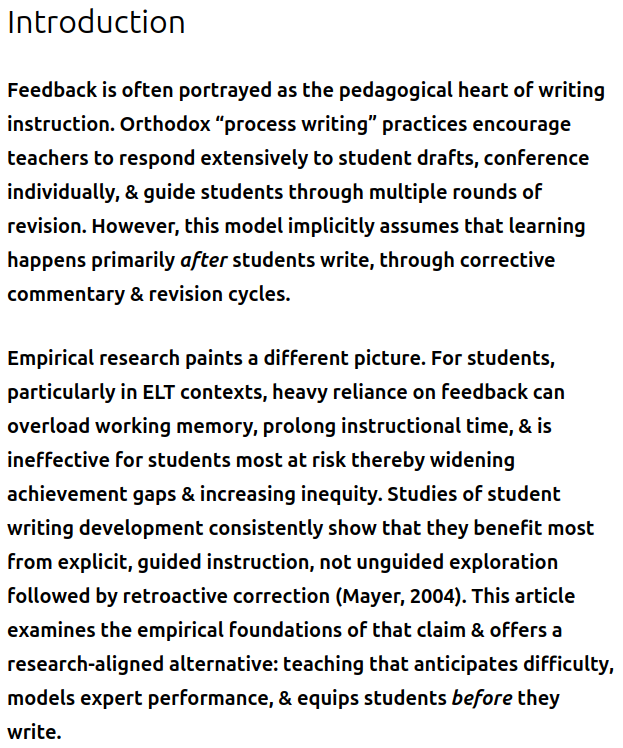
@edudissenter@VinceBoley I've come around on this. I used to think the same, but moving to the elementary level and studying evidence based approaches to teaching writing has me convinced that we need to explicitly teach writing to a large group of students ala' "The Writing Revolution" style approaches.
If we care about the science of learning and evidence-based practice, we need frameworks that evaluate actual instructional quality. We cannot rely on rigid algorithms that punish educators for the statistical noise of human development. Let's evaluate teaching, not variance.
@MrDanielBuck I believe the finding has been around for awhile. I remember talking about this 15 years ago at the start of the Measures of Effective Teaching study by the Bill and Melinda Gates foundation.
So much of what we call reading comprehension failure is basically disguised vocabulary failure. Struggling kids don't need to be taught to "find the main idea", they need to be taught more words. And explicitly.
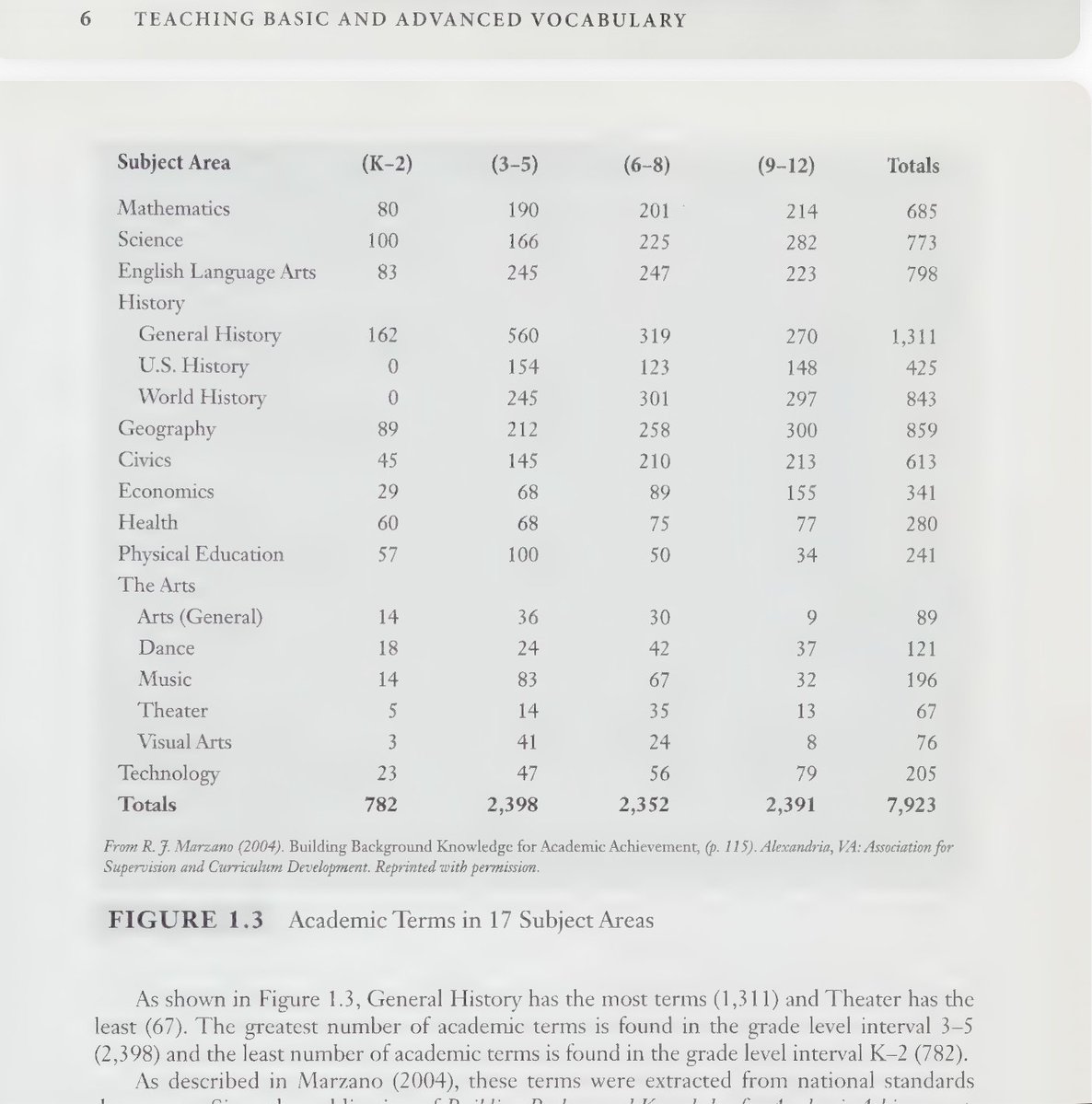
Reading Marzano's book on vocab and I'm fascinated by this table. Look at the jump from grade 2 to 3!! There is a vocabulary avalanche in grades 3-5. The jump from 782 terms to 2,398 is just massive.
Again, when students encounter so many new academic terms in grades 3-5 and struggle to "make inferences" or "identify main ideas", the problem is not “comprehension strategies”, it’s not understanding enough words!
And there is an argument to say that what we think of as ‘higher-order’ subjects are really just high-density subject vocabulary subjects, even Economics, Sciences, Advanced Math terminology etc
Again "critical thinking skills" don't help you if you don't understand what you're reading.
This is clearly disturbing. However, there is a middle way between the "Ban all screens" and "Personalized learning for all kids, 1:1 laptop at all time" crowd. AI tutoring shows a lot for promise, and so does some other EdTech.
The question is how to navigate that middle way.
This is crazy. "In a survey of American teenagers by the nonprofit Common Sense Media, one-fourth admitted they had seen pornographic content during the school day. Almost half of that group saw it on a school-issued device." https://t.co/zlfoFje4kq
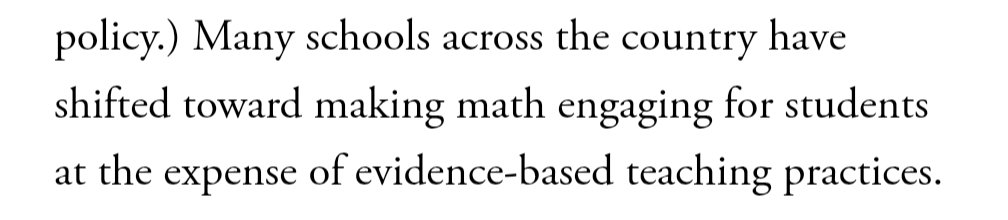
The recent UC San Diego report on the lack of math readiness in incoming freshmen is the canary in the coal mine. Until we return to evidence-based principles in math instruction, this problem is likely to get worse.
The new California Math Framework isn't the beginning of something new in math. It's the culmination of a trend that's been building for the last decade in Math Ed. It's a return to the same failed ideas of the 1989 NCTM Math Standards, and the 1960's "New Math".
I fear that the EdTech sector is looking to transform schools into Vulcan pod schools. It's a project doomed to fail.
While AI tutoring holds much promise to transform education, we will need a new model for schools that also honors our human need for belonging and meaning.
@C_Hendrick Has written a great piece on AI in Education. It mirrors many of my own thoughts. I highly recommend reading it. Some reflection that I had while reading it:
https://t.co/rOLflEBq2K
In Star Trek, Vulcans have always represented what humans could become if we grappled sufficiently with the darker sides of our nature, but they also have been a plot tool to explore what could happen if we become too technical and cold to our humanity.