Startups want to ship code fast.🏃
Anything that gets in the way is dead weight.
But under the DPDP Act, every unencrypted byte is now a ₹250 Crore liability sitting on your balance sheet.
The era of discretionary privacy is over.
Book your demo. Link in Bio.
#privacy#dpdp
Engineering teams shouldn't have to be legal experts to build secure products. 🇮🇳
DPDP compliance is a technical challenge that deserves a technical solution. Move away from manual tracking and integrate Privacy-as-Code directly into your deployment flow.
If your engineering team has to pause active feature development to manually run a DPDP internal audit, you are running a manual tollbooth inside a high-velocity code repository. 📉🇮🇳
Manual data tracking is the ultimate speed killer for Indian B2B SaaS.
#DPDP#B2BSaaS
@naomibrockwell Those 60-page walls of legal text are a massive liability forDPDP . The law demands clear, itemized consent in plain language.
We help to simplify this and do alot more!
The DPDP Act's max penalty is ₹250 crore. For an Indian startup, that's not a fine. It's an exit notice.
First enforcement: November 2026.
5-minute walkthrough of how Privacy Labs handles the whole DPDP surface for fast-moving startups.
Link: https://t.co/zE3f1lMrqy
Startups want to ship code fast.🏃
Anything that gets in the way is dead weight.
But under the DPDP Act, every unencrypted byte is now a ₹250 Crore liability sitting on your balance sheet.
The era of discretionary privacy is over.
Book your demo. Link in Bio.
#privacy#dpdp
I can't believe how few companies can just claim things.
I am talking about @HappyVisitors
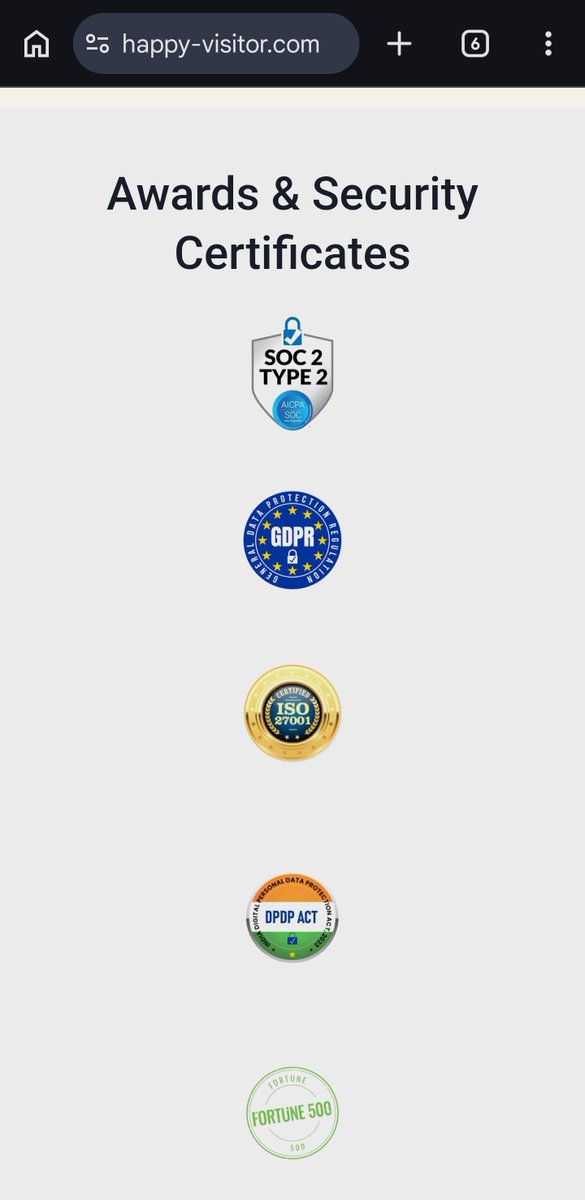
They claim they are DPDP compliant, but where is the consent mechanism?
A simple scan shows that you have tracking cookies in your website and I don't find a consent banner.
And we seriously need to talk about these 2 things:
1️⃣ Why do you need aadhar number for creating a visitor scan? Where is the purpose information? Where is the purpose minimisation?
You ask for a picture of the person. What do you do with that picture? How do you store it?
To understand that, I went to your privacy policy.
2️⃣ Your privacy policy is just a joke. Nothing is mentioned there. Where is breach management? Where is child policy? Where is your dpo information? Your privacy policy is not even 2 pages.
You seriously need to fix this, and if you are looking to work with someone for this, just contact me or @PrivacyLabsCo
The Bottom Line: Compliance isn't about avoiding a fine; it’s about building a system that can withstand an audit.
The regulators are moving from "teaching" to "enforcing."
Let’s talk in the comments. 👇
#DPDP#DataPrivacy#StartupIndia#CCPA#GlobalCompliance#PrivacyTech
Why the "Wait-and-See" approach to Data Privacy is a ₹250 Crore risk.
We’ve been tracking global regulatory trends for 2026, and the message from regulators is loud and clear: The era of "policy-based compliance" is dead.
We are now in the era of "evidence-based accountability."
3️⃣Audit Your Vendors: In 2026, regulators are coming after the entire supply chain. If your third-party vendor isn't compliant, their risk is now officially your risk.
Zerodha built it as philosophy.
DPDP is making it the baseline.
Data minimisation and informed consent gives us no more blind permissions.
Users now won’t just trust, they’ll verify.
I don't use net banking apps on my phone because the mandatory permissions they ask for make no sense.
Why does a banking app need access to my SMS, phone, contacts, etc., in the name of security, when not seeking invasive device permissions is, in fact, the global benchmark for cybersecurity. This is called the Principle of Least Privilege (PoLP).
“Don't do unto others what you don't want done unto you” has been at the heart of the Zerodha philosophy.
This is exactly why we've built Zerodha the way we have. Kite asks for ZERO permissions on mobile, for instance, and this is one of the big reasons why millions of people trust us. What has enabled us is SEBI's mandatory strong two-factor authentication framework strike the right balance between security and privacy.
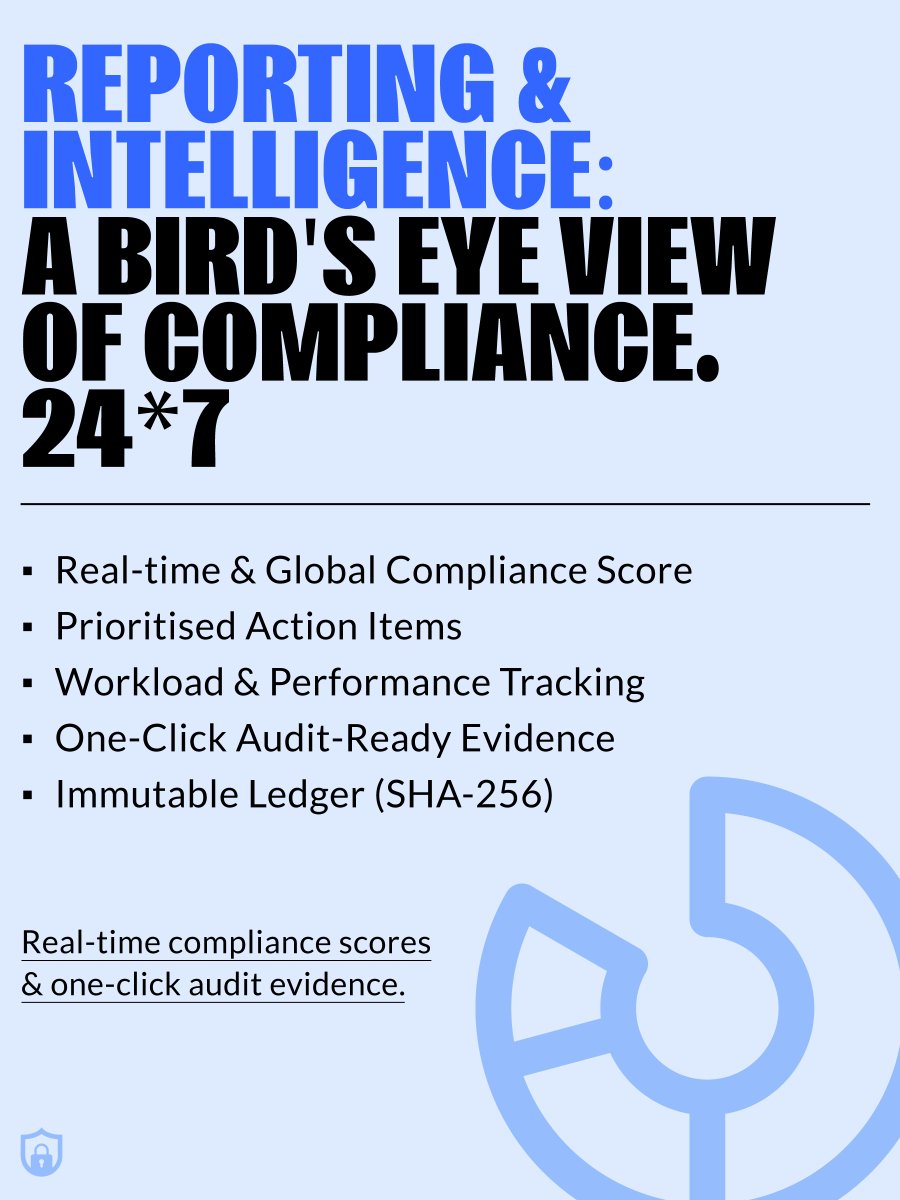
Businesses (like @razorpay) need to recognise this not as a challenge, but as an opportunity to double down on trust. That’s really the business Privacy Labs is in, helping startups handle data in trustworthy ways, and be able to prove it at the click of a button.
When @priteshlkhani started the conversation around app permissions and privacy, we got thinking about what this says about changing consumer mindset. People view data with a lot more propriety now. They understand the trade-off, and want to set some of their own terms.