🦔A researcher invented a fake eye condition called bixonimania, uploaded two obviously fraudulent papers about it to an academic server, and watched major AI systems present it as real medicine within weeks.
The fake papers thanked Starfleet Academy, cited funding from the Professor Sideshow Bob Foundation and the University of Fellowship of the Ring, and stated mid-paper that the entire thing was made up. Google's Gemini told users it was caused by blue light. Perplexity cited its prevalence at one in 90,000 people.
ChatGPT advised users whether their symptoms matched. The fake research was then cited in a peer-reviewed journal that only retracted it after Nature contacted the publisher.
My Take
The researcher made the papers as obviously fake as possible on purpose. The AI systems didn't catch it. Neither did the human researchers who cited it in real journals, which means people are feeding AI-generated references into their work without reading what they're actually citing.
I've covered the FDA using AI for drug review, the NYC hospital CEO ready to replace radiologists, and ChatGPT Health launching this year. All of that is happening in the same environment where a condition funded by a Simpsons character and endorsed by the crew of the Enterprise was being presented as emerging medical consensus. The people making these deployment decisions seem to believe the pipeline from research to AI to patient is more supervised than it actually is. This experiment suggests it isn't supervised much at all.
Hedgie🤗
https://t.co/8Kg8FOrgHW
Dr. Fei-Fei Li just called out the biggest blind spot in the entire AI industry.
We have been building half of human intelligence. And calling it the finish line.
Li: “If you look at human intelligence, it pretty much boils down to two buckets.”
The first bucket is language. Symbolic reasoning. Communication. The ability to think in words and abstractions.
That’s what every major AI lab has spent the last decade building.
The second bucket is the one the industry has almost entirely ignored.
Li: “We call that in AI spatial intelligence.”
How humans and animals perceive, navigate, and interact with the three-dimensional physical world. How we reach for objects. How we move through space. How we build and manipulate physical reality.
From painting masterpieces to constructing the pyramids, non-verbal spatial intelligence is what actually shapes the world.
Language describes reality. Spatial intelligence acts on it.
And the gap between those two things is the gap between a chatbot and a robot.
Li: “When this technology is ready, the robotic revolution is gonna start. We’re already seeing that trend.”
Every robot is a moving agent. Every moving agent requires spatial intelligence to function in the real world.
The humanoid robots being deployed in factories right now are hitting the ceiling of what language models alone can power.
Spatial intelligence is the unlock.
But Li didn’t stop at robotics.
Li: “From a geopolitics point of view, this is part of the technology that goes straight into weapons.”
Autonomous drone swarms. Battlefield navigation. Physical target acquisition without human oversight.
Every military application of AI that operates in the real world runs on spatial intelligence.
The nation that masters the transition from static text to dynamic three-dimensional perception doesn’t just win the software race.
It commands the physical battlefield.
The AI arms race just broke out of the data center.
It’s operating in three dimensions now.
European Commission plans to introduce its Data Act on Feb. 23.
Data is at the core of the digital economy and an essential resource to secure the green and digital transitions. The volume of data generated by humans and machines has been increasing exponentially.
Meta's threat to close down Facebook and Instagram in Europe backfires as EU leaders embrace shutdown: 'Life would be very good without Facebook’ https://t.co/HoIMqGybbX
Algorithmic impact assessment: a case study in healthcare. Yesterday, @AdaLovelaceInst published a proposal for #AIA in a healthcare contexts. https://t.co/jpRoAm6huQ
I am so excited to be part of this amazing @WIRED@WiredUK w/ @sethuvij documentary series on AI & autonomous robots in health, transport & the workplace. How can we protect privacy in a connected world? Who is liable if the system fails? Is the law ready for autonomous systems?
#Privacy: France’s highest administrative court today rejected Google’s request to have a €100 million privacy fine annulled. The decision is a major win for the CNIL and confirms the regulator can enforce the #ePrivacy directive in France. https://t.co/FUsj5da492
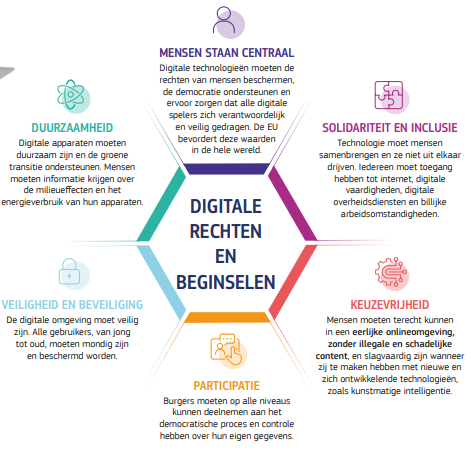
Iedereen in de EU moet optimaal kunnen profiteren van de #digitaletransformatie. Digitale technologieën moeten onze rechten beschermen, democratie ondersteunen en ervoor zorgen dat digitale actoren veilig & verantwoord handelen.
#DigitalEU
https://t.co/y3e33uFJ3P
Zojuist de Nederlandse Privacy Award gewonnen! Volgens de jury is Quodari 'een eerlijk alternatief voor de Big Tech'. Een zeer mooie erkenning! #npc2022#dataprivacyday#ownyourdata