𝐃𝐚𝐭𝐚 𝐂𝐚𝐫𝐞𝐞𝐫 𝐋𝐚𝐮𝐧𝐜𝐡𝐩𝐚𝐝: https://t.co/6lUcIyxLM9 If you have any questions or need clarification about the course, feel free to reach out at [email protected].
We have limited seats available for LIVE discussions, allocated on a first-come, first-served basis. If you’re genuinely interested, make sure to reserve your spot soon. Thanks, and happy learning!
Happy Guru Poornima. These are the few educators which turned my journey inside out.
From priya maam sql case study to getting an ai intern to learning tRPC and now agents.
It is fun and all of this because of them.
@Hiteshdotcom@piyushgarg_dev@PriyaBhatiaDS
And @abhijitWebDev for solving my silly doubts.
Final year ahead!
Time to revise DSA and practice more.
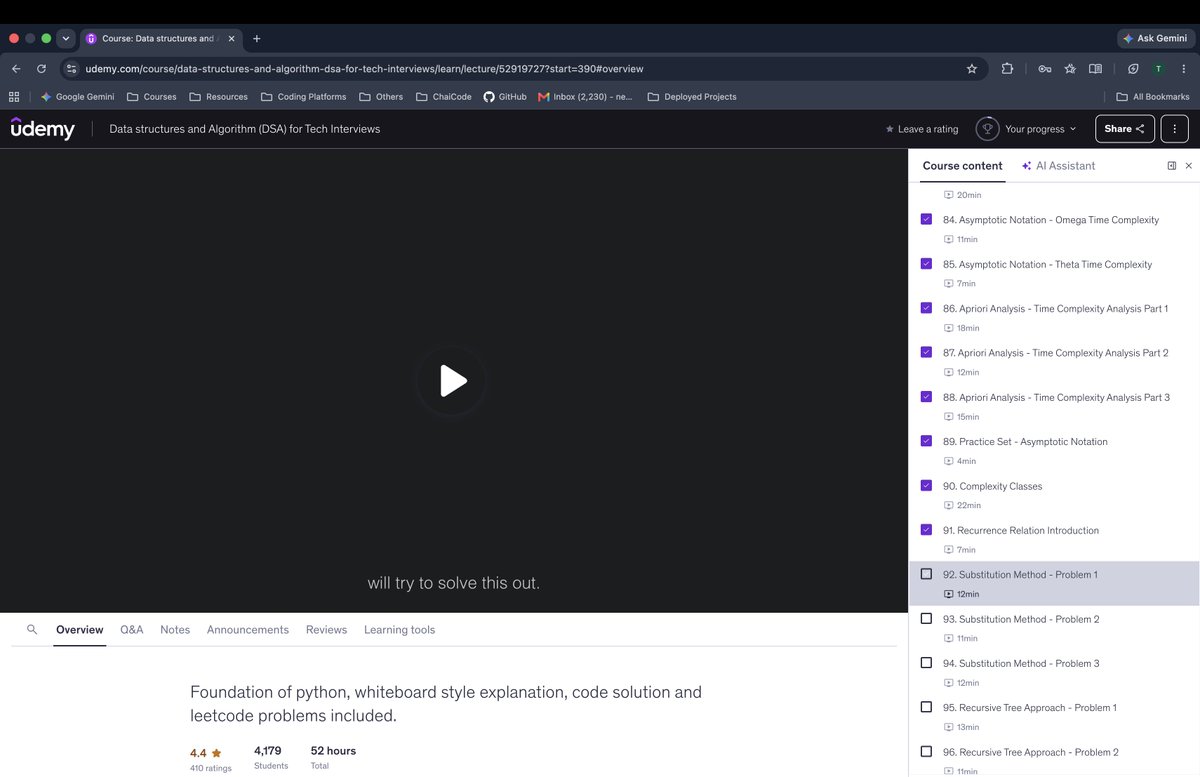
https://t.co/hTWO9R7GGE and @PriyaBhatiaDS DSA udemy course is something I will follow along for my prep. And also got the interview prep course from https://t.co/cil6hhXpD1 completed the CNS part of it. Amazing content.
From the days of DS cohort whenever I want to learn something related to math stuff, priya maam YT is my go to.
@Hiteshdotcom thanks sir for this course too.
@ChaiCodeHQ@nirudhuuu
🚀 Episode 5 of the AI Engineering Series is LIVE!
RAG Discussion: https://t.co/yihQceEou7
Interested in the AI Engineering LIVE Cohort 2026? Get priority access + exclusive launch offers here:
📝 https://t.co/w2BecXn7Ws
We often assume that once an LLM is connected to our application, the job is done.
In reality, that's where the real engineering begins.
A language model is incredibly powerful, but it is also unpredictable. The same question can produce different styles, different levels of detail, or sometimes even responses that don't align with what your application actually needs.
Imagine building:
• A customer support assistant who suddenly becomes overly creative.
• A financial assistant who starts making assumptions.
• A coding assistant that ignores your output format.
The model isn't "wrong."
It simply wasn't guided well enough.
This is why controlling the behavior of an LLM is one of the most important skills for an AI Engineer.
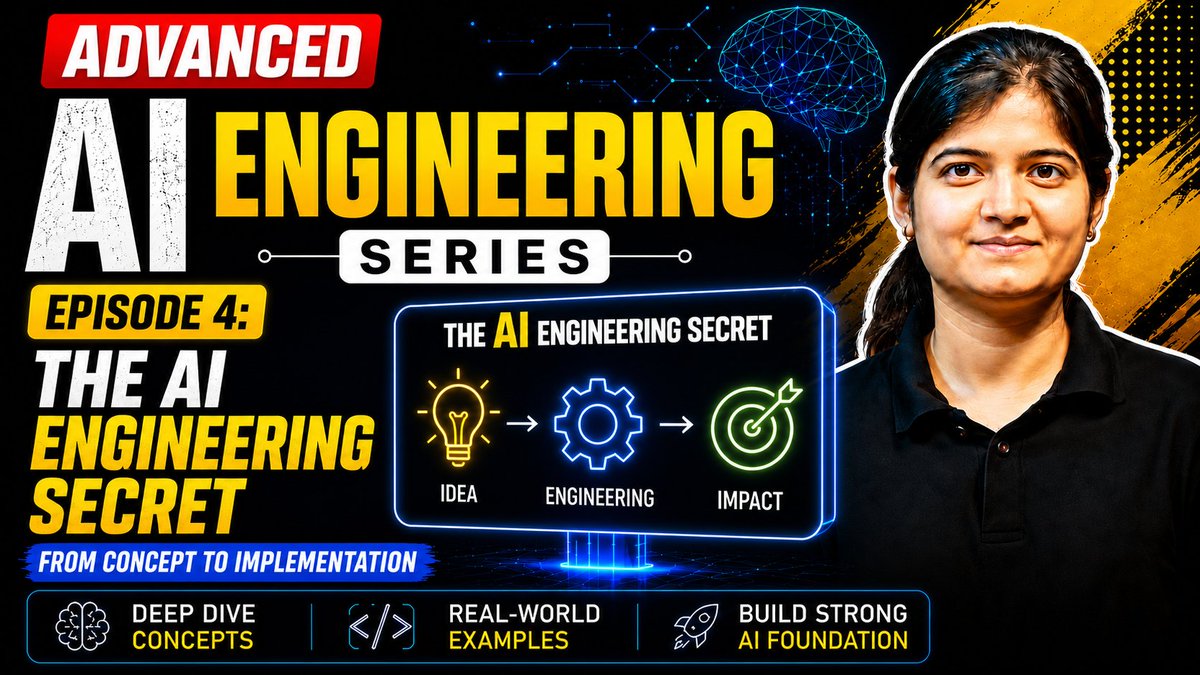
In Episode 4: The AI Engineering Secret, I take a practical deep dive into how Prompt Engineering helps us shape model behavior, improve consistency, and build AI systems that are actually reliable in production.
In this episode, you'll learn:
✅ Why controlling LLM behavior matters
✅ The limitations of giving vague prompts
✅ Practical Prompt Engineering techniques that improve consistency
✅ How these techniques become the foundation for building production-ready AI applications
If you're learning AI Engineering, don't treat prompt engineering as just "writing better prompts."
Think of it as designing the behavior of your AI system.
🎥 Watch the latest episode here: https://t.co/qmLmTv8CsJ
I'd love to know your thoughts after watching.
There was a time when building AI meant engineering features carefully, selecting the right algorithm, and spending weeks improving model performance.
Then everything changed.
Large Language Models shifted the conversation from "How do we train a model?" to "How do we teach a model to think through instructions, reason over context, and solve real-world problems?"
But here's what I noticed.
Many learners jump straight into using APIs or frameworks without truly understanding what is happening behind the scenes. They can build demos, but when something breaks or doesn't perform well, they struggle to explain why.
That is exactly why I created 𝐄𝐩𝐢𝐬𝐨𝐝𝐞 𝟑 of my Advanced AI Engineering Playlist.
In this episode, we move beyond the buzzwords and build a strong conceptual foundation for LLMs.
Here's what you'll learn:
• What exactly is an LLM?
• Why scaling data and parameters changed the AI landscape
• The complete architecture of an LLM from input to output
• How tokenization, embeddings, attention, and Transformers work together
• The lifecycle of an LLM from pretraining to inference
• Why models like GPT, Gemini, Claude, and Llama are so powerful
My goal with this playlist has been simple.
Not to help you memorize concepts.
But to help you understand them so deeply that building AI systems becomes intuitive.
Whether you're a Data Scientist, ML Engineer, AI Engineer, or someone preparing for the next generation of AI interviews, this episode will give you the foundation that every AI professional should have.
The journey has just begun, and the next episodes will become even more hands-on as we move towards production-grade AI Engineering.
🎥 Episode 3 is now live on YouTube.
Here's the link: https://t.co/t6bjz7pyZv
#AI #ArtificialIntelligence #LLM #GenerativeAI #MachineLearning #DataScience #AIEngineering #Transformers #OpenAI #Python #LearningInPublic #TechEducation
There was a time when I could build Machine Learning models, explain Deep Learning architectures, and even implement RNNs and LSTMs with confidence.
But every time I opened a research paper on Large Language Models, one word kept appearing everywhere.
𝐓𝐫𝐚𝐧𝐬𝐟𝐨𝐫𝐦𝐞𝐫.
At first, it looked intimidating.
Attention, Multi-Head Attention, Positional Encoding, Residual Connections, Layer Normalization... It almost felt like everyone understood it except me.
Then I decided to stop memorizing diagrams and start understanding the mathematics behind every single block.
That changed everything.
I realized that Transformers are not magic. They are beautifully engineered mathematical concepts working together to solve one problem:
How can a model understand relationships between words, no matter how far apart they are?
That's exactly why I created Episode 2 of the Advanced AI Engineering Series.
🎥 Transformers Explained from Scratch | Complete Architecture, Mathematics & Implementation
In this episode, we build the entire intuition from the ground up.
✅ Why RNNs and LSTMs reached their limits
✅ The intuition behind Self-Attention
✅ Query, Key, and Value explained in the simplest possible way
✅ The mathematics behind Attention Scores
✅ Multi-Head Attention step by step
✅ Positional Encoding and why order matters
✅ Encoder and Decoder architecture
✅ Residual Connections and Layer Normalization
My goal was simple.
Not just to teach you how Transformers work, but to help you understand why every component exists.
Because once the Transformer architecture becomes clear, understanding modern models like GPT, BERT, Llama, Gemini, Claude, DeepSeek, and many other LLMs becomes significantly easier.
If you're serious about becoming an AI Engineer in 2026, this is one of the most important concepts you can invest your time in.
I hope this episode helps you connect the mathematics, intuition, and implementation into one complete picture.
The journey into AI Engineering has just begun.
Happy Learning! 🚀
#AI #ArtificialIntelligence #Transformer #LLM #MachineLearning #DeepLearning #GenerativeAI #Python #DataScience #AIEngineering #OpenAI #TechEducation
A few years ago, whenever I found a job opening that matched my skills, I would do what most people do...
📄 Open my resume
📄 Change the company name in the objective section
📄 Hit "Apply."
And then...
Silence.
No interview calls.
No recruiter responses.
No feedback.
At that time, I thought the problem was my experience.
Later, I realized something important:
The problem wasn't always the candidate.
The problem was often the resume.
Most applicants send the same resume to 50 different companies and expect different results. But recruiters are looking for candidates who align with their specific job requirements.
Today, with the help of ChatGPT, customizing your resume for every job application can take minutes instead of hours.
In my latest YouTube video, I have shown:
✅ How to analyze a Job Description using ChatGPT
✅ How to identify the right keywords recruiters are searching for
✅ How to customize your resume for each application
✅ How to improve your ATS score quickly
✅ Common mistakes that lead to resume rejection
The goal is not to "game" the ATS.
The goal is to present your existing skills in a way that clearly matches what the employer is looking for.
A small change in your resume can sometimes make a huge difference in your interview conversion rate.
New Video: "How to Customize Your Resume for Every Job Using ChatGPT | Increase ATS Score Fast🚀"
Click here to watch: https://t.co/hX7aSRE2Zu
Watch it and start applying smarter, not harder.
#ChatGPT #ResumeTips #ATS #JobSearch #CareerGrowth #DataScience #ArtificialIntelligence #MachineLearning #CareerAdvice #InterviewPreparation #TechCareers
One of the most common questions I receive from learners is:
"𝐇𝐨𝐰 𝐜𝐚𝐧 𝐈 𝐢𝐦𝐩𝐫𝐨𝐯𝐞 𝐦𝐲 𝐫𝐞𝐬𝐮𝐦𝐞?"
"𝐇𝐨𝐰 𝐜𝐚𝐧 𝐈 𝐢𝐧𝐜𝐫𝐞𝐚𝐬𝐞 𝐦𝐲 𝐀𝐓𝐒 𝐬𝐜𝐨𝐫𝐞?"
"𝐖𝐡𝐲 𝐚𝐦 𝐈 𝐧𝐨𝐭 𝐠𝐞𝐭𝐭𝐢𝐧𝐠 𝐢𝐧𝐭𝐞𝐫𝐯𝐢𝐞𝐰 𝐜𝐚𝐥𝐥𝐬 𝐝𝐞𝐬𝐩𝐢𝐭𝐞 𝐡𝐚𝐯𝐢𝐧𝐠 𝐭𝐡𝐞 𝐫𝐞𝐪𝐮𝐢𝐫𝐞𝐝 𝐬𝐤𝐢𝐥𝐥𝐬?"
A few days ago, a learner shared their resume with me.
The skills were there.
The projects were there.
The effort was clearly visible.
Yet the resume struggled to get shortlisted.
The problem wasn't the candidate.
The problem was that the same resume was being sent to every company.
Today, companies don't just look at resumes. They compare them against specific job descriptions. A resume that works well for one role may not perform well for another.
This is where things get interesting.
With the rise of GenAI tools, we can now customize resumes intelligently based on the target company and job description. Instead of spending hours manually editing resumes, we can leverage AI prompts to identify gaps, optimize keywords, align experiences, and improve ATS compatibility.
In tomorrow's video, I will share:
✅ How ATS systems actually evaluate resumes
✅ Why one generic resume is hurting your applications
✅ How to use GenAI tools to customize resumes for different job descriptions
✅ Prompting techniques that can significantly improve resume quality
✅ Practical examples you can implement immediately
📅 Video Release: Tomorrow
⏰ 1:00 PM IST
If you're actively applying for jobs, internships, or planning a career switch, this video could save you countless hours and help you approach applications more strategically.
Also, a quick update for everyone following our learning journey: Today is the 𝐋𝐀𝐒𝐓 𝐃𝐀𝐘 to avail 𝟑𝟎% 𝐎𝐅𝐅 on all courses.
Our recently launched Data Career Launchpad program has completed the Excel module, and we have now started the SQL module LIVE with learners.
If you're looking to build strong foundations in data analytics and data science through structured learning, live sessions, projects, and mentorship, this is a great time to join the journey.
Looking forward to seeing you all in tomorrow's premiere!
#DataScience #ResumeBuilding #ATS #ArtificialIntelligence #GenAI #ChatGPT #CareerGrowth #JobSearch #DataAnalytics #SQL #Learning #CareerDevelopment
🚀 Kickstart your DSA journey at just ₹399! 💻✨
Get "Data structures and Algorithm (DSA) for Tech Interviews " on Udemy with this exclusive coupon! 🔥
🎟️ Code: CHAIJUN02
⏳ Valid for 5 days only!
Don’t miss out—enroll now!
#DSA#Python#UdemyCourse#BeginnertoAdvance #HiteshChoudhary #Priyabhatia
"𝐏𝐫𝐢𝐲𝐚 𝐌𝐚'𝐚𝐦, 𝐈 𝐚𝐦 𝐧𝐨𝐭 𝐟𝐫𝐨𝐦 𝐚 𝐜𝐨𝐝𝐢𝐧𝐠 𝐛𝐚𝐜𝐤𝐠𝐫𝐨𝐮𝐧𝐝. 𝐂𝐚𝐧 𝐈 𝐫𝐞𝐚𝐥𝐥𝐲 𝐛𝐮𝐢𝐥𝐝 𝐩𝐫𝐨𝐣𝐞𝐜𝐭𝐬 𝐢𝐧 𝐃𝐚𝐭𝐚 𝐒𝐜𝐢𝐞𝐧𝐜𝐞?"
Over the years, I have received this question hundreds of times from aspiring data scientists.
And honestly, I understand where this fear comes from.
When you open LinkedIn, YouTube, or any job portal, it often feels like everyone around you has a Computer Science degree, years of coding experience, and a strong technical foundation.
As a result, many talented learners convince themselves that Data Science is not meant for them.
But what if that belief is completely wrong?
Today, I am going 𝐋𝐈𝐕𝐄 on my YouTube channel with one of my learners who came from a non-coding background.
When this learner joined the batch, they had the same doubts that many of you have today:
Will I be able to understand programming?
Will I be able to build projects?
Will companies even consider my profile?
Instead of letting these doubts stop them, they focused on learning consistently, practicing regularly, and trusting the process.
Today, they are ready to showcase an exciting NLP project live in front of all of you.
This session is much more than a project demonstration.
It is proof that your background does not decide your future.
Your willingness to learn does.
If you are someone who has ever thought:
"I am not from coding."
"I started late."
"I don't think I can do this."
Then this LIVE session is for you.
Apart from understanding the NLP project, you will also get inspiration for a practical project that can strengthen your resume and help you stand out during interviews.
Sometimes, seeing someone who started from a similar position achieve something meaningful is all the motivation we need to take the first step.
See you all in the LIVE session today at 8:00 PM IST.
#DataScience #NLP #MachineLearning #ArtificialIntelligence #CareerGrowth #DataScienceProjects #LearningJourney #TechEducation #DataScienceCommunity #GenerativeAI #ProjectBasedLearning #CareerTransition
Every month starts with a promise.
📚 "This month, I'll finally learn SQL."
📊 "This month, I'll start Data Science."
💡 "This month, I'll complete that DSA course sitting in my bookmarks."
But then life happens.
Work gets busy.
Family responsibilities take over.
Unexpected commitments appear.
And before we realize it, another month has passed without taking that one step we promised ourselves.
I've seen this happen with thousands of learners over the years, and honestly, the biggest challenge is rarely intelligence or capability.
It's simply getting started.
That's exactly why, for the first week of June, I have decided to offer 30% OFF on all courses available on TechForAllWithPriya.
Not because a discount changes your career.
But because sometimes a small push is all we need to commit ourselves.
My request is simple:
✅ Pick one skill.
✅ Enroll in one course.
✅ Promise yourself that you'll invest in your growth this month.
One month of consistent learning can create opportunities that impact the next several years of your career.
And if this initiative helps you, I have a small favor to ask.
Share your learning journey on LinkedIn, Instagram, or Twitter/X. Let more people know that investing in skills is still one of the highest-return decisions anyone can make.
If you do share your journey, please tag me. I genuinely enjoy seeing learners take action and grow.
If the response is positive and my budget allows, I'll try to run such initiatives more often to make learning accessible to even more people.
🎯 Coupon Code: LEVELUP30
🎯 Offer Valid: First Week of June
🎯 Website: https://t.co/dPZZ9SEPZ7
The best time to start was yesterday.
The second best time is today.
#upskillyourself #lifelonglearning #growthmindset #careergrowth #professionaldevelopment #continuouslearning #learningjourney
Today, after quite some time, I don't have any meetings lined up for the evening. I'm thinking of going LIVE tonight at 8:00 PM IST and conducting a session on: "How Top Data Scientists Perform EDA in the GenAI Era" In this session, I'll take a real-world House Price Prediction dataset and demonstrate: ✅ Advanced Exploratory Data Analysis (EDA) techniques ✅ How experienced data scientists think during analysis ✅ Feature engineering strategies that actually matter ✅ Practical use of GenAI tools to accelerate EDA and insight generation ✅ Modern workflows used in today's data science industry Before I finalize the session, I'd like to know how many of you would be available to join a LIVE discussion at 8:00 PM IST tonight. If enough learners are interested, I'll go ahead with the session. Otherwise, I might take the evening off and enjoy a well-deserved break. Also, feel free to suggest: • Better topics you'd like me to cover • Preferred timings for LIVE sessions • Any specific GenAI + Data Science use cases you'd like to learn Drop your thoughts in the comments below.
Looking forward to hearing from you!
Would you like me to conduct a LIVE session tonight at 8:00 PM IST?
A few years ago, preparing for a Data Science interview meant solving SQL queries, explaining regression, discussing bias-variance tradeoff, and maybe building a machine learning pipeline.
Today?
That’s just the starting point.
Over the past few months, I’ve spoken with learners, mentors, hiring managers, and professionals across the industry.
One thing became very clear:
The interview landscape in Data Science has completely changed in 2026.
Companies are no longer only looking for someone who can train a model.
They want professionals who can think with AI, build with AI, and adapt with AI.
Now interviews are testing:
• How well you use GenAI tools
• Your understanding of real-world AI workflows
• Prompt engineering capabilities
• End-to-end thinking
• Communication and business understanding
• System design for AI applications
• Practical problem-solving over textbook answers
And honestly, many learners are still preparing with an outdated roadmap.
That is exactly why I decided to create this video:
"𝐃𝐚𝐭𝐚 𝐒𝐜𝐢𝐞𝐧𝐜𝐞 𝐈𝐧𝐭𝐞𝐫𝐯𝐢𝐞𝐰𝐬 𝐇𝐚𝐯𝐞 𝐂𝐡𝐚𝐧𝐠𝐞𝐝 𝐢𝐧 𝟐𝟎𝟐𝟔! 𝐇𝐞𝐫𝐞'𝐬 𝐖𝐡𝐚𝐭 𝐍𝐨𝐛𝐨𝐝𝐲 𝐓𝐞𝐥𝐥𝐬 𝐘𝐨𝐮!"
Here's the video link: https://t.co/dY7X1PsEag
In this video, I discussed:
• What interviewers are actually expecting now
• How GenAI is reshaping hiring
• The new skills are becoming non-negotiable
• Sample interview questions for ML and Data roles
• How learners should prepare strategically in 2026
If you are preparing for Data Science, ML, or AI roles, this video might completely change the way you approach interview preparation.
The industry is evolving fast.
The smartest professionals are not resisting the shift.
They are adapting before everyone else does.
#DataScience #ArtificialIntelligence #MachineLearning #GenAI #CareerGrowth #InterviewPreparation #DataScientist #AI #TechCareers #Learning #YouTube
A few years ago, when I started learning data science, I used to think that analyzing data meant applying a few charts and building a model.
Then reality hit.
Data does not speak directly. It hides stories.
Take Netflix as an example. We all open it, scroll endlessly, watch movies and series, and move on. But behind those screens lies a completely different world:
Why are some genres dominating?
Why do certain countries contribute more content?
How has Netflix's content strategy evolved over the years?
What hidden patterns exist that most people never notice?
That is where Exploratory Data Analysis (EDA) becomes powerful.
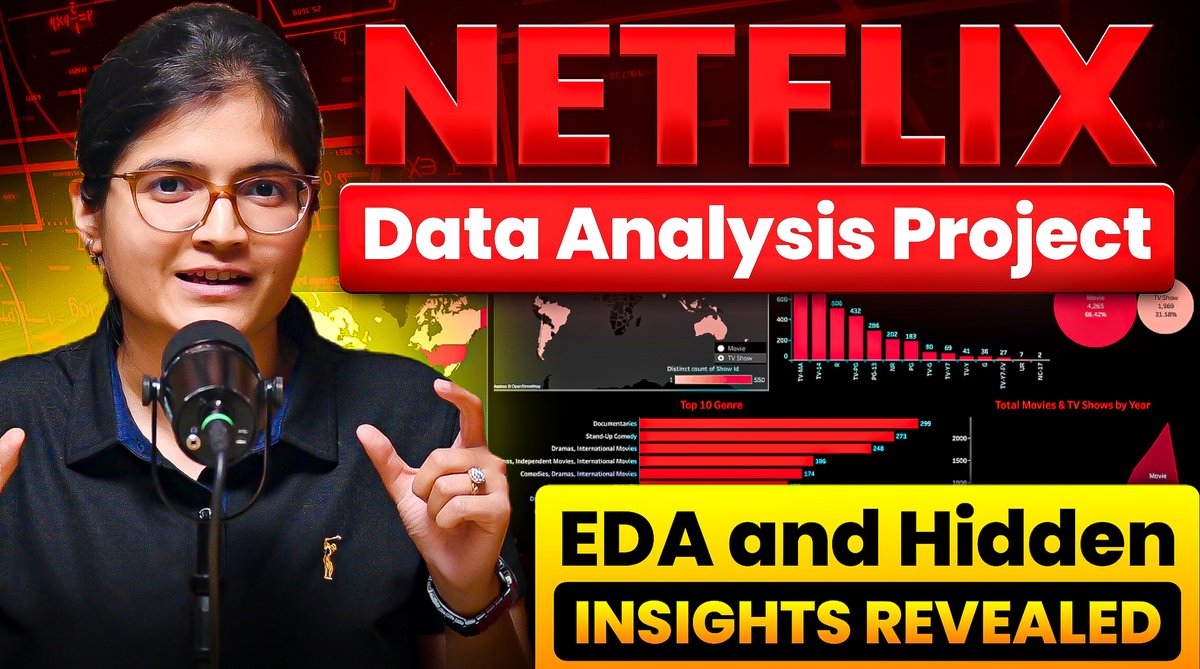
I have released a new YouTube video: "Netflix Data Analysis Project: EDA and Hidden Insights Revealed"
In this project, we move beyond just plotting graphs. We think like data analysts and uncover stories hidden inside the dataset.
What you'll learn:
✅ Data cleaning and preprocessing
✅ Exploratory Data Analysis (EDA) techniques
✅ Finding hidden trends and patterns
✅ Data storytelling using visualizations
✅ Real-world project implementation
Here's the link to the video: https://t.co/crye8tXK1k
Learning data science becomes much more meaningful when you stop asking, "How do I use this function?" and start asking: "What story is the data trying to tell?"
Watch the video and share one insight that surprised you the most.
#DataScience #DataAnalytics #Netflix #EDA #Python #MachineLearning #DataVisualization #Analytics #Learning #Projects
There was a time when every second message I received sounded almost the same:
"Priya, I want to enter Data Science, but I do not know where to start."
"Should I learn Python first or SQL?"
"Data Analyst or Data Scientist... which one is right for me?"
"Do I need to learn everything before applying for jobs?"
And honestly, I understand the confusion.
When you search online, you find thousands of roadmaps, endless playlists, and hundreds of opinions. Instead of gaining clarity, many learners end up feeling stuck before even beginning.
That is exactly why I recorded and released this video:
"Data Career Launchpad Orientation Session | Complete Learning Roadmap"
This is actually the recorded orientation session from the launch of the Data Career Launchpad Batch, where I discussed the complete learning journey and roadmap with aspiring learners.
In this session, I walk through the journey that many learners struggle with:
✔ How to approach the Data Science and Data Analytics domain
✔ What skills actually matter and in what sequence to learn them
✔ A practical roadmap instead of random learning
✔ Expectations from the journey ahead
✔ A complete feel of how my LIVE classes are conducted
I wanted this to be more than just another roadmap video. I wanted it to feel like sitting in a classroom and understanding how learning should actually happen.
The good part is that if you are someone planning to build a career in Data Science or Data Analytics, you can still become a part of this journey.
Course Joining Link: https://t.co/6lUcIyxLM9
#DataScience #DataAnalytics #CareerGrowth #Learning #TechForAllWithPriya #DataCareerLaunchpad #Roadmap #CareerGuidance