At the historic Bandel Basilica in Bengal, Catholic nuns have been offering spiritual nourishment to Hindu, Muslim and Christian devotees and smoothing sectarian differences despite the growing religious polarization in India.
My piece for @RNS
https://t.co/fGi9kJj9U8
Five years after Delhi riots, women survivors of religious hate and violence are stitching powerful stories of healing, resilience and self-reliance through their work in the very neighborhood that witnessed multiple waves of violence. My story for @RNS
https://t.co/2Kg0eFRiT7
I'm excited to share that the Spiritual Solutions Library — a global storytelling project — is now live. It's a powerful archive of over 60 global stories capturing sacred responses to our world’s most urgent issues. Explore the library: https://t.co/JiKUr1i4Fd
@fetzerinstitute
Nestled in the foothills of the Lesser Himalayas, the Dolma Ling Nunnery transitioned to a female leadership for the first time in its three-decade history. It marks a radical shift in the landscape of Tibetan Buddhism in exile in India.
My story for @RNS
https://t.co/FO42cd82yd
The 19th century Banke Bihari Temple, with its black stone idol of the Hindu god Krishna, draws tens of thousands of devotees every year to Vrindavan. With the government 's $5 billion redevelopment plan, residents are up in arms.
My story in @RNS
https://t.co/AfCpngISCB
This morning, at 9:30, my mother called me.
I was at the hospital, my hands still smelling of blood, when her voice came through, shaking and hurried: Rice. Oil. Sugar.
Three words. So ordinary once. Now they fall like the sound of church bells in an abandoned city, echoing through emptiness. She told me to go to the market quickly, before they disappeared again, swallowed by the hunger of a hundred thousand hands.
I told my colleagues I had something urgent to do.
Urgent, yes. But here, everything is urgent. Breathing is urgent. Dying is urgent. Finding bread is urgent.
Before I left, I took off my white coat. I could not bear to be seen as a doctor scavenging for food, to watch the last threads of their respect fall apart in their eyes.
When I stepped outside, the street met me not as a road but as a wound.
Men sat against the walls with their heads in their hands, faces lost in shadows. Mothers wept in silence, shoulders trembling under an invisible weight.
And there, in the middle of the road, a woman, perhaps thirty years old, holding a small white bundle.
A child.
Wrapped for burial.
She was speaking to a man on a horse cart.
Her voice was low, stripped of life. She was negotiating the price to take her baby to the cemetery.
Alone. No hands on her shoulder, no voices to stand with her. Surrounded by people, and yet she might as well have been standing in the middle of an empty desert.
I stopped moving. My mother’s request still hung in the air, but I called her back. I told her I could not go to the market. Because how can a man carry bread in one hand and the memory of that white bundle in the other?
And now, hours later, I am still there, in that street, standing before her, unable to step past her. My mind has become a house with only one room, and she is standing in the center of it, and I cannot leave.
My days are now nothing but a circle: searching for water, searching for food, finding money, avoiding displacement, counting how to survive the next hour, the next day. But when do we live? When do we breathe as human beings, without the taste of ashes in our mouths?
I feel my mind breaking, not in silence, not in peace, but like glass under pressure. I am speaking to you now as a man who is drowning in the same place he was born.
This is not for your pity. It is a cry, an outstretched hand in the dark. If there is a bridge, even the narrowest one, throw it to me. I will rebuild myself if I reach safety. I will be whole again. But here, every hour takes something from me I will never get back.
And still she stands before me, the woman in the road, the child in her arms.
And I think, perhaps she too once believed there would be a bridge.
#GazaGenocide
For thirty days, we have not seen water.
No, worse than that, we have not seen mercy.
The pipes are broken, and the army forbids repair. It is not a siege.
It is a theology of punishment, delivered in silence and ratified by the world.
So now we boil the sea. Salt seeps into our mouths, our wounds, our prayers.
We bathe in it. We cook with it. We swallow it, as if baptizing ourselves in despair.
And food? Yes, they say more trucks have entered lately.
But what is a crumb to a nation of the crucified? What is one breath to a man drowning?
To reach these trucks, we become beasts.
We sprint, not walk, toward the shadow of aid, toward the thrum of engines beside tanks.
We do not carry weapons.
We carry emptiness.
And for this, they shoot us, as if hunger were a crime, as if longing were treason.
In the hospital, if that name still holds meaning, I see the broken return from death, only to be abandoned again.
Thirty corpses a day.
One hundred wounded, crying for mothers who are themselves unburied.
And we, the doctors, our hands are not hands anymore. They are tools of failure. They tremble, not from fatigue, but from knowing that every attempt at healing ends in more blood.
And yet, God forgive me, I have thought of it.
I have considered charging that aid truck, to wrest a bag of flour from the chaos, to lower my eyes in the market
and pay not in currency, but in dignity.
But something stops me.
No, not pride.
Pride is dead here.
Something older.
Something irrational, perhaps divine.
A sliver of self not yet mutilated.
It whispers: “Do not become what the world thinks you are.”
Then yesterday, a video emerged.
An Israeli hostage, pale and thin.
A soldier reduced to a whisper of flesh.
And oh, how the world wept.
How it suddenly remembered the human form.
The headlines screamed.
The parliaments paused.
The diplomats emerged from hibernation.
But here lies the obscene paradox:
the same group that holds him, Hamas, calls upon Israel to remember its own morality,
to act with compassion.
But where is that compassion here?
Where is it when we, the imprisoned millions, wither into shadows before their very eyes?
Hamas does not flinch.
It does not stutter.
It does not blink.
Two million souls vanish beneath disease, thirst, humiliation, and still they speak of resistance, as if resistance meant sacrificial altars of children.
And Israel?
It unleashes punishment not upon Hamas, but upon those already buried.
We, the ones who neither ruled nor chose, bear the price of others’ ideologies, others’ wars.
And the world? It watches. And doubts.
“Is it really a famine?” they ask. “Is it truly that bad?”
Shall I fetch them the corpse of a girl with bread still clenched in her fist?
Shall I line the bones of infants on white silk and mail them, express delivery, to Geneva?
What more must we give?
What more must we prove?
Has mankind gone blind, or has it simply chosen blindness as a more convenient truth?
No one will save us.
Not the sky. Not the diplomats. Not even God, who, perhaps, has turned His face away in shame for the world He created.
And one day, in the quiet of history,
when the bombs have stopped and the silence has returned,
humanity will open the books and see:
That children died, and men debated whether they were really dying.
That a nation starved, and the world demanded statistics.
That a soul cried out from the bottom of the pit, and was met with hashtags and hesitation.
I do not know what redemption looks like anymore.
But I know what damnation feels like.
And I tell you:
We are already in it.
#GazaGenocide
I am writing this from the grave.
Do not look for me.
There is no body, only dust, and the smell of what once was bread.
We spoke. Oh, how we spoke.
With the tongues of children choking on smoke.
With the tongues of old men whose homes turned to ash before their afternoon tea cooled.
With the tongues of mothers who gave birth beside mass graves, and then laid their newborns inside them.
We spoke with our blood, with our silence, with our madness.
But the world did not hear.
The world, my friend, is deaf to the human soul, unless that soul bleeds gold.
They bombed us in the name of defense. They starved us in the name of security. They erased us with such calm, you would think it was an administrative procedure.
And now, they speak of expanding the operations, of occupying Gaza fully, not as a tragedy, but as a plan. It is no longer war, it is appetite.
And still we remained.
Not because we are brave.
Not because we are strong.
But because there was nowhere left to go.
I have seen a child dig through rubble with one hand, the other still clutching his sister’s decapitated doll.
I have seen doctors use thread from their own clothes to stitch together lungs that were already drowning.
I have seen men curse God.
And I have seen God…
say nothing.
Forgive me. I do not write this in anger.
I write it because I no longer know if I exist.
Because my memories are louder than your missiles.
Because my dead will not stop speaking.
They ask me:
“Did you tell them? Did you show them what they did to us?”
And I say: “Yes. I told them. I screamed it.”
And they say: “Then why are we still dead?”
They do not want justice. They want the land. Let them take it.
Let them build gardens atop our skulls.
Let them pave our history into a road that leads to nowhere.
Let them sleep beside the sea and call it peace.
But let us go.
Let the children go, with their bent spines and swollen bellies.
Let the mothers go, with the milk still warm in their breasts for babies who no longer breathe.
Let the old go, with their keys rusted into the shape of grief.
We no longer dream.
We no longer believe in victory.
We do not ask for revenge.
We ask only this:
Let us leave before we become beasts.
Let us carry our wounds like prophets, wounds that do not heal, but teach.
Let us walk away from this cursed inheritance, before we pass it on to our children.
And if you must continue your war, then do it without us.
Bomb the dust.
Starve the wind.
Colonize the silence.
But we are gone.
We take with us the names, the songs, the shadows.
We take with us the unbearable dignity of the murdered.
And if God still watches, let Him bear witness.
For if He is silent now, then one day He must speak.
And when He does, He will whisper not in Hebrew, nor Arabic, nor English, but in suffering.
The only language that was ever real.
#GazaGenocide
Dear Readers of The Wire In a clear violation of the Constitutional guarantee of freedom of the press, the Government of India has blocked access to https://t.co/BCdnZhucBj across India. +
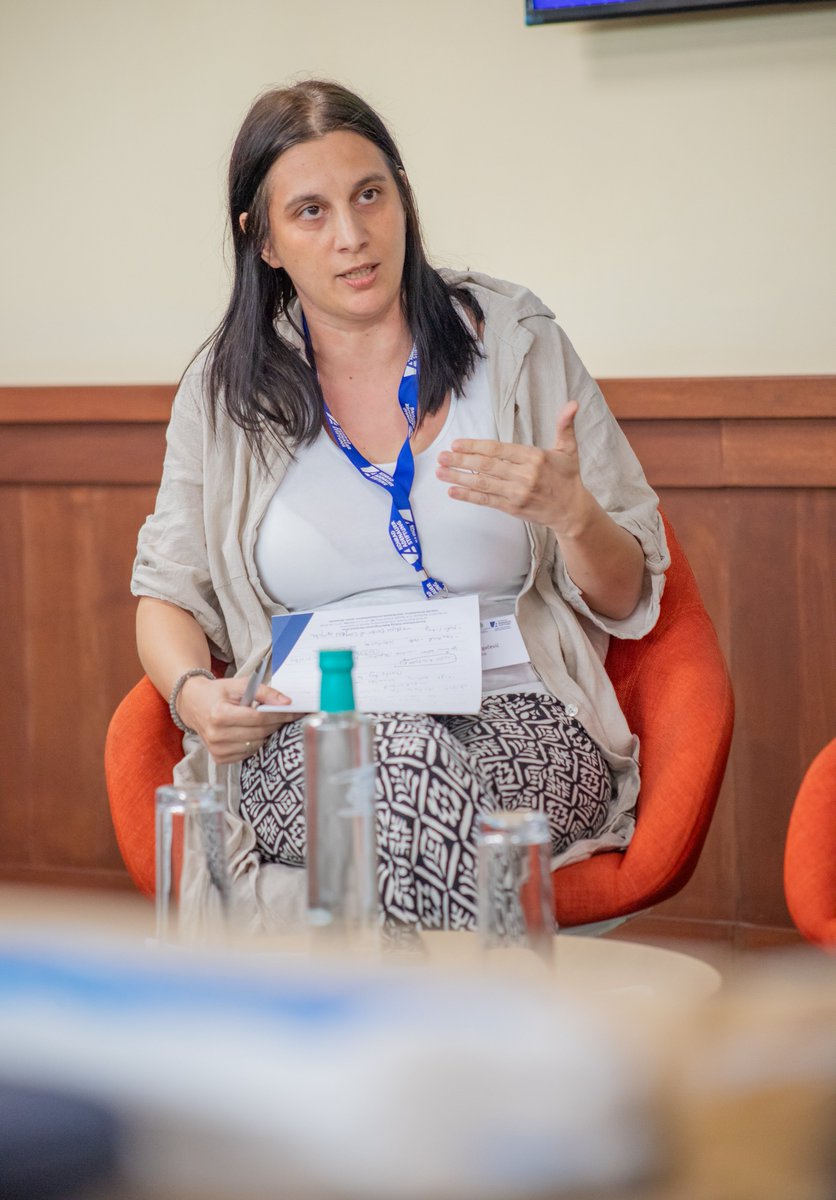
On the panel at Aga Khan University in Kenya where we spoke about religion reporting in Africa and globally. Amazing to have collaborated with colleagues from Aga Khan University and Konrad-Adenauer-Stiftung.
The International Association of Religion Journalists @RJournalists
In Sadhan, just 25 miles from Taj Mahal in Agra, tolerance of different faiths has endured for centuries. What is it about this town that has prevented religious fundamentalism from taking root when all around it communal tensions have swept villages?
https://t.co/vVrfWI7jRI
In my years as District Magistrate when India was burning with the Babri Masjid movement, a vicious hate-mongering voice was of Sadhvi Rithambara
Today she is picked up for India's third highest civilian honour
India is utterly disgraced by the Padma Bhushan for Sadhvi Rithambara
Hindu governing body shuts out Muslim vendors from world's largest religious festival
@PriyadarshiniS_ writes about Kumbh Mela and the marginalization of Muslims
#Religion#India@RNS https://t.co/nenDz1rx82
Billed the world's largest single gathering of humanity, the Kumbh Mela festival in the north Indian city of Prayagraj has something new in store this year. Hindu monastics have decided to bar the entry of those who are not part of orthodox Hinduism. @RNS
https://t.co/Ay62qBCPqO
Beautiful Article on Behraam Shah Tomb Kasur by @PriyadarshiniS_ . This tomb is on Border Line and devotee's were allowed to visit some years ago by forces on both side.
https://t.co/a2oQCyutbk