Artificial intelligences do not undergo experiences, do not possess a body, do not feel joy or pain, do not mature through relationships, and do not know from within what love, work, friendship or responsibility mean. Nor do they have a moral conscience, since they do not judge good and evil, grasp the ultimate meaning of situations, or bear responsibility for consequences. They may imitate or even simulate, but they do not understand what they produce, for they lack the affective, relational, and spiritual perspective through which human beings grow in wisdom. #MagnificaHumanitas
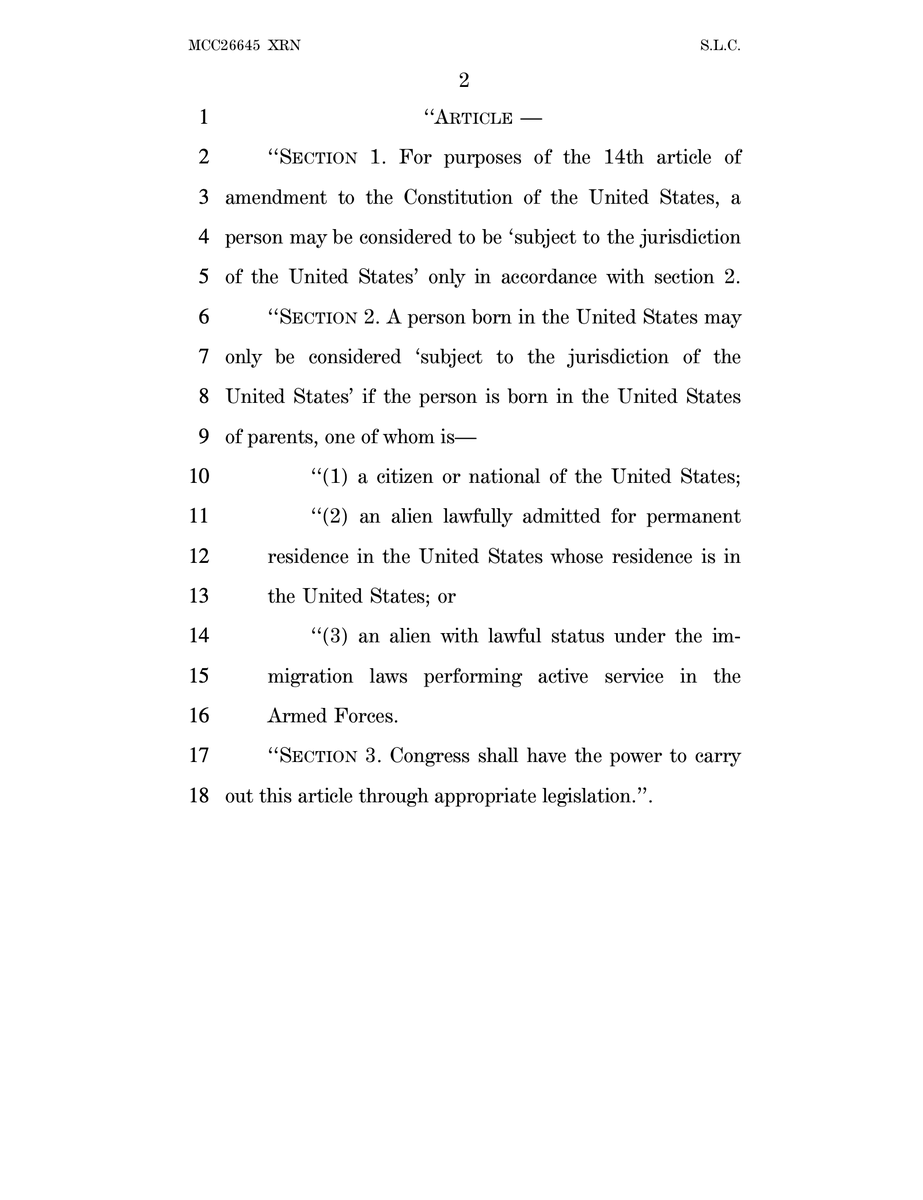
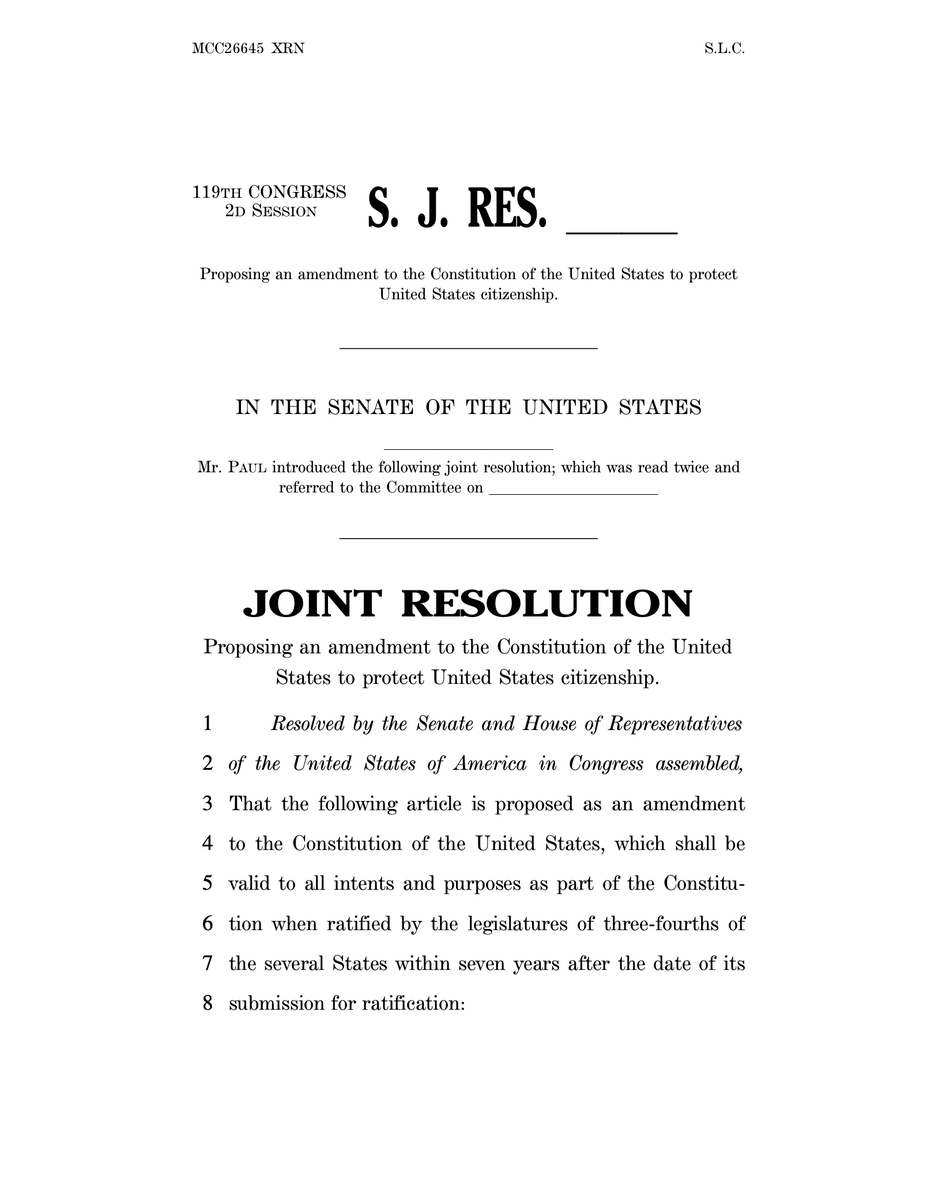
I am introducing a Constitutional Amendment to end Birthright Citizenship.
Under current interpretations of American law, anyone born on American soil automatically becomes a U.S. citizen, regardless of whether the parent was here legally or not. This is wrong and not at all the intent of those who wrote the 14th Amendment.
We are a country filled with immigrants, and legal immigration is valuable and should be protected. But we are also a country whose borders have been too open and our generosity exploited too often. President Trump has moved to seal our border from illegal immigrants more than any other president.
But we will have more to do.
We need to make sure that only children born to legal residents of the U.S. are automatically citizens. I have supported protecting birthright citizenship from abuse since the beginning of my tenure in the Senate, when I cosponsored the Birthright Citizenship Act of 2011, and now I am proposing an amendment to protect United States citizenship in case the Supreme Court fails to address this issue correctly.
I somehow made it to middle age without ever seeing It's a Wonderful Life. Finally watched it this Christmas and I have to say, it's obviously the best movie ever made, and it's not even close. Merry Christmas!
One of my occasional hobbyhorses on here is the unreliability of written sources as historical evidence. We read about "fake news" now, and think it's new. It isn't new. And old newspapers, whether digitally stored, or on microfilm, become sources decades and centuries later for historians to tell "the real story."
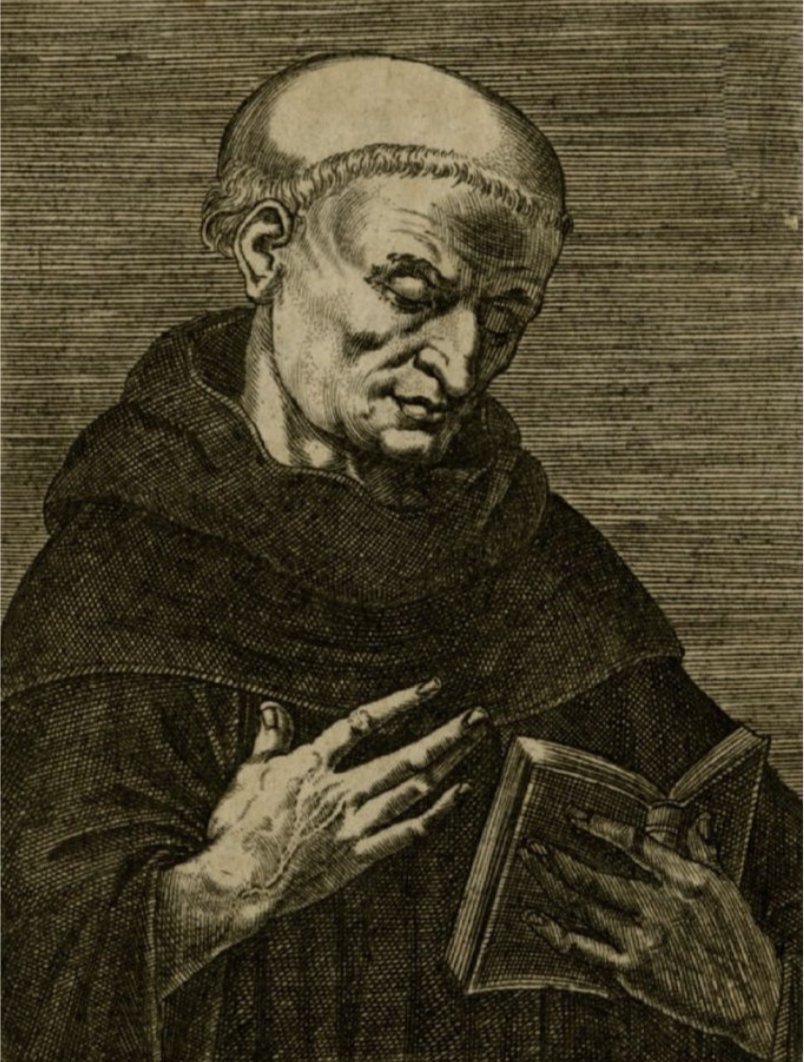
This image here is of a British monk called "Gildas the Wise." He was writing in the early 6th century, about 100 years after the initial Germanic incursions into Roman Britain. He is the first major written source explaining the invasion of Roman Britain from Germanic tribes. He was religious obviously, and he basically had an axe to grind with Romano-British rulers - he condemned them for their lack of piety, which he saw as a cause for their subjugation. The origins of the story of a military conquest of Britain from Saxons, Angles and Jutes starts here - the "Venerable Bede" takes that up a century or so later.
What's interesting in modern scholarship - which relies more on DNA analysis and archeological evidence - is that it upsets the written record. We aren't even sure the "Jutes" ever existed now. And the initial Germanic settlements show no sign of military conquest - meaning, they were probably peaceful. Examination of the cemeteries shows all kinds of different artifacts, that indicate people from all over what is today the Netherlands, northern Germany and Denmark were arriving, somewhat haphazardly, here and there in what is now south England and East Anglia. Over time these groups coalesced into what we think of as "Anglo-Saxons." Their relatively mutually intelligible Germanic dialects coalesced into the Old English of Beowulf.
So what this means is that our earliest written source of England is just too simplistic and inaccurate, reflects his personal opinions that are directed against the politics and social relations of his own day - they are not aimed at telling posterity any kind of objective truth.
Now do all of our historical discussions at the present. They are overwhelmingly political. This WW2 revisionist debate is not just about WW2 - it's about politics in the here and now, people attempting to frame events to justify current views. The constant discussion of slavery and the "1619 Project" are not really about history at all - they are about framing the past in a way to get something here and now through political means. The other day I heard Sam Tanenhaus on a podcast mention his use of newspaper sources in his large biography of William F. Buckley. No doubt looking at those sources is necessary - but must be viewed critically.
In all events - what we think of as "the past" is really shifting sand in many ways. We can know the exact date of the Battle of Waterloo, or when Lee surrendered at Appomattox. But once you go beyond sticking down dates, and you begin interpretation, you start to rely on evidence that is itself biased, tendentious. Everything we are writing now about the Trump administration might also become "evidence" about what these times were like - even though almost everything you read is either totally full of lies, or extremely biased.
Reading this made me feel a deep sense of gratitude. We live in a country where we can freely worship God.
No group should ever be persecuted for practicing their religion. We don’t have to share the same beliefs in order for us to respect each other.
Numerous countries all around the world are being affected by this horror & it’s dangerous to pretend we don’t notice.
Thank you to The President & his team for taking this seriously.
God bless every persecuted Christian.
Let’s remember to lift them up in prayer.