Prospective Physical Activity, Sitting & Sleep Consortium: Pooling thigh-worn accelerometry studies to quantify how movement & posture impact adult health
🚨New role⌚🚨 .. Read more👇
This unique position is optimal for an experienced candidate or ECR who:
🔹 Epidemiologist interested in 24-hour movement behaviours and/or sleep research.
🔹 Has experience with *IT system integration* 🗄️
Apply: https://t.co/3R7EJ5L4NG
See the latest report from the WHO meetings on integrating wearables into global physical activity surveillance, available to read online now:
https://t.co/jRYFyGN733
[2/2] What counts as VILPA? We accumulate it in short bursts throughout the day: Stair climbing, fast walking, uphill bursts. These short bursts appear to add-up across the day to reduce the risk of many conditions, including T2-Diabetes @DrJohnChong
https://t.co/LDjv2bvtY0
New evidence on short-bursts of activity and lower type 2 diabetes risk among non-exercises: A clear dose–response. Even ~4 min/day of vigorous intermittent lifestyle activity (VILPA) is linked to ~36% lower type 2 diabetes risk [1/2]
https://t.co/LDjv2bvtY0
Do we need condition-specific PA guidelines? 🤔
Initial evidence differs depending on how PA is measured:
→ Self-report suggests higher minimum doses.
→ Devices reveal the benefits of even very low levels + dose-response📉
Read more: https://t.co/nFhnrh14p6 @BorjadelPozoCr1
A helpful breakdown of the recent findings on the collective power of small changes to Sleep, Physical activity and Nutrition (SPAN) for heart health, @escardio
https://t.co/KyXUsgKaM3
PhD opportunity 📢 : Use wearable tech to generate novel evidence on the health benefits of physical activity in low- and middle-income countries.
Help close global evidence gaps to help shape more equitable public health insights.
https://t.co/e2kKxGIwAD
💡A New @NaturePortfolio commentary asks why physical activity hasn’t achieved the political priority of tobacco or alcohol control? What are the future hurdles facing the field? And, how can increasing global physical activity aid climate action efforts: https://t.co/NpjZIissw9
Listen in 🎧🔊 to eClinicalMedicine in conversation with @M_Stamatakis on recent research. Together they discuss how even small, more manageable changes to sleep, PA & Nutrition stack up to support health and longevity. 💬🎙️
https://t.co/Q7zXdiYUN4
Are you a 'morning mover', accumulating your steps on your commute? Or do you leave it until the afternoon or evening? Interesting findings from The Maastricht Study reveal timing might make a difference for T2 Diabetes Mellitus: https://t.co/CuEJUtCzV7
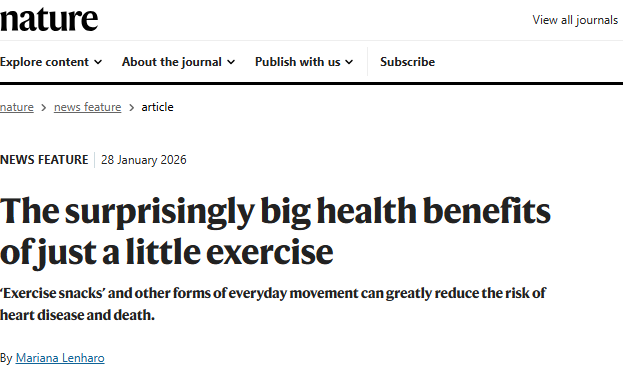
Some recent PA papers broken down in @Nature . Using wearable-device data, they show how even small amounts of everyday movement are associated with meaningful health benefits- with the biggest gains at the low end - going from nothing to something). Read:https://t.co/VB4cFcnEPw
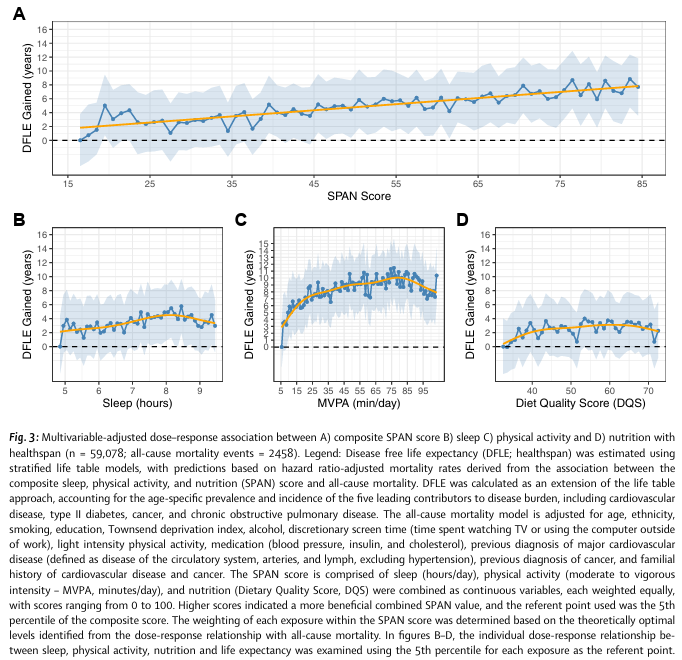
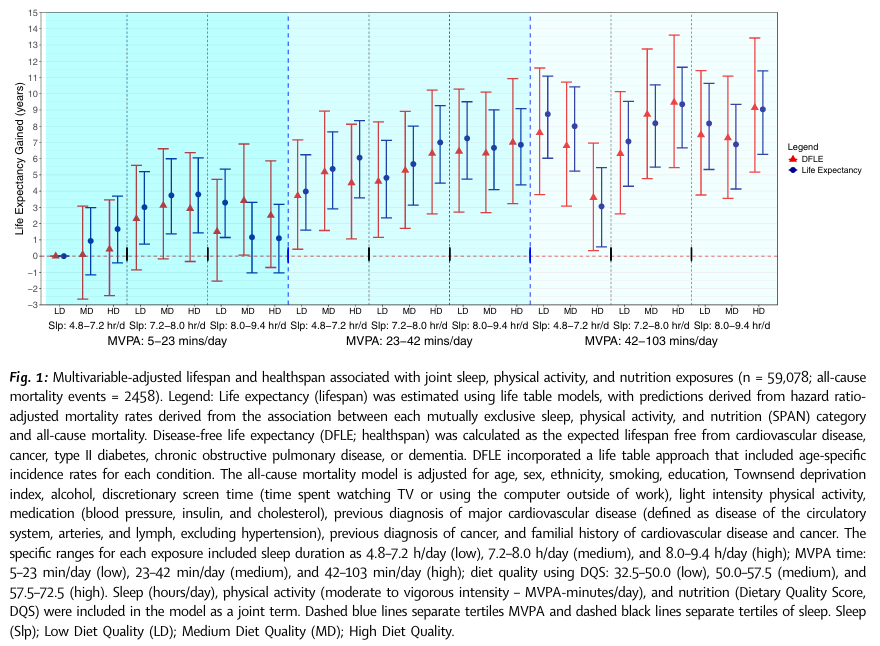
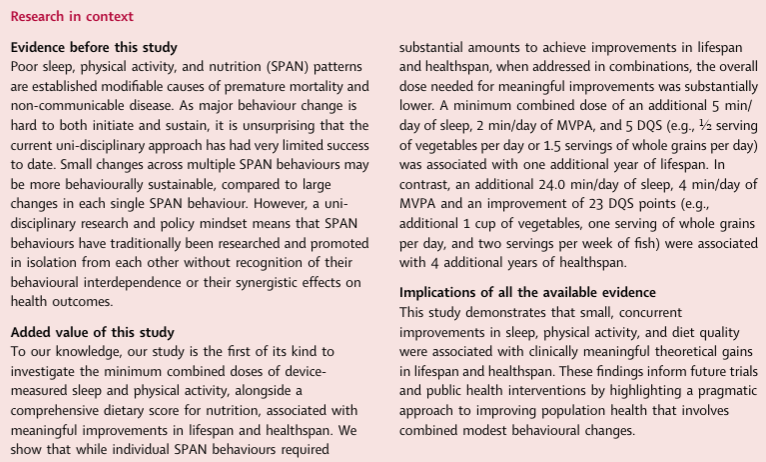
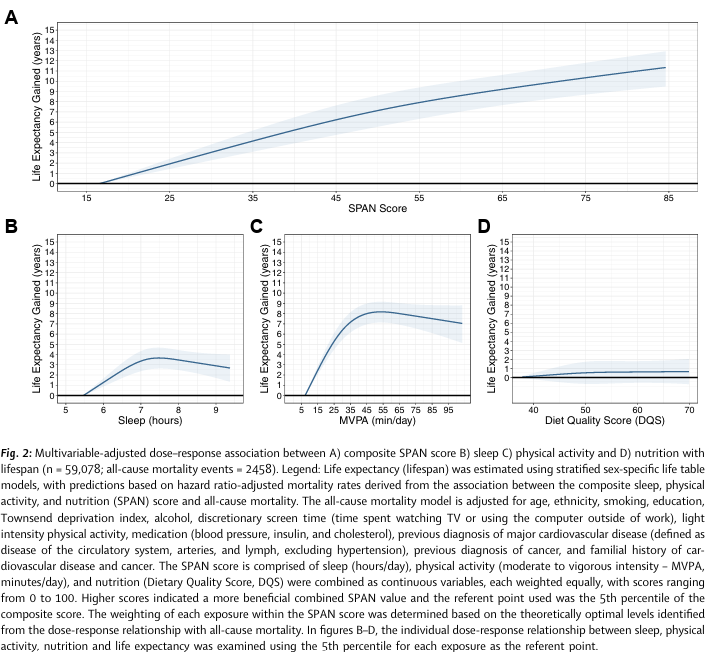
What tweaks can we make to our sleep, physical activity, and diet to live longer and healthier?
Our new study in @eClinicalMed shows that a daily
🛌+5 min sleep
🏃+2 min moderate to vigorous activity
🥦+½ serve vegetables
Added +1 year lifespan
https://t.co/H91bZ22Xpk
Can small changes in physical activity make a major difference?
A new meta-analysis suggests that just five extra minutes of moderate physical activity a day is associated with a 10% reduction in all deaths in the majority of adults.
Find out more 👉 https://t.co/zU7GkRSIYL
📣 We're excited to announce the Dare2Share call for abstracts for #ISBNPA2026!
We want interactive, participatory, creative, and innovative ideas that enhance sharing beyond the scientific sessions at the Annual Meeting.
🔗 Learn more here: https://t.co/wuxOzoB0U7
Among adults taking ≤8000 steps/day, those who accumulated most of their steps in longer bouts (≥10–15 min) had markedly lower risk of cardiovascular disease than those walking in short bursts. How we walk appears to matter, not just how much.. https://t.co/jQlGE3bP8V
Resaearch led by Dr John Mitchell, with co-authors Dr Jo Blodgett & Prof. Mark Hamer, used data from more than 4k individuals to investigate how changes in 24-hour time use were associated with the risk of developing type II diabetes over a five-year period. Swipe. (🔗 in bio).
The Call for Regular Abstract Submissions for #ISBNPA2026 is still open! Join us in Cádiz, Spain 🇪🇸 (May 27–30, 2026) and be part of the world’s leading research community in behavioral nutrition and physical activity.
🗓️ Deadline: Nov 12
📄 Guidelines: https://t.co/JLv79eaByn
🚶♂️Pulling different physical behaviour levers for an equivalent outcome: Far larger than previous 'best-estimates', the authors find 1min of vigorous activity = 4–9min of moderate or 50–90min light PA for a number of major outcomes. Now in @NatureComms https://t.co/hoFDyQG9li
Why aren’t interventions getting us moving?
This week's episode of the #NESIPodcast features @Benjamin_Rigby discussing the issue of physical inactivity and how we can encourage communities to get more active.
Check out the episode now on Apple 🎙️ and Spotify