Did a New Brunswick court just change the land claims debate in Canada?
A new ruling is raising big questions about Aboriginal title, private property, and what comes next.
Is this clarity…or the start of more legal uncertainty?
Join me with law professor Bruce Pardy live on YouTube this Thursday at 2pm CT.
https://t.co/rZpocb6P58
@FrontierCentre@PardyBruce
Alberta faces a stark reality: is it possible to become independent if your premier is determined to stop it?
Despite Danielle Smith’s public stance, organizers are pushing ahead with the October vote anyway, banking on goodwill and a promise that a potential “yes” result will be honoured. But given everything Smith and her team have said—especially around that pivotal 10th question—it’s hard to escape the conclusion that this train probably isn’t leaving the station.
That leaves Albertans staring down a tough choice: which path forward to actually take?
Tackling the confusion around the October referendum, law professor @PardyBruce joins Tea & Coffee w/ Paula & Jay | @TheLavigneShow
https://t.co/nDWW1eBPyQ
Chief Justice Richard Wagner has expressed views clearly opposed to the trucker protest. Among other things, he was quoted as saying it was “...the beginning of anarchy where some people have decided to take other citizens hostage”, and that “forced blows against the state, justice and democratic institutions like the one delivered by protesters … should be denounced with force by all figures of power in the country”.
As a result of these statements, the FSUC called on Chief Justice Wagner to recuse himself from the case. Judges must at least keep up the appearance of neutrality by declining to comment on matters that may come before the bench, or that may disclose a particular bias.
Chief Justice Wagner seems to think he can separate his feelings about the protest and his application of the law. That may or may not be true, but that’s not the issue. The mere appearance of bias is enough for him to recuse himself from this case.
Public trust in the justice system is essential to a functional society, and once lost it is not easily restored. We hope the Chief Justice will reconsider.
Question for Albertans:
If Alberta successfully seceded from Canada, what kind of government would you want to see?
1. British Commonwealth
A parliamentary system similar to what we know now, with responsible government, a Prime Minister, elected legislature, and constitutional traditions rooted in Westminster.
2. American-Style Republic
A written constitution with stronger separation of powers, an elected executive, elected legislature, elected senate, and a system designed to limit concentration of power.
3. Swiss-Style Democracy
A highly decentralized model with strong local control, frequent referendums, citizen initiatives, and more direct democracy built into the system.
4. Pardy’s Limited Government
Inspired by Bruce Pardy’s “flip the default” idea: government has no authority unless the people specifically grant it. Power starts with the citizen, not the state.
Please share for a larger sample.
Canada's speech crackdown has already begun — speak up while you still can
I genuinely believe we are closer to a real speech crackdown in this country than at any point in modern Canadian history. And the craziest part is they’re not even hiding it anymore.
While Canadians were distracted by inflation, tariffs and housing costs, the Liberals quietly buried something deeply disturbing on page 145 of the Spring Economic Statement: amendments to the Canada Post Corporation Act expanding police powers to search and seize your mail.
Your actual physical mail.
Letters. Packages. Private correspondence.
Read that alongside the Liberals’ censorship agenda, and the pattern becomes impossible to ignore. If Canadians move sensitive conversations off social media and back to texts, phones and old-fashioned mail to avoid government snoops, Carney’s people appear to have anticipated that already.
They are tightening control over digital communication while quietly expanding state access to private correspondence at the same time.
There is no escape hatch.
And before anybody accuses me of paranoia, let me remind you what Trudeau’s government already tried to make law.
Bill C-36 would have allowed anonymous complaints over lawful speech. Somebody could accuse you of hateful expression, and you might never properly confront your accuser. The bill proposed fines of up to $20,000 paid directly to the complainant, plus another $50,000 paid to the government itself.
Over speech.
Not violence. Not terrorism. Speech somebody found offensive online.
And then came the truly chilling part: pre-crime restrictions.
The Liberals wanted courts to impose curfews, communication bans and house arrest conditions on Canadians who had committed no criminal offence whatsoever, simply because somebody claimed to fear what they might say in the future.
Not punishment for criminal conduct.
Punishment for predicted wrongthink.
Then came Bill C-63, the Online Harms Act, which proposed even more censorship infrastructure through digital safety commissions, regulators and online speech enforcement bodies.
The same activist ecosystem backed every step of it: anti-hate NGOs, censorship advocates, activist academics and taxpayer-funded organizations that increasingly treat free expression itself as the social problem to solve.
Those bills died when the election was called.
The agenda didn’t.
Now Mark Carney’s government is openly signalling it wants another crack at it. Marc Miller admitted Canada is “a couple years behind” Britain and Australia on internet regulation.
Britain.
The country where police investigate tweets and Facebook posts. Where citizens get questioned over memes and offensive jokes. Where authorities reportedly made more than 12,000 arrests tied to online communications offences in a single year.
And instead of treating that as a warning sign, Canada’s political class increasingly talks about it like it’s a model worth copying.
That should terrify every Canadian.
Because freedom rarely disappears dramatically. It disappears slowly, bureaucratically and under the language of safety and harm reduction.
And Carney may actually be more effective at advancing this agenda than Trudeau ever was because Trudeau sounded ideological and flaky. Carney sounds calm, managerial and “evidence-based,” which makes people lower their guard while the state accumulates more power over speech and information.
And independent media will obviously be among the first targets. Government-funded outlets like the CBC have very little to fear from censorship systems because they already exist safely inside the approved institutional framework. They support the government because the government supports them. The pressure lands on independent journalists, alternative media and anybody operating outside establishment narratives — because we are skeptics of government.
That’s where this road leads: criminalized dissent, self-censorship and a country where ordinary people slowly become afraid to speak honestly because the legal, financial and social consequences become too risky.
And once that fear becomes cultural, governments barely need to censor anybody anymore.
People start censoring themselves.
We need to speak up now, while we still can.
Go to https://t.co/XVVGrwZ4wI.
This column warns that Canada is moving toward the more restrictive speech and surveillance laws already seen in parts of Europe. Bill C-9 could expand government power over expression, while Bill C-22 raises concerns about privacy and state access to personal data. The author points to censorship and surveillance laws in countries such as the UK, Germany, and France as a cautionary example of where Canada could be headed if these measures become law.
https://t.co/scYLDLZF4w
Canary Book launch video Just released!
All religions have dogmas.
Dogmas are not proven statements but assertions that cannot be challenged.
It’s a bad idea to have anything that can’t be challenged.
Sound familiar?
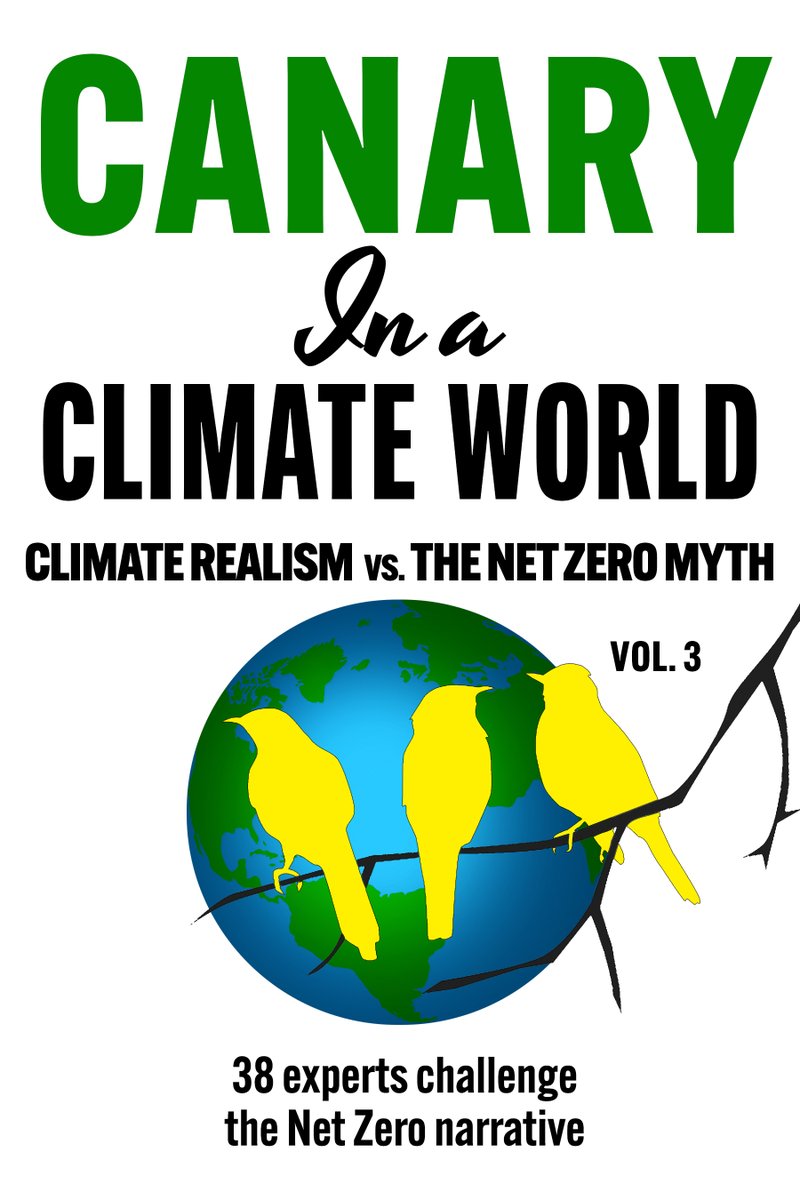
Canary in a Climate World: Climate Realism vs The Net Zero Myth is now available on Amazon in paperback, hardback, e-book and audio.
Amazon: https://t.co/9ENV03K6oK
Must watch (short) video:
@EcoSenseNow@ConradMBlack@PardyBruce@seamusbruner@MargaretAnnaAl1@Shawnbuckleylaw@nshaviv
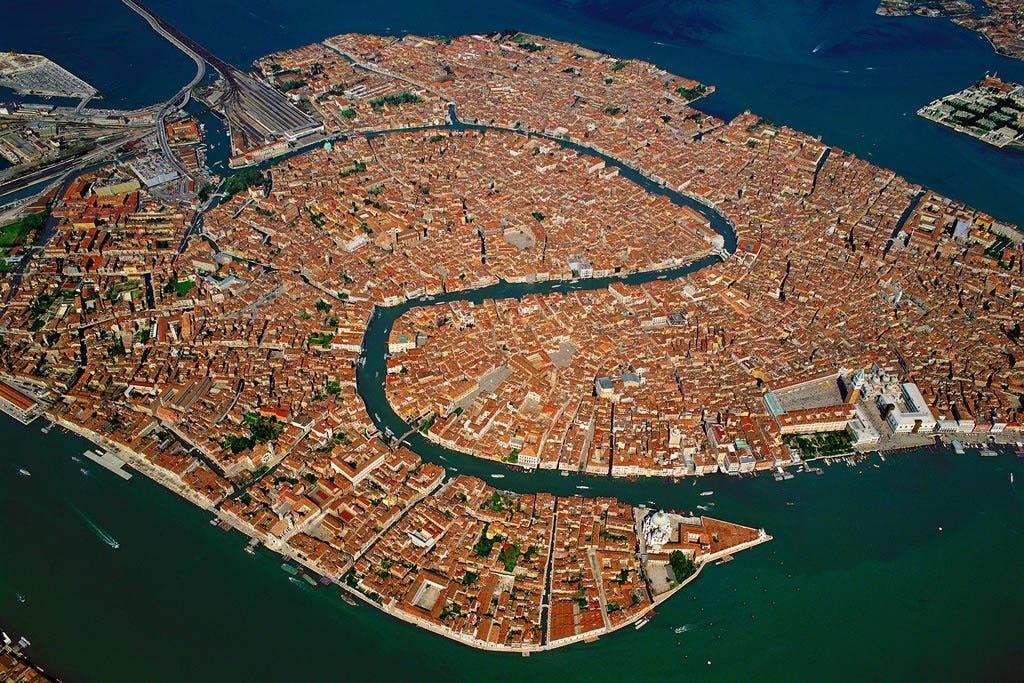
Venice built the greatest commercial empire in European history without a central bank, without industrial policy, and without a single economic development agency. While Byzantine bureaucrats strangled Constantinople with regulations and Frankish kings debased their currencies, Venetian merchants created wealth through voluntary exchange and sound money.
The lagoon dwellers who fled Attila's hordes in 452 AD had nothing but salt marshes and fish. No natural resources. No agricultural surplus. No inherited infrastructure. What they possessed was something far more valuable: distance from the coercive apparatus of mainland states. This geographic accident forced them to survive through trade rather than taxation, commerce rather than conquest.
Venice's constitution deliberately fragmented power to prevent any single authority from controlling trade. The Doge held ceremonial functions while competing merchant families checked each other's ambitions. No guild could monopolize an industry without rivals organizing alternative trading networks. When the state tried to restrict private commerce in 1297 with the Serrata del Maggior Consiglio, it marked the beginning of Venice's decline, not its peak.
The Venetian ducat maintained its gold content for over 500 years while every other European currency suffered debasement. Merchants could calculate profits across decades, plan investments across generations, and accumulate capital without worrying about monetary manipulation. Compare this to England, where Henry VIII cut silver content by 83% in just 20 years.
Voluntary association and sound money create abundance. Coercion creates poverty. Venice proved this. The same economic laws that enriched Venetian merchants still operate today, waiting for governments brave enough to get out of the way.
Carney’s stance validates the argument @PardyBruce has put forth all along:
Canada has shifted toward “rule by law” (discretionary authority by elites, bureaucrats, and courts) rather than predictable, limited government. The prime minister’s flexible reading of the Clarity Act exemplifies this—democracy is respected except when it challenges central power.
https://t.co/iBPev2TLRK
A Google exec warned Bill C-22 grants "essentially boundless" secret powers over private companies' electronic systems and devices that go beyond comparable laws abroad.
She said firms can appeal orders, but must comply before courts rule.
“It increasingly appears Canada has become reluctant to defend lawful military operations, confront foreign interference, protect democratic institutions, or speak openly about coercive behaviour for fear of China’s economic retaliation. The greatest danger is not necessarily open alignment with Beijing, but the gradual normalization of hesitation until Canada begins limiting its own sovereign behaviour before Chinese pressure tactics are even applied,” writes MLI Senior Fellow Joe Varner (@josephbvarner).
Read here⬇️
https://t.co/f9mJTub354
CARNEY tells Canadians that Canada has what the world wants, BUT, only 16 countries invested in Canadian startups in Q1 2026, down from 54 a year earlier 👀
38 FEWER Countries 🤯
Yet, CARNEY continues his world tour with much fewer results. This is bad 🇨🇦
“To hear the prime minister even contemplate the idea that ‘daddy Ottawa’ could tell Albertans how to think, if their question is clear, or even what a clear majority is, is completely inadmissible.” ~ Bloc House leader Christine Normandin
https://t.co/rZNdkbfeZJ
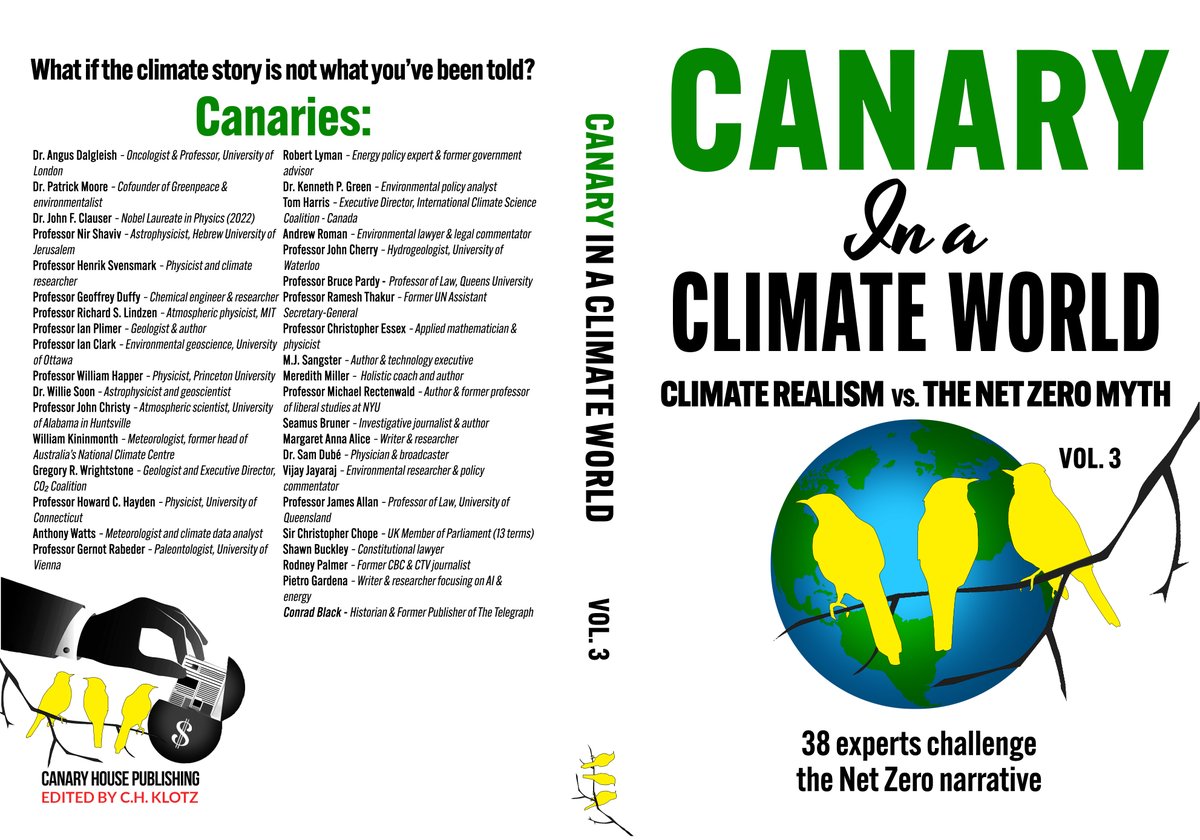
After nearly two years of research and eight months of building this project alongside co-editors Professor Ian Clark and Tom Harris, we are ready to launch Canary in a Climate World: Climate Realism vs. the Net Zero Myth this Wednesday.
What surprised us most throughout this journey was the extraordinary number of highly credentialed individuals quietly questioning key aspects of the prevailing climate and Net Zero narrative.
Scientists. Physicists. Geologists. Engineers. Economists. Physicians. Professors. Policy experts. Investigative journalists.
Contributors include Nobel Prize-winning physicist Dr. John F. Clauser, Greenpeace co-founder Dr. Patrick Moore, MIT atmospheric physicist Dr. Richard S. Lindzen, Princeton physicist Professor William Happer, Professor Henrik Svensmark, Professor Nir Shaviv, Professor Angus Dalgleish, Sir Christopher Chope, Lord Black of Crossharbour, and many other internationally recognized experts and Climate Canaries.
Several contributors from the earlier Canary Covid volumes also return in this book, writing directly about the striking parallels they now see emerging between the Covid era and the climate narrative.
Launching Wednesday on Amazon across hardcover, paperback, eBook, and audiobook platforms.
The Canaries are speaking and this conversation is only just beginning.
#Climate #NetZero #ClimateRealism #CanaryInAClimateWorld
#AlbertaIndependence#referendum
Alberta will not become independent with this provincial government at the helm.
Danielle Smith is hiding behind court rulings as a convenient pretext. The tenth question is a trap. ~ @PardyBruce
https://t.co/weGYSJCiEo