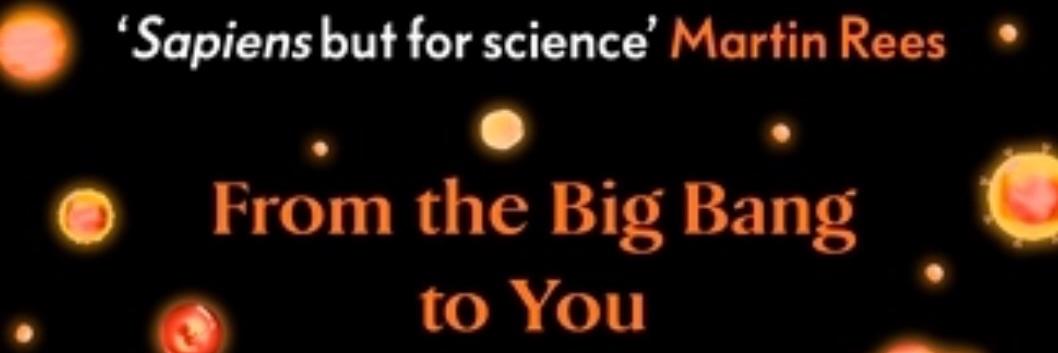
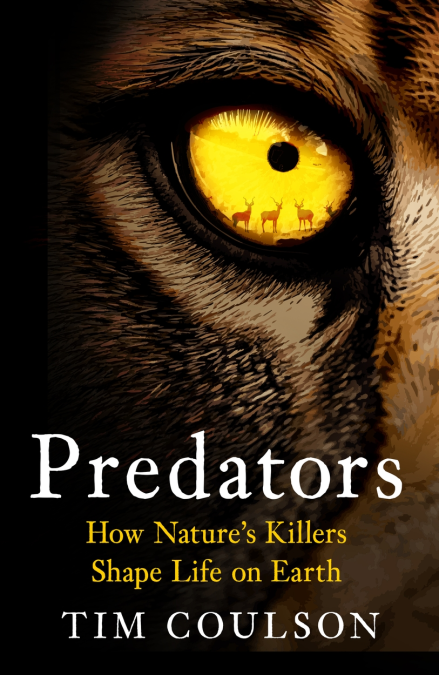
Author of" A Little History of Everything from the Big Bang to You" Penguin.
Science and Environment Correspondent, The European.
Professor of Zoology, Oxford.
Yep. We've all been there. Christmas is nearly here, but what to buy for friends and family? This year the answer is easy: A Little History of Everything from the Big Bang to You: "Sapiens but for Science" as the Astronomer Royal so eloquently put it:
https://t.co/980MR6PWsd
I don't particularly like lobster, but I love seeing live lobsters when diving. So much so, that I went to investigate a project aiming to increase lobster numbers in Cornwall. I wish there was some before and after data to enable a proper comparison.
I wrote about my experience in The European. If you like marine life, have a read!
https://t.co/viwi2cpzm1
The universe did not have to produce you. Yet here you are, conscious, curious, and able to trace the astonishing chain of events that made you possible. https://t.co/Qe8qdJrnnU
It takes nearly 3,000 lemons to generate 2,400 volts of electricity. What started as a fun experiment turned into a competitive quest to reclaim a world record. New Science of the Times episode https://t.co/DnfXATJyHm
Cognitive offloading could be the beginning of our domestication by AI -- accidental or otherwise. I very much doubt we'll be farmed for energy, but domestication made me think of The Matrix.
https://t.co/tanu4vhOGT
Professor Tim Coulson explores why humans remove body hair, examining cultural anxieties and evolutionary theories behind our unusual hair patterns. https://t.co/QdlE18udA9
Out today in @nature.com: our review on how single cells evolve into multicellular organisms, with Ozan Bozdag, @kai_tong_mc25, Peter Yunker, and Matt Herron.
https://t.co/mJYWOSK3g3
For an overview, check out the video below.
Silence is key to communicating emotion and empathy. We use it to modulate speech, emphasize words, and even employ a universal eyebrow flash signaling trust. It's a subtle yet powerful tool for social connection. New SOTT podcast out now: https://t.co/1t88NwXfLf
Pubic lice, closely related to gorilla lice, jumped to ancient hominins 3-3.5 million years ago during a close encounter. They've been with us ever since! Next episdoe of SOTT podcast out now https://t.co/1t88NwXfLf
The Dodo, a flightless pigeon, wasn't poorly adapted. It was perfectly suited for its predator-free island life. Remove predators, and even a common pigeon might evolve into something remarkably similar. https://t.co/TcgVbiGiCM
Bird malaria has driven some species extinct.
New Science of the Times podcast episode out! Sonya Clegg speaks to us about her work. https://t.co/6qmPlTnQs9
Tutrtle rodeo? Whaaattttt?? And then dodos?
New Science of the Times podcast episode out! Sonya Clegg speaks to us about her work. https://t.co/6qmPlTnQs9
These mites don't consciously decide their fate. Instead, they actively regulate their development by adjusting feeding and energy allocation, leading to 'fighter' or 'scrambler' forms. It's about developmental regulation, not self-awareness. #Biology#AnimalBehavior
Juvenile mites migrate by crawling out of the soil and using a sucker plate on their belly to latch onto passing insects. They can't feed during this phase and must completely redevelop their digestive system upon arrival to survive. #Insects#NatureFacts
My accidentally holidaying @royalsociety certificate lost WiFi connectivity for a while, but its adventures continued. Here it met some giant tortoises on Santa Cruz.
Series 2 of science of the times has dropped. We talk with Robin Chowdhury about the beating heart. The science behind why it works, and its place in art and culture. Listen, Share, Subscribe. And learn. Something that doesn’t happen much on X
https://t.co/wUo5x1MMec
Congratulations to Professor Tim Coulson @ProfExistence on being elected a Fellow of the #RoyalSociety — one of the world’s most prestigious scientific honours. The Oxford zoologist and The European correspondent was recognised for his work in ecology and evolutionary biology.