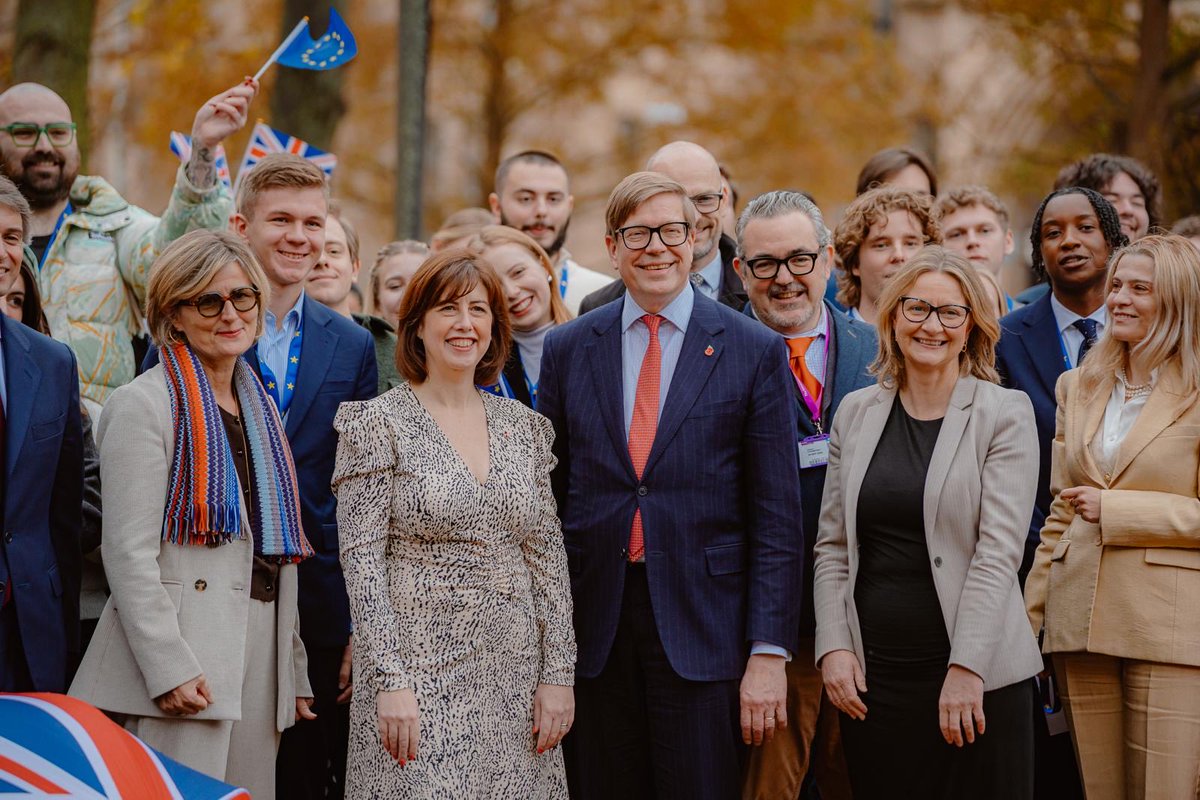
@Smyth_Chris I don’t understand why you think that anything other than rejoining the EU is “tinkering” at the edges. Other European states manage relations with EU in different ways. Why can’t the U.K.? Or is the essential problem that the U.K. simply doesn’t know what it wants?
Isn’t the point that tuition fees - including extracting.higher fees from international students - has not made UK HE sustainable. Home fees don’t cover costs and international fees make institutions vulnerable to change. Oxbridge manages this through philanthropy and endowments.
A lot has been said about this topic already, and I won’t repeat the various arguments. I’ll just add one thing. The EU obviously believes that the U.K. HE sector is an important element of trade policy and human capital formation in Europe. It’s great to be highly valued. But it reinforces that U.K. (ie including devolved) governments need to take a very close interest in the financial sustainability of a key sector for our economy.
It has taken two years for the U.K. Labour government to negotiate today’s modest deal with the EU. What would make anyone think rejoining the EU would happen anytime soon? If that’s the key to growth it’s a long time off.
Remain and Leave voters each believed their vote would make people better off. Leave won and people are worse off. The challenge for Rejoin Is to demonstrate that people will be better off. That’s not a given.
What does the EU make of Burnham, Britain and the new debate on Brexit?. My report after a two-day deep-dive in Brussels. Thank you James Harding for the commission! https://t.co/0drIKiDZK9
@TimesRadio@Dannythefink The problem with labels like Remain or Leave or Rejoin is that they reduce complex and differentiated relationships down to singularities. Instead there are options beyond the current status quo that are not EU membership. Let’s talk about that.
@lionelbarber@adamboultonTABB A little explainer on Article 49 and why it’s different from Artixle 50. Or why Leave was legally easy and Rejoin isn’t:
https://t.co/vBo5ktbegy
@Mij_Europe@SarahLudford@andyburnham Surely the number of veto points on a full membership negotiation are so multiple as to make it a highly unattractive option. The logic seems to be that if any option is painful go for the pain that has the biggest prize.
If Iceland had decided to join EU then EFTA and EEA Agreement would be destabilised. Making EFTA a clear alternative to EU and expanding the EEA Agreemebt could be attractive to U.K. Yet no one seems to be pushing this.
As I’ve been writing recently on Substack it’s just way harder to (re)join the EU than it is to leave. Exit was a unilateral act; joining demands hard negotiations.
Also a referendum that saw English voters reject EU membership would likely boost Scottish independence efforts
NEW: Cabinet minister Lisa Nandy appears to suggest she opposes rejoining the EU, saying Britons do not want to “relitigate endless conversations about in or out”
As Bloomberg reported on Saturday there is significant concern high up in government about Andy Burnham’s Brexit strategy, with several cabinet ministers trying to dissuade the PM from backing rejoining and committing to an in-out referendum in the next parliament
This is the transcript of her Sky interview with @MarkUrban01 this morning
Lisa Nandy: People don't want to relitigate, sort of endless… Yeah, I mean, people don't want to relitigate endless conversations about in or out leave or remain. They don't want to repeat those years. But what they really do feel very sharply is that the Brexit deal that we got is not working for people. It's not working for small businesses. We're struggling to trade. It's not working for upcoming bands who want to tour. It's just it's not working for kids who need to access clinical trials. It just is not working.
Mark Urban: Sorry to jump in. But if I were to say to you, reversing Brexit would have a catastrophic effect for politics. Who said that? You know what I'm going to say, don't you? That was you
Lisa Nandy: Yeah so I've always. Yeah, I've always, sorry…
Mark Urban: No, go ahead, go ahead.
Lisa Nandry: I was just going to say, I've always thought that when we got to the point, I campaigned for a remain in the referendum, and when we got the result, 52% to leave, 48 to remain. I always said that we have to respect that result, and we need to respect the fact that there are significant numbers of people who disagree. We need to leave, but we need to have a close relationship with our closest neighbours across Europe. And we honoured one part of that deal. We did leave eventually. We didn't honour the other because we didn't have the close relationship, and I think it is right to respect the fact that we went round that track many times and people made a decision. I think it's also right to respect the fact that for people across this country, the deal that we got is not what we were promised and we need to do better.
As this and other social media cranks up the debate on the U.K. rejoining the EU it is helpful to recall why leaving the EU was easy and joining is hard 👇
https://t.co/v7GU8CswKp
@anandMenon1 Banal but key point is that it was easy for UK to leave EU as it was a unilateral choice. Getting back in would be much harder 👇
https://t.co/vBo5ktbegy
The UK is back in Erasmus+ from 2027! This will bring new opportunities for people in further and higher education, adult education, schools, youth work, and sports across the UK.
(1/4)