Sir #DavidAttenborough
“Things are going to get worse. This is the new extinction. We are in terrible, terrible trouble and the longer we wait to do something about it, the worse it is going to get."
#ClimateEmergency
https://t.co/EfMrZh9RGB
With 6 more straight days of 100% WindWaterSolar for part of the day, CAISO has now reached 100% WWS on 210 of 289 (72.7%) days in 2026, which compares with 51 days in 2023.
WWS has met 55.2% of all demand in 2026, vs 46.6% in '23.
17.2% of all hours in 2026 have had >100% WWS, vs 3.1% in '23
'Scientists detect a sharp acceleration in global warming'.
"How quickly the Earth continues to warm ultimately depends on how rapidly we reduce global CO2 emissions from fossil fuels to zero."
Stefan Rahmstorf
#ClimateChange#ClimateCrisis
https://t.co/Yn0jMLcTZw
Sir #DavidAttenborough
“Things are going to get worse. This is the new extinction. We are in terrible, terrible trouble and the longer we wait to do something about it, the worse it is going to get."
#ClimateEmergency
https://t.co/EfMrZh9RGB
Scrapping UK green home regulations would mean higher bills for homeowners, but would be cheaper for developers (many of which historically donate to right-wing political parties)
https://t.co/SqLGJKm3E8
Great article but Ireland’s energy transition: the wolf in sheep’s clothing 🧵
1/ Wind and solar are essential, but weather-dependent. Nuclear can provide firm, low-carbon power. A resilient grid needs a balanced mix of renewables, dependable generation, storage and interconnection—not just more installed capacity.
2/ Data centres need reliable 24/7 electricity. Like other large industrial users. Keeping them online requires firm energy, balancing, frequency control, inertia, voltage support and grid reinforcement. These are real costs, not accounting details.
3/ Enter the cap-and-floor model. Revenue floors can reduce interconnector investment risk; caps limit retained revenues under the scheme’s rules. But who ultimately bears the downside, and who benefits from the upside? And they like to whiff of renewables and it’s proved a good business model.
4/ Merchant development fragments the system into privately financed assets: interconnectors, batteries, LDES and grid services. Each pursues its own revenue streams, while the electricity system must coordinate the whole. Revenue stacking can be efficient—but overlapping subsidies and socialised costs need scrutiny.
5/ Here’s the danger: private investors secure regulatory support, data centres secure the power they need, and households and SMEs may absorb part of the wider network and system costs through electricity prices and regulated charges. The actual allocation must be demonstrated, not assumed.
6/ Nuclear, wind, solar, storage and interconnection should be planned as one integrated system. Firm low-carbon generation can complement renewables; storage shifts energy through time; interconnectors share resources across borders. None replaces the need for proper grid engineering.
7/ If large energy users drive new infrastructure demand, they should bear an appropriate share of the costs. If the public helps de-risk private investment, consumers should receive transparent, measurable benefits in return.
The wolf in sheep’s clothing isn’t clean energy. It’s a fragmented development model that can privatise returns while spreading risks and costs across the public.
Ireland needs a dependable, low-carbon electricity system—not a blank cheque for investors or an assumption that households will pick up the tab. 🧵👇🧐
Just a few thoughts and observations.
As the glaciers continue to melt and meltwater lakes continue to breach, this will become an ever more common sight in the Himalayas and other high mountain regions
Hedgehogs have gone extinct in much of Scotland, a comprehensive new study finds. Across the whole of rural U.K. their numbers have crashed by nearly three quarters since 1981, and the rate of decline has more than doubled in the last 10 years.
https://t.co/oN83yeHC8V
@VoteClimateUK No, the government didn’t publish it! But it was warned by its own spy chiefs that biodiversity collapse overseas, partly driven by climate, is a major national security threat
https://t.co/D2QpfipJLM
#Australia uptake of #solar panels is already through the roof. How much higher could it get? Sunshine, government subsidies and high power prices are driving record solar installations.
https://t.co/lgXL4UZHzO
NEW BRIGHT SPOTS: How countries with hot climates, fast-growing economies, expensive energy, and fragile grids turn to solar.
Not because of policy. People and businesses voted with their feet.
https://t.co/7uaHturBAE
A new study has examined 20,736 scientific publications about climate tipping points. Several of those are estimated to be crossed around 1.5 degrees warming, i.e. any time soon: permafrost thaw, Greenland Ice Sheet, North Atlantic Subpolar Gyre.
https://t.co/H7sNb0Nm5o
Main Topic: Climate Decision-Support Should Focus on Policymakers and Business Leaders Before Consumers. Via @PsychToday
On The Extreme Temperature Diary SAT 10/10/2026
At: https://t.co/fad07z19CT
+ #climate#weather + rec. temp reports
@KHayhoe@ProfStrachan@MichaelEMann
Speaking tomorrow at New Scientist Live with Profs Behrens & Seddon.
The Paris climate challenge is not a matter of urgency, but of emergency. Urgency seeks to accelerate change; emergency demands a fundamentally different policy & technology agenda.
https://t.co/P1Keh0Iuif
"review of 12 large-scale projects reveals a litany of cost-overruns and missed targets, with a net increase in emissions."
Fossil Fuel Companies Made Bold Promises to Capture Carbon. Here’s What Actually Happened.
https://t.co/eY5qa9lQoi @DeSmog@LMicalBuchsbaum Edward Donnelly
199th of 268 days (74.3%) of the year with WindWaterSolar meeting > 100% of demand for part of the day.
Compares with
186 days in '25 through 268 days
119 in '24
51 in '23
56.1% of all electricity in CA produced with WWS in '26
Solar up 52%, wind up 23%, batteries up 309%, gas down 47% in '26 v '23
The UK’s spy chiefs examined the impacts of the collapse of overseas ecosystems, under pressure of climate crisis and biodiversity loss, on UK’s national security.
Their findings?
“Apocalyptic.”
UK defence and society at risk, impacts within 5 years.
https://t.co/D2QpfiqhBk
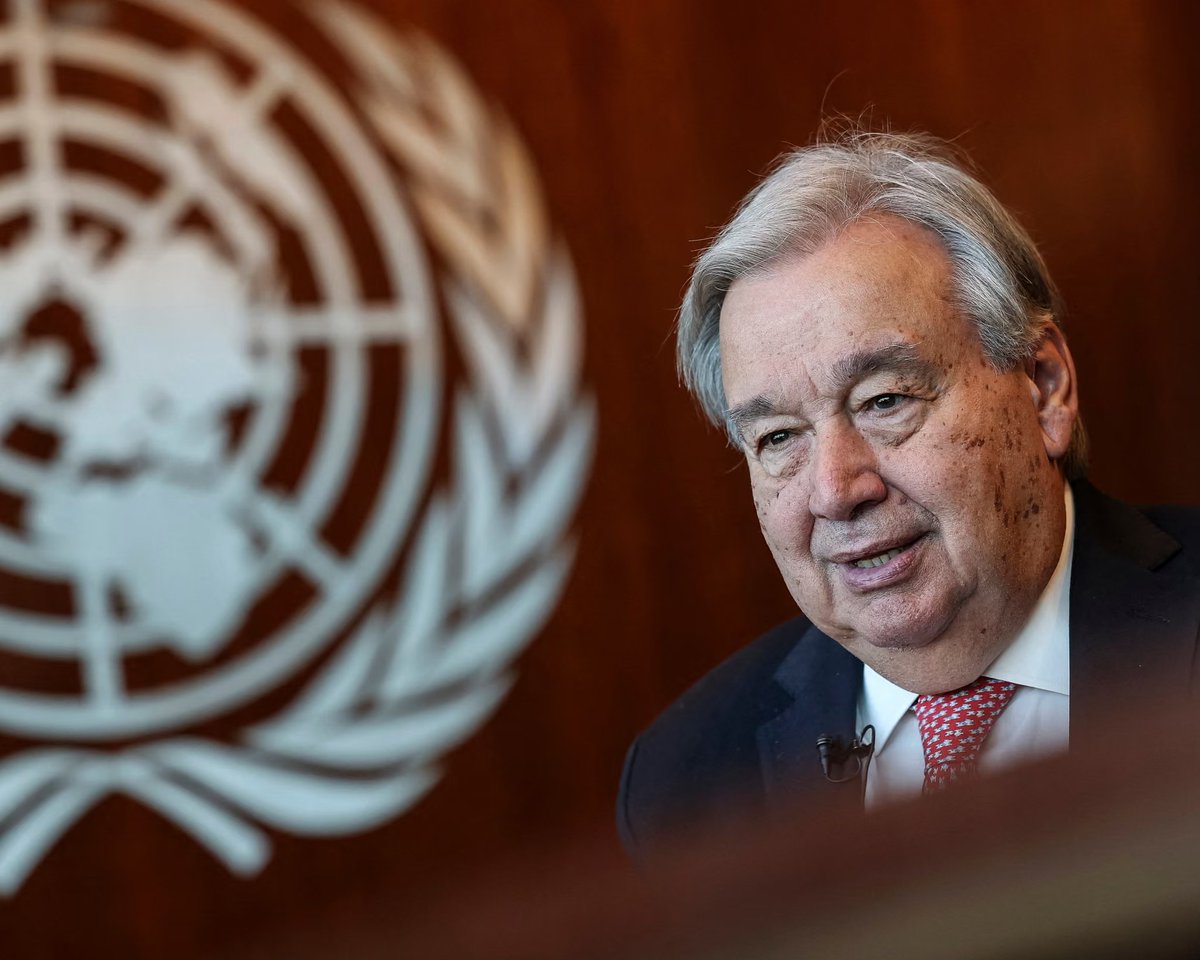
Main Topic: Last Major Speech by Outgoing U.N. Secretary António Guterres Emphasizes the Climate Crisis via @guardian
On The Extreme Temperature Diary THU 9/24/2026
At: https://t.co/fad07z1Hsr
+ #climate#weather + record temp reports
@KHayhoe@ProfStrachan@BrianMcHugh2011