Today is the US launch of Josephus and Jesus: New Evidence for the One Called Christ (Oxford). The book, however, is already SOLD OUT! Oxford is printing new copies. Due to a generous donor, you can get a free digital copy at https://t.co/C6quqdHuym
Pir Natal (Christmas mat) from the Asmat people of Indonesian Papua. Showing Mary giving birth in a traditional Asmat forest camp. Cambridge Museum of Archaeology and Anthropology.
Happy to announce I built a Greek/English reader site with all the surviving plays of Aeschylus, Sophocles, Euripides, & Aristophanes.
Multiple translations for each play; click to parse & define for any Greek word; full Greek & English search.
https://t.co/8RevjZwyLl
Professor Daniel Schwartz of Hebrew University has just published in the Journal of Jewish Studies a 24-page review article on my book, *Josephus and Jesus*.
https://t.co/KsYHzhUmWS
Professor Schwartz is the first academic reviewer, to my knowledge, to state his disagreement with my conclusions about the authenticity of Josephus's testimony about Jesus (the Testimonium Flavianum), but he is still complimentary, he writes:
“To conclude: although Schmidt's erudition and arguments are impressive, I still tend to believe that the TF proclaims Christian beliefs.” He also adds that I provide “a detailed and well-informed study of some details of Judaean prosopography of the first century, one that is valuable for its own sake.”
I am honored that such eminent scholars have taken so much time in responding to my book. Daniel Schwartz, Steve Mason, and James Carlton Paget have combined to write over 50 pages in their academic reviews. What is more is the fact that all three have approached the task with admirable clarity and charity, having understood and fairly portrayed my arguments. Mason stated that my arguments for authenticity were “strong” and Paget wrote that my argument is the “best case” hitherto made for authenticity.
I am gathering and going through all the reviews thus far written and am finding them very stimulating. I hope to incorporate them into some kind of second edition or follow-up article in the future.
@McCormickProf Agreed. It is sad that things have come to such a point. On the other hand, I found my time at the James Madison program to be a great breath of fresh air in this regard.
I'm very much looking forward to being part of the Tyndale House World of the Bible conference on Saturday October 24th. Live stream tickets are available
https://t.co/cD4GskrJYY
I look forward to attending (rather than speaking at) the Tyndale House World of the Bible conference on Saturday 24 October in Cambridge, which is also available on livestream worldwide.
Hear about the New Testament, William Tyndale and the date of Christmas from Dirk Jongkind, Tony Watkins and Tom Schmidt. Link below.
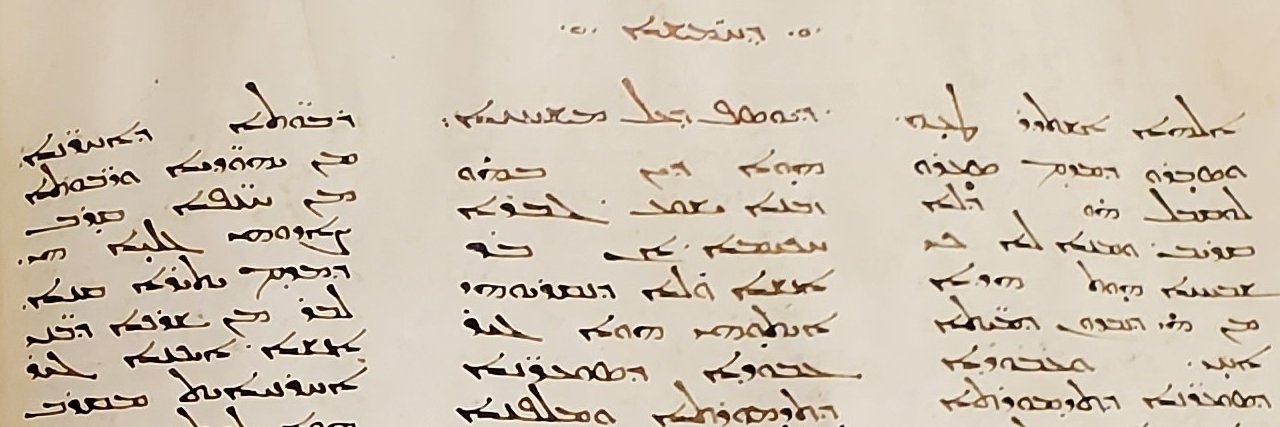
@craftedheavenly Independent Syriac and Latin translations instead read "thought to be" or "believed to be" the Christ. Another Latin translation and a secondary Arabic translation supports these. So I don't think the original Greek phrase was that Jesus "was the Christ."
In my opinion the strongest evidence is the fact that every single phrase in the testimonium and can be indexed back to Josephus, and when examining those parallel phrases it is clear that Josephus often uses the same phrases in ambiguous and not necessarily positive ways. This clears away the two main objections against the authenticity of the testimonium in so far as the testimonium matches Josephus's style and is not overly Christian in tone.
Happy to report that https://t.co/o6DqEwzbp4 has linked to the Wall Street Journal op-ed "Unlocking the Josephus Code" about my book. Thank you to everyone who has linked to it. @RealClearRelig
Think of it as a reversal of “The Da Vinci Code.” A professor of religious studies has written a work of genuine scholarship that affirms Christian traditions with a new interpretation of an ancient text.
My latest: Unlocking the Josephus Code https://t.co/bK0i4Jm6mu via @WSJFreeEx
The Wall Street Journal ran an op-ed on my book Josephus and Jesus today. Please share and comment on the article!
https://t.co/tWFVEg649o
@WSJFreeEx@heymiller
John Miller writes: "Think of it as a reversal of “The Da Vinci Code.” Instead of a bestselling novel by Dan Brown that presents make-believe research to dispute the story of Jesus, a professor of religious studies has written a work of genuine scholarship that affirms Christian traditions with a new interpretation of an ancient text."
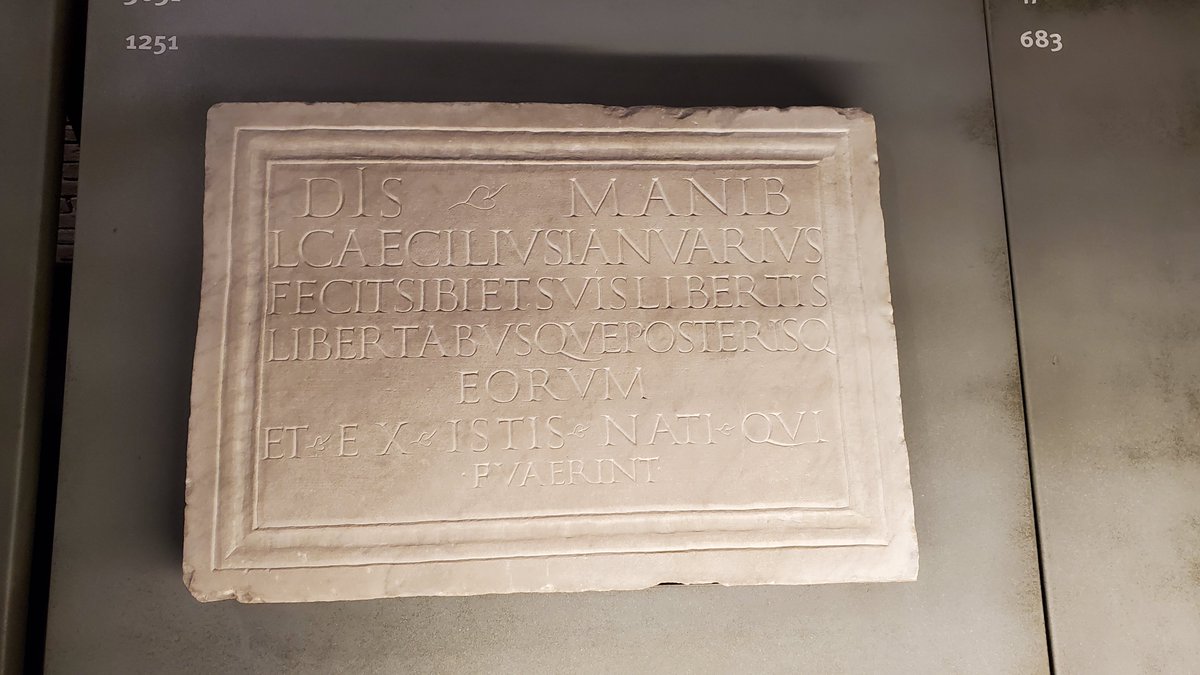
Second century tomb inscription from Ostia
Dis Manib(us).
L(ucius) Caecilius Ianuarius
fecit sibi et suis, libertis,
libertabusque posterisq(ue)
eorum
et ex istis nati qui
fuaerint (!)
For the souls departed. Lucius Caecilius Januarius saw to (the making of this tomb) for himself, for his family, his freedmen and freedwomen, their descendants and whoever is born of them.