Instead of asking “How do we punish this behavior?” Ross Greene asks educators to consider: “What problem is this student struggling to solve?”
https://t.co/qppWBQhU5t
A MIT professor taught the same lecture every January for 40 years, and every single time it was standing room only.
I watched it at 2am and it completely rewired how I think about communication.
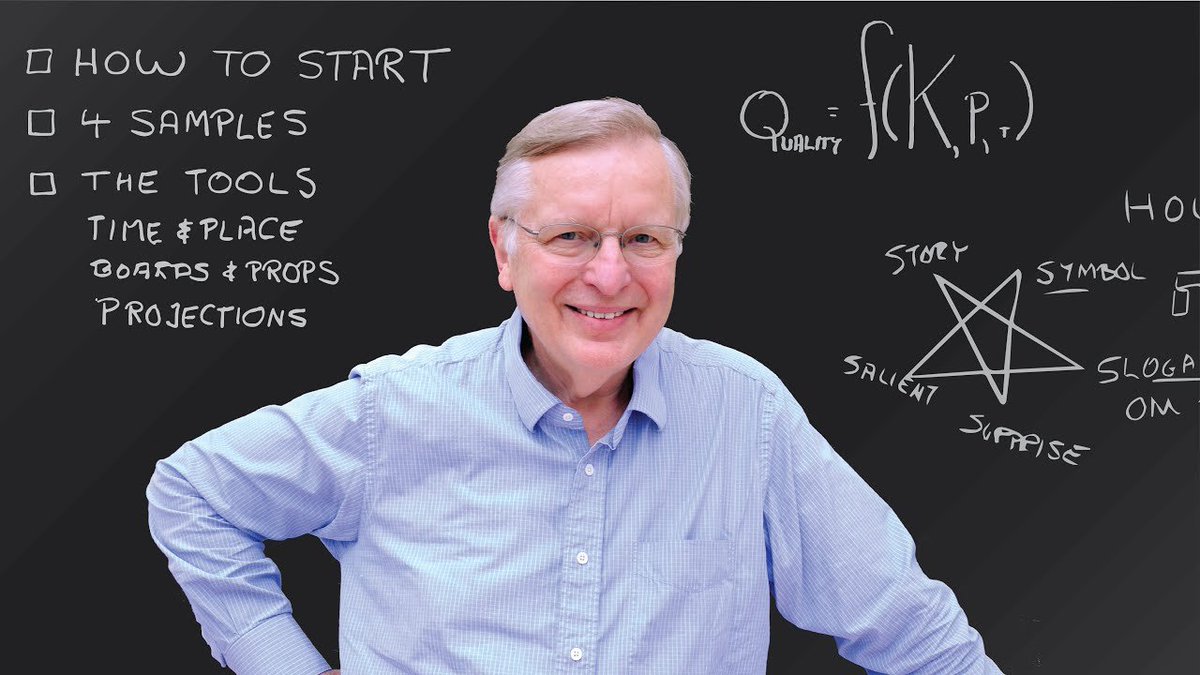
His name was Patrick Winston. The lecture is called "How to Speak."
His opening line hit like a truck: your success in life will be determined largely by your ability to speak, your ability to write, and the quality of your ideas in that order.
Not your GPA. Not your pedigree. Not your IQ. How you speak is what separates people who get heard from people who get ignored.
Here's the framework he drilled into MIT students for four decades.
He said never start with a joke. Start by telling people exactly what they're going to learn. Prime the pump before you pour anything in. He called it the "empowerment promise" give people a reason to stay in their seats within the first 60 seconds.
Then he broke down the 5S rule for making ideas stick: Symbol, Slogan, Surprise, Salient, and Story. Every idea worth remembering hits at least three of these.
The part that floored me was his "near miss" technique. Don't just show what's right show what almost looks right but isn't. That contrast is when the brain actually locks something in permanently.
His final rule before any big talk: end with a contribution, not a summary. Don't recap what you said. Tell people what you gave them that they didn't have before they walked in.
I've used this framework in pitches, interviews, and presentations ever since watching it, and the results are not subtle.
Patrick Winston passed away in 2019, but this lecture is still free on MIT OpenCourseWare. One hour, watched by millions, and it costs absolutely nothing.
The most important class MIT ever put on the internet isn't about code or math. It's about how to make people actually listen to you.
The whole of North India is covered with the severe pollution created by the US & Israel attack on Iran.
This unwarranted war (sheer foolishness) is accelerating the demise of the human race.
The problem isn't that there aren't good people in India. The problem is that the system is designed to stop good people from surviving . What's your experience been?
@JioMart_Support@jiomart
This is really frustrating. Ordered a product on 16th Feb, delivery date was 17th 2026. It hasn't been delivered. I asked for cancellation but it is not cancelled. No refund.
Your App doesn't work, it has technical glitches as per your support team.
@JioMart_Support Hello
No refund till now?
What is happening?
The order wasn't delivered for more than 15 days. Even after order cancellation 5 days?
Why such a delay when the order didn't even reach me?
Expedite it.
When the Government of India announced the Padma Shri for Dr. Tapan Kumar Lahiri,
the protocol required him to travel to Rashtrapati Bhavan in New Delhi to receive the honor from the President.
However, Dr. Lahiri was hesitant to go. His reasoning was simple: "If I go to Delhi, who will look after my patients in the OPD?" For him, a day away from the hospital wasn't a holiday; it was a day his patients—many of whom traveled from Bihar and rural UP—would go untreated.
Finally he did go given the prestige associated with the event.
Who is Dr Tapan Lahiri?
Dr. Tapan Kumar Lahiri is a legendary Indian cardiothoracic surgeon and professor commonly referred to as the "Saint of BHU". Dr. Lahiri has done FRCS and MCh and working in BHU.
Dr. Lahiri’s commitment to the poor is extraordinary.
In 1994, when his salary (including allowances) exceeded ₹1 lakh, he stopped taking it entirely, directing the university to use the funds for the treatment of underprivileged patients.
After retiring in 2003, he continued this practice with his pension. He keeps only enough to cover two simple meals a day and donates the remainder to the BHU patient fund.
Even in his 80s, he has been known to walk to the hospital at 6:00 AM daily, carrying a simple bag and a black umbrella, to check on his patients.
As he says
"With the grace of Lord Vishwanath and Maa Annapurna, I will keep serving patients till my last breath."
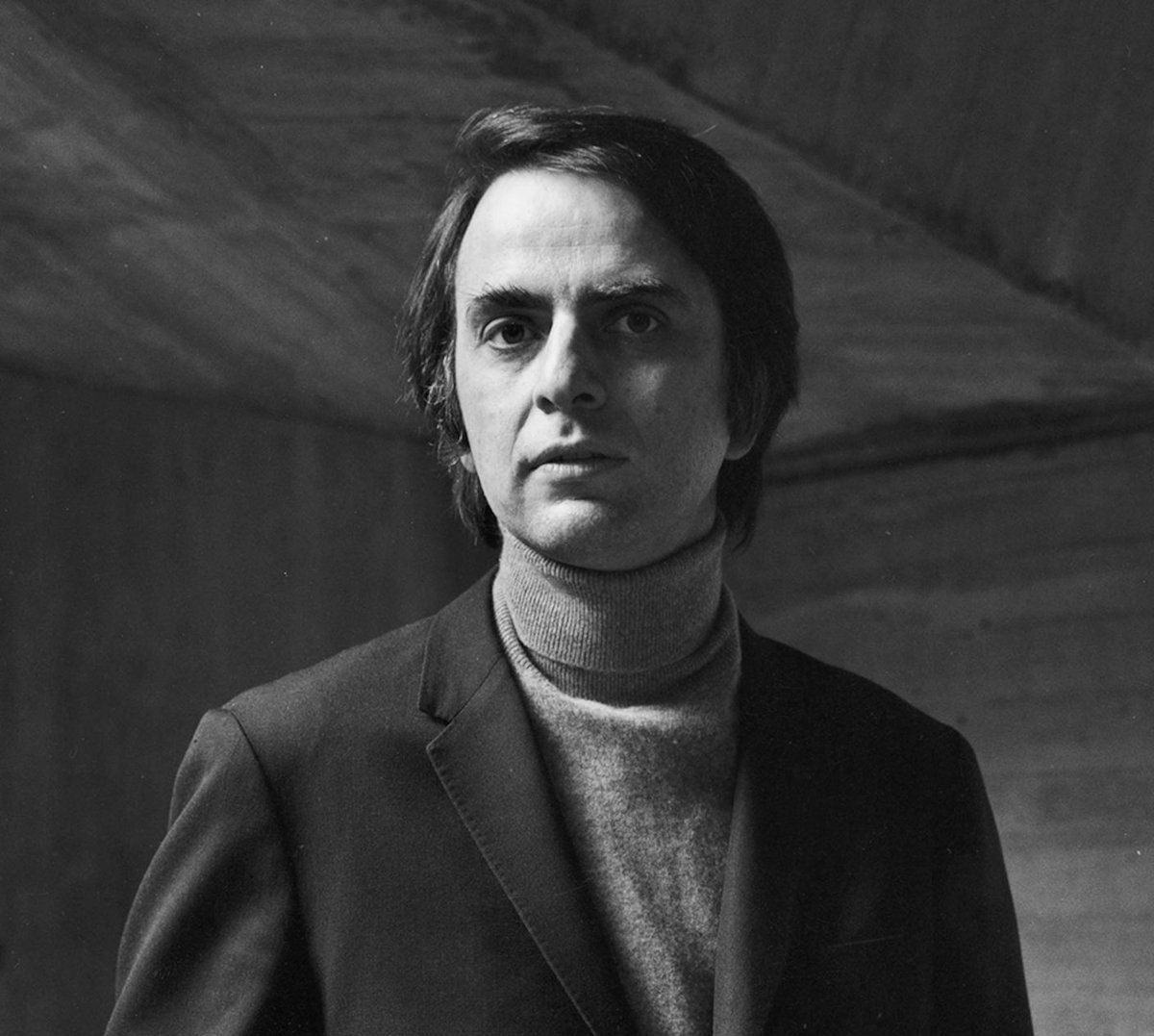
“If we continue to accumulate only power and not wisdom, we will surely destroy ourselves... If we become even slightly more violent, shortsighted, ignorant, and selfish than we are now, almost certainly we will have no future.”
— Carl Sagan
Want your own private AI assistant? Install a small LLM on your Arduino UNO Q to create a local chatbot that's capable of running offline: https://t.co/Lb1bXN6nG6
🚨 BREAKING: Passive studying is dead!
Claude can train your brain harder than most professors ever will.
Here are 10 Claude prompts to learn anything 10× faster 👇
The F-15 “friendly fire” claim is either *lie* or a US command failure. But something is OFF.
After talking to experienced military sources, here’s how we KNOW the reporting is cover:
* Kuwait uses three types of air defense system:
>Patriot
>Improved HAWK
>SHORAD
A SHORAD type air defense would not reliably take down an F-15.
An improved HAWK *could* hit an F-15 BUT because a hawk requires constant radar illumination, the pilot would be alerted to the lock by radar detection, could deploy chaff, activate ECM, and take maneuvers against it. So a hawk striking 3 planes is deeply unlikely.
The Patriot system can reliably strike targets like an F-15, and so we know it’s likely this was the system used.
* Patriot systems rely on multiple ID types to engage a target:
>Radar track behavior rules (it only shoots at things that act like a missile)
>IFF signature (a broadcasted automatic signature between fighter craft and ground systems)
>Link-16 (an integrated system for IDing friendlies in the air space, that is shared via integrated command)
>Air tasking order data (the equivalent of an issued flight route)
* F-15 broadcast an IFF that Patriot batteries can detect when the proper encryption key is shared with allies.
* Kuwaiti Patriot batteries support Link-16 integration with US data when properly shared.
* Our agreement with Kuwait to operate regionally requires sharing all Air Tasking Orders in their air space.
* After a single friendly fire joint emergency command orders would need to be shared with Kuwait.
In order for Kuwait to hit 3 F-15 with Patriot friendly fire in one night would require ALL of the following:
* We didn’t share IFF encryption keys or ID data with them, or were not broadcasting IFF.
* We did not share Link-16 data with them, or Link-16 broadcast capabilities were destroyed.
* We did not share Air Tasking Orders with them.
* We did not share emergency alerts with them after the first ejection took place.
* The area was under extreme barrage of missiles FAR more than reported.
* There was no AWACS data sharing, or no higher level C2 node integration, or these were damaged.
So either:
1) We made an operational decision to ignore our standard practices and leave an ally in the dark, not share data and risk American lives
OR
2) The Iranian attack was *far* more successful than the US let on, and damaged critical ID and comms infrastructure of US assets in Kuwait.
Either way, we are not getting the real story from the US side here.
People with contacts in Kuwait, or active command, should be asking serious questions about this blunder.
As it likely points to a gaping hole in US defense that puts our service members at serious risk!
@JioMart_Support Hello
No refund till now?
What is happening?
The order wasn't delivered for more than 15 days. Even after order cancellation 5 days?
Why such a delay when the order didn't even reach me?
Expedite it.