📚 New Book Announcement: "AI for Radiology" 📚
I hope my latest book will become a valuable resource for medical professionals, computer scientists, and anyone interested in AI's clinical applications.
https://t.co/aSy1tlkiz0
#AI#Radiology#MedicalImaging
NVIDIA’s Graduate Fellowship Program is now accepting applications for the 2026–2027 academic year. Selected Ph.D. students receive tuition and stipend coverage up to $60K, plus mentorship and technical support from top NVIDIA researchers during an NVIDIA internship.
If you’re advancing work in AI, robotics, computer graphics, autonomous vehicles, healthcare, HPC, or related fields — this is your moment.
📅 Apply by Sept. 15, 2025: https://t.co/MnIJqxahUq
We're hiring! We have openings in 9 subspecialties, including Neuroradiology, Breast Imaging, IR, Pediatrics & MSK. Join a leading academic department committed to clinical excellence, research & education. https://t.co/dB8NZLnKI2
📣 Announced at #GTC25: NVIDIA cuML now accelerates scikit-learn, the most popular machine learning library, up to 50x with zero code changes.
Zero code change acceleration is also supported for HDBSCAN and UMAP.
Read the announcement blog: https://t.co/uPz4L1tDZr
You heard it at #SC24, NVIDIA #BioNeMo Framework is now open-source.
Researchers worldwide can accelerate the development of life-saving treatments by tapping into the collection of accelerated programming tools for biomolecular research. #drugdiscovery https://t.co/MIoAMd7ka8
Hugging Face and NVIDIA are teaming up to advance robotics.
By combining Hugging Face's LeRobot with NVIDIA AI, Omniverse, and #robotics technology, we're enabling researchers & developers to innovate.
#CoRL2024 https://t.co/UuonbzojrS
Learn more about the new NVIDIA AI Blueprint for video search and summarization, which speeds up the development of visual AI agents.
It uses #VLM, LLMs, and the latest RAG techniques for long-form video understanding. https://t.co/BEIuEW4URh
Discover how to build powerful multimodal visual AI agents with NVIDIA NIM.
Get hands-on with Jupyter notebooks for applications like streaming video alerts, structured text extraction, multimodal search, and few-shot classification. https://t.co/KD0wxp2hOQ
🔬 New research from @UTSWMedCenter creates a 4D deep learning #AI model for identifying #breastcancer metastasis using only MRI and clinical data, for early detection without invasive biopsies.🩺
🔗 Learn more: https://t.co/YLVw3yH23o
https://t.co/346w8YMv6a
🙌 Join a series of free, virtual faculty development workshops w/ training in #deeplearning, #generativeAI and #LLMs, data science, & accelerated computing.
Register now ➡️ https://t.co/4dQow7SdrU https://t.co/OmJdtomVo6
See the NVIDIA technical blog on how we are optimizing the 🦙 Llama 3.2 collection of open models with NVIDIA NIM microservices to accelerate flexible #AI experiences: https://t.co/Hf5Qat9Cpe
Experience high-efficiency NVIDIA Llama-3.1-Nemotron-51B - a NAS-optimized model achieving 2x throughput while preserving accuracy runs on a single H100 GPU. Technical deep dive ➡️ https://t.co/Yn0M3bbdjG
Leading U.S. medical centers and research institutes are tapping into federated learning to detect cancer. This research collaboration uses NVIDIA FLARE and MONAI for secure, flexible AI model training for tumor segmentation. #NVIDIAAcademicGrant https://t.co/MmYesaFN8t
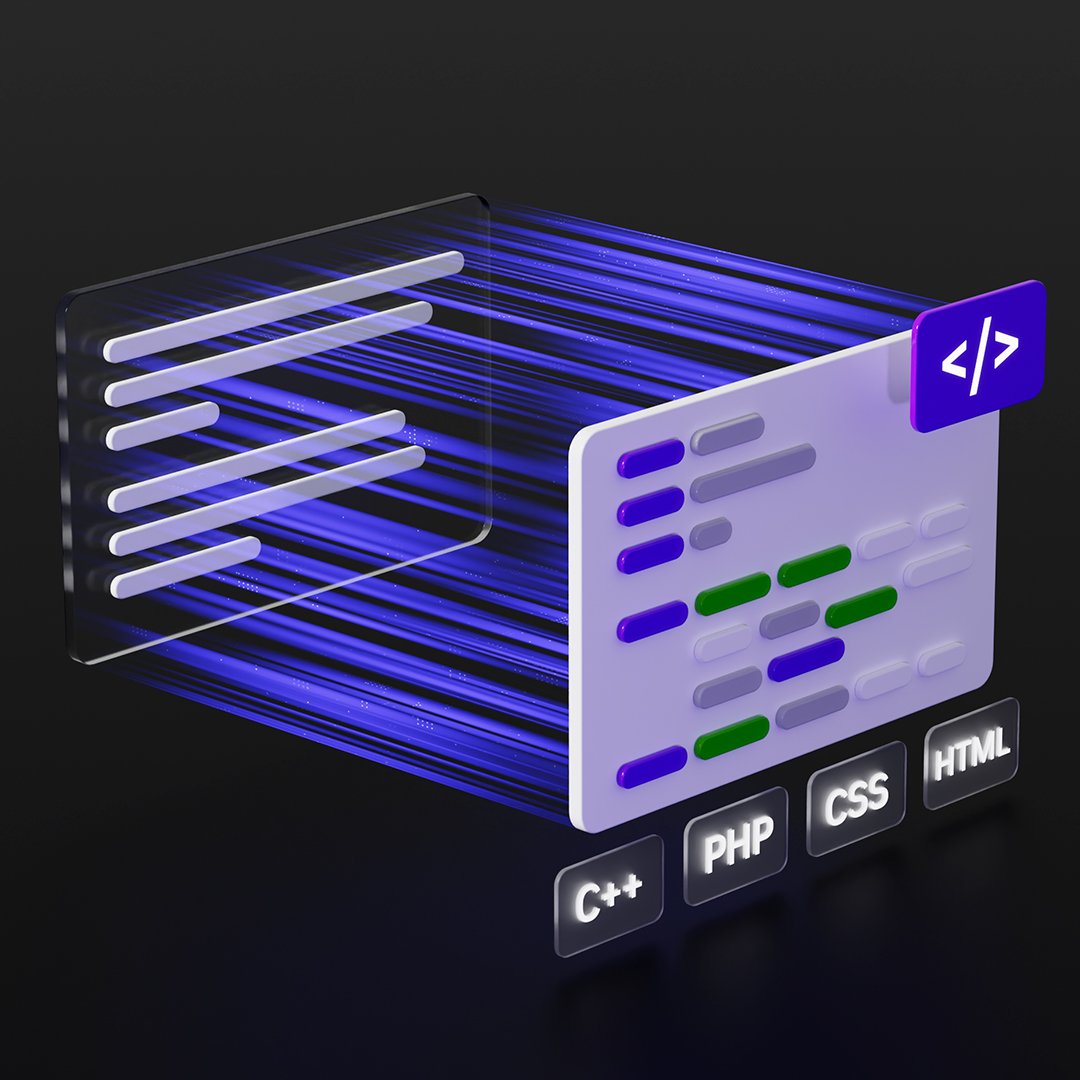
Generate code with Abacus AI’s Dracarys Large Language Model
Dracarys, fine-tuned from Llama 3.1 70B and available from NVIDIA NIM microservice, supports a variety of applications, including data analysis, text summarization, and multi-language support. https://t.co/iScum29d2B
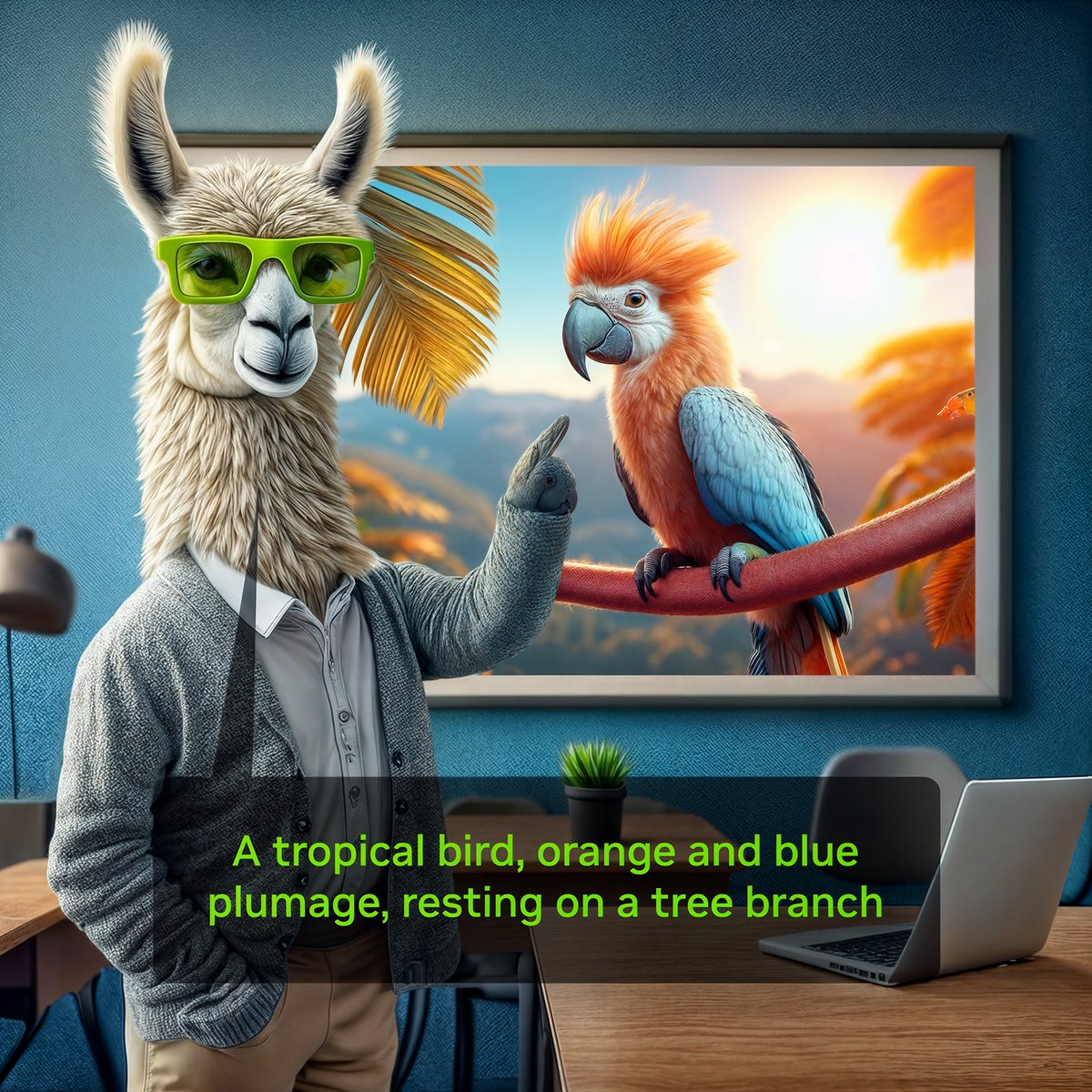
Generate images with consistent characters without fine tuning or training. Consistory maintains subject consistency between text-to-image generations on pretrained models. Explore: https://t.co/krInXuWzI7 https://t.co/XMAETL4PEx
📚 Introducing the new Generative AI Teaching Kit for educators developed w/ Professor Sam Raymond from @dartmouth.
Enable students to explore the field of #GenAI w/ hands-on experimentation in #LLMs, diffusion models, & more. https://t.co/9PS487iZlc
💫Excited to share our new study: “Uncovering Knowledge Gaps in Radiology Report Generation Models through Knowledge Graphs”.
We’ve developed a system ReXKG to extract structured information from radiology reports, building a comprehensive knowledge graph for in-depth model analysis.
Our study compares AI-generated vs. human-written radiology reports, evaluating both specialist and generalist models.