Sindh has cut its agriculture research and development allocation by 57pc for FY27. That is the immediate fact. It is also the wrong cut, in the wrong province, at the wrong moment
There are a few Pakistani brands that carry the kind of memory Shezan does. It is a brand that has lived in school canteens, kitchen shelves, summer trips and neighbourhood stores for decades. But that nostalgia is now being tested against hard numbers.
After suffering one of the worst years in its recent history, Shezan International appears to be turning a corner. Sales crossed Rs9 billion in 2025 for the first time. Earnings recovered from a loss per share of Rs47.89 in 2024 to earnings per share of Rs16.87 in 2025. The latest nine-month accounts for 2026 suggest the recovery is continuing, with net profit rising sharply over the same period last year.
On the surface, this looks like a familiar corporate turnaround story: a legacy consumer brand hit by inflation, taxes, weak demand and high costs begins to recover as margins stabilise. But Shezan is not a conventional Pakistani consumer company. Its story is also about religious persecution, a forced business split, decades of public confusion over ownership, a 33-year trademark fight and the economic logic of adding value to agricultural produce in a country that still exports too many commodities in raw form.
The company has had to compete not only with multinational beverage makers, carbonated drinks, changing consumer tastes and a punishing tax structure, but also with repeated boycott campaigns tied to the Ahmadi faith of its founding family. Despite the challenges, this is the story of how they have managed to survive.
https://t.co/Eax0jxCjyc
The PMEX and the IFC have entered a partnership to strengthen agriculture commodities trading in Pakistan. The first step is formalising and digitising warehouses.
At a time when Pakistan’s major crops are failing, the country’s livestock sector is thriving against all odds. Could it be enough to keep us food secure?
Pakistan’s agriculture supply chain is broken. And the problem isn’t just climate change or low yields. Most farmers lose out after harvest as well. Crops are sold at spot-markets. Unless a farmer has access to storage or transport, they are forced to sell at whatever rate they get.
In most parts of the world, farmers can partake in future markets. They can hedge against prices going down in the future or store their crop until prices improve. Essentially, the farmer takes on the role of the trader for his own crop. While agricultural commodities are traded on the Pakistan Mercantile Exchange, it remains a fraction of the overall agricultural output. PMEX recorded Rs9.77 trillion in overall trading volume, yet less than 1% of Pakistan’s agricultural crop volume is sold through it.
Perhaps the biggest obstacle is that Pakistan only has 37 accredited warehouses under the electronic warehouse receipt system, with a capacity of 461,550 tonnes, against wheat output of about 29.6 million tonnes in 2025-26. If this system is made accessible through nearby warehouses, farmer groups and faster bank financing, it could change how farmers sell.
Expanding access to these warehouses is at the centre of a new partnership between PMEX and the International Finance Corporation. But will they be able to scale it?
https://t.co/wOJzNMhtvP
With their bid for Bank Makramah, the Essarani family may become the first Pakistani Hindu bank owners since Partition. The family, which is prominent in industrial, agricultural, and commodity trading, is trying to expand its footprint into financial services for the first time.
Pakistan’s retailers have finally gotten the tax system they have been demanding for years. Now the real question is: will they actually use it, or will they try to duck this too?
Under the new Fixed Tax Asaan Scheme announced in the federal Budget for 2026-27, retailers with annual sales of up to Rs20 crores will be able to pay one per cent of turnover as income tax, subject to a minimum annual payment of Rs25,000.
The scheme replaces the failed Tajir Dost initiative and gives traders several major concessions. Returns will be simpler, routine audits will be restricted, and tax officials will have limited access to business premises. Many of the documentation requirements that traders have long opposed will also be relaxed. This is not just another tax scheme. It is largely the model trader groups themselves have asked for.
That makes the next step important. If retailers still refuse to register or understate their sales, the problem can no longer be blamed only on complicated rules or harassment by tax officials. It would suggest that the real resistance is to paying tax at all.
https://t.co/HmZ6xNrKvS
Historically, most long-term saving in what is now Pakistan has not involved financial institutions. That is changing as the upper middle class start to invest through the stock market and mutual funds.
A recent report on Global Food Crises has placed Pakistan as one of the most food insecure countries in the world with at least 11 million people facing acute food insecurity. The crisis is one of our own making. But is there a way out?
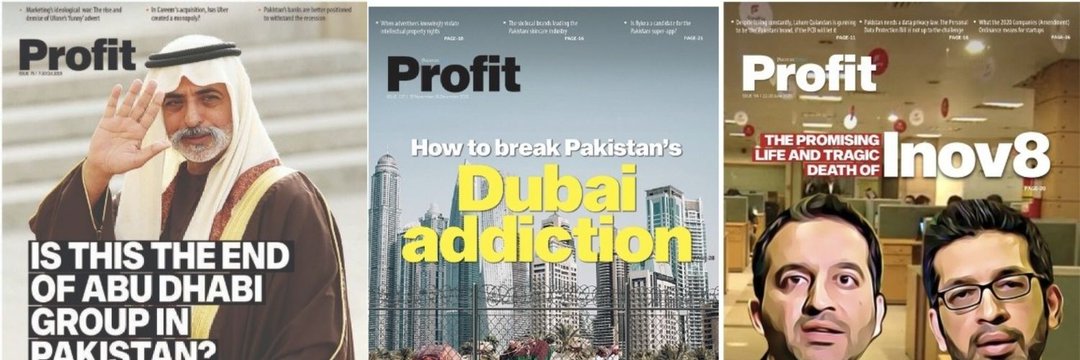
Up until last year, there was a flight between the UAE and Pakistan every 12 minutes. By some estimates, there were at least eight khepiyas on any given flight between Karachi and Dubai. But with the UAE closing itself off to Pakistani travellers and tourists, the infamous khepiya network that has long provided “imported” consumer goods from Macbooks to chocolates is on the verge of collapse. And the consequences are just about to hit Pakistani shelves.
For the first time in Pakistan’s history, textile mills have placed orders to import cotton from the US and Brazil even before the cotton ginning season begins in Pakistan. This is only the latest symptom of an illness that has plagued Pakistan’s cotton for the past two decades.
In 2025, there was a flight between the UAE and Pakistan, on average, every 12 minutes. And by some estimates, at least 8 passengers on every flight from Dubai to Karachi were khepiyas. A khepiya, for those that have not heard the term before, is a professional luggage carrier.
These are the individuals who have over the years brought certain luxuries to upper middle class neighbourhoods in Pakistan by smuggling consumer products in their luggage. Most of these products come from Dubai. Expensive tech like iPads and MacBooks, perfumes, designer bags, cosmetics, skincare, chocolates and clothes are all available in Pakistan even if the brands that make them have no retail or distribution presence in the country. So much so that many upper-middle-class households no longer ask visiting expat relatives to bring them anything from abroad because “ab toh Pakistan mai sab milta hai”.
But over the past few years, and specifically the past few months, the vast network of khepiyas has been brought to its knees. Not because the authorities have gotten stricter, but simply because visa constraints with the UAE and the sudden fall in air traffic between Pakistan and the UAE is making business more difficult. Profit explores the khepiya network and the immediate, consumer level implications of the shift in Pakistan’s relationship with the UAE in this week’s cover story.
https://t.co/8hgWVHORGB
Meet Zain Aziz. Born in Lahore in 1985, he is the son of Seema Aziz, one of the founders of Bareeze. And over the past seven years, he has leveraged his family business to create an umbrella of establishments in the food and hospitality segment that have taken Lahore by storm. At the centre is The FRED Hotel, a 37 room luxury boutique hotel set up at a cost of Rs 50 crores (minus the building lease). But what does Zain plan to do with The FRED, and can it shake up the hotel business beyond this one building?
On Monday, Service Long March Tyres offered 300 million IPO shares in their company. They were subscribed in 5 seconds, and the red-hot IPO drew bids for 3.5 billion shares worth Rs 69 billion. Now, the company is set to offer another 90 million shares — this time to the public.
But are the shares worth the hype? Before you begin setting aside the money to take part in the public subscription stage of the IPO on the 3rd of June, it might be worth looking at what you’re buying.
That requires an understanding of what the company does, where it came from, what problems it might face, and what its future plans are. In the case of SLM, for example, the company currently manufactures tyres for buses and trucks. It now wants to use the money it raises from this IPO to start producing tyres for consumer vehicles. For a full history of the company, analysis of its financial performance, potential concerns, and a list of questions you will want to know the answers to, read this week’s cover story at: https://t.co/sP641uMJxE
For the third year in a row, the State Bank of Pakistan and a group of commercial banks are setting up facilities at cattle markets to promote cashless transactions. Just how big is the market, and can it even make a dent?
Within seconds of the market opening today, Service Long March Tyres, Pakistan’s only manufacturer of tyres for buses and trucks, knew that it was about to achieve the biggest IPO in the history of the PSX. The IPO is expected to raise Rs 7.7 billion in exchange for 5% of the company’s post-IPO equity, giving it a valuation of Rs 156 billion, or $557 million.
With the book building stage set to end tomorrow, shares in Service Long March will be open to the public on the 3rd of June. Does it make sense for investors?
For a company that has only been around since 2022, the ascent has been dizzying. Pakistan’s vast road network is used by a large host of buses and trucks used to transport both goods and people. These vehicles need their tyres replaced regularly — and that is where Service Long March has built their niche. Not only are they expected to hit over Rs 65 billion in sales this year, nearly 40% of their sales come from exports to markets like the US, South Africa, Puerto Rico, and the UAE.
The aim of the current IPO is to raise money to invest in a plant that makes tyres for consumer cars. That business is a little more crowded by local competitors, but there is plenty of space in the market.
At the same time, the company has a challenging road ahead. Their 50-acre facility is currently housed in a Special Economic Zone in Nooriabad, Sindh, where they operate with tax exemptions. While the tax holiday ends in 2033, the IMF is already after ending freebies to companies in these special economic zones. Then there are also questions of market volatility, the potential of smuggled tyres coming in if the Afghan border opens, and the prices of global rubber prices.
Profit analysed the company’s history, its financial data, and spoke to analysts involved in the deal to understand the full picture.
https://t.co/sP641uMJxE
Standard Chartered has the oldest operating history in Pakistan. They are also reducing their presence in the country. It is not on its way out, but what exactly is SCB doing in Pakistan?
In 2005, Sazgar introduced their CNG rickshaws which quickly dominated the market. In 2021, they began locally assembling GWM cars in Pakistan. The results tell an extraordinary story
More than half of Pakistan’s cigarette market is dominated by smuggled and illegal cigarettes. How much is this costing the national exchequer and what does it mean?
A number of everyday products already fall under the Third Schedule, which means GST is collected directly from the manufacturer and the final price is printed on the products. Expanding it could bring down tax evasion and make pricing clearer for end consumers.