📢The countdown to #AACAP26 is on! We can't wait to welcome you to the premier gathering of child & adolescent psychiatrists from across the globe.
Can't make it to Atlanta this year? Consider joining us virtually!
👉More details and to register: https://t.co/Y84msuDuq2
Establishing a broadly accepted set of criteria is essential, said Judith Ursitti, cofounder and president of the Profound Autism Alliance. “Clarity will help identify best practice and provide individualized supports and services across the spectrum.”
https://t.co/lYpLsiSTp9
A beautiful Sunday read: Mark Kendall writes about driving with his 23 year-old daughter, Lauren, one song at a time.
Read here: https://t.co/1u3GWqajeo
It's important to note that the Delphi Consensus definition wasn't actually used for the latest study. Why? A core component of the definition couldn't be measured.
"A key gap in the field begging to be filled," according to the article.
Read more:
https://t.co/WRE6lWz3Yl
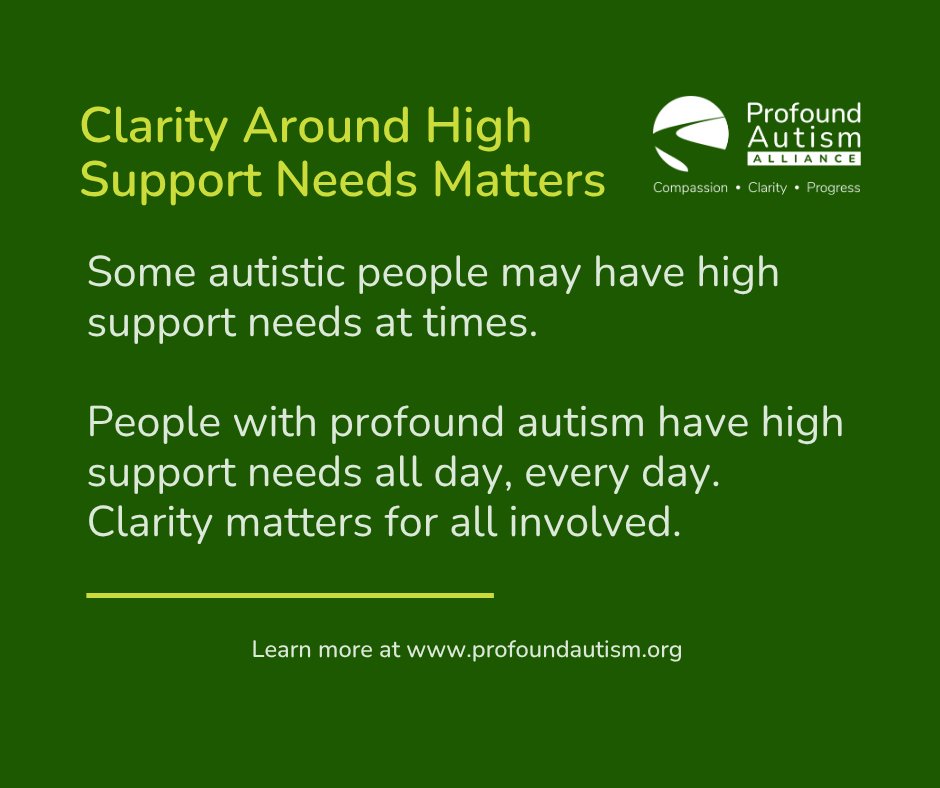
Clear is kind. Defining profound autism clearly helps ensure autistic people with non-intermittent high support needs are included in clinical research and in the development of supports that truly meet them where they are. Learn more:
https://t.co/P3cPU8H4hy
A Phase 3 Clinical Trial in Children with Phelan-McDermid Syndrome (PMS), KOALA, is currently enrolling participants.
18 sites have been activated.
Study Type: Phase 3 Interventional Clinical Trial
Age Range: children with PMS 3-12 years old
Eligibility criteria apply
Locations: Alabama, California, District of Columbia, Georgia, Illinois, Maryland, Massachusetts, Michigan, New York, Ohio, Texas, Virginia, and Toronto, Canada
The Koala study is evaluating an investigational treatment in children with Phelan-McDermid syndrome.
Each participant will be assigned by chance (like flipping a coin) to receive either the investigational treatment or a placebo. A placebo is an inactive treatment that looks like the investigational treatment but does not contain any active ingredient. This is a "double-blinded" study, which means neither you nor the study doctors would know which treatment your child is receiving.
Participation in the study will last for a total of about 19 weeks. You will be expected to bring your child to 5 on-site clinic visits. You will also have 6 phone or video calls (your child does not need to attend these).
Participants who complete the Koala study and meet eligibility requirements may have the option to participate in a separate 52-week open-label extension study.
We’ll keep the community updated as new sites are added.
To learn more about the Koala study, eligibility, and the participating in research, visit https://t.co/HTTNprODXw
#NeurenPharmaceuticals #KoalaStudy #PhelanMcDermidSyndrome #PMSResearch
Today is Phelan-McDermid Syndrome Awareness Day!
Every family impacted by Phelan-McDermid syndrome deserves to be seen, heard, and supported. Today, CureSHANK and PMSF are standing together to raise awareness for Phelan-McDermid syndrome.
Join us as we raise awareness for the Phelan-McDermid syndrome community.
#PMSAD #PhelanMcDermidSyndrome #PMSF #CureSHANK
The Profound Autism Summit brings together caregivers, researchers, self-advocates, policymakers, providers, and clinicians from across the country and around the world.
Learn more about the 2027 Summit: https://t.co/ywG9bj8zN3
Over time, autism research has included fewer and fewer participants with profound autism. Without targeted research, our population will never have the answers, supports, and services they need. We are working to change that.
Learn more: https://t.co/P3cPU8H4hy
#profoundautism
From the article:
Alma Dubuc GRD '31, a doctoral student in the Computational Biology and Biomedical Informatics Department, said she uses AI to investigate the biological foundations of neuropsychiatric conditions like profound autism.
Read more: https://t.co/s4J7omN7u2
41% of parents of nonspeaking autistic adults suspect depression. New research in Autism finds two quick caregiver screeners show promise for closing that gap. #ProfoundAutism https://t.co/VfDsW7H9Nw
Aligning Research to Impact Autism (ARIA), launched by the Sergey Brin Family Foundation in 2024, has publicly committed more than $450 million for a range of projects designed to accelerate research into profound autism and potential autism therapies.
https://t.co/wkttLffVX8
How many children have profound autism? A new CDC study brings us closer to an answer. But no records documented the need for 24-hour supervision. A standard measure would change how we count, plan for, and support this population.
Learn more: https://t.co/iiv6VxqMH5
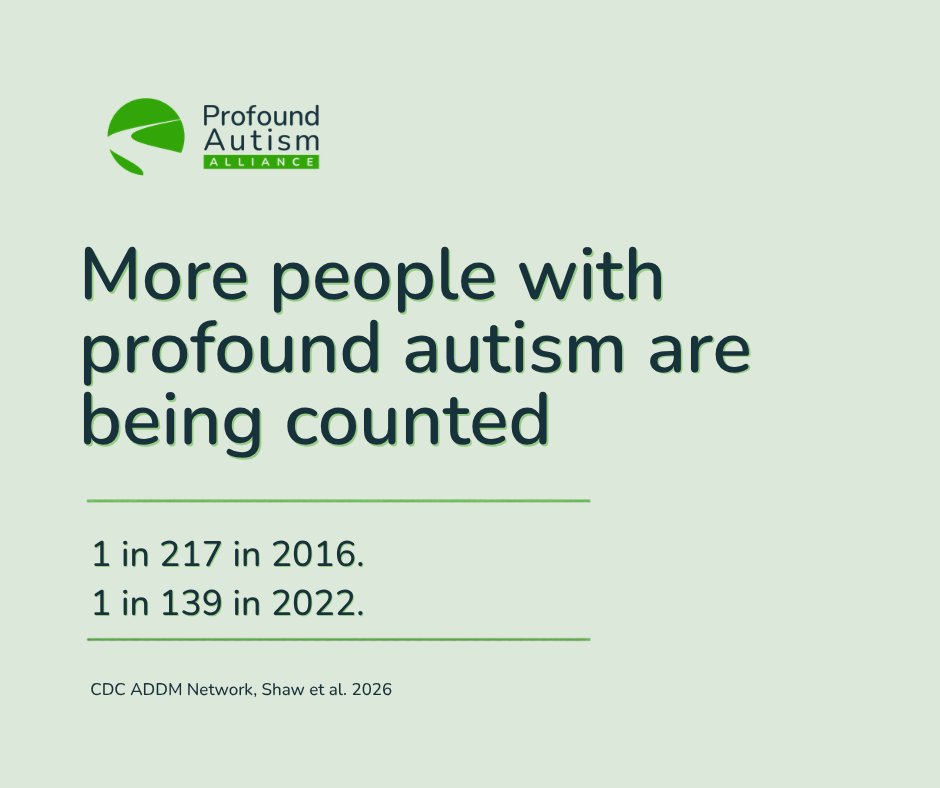
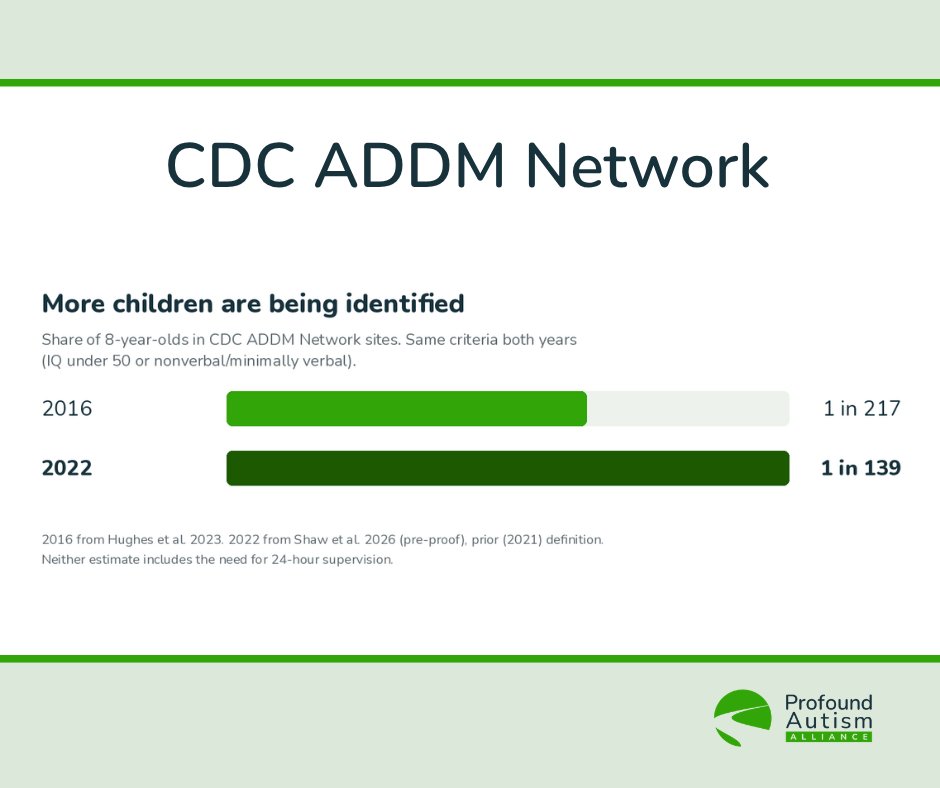
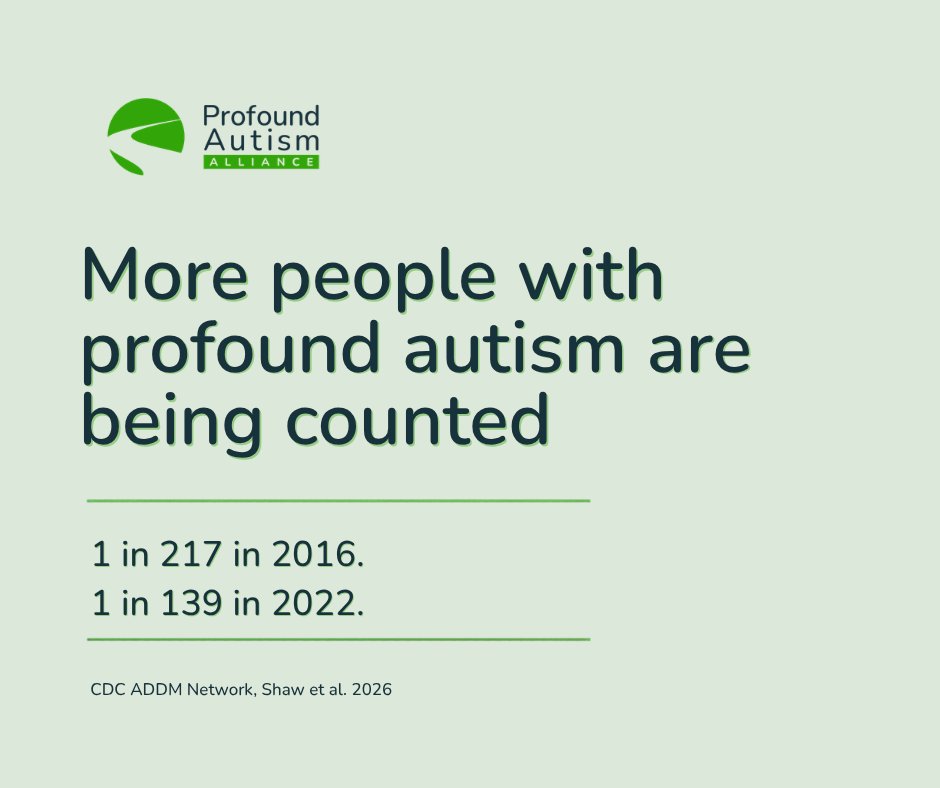
How many children in the US have profound autism? A new CDC study brings us closer to an answer. Using the same criteria, identification of profound autism rose from 1 in 217 eight-year-olds in 2016 to 1 in 139 in 2022.
Learn more about the new study: https://t.co/FP4zA7VE2H
Scenes from a grocery store. If you care for someone with profound autism, you’ve likely lived these moments. Alysia Abbott writes beautifully about Finn, the looks from strangers, and the Star Market employee who saw what they needed without a word.
https://t.co/G6b1OX1Jrx
Establishing a broadly accepted set of criteria is essential, said Judith Ursitti, cofounder and president of the Profound Autism Alliance. “Clarity will help identify best practice and provide individualized supports and services across the spectrum.”
https://t.co/lYpLsiSTp9
It's Washington Wednesday! Don't miss today's Profound Autism Advocacy Network meeting.
Wednesday, October 7, 2026 | 7:00 PM Eastern
Advance registration is required. You can do so here: https://t.co/fSepVchlcE
How many US children have profound autism? CDC data shows identification rose from 1 in 217 (2016) to 1 in 139 (2022). Yet, 24-hour supervision data is missing.
Read more: https://t.co/FP4zA7VE2H
Caring for someone with profound autism is a labor of love. But too many caregivers feel completely isolated and stressed.
Caregivers Connected offers a safe space for connection with others who truly understand.
Join us: https://t.co/SYFZXcXwZU
#ProfoundAutism#Caregivers