Every second, the Sun ejects 1.5 million tons of material into space at hundreds of miles per second, but Earth's magnetic field protects it from the solar wind.
📽: NASA Goddard
Cardinal: Seismic and Geoacoustic Array Processing #SRL
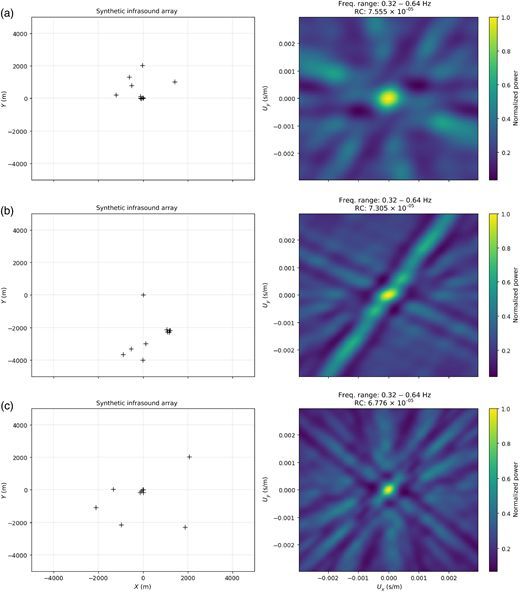
An open‐source Python code, called Cardinal, can process seismic and infrasound array data in discretized time–frequency space with the option of applying an adaptive array design.
https://t.co/rrmjNC1ysO
🌟OPEN ACCESS🌟AK112: Full Waveform Inversion Tomography of Alaska Improves Waveform Fits While Imaging Crustal, Mantle, and Slab Structure #TSR
A new model of Alaska's subsurface reveals details of slabs and sedimentary basins.
https://t.co/Po2KACQ2ID
When an earthquake's seismic signal arrives at a sensor, accurately measuring that arrival time is used for estimating earthquake location and origin time. A new #SRL study indicates that deep learning model PickerXL outperforms other models at this task.
https://t.co/JZiKGAsJet
Characteristics of Higher‐Mode Ambient Noise Rayleigh Waves in Taiwan: Insights from Multicomponent Interferometry #SRL
Scientists find that higher-mode waves correlate with underlying geological structures.
https://t.co/q4cAYZadPV
Seismic data are generally contaminated by noise from different sources. If the noise and signal don't share the same frequency, filtering is relatively simple. If they do, a new #BSSA paper considers how to deal with this problem.
https://t.co/7VvCWlpSaE
🚀 Just released in ISP a powerful tool for analyzing test nuclear explosions (like those from North Korea) using advanced array processing techniques! 🎯 Supports FK, Capon, and MUSIC for precise source detection and characterization.
#Seismology#ArrayProcessing#CTBTO
🌟OPEN ACCESS🌟In a new #TSR paper, scientists present a new way to look at clustering and seismicity rate of induced earthquakes. They apply their method to a case study from a potash mine in Saskatchewan.
https://t.co/OprgF6lNVt
🚀 Just released in ISP a powerful tool for analyzing test nuclear explosions (like those from North Korea) using advanced array processing techniques! 🎯 Supports FK, Capon, and MUSIC for precise source detection and characterization.
#Seismology#ArrayProcessing#CTBTO
Introducing RPNET: a deep‐learning model for P‐wave first‐motion polarity determination that should help to derive earthquake focal mechanism solutions. Find out more in this new #SRL paper.
https://t.co/iakpV6uz5g