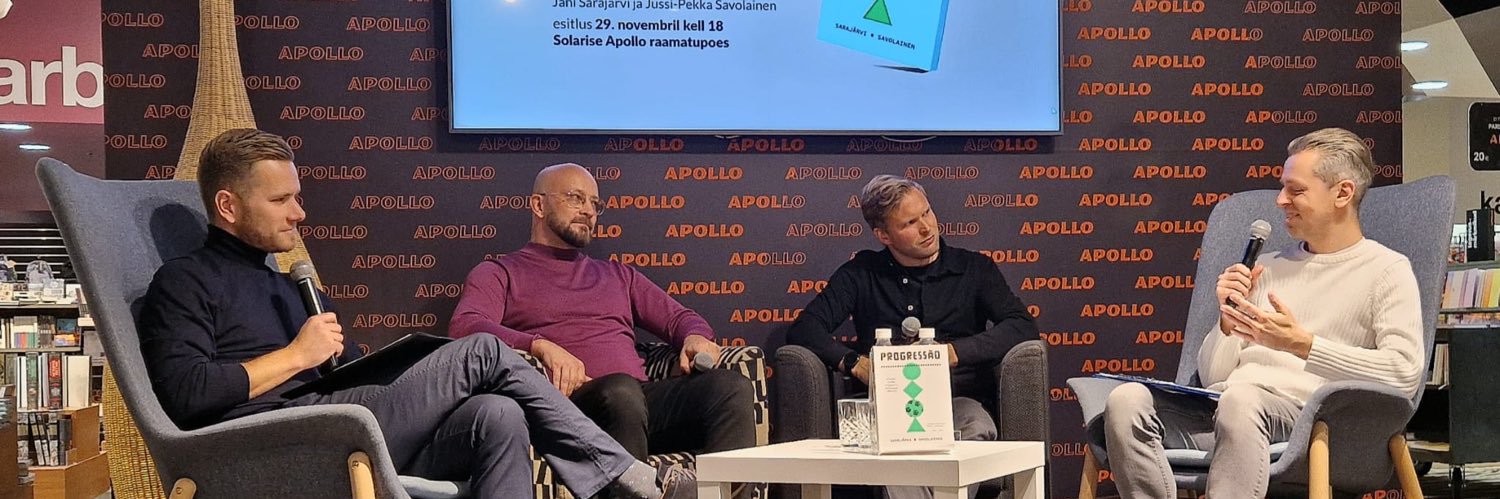
This is our final post on X.
Thank you for every like, reply, and follow.
We're moving the conversation elsewhere.
Continue the journey with us here:
💼 LinkedIn https://t.co/YYJGs2H2hP
📸 Instagram https://t.co/jWHBbb7YHz
See you there. Progressão.✌️
@rodripicchioni@AS_Monaco former @Atletico on bridging analytics and traditional scouting, and what it really means to understand a footballer.
🎧 Listen to the full episode 👇
https://t.co/uI30Qn6Ebi
Further reading:
@Gerard_Jones , Kubayi, A., Stone, J.A. & Davids, K. (2026). Game models in football coaching: an ecological dynamics perspective. International Journal of Performance Analysis in Sport.
https://t.co/3VJb5KEqfF
When a game model becomes a script, when it tells players what to do in certain situations in advance, it does something a little bit dangerous. It reduces the players' exposure to the informational complexity of real football.
The new Progressão website is open. It's beautiful.
Visit https://t.co/Y2pHrrlNlG. Each section flows into the next. The stickers are appearing in cities around the globe.
The conversation is spreading. 🌍
@Aaron_Killough The English edition is currently in translation. We're working hard to get it right. No exact release date yet, but stay tuned, it's coming!
Progressão is now in English.
A new chapter begins. As our book Progressão – How We Have Misunderstood Football is being translated, the podcast moves fully into English.
"We trained that" and "we trained the version of that which actually shows up at this level" are two completely different comments.
This episode: why the gap between general and specific intensity is one of the most invisible failures in practice design.
https://t.co/A9ddc4KG9A
The metaphor you choose guides your mind.
💻Call a player a computer, and you look for software to upgrade.
🧩Call a team a puzzle and you start developing pieces to assemble.
Ingold, T. (2015). The Life of Lines
https://t.co/oiUQyR7CTR
Brette, R. (2022). Brains as Computers: Metaphor, Analogy, Theory or Fact
https://t.co/sHksEyd5Z4
In this episode, the first in the new monologue format, we explore resonance and how it appears in football.
The player and the game are one coupled system, and the coach’s job is to design the conditions in which that coupling can develop.
In this conversation, we explore @DioVicen fascinating work, dive into his concept of “resonance,” and discuss practical applications in sports coaching, especially football.
https://t.co/nF4XFKCvb5
Excited to revisit one of our most meaningful and widely listened-to DISCUSSÃO MUNDO episodes — featuring Dr. Vicente Raja, a researcher working at the intersection of ecological psychology, neuroscience, and philosophy.
Headrick, J., Renshaw, I., Davids, K., Pinder, R. A., & Araújo, D. (2015). The dynamics of expertise acquisition in sport: The role of affective learning design. Psychology of Sport and Exercise, 16(Part 1), 83–90.
https://t.co/XFIoJJic6j
In football, training often looks organised, structured, and even very “game-like”. But does it truly represent the demands players face in matches?
🎧 Listen to the full episode 👇
Articles mentioned in the episode:
Pinder, R. A., Davids, K., Renshaw, I., & Araújo, D. (2011). Representative learning design and functionality of research and practice in sport. Journal of Sport and Exercise Psychology, 33(1), 146–155.
https://t.co/LukdfaLXGj