AIRE’s research has been featured in Horizon, the EU Research and Innovation Magazine. The article by Gareth Willmer explains how real weather measurements can help predict blade erosion and develop tools to improve wind turbine durability. Read it here: https://t.co/nAa4pCy5vr
A new scientific paper, in a shorter format.
In our latest blog, we explain how protective shields affect airflow over wind turbine blades and how their design can reduce aerodynamic losses.
You can read it here:
https://t.co/xfpSR1GRLg
Following aerodynamic testing at @DTUtweet, AIRE’s research moves to @FraunhoferIWS.
Four specimens will undergo rain erosion tests to investigate how leading-edge curvature affects erosion patterns.
More details and images in our LinkedIn post: https://t.co/0okBDXMwmJ
A new scientific paper, in a shorter format.
In our latest blog, we explain how protective shields affect airflow over wind turbine blades and how their design can reduce aerodynamic losses.
You can read it here:
https://t.co/xfpSR1GRLg
How reliably can current aerodynamic models predict the performance of eroded wind turbine blades? The answer is in our new blog:
https://t.co/PBqcA6eUOn
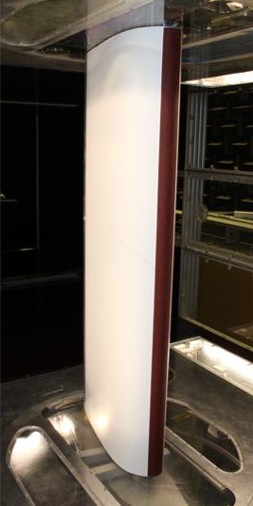
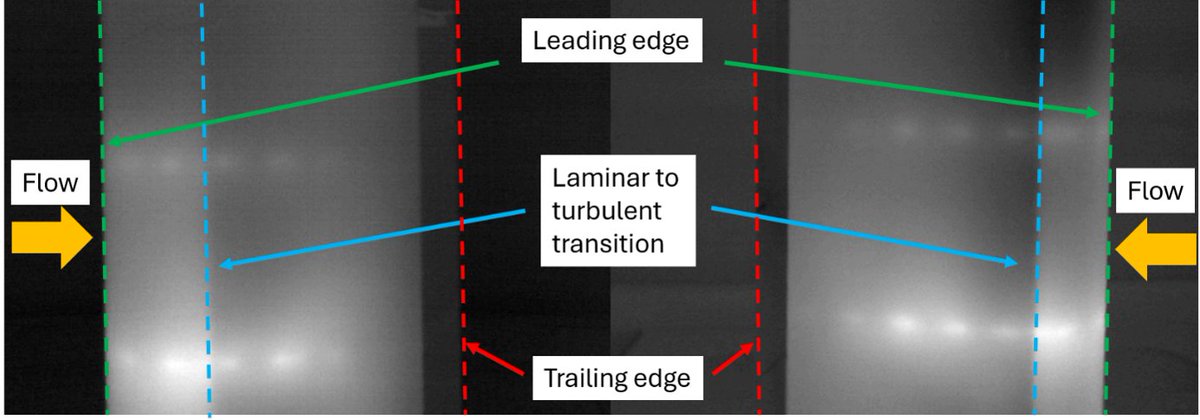
After developing six aerofoils using three design methodologies, AIRE selected two for experimental testing.The 21% and 30% aerofoils have now been tested at @DTUtweet Poul la Cour Tunnel in clean and artificially roughened configurations. IR thermography helped examine the flow.
Our toolbox, open and available! Built within project AIRE to help the wind sector design turbines and farms with lower costs and higher energy production. Explore, use, and share i! 👇
https://t.co/R2Dfpuwk3f
A new study by Sandua-Fernández, Aparicio-Sanchez, Cantero-Nouqueret & Eguinoa (@CENER_Energia) explores how Leading Edge Erosion impacts static wake steering performance in wind turbines.
Read more below!
https://t.co/JUwr6r3Ca7
Have you heard of the wake effect?
In the EU’s race to net-zero, wind farms often face a challenge where upstream turbines reduce the wind velocity reaching those downstream, reducing overall energy output.
👉🏻 Watch the video to learn how the @ProjectAIRE is tackling this
𝗕𝗹𝗮𝗱𝗲 𝗘𝗿𝗼𝘀𝗶𝗼𝗻 𝗥𝗶𝘀𝗸 𝗔𝘁𝗹𝗮𝘀 (coming soon to complete the set)
Maps how erosion-related conditions vary across the study region using mesoscale simulation data, so you can see where risk concentrates.
Developed by IWES and DTU Wind.
Our toolbox, open and available! Built within project AIRE to help the wind sector design turbines and farms with lower costs and higher energy production. Explore, use, and share i! 👇
https://t.co/R2Dfpuwk3f
𝗖𝘂𝗿𝘁𝗮𝗶𝗹𝗺𝗲𝗻𝘁 𝘀𝘁𝗿𝗮𝘁𝗲𝗴𝘆 𝘁𝗼𝗼𝗹 – 𝗘𝗿𝗼𝘀𝗶𝗼𝗻-𝘀𝗮𝗳𝗲 𝗼𝗽𝗲𝗿𝗮𝘁𝗶𝗻𝗴 𝘁𝗼𝗼𝗹: Models how leading edge erosion is likely to progress over time and helps design erosion-safe operating strategies. By DTU: https://t.co/ycfl5T5wyb
@ProjectAIRE will be at #WCCMECCOMAS2026, represented by @FraunhoferIWS. On Friday 24, they present a cross-code comparison of three numerical frameworks for thick airfoil aerodynamics. Session MS157D, 11:30–13:00, room ICM – 4a. At the congress? Let us know!