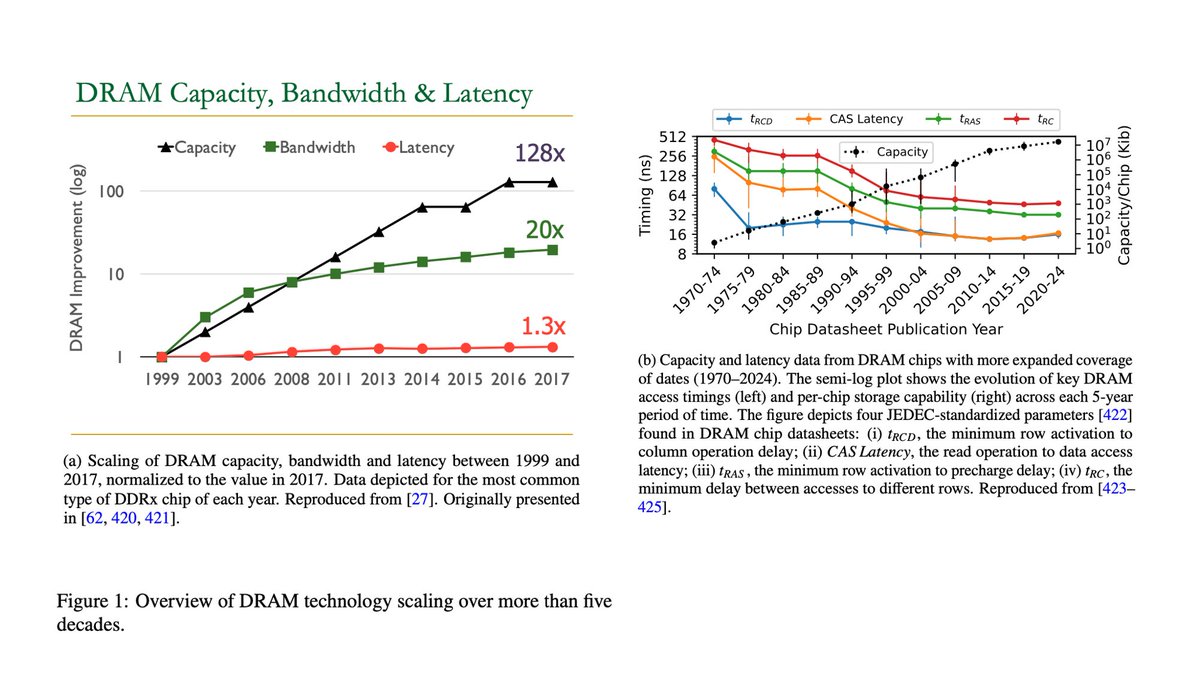
The BioPIM Project aims to leverage the emerging processing-in-memory (PIM) technologies to accelerate #bioinformatics applications while reducing energy requirements and enabling powerful edge computing in mobile devices.
We’re excited to share our new position paper from the BioPIM Consortium: "Processing-in-memory for genomics workloads", published online in IEEE Micro, and will be a part of the upcoming Special Issue on Data-Centric Computing. Thread below 🧵👇
Our focus? Hardware-software co-design.
We are optimizing: genomic data analysis algorithms using specialized data structures and multiple PIM architectures.
The goal: Unprecedented cost, energy, and time savings for life sciences.
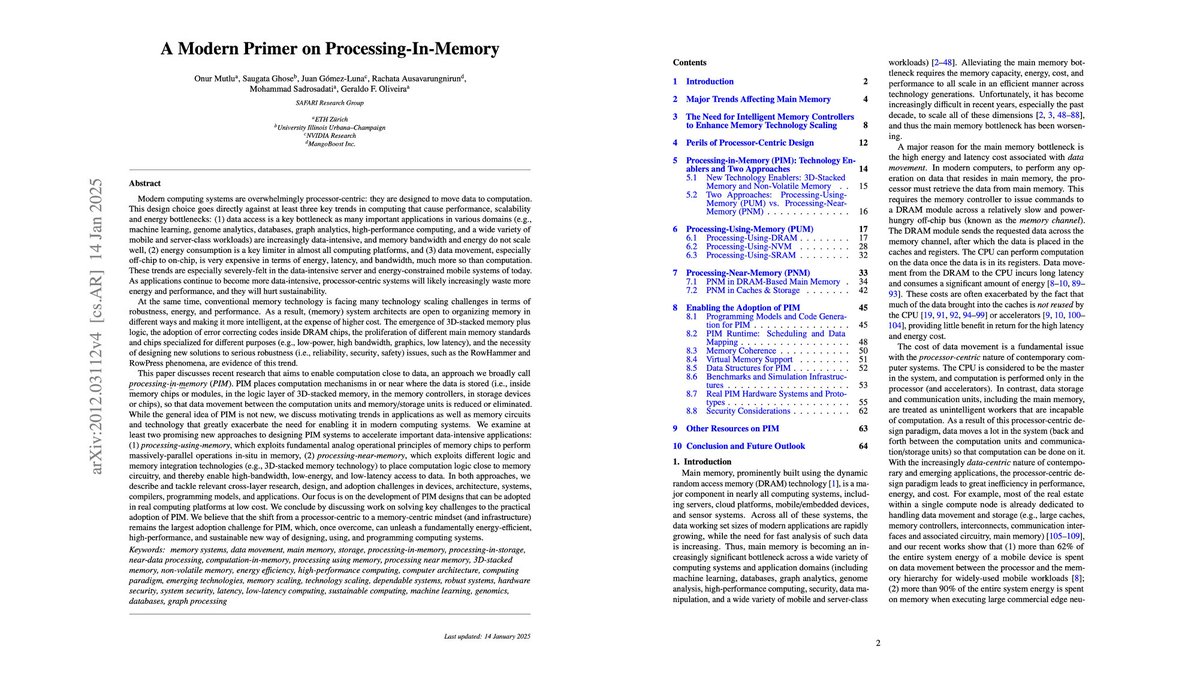
We've updated our PIM Primer! We've expanded the overview to cover the extensive PIM work over the past few years.
💥A Modern Primer on Processing in Memory: https://t.co/i232IfE1Fx
@_onurmutlu_@SaugataGhose@el1goluj R. Ausavarungnirun @MohammadSadr89@geraldofojunior
We're excited to share our recent @sigarch blog post highlighting our real-world PIM tutorials!
Processing-in-Memory Tutorials: Experiences from Past Two Years and Thoughts Looking Forward:
https://t.co/qRIxPCQgyK
@geraldofojunior@el1goluj@_onurmutlu_@ProjectBioPIM
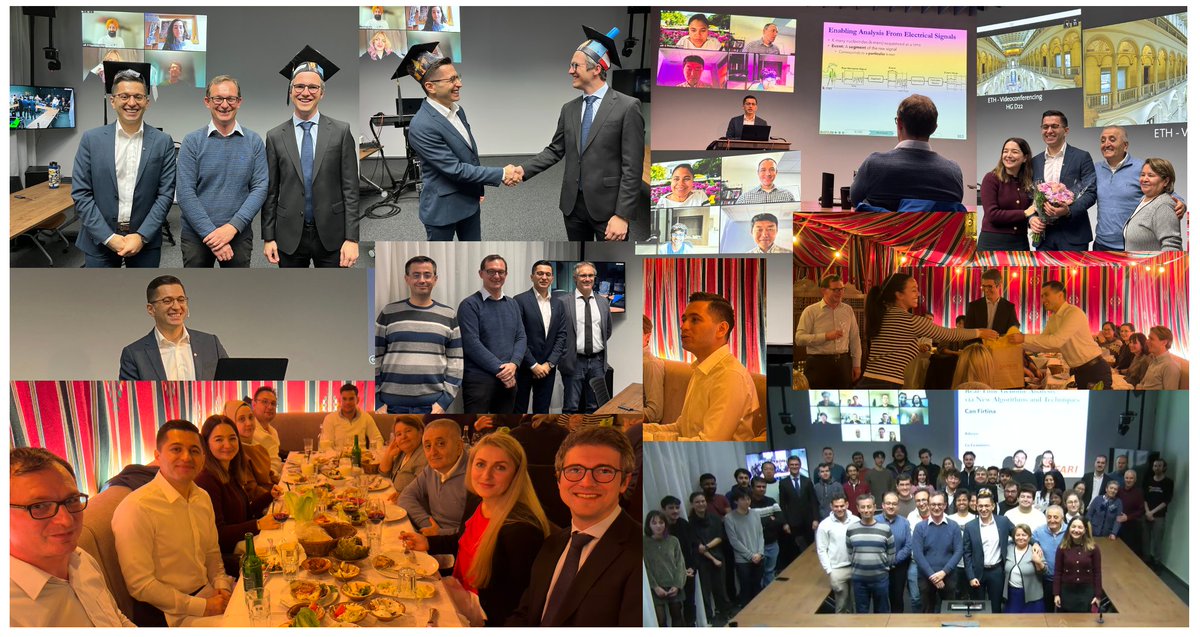
We were excited to celebrate two PhD defenses in November! We'd like to wish a very warm congratulations to @FirtinaC & @breitware on the successful completion of their PhDs.
Read more on Can's thesis: https://t.co/EIYpdI85E0
https://t.co/uUqxYYT7hn
@_onurmutlu_@ProjectBioPIM
We're excited to be at #ICECS2024 this week in Nancy, France. @_onurmutlu_ will give a keynote tomorrow, Tuesday, Nov 19 at 9AM on Memory-Centric Computing, don't miss it!
Talk details: https://t.co/sn0Q98aGhE
@icecs2024@ieeecassociety@IEEEorg
Last day of #genomeinformatics24! We have presented our work in @ProjectBioPIM with talks from @calkan_cs and @camiladuitama1 and a poster by @zulal_b, increasing the awareness of hardware acceleration in the community.
We held our third plenary meeting for the BioPIM Project in beautiful Zurich, marking the close of our second review period. Since our last meeting in May, we have published three additional papers, with several more submitted and available as preprints.