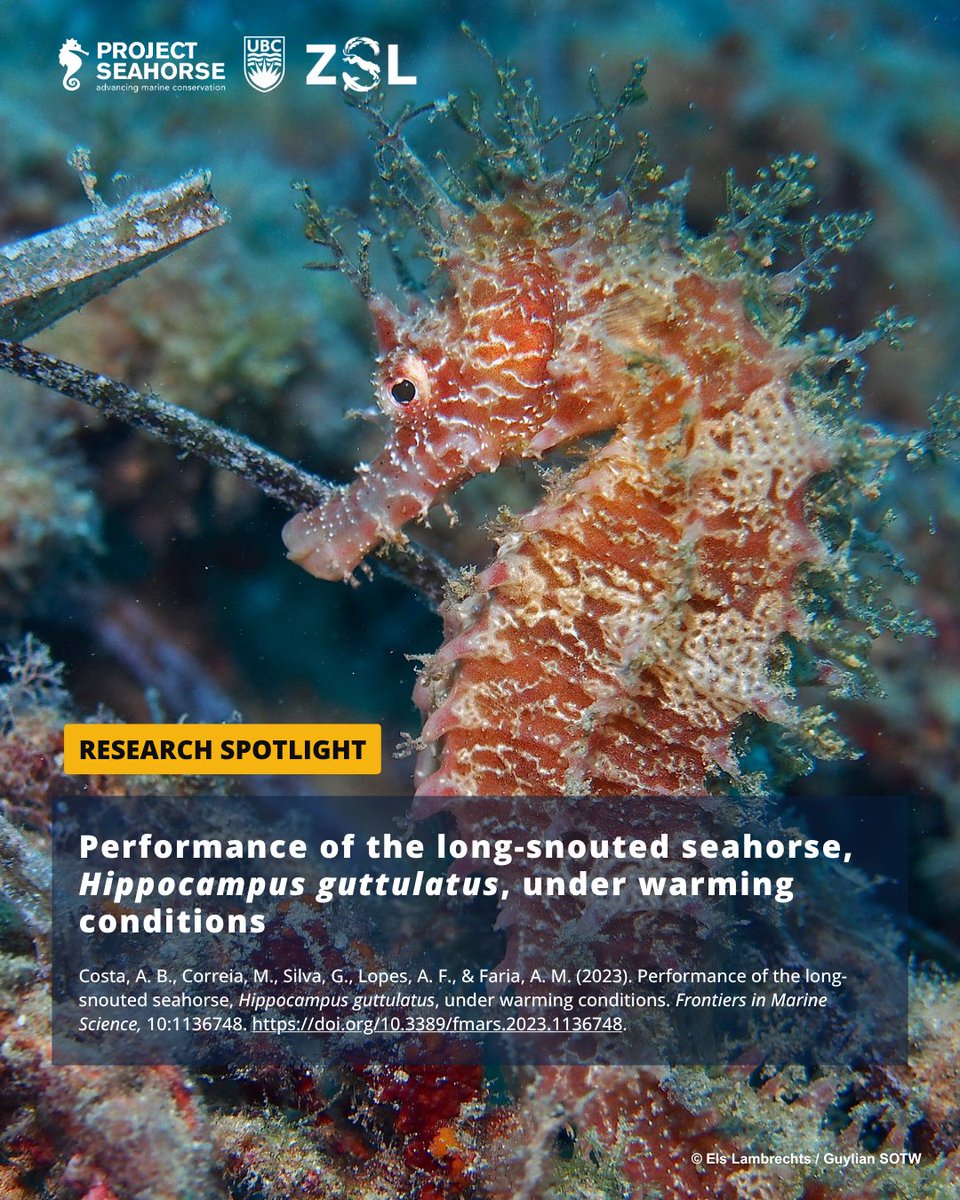
#ThrowbackThursday 🌡️ Warming conditions increase activity and feeding in the long-snouted seahorse Hippocampus guttulatus, but do not improve growth, suggesting potential energetic stress at higher temperatures. Find out more: https://t.co/TKWQPBhygd
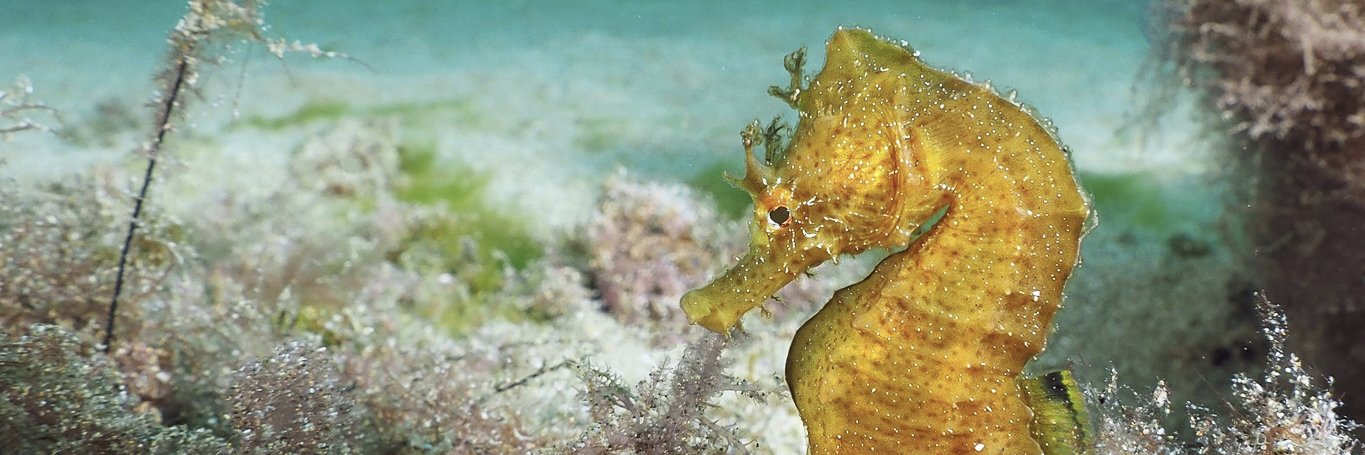
Watch now! Saving seahorses to save the seas with our co-founder and director, Prof. Amanda Vincent, 2021 Indianapolis Prize Winner.
🔗 https://t.co/SLoA3mWyQF
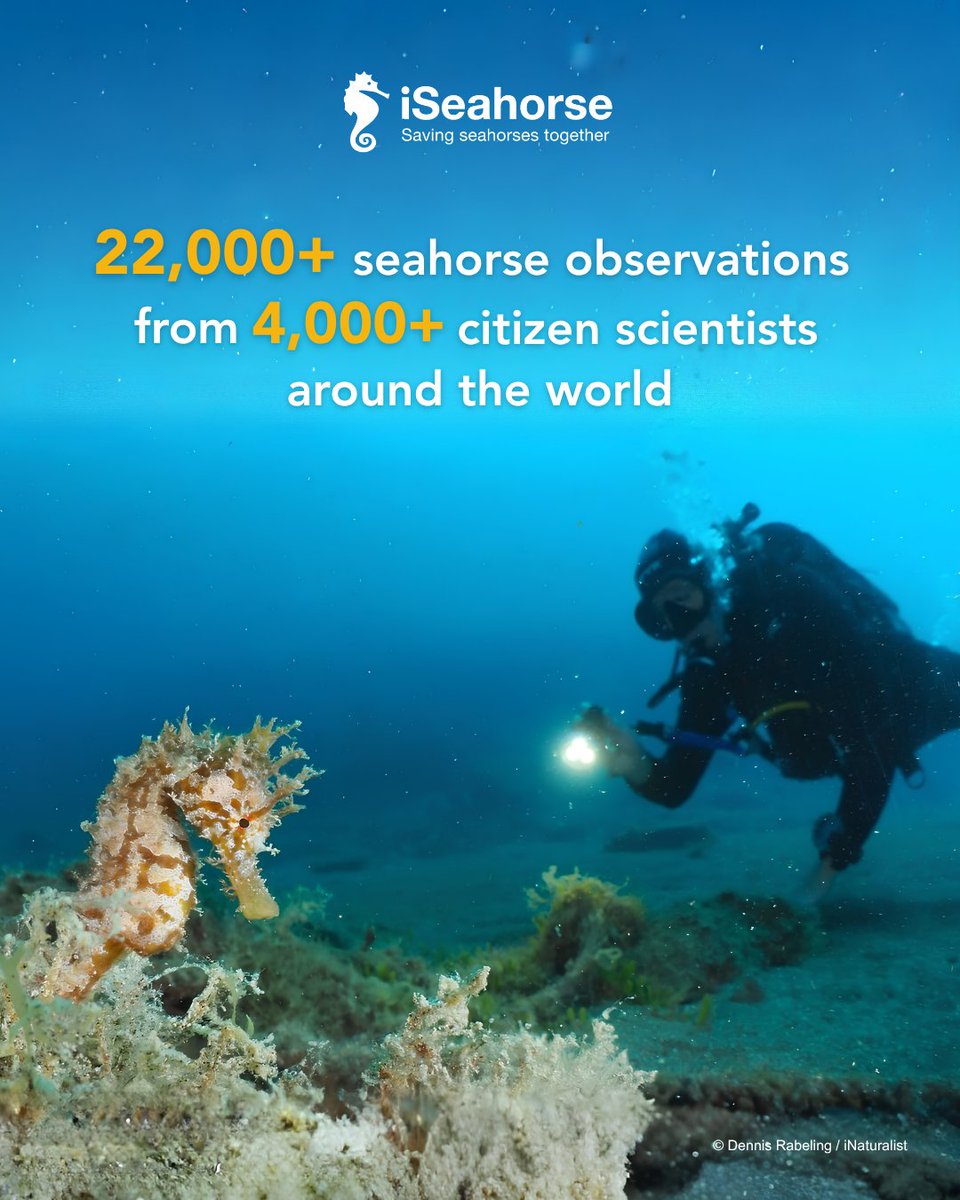
❤️ iSeahorse is only possible thanks to you. Together, 4,000+ citizen scientists around the world have contributed over 22,000 observations – vital data that helps our scientists protect our seahorse friends. Join the movement and log your sightings: https://t.co/4ufvOvX22S
Rushing environmental protection without consulting the local community fails both people and marine life. This week’s #ThrowbackThursday study of the Gulf of California shows top-down policies both alienated fishers and endangered the vaquita. Learn more: https://t.co/sK4J2jcuqD
Our PhD candidate Marta Flotats heads to Peru to develop the first-ever comprehensive evaluations of conservation strategies for the Pacific seahorse. Learn more: https://t.co/8xD8zuZ8AN
A new creation has joined our global arts movement, Inspired by #IconicFishes! It’s a collaborative mosaic made up of 135 artworks, an initiative led by artist Mayali Geyling! Learn more: https://t.co/tj2w6ZZlKD
#ThrowbackThursday 🌍 A global assessment of 300 syngnathiform fishes shows most species are Least Concern, but many are threatened or Data Deficient, so true risk may be higher. Fishing and habitat loss are key pressures. Read more: https://t.co/rIp01fVJ4Y
#SavingIconicFishes
📝Our new report is out! Built from a workshop led by PhD candidate Samara Polwatta in 2025, this report is helping build the country’s first national seahorse assessment. This month, Samara returns to Sri Lanka to conduct field surveys.
🔗https://t.co/NW8He2UuzF
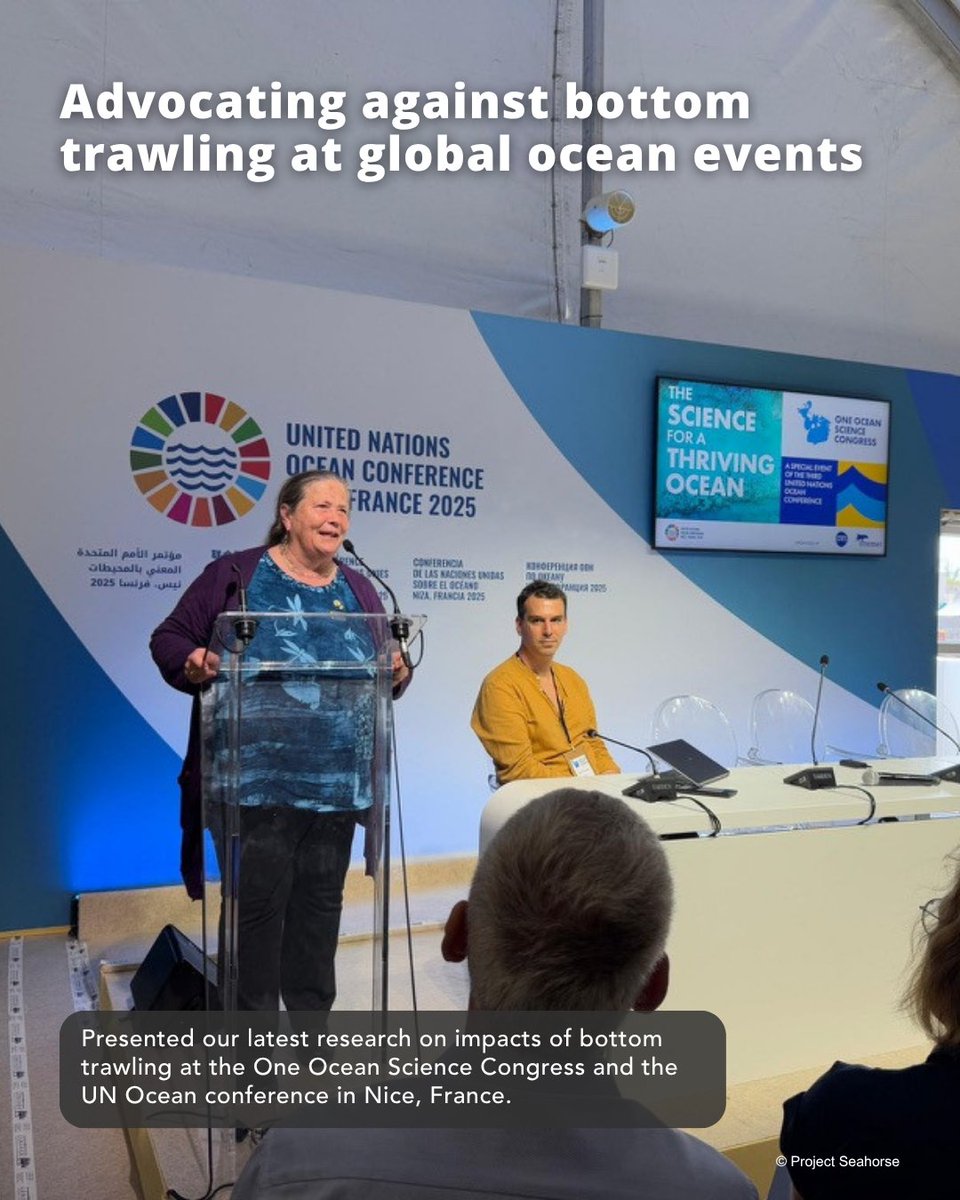
#ICYMI Our program leader Sarah Foster is championing #seahorses at the 34th meeting of the #CITES Animals Committee, taking place this week in Geneva, Switzerland.
🔗 Learn more: https://t.co/7sJZoLJiIj
📸 Say hello to the magical pygmy seahorse, or Hippocampus bargibanti, logged onto iSeahorse by citizen scientist wunderdiver.
Upload your seahorse sightings onto iSeahorse too! Learn more here: https://t.co/4ufvOvX22S
India banned seahorse fishing in 2001, but 13 million are still caught every year. Why? This week’s #ThrowbackThursday study reveals that 89% are taken as accidental bycatch by trawlers – paper bans are useless without active gear restriction. Read more: https://t.co/XWyrLaK439
Governments have promised to protect seahorses from illegal trade. At the upcoming 34th #CITES Animals Committee meeting in Geneva, #ProjectSeahorse will be there to make sure they follow through. More here: https://t.co/7sJZoLJiIj
🌊 #ICYMI Our 2025 Achievements report is out! From Mexico to Indonesia, we worked with partners around the world to turn science into real-world conservation for seahorses and their seas! Full report here: https://t.co/gehB8dhXys
#ProjectSeahorse#SavingSeahorses
We’re delighted to spotlight this beautiful illustration of Knysna seahorses by Simon Baker!
Inspired by Iconic Fishes is our global arts movement, open to everyone, everywhere, using creativity to inspire awe for these magical fishes! Take part: https://t.co/QQDttAzBB1
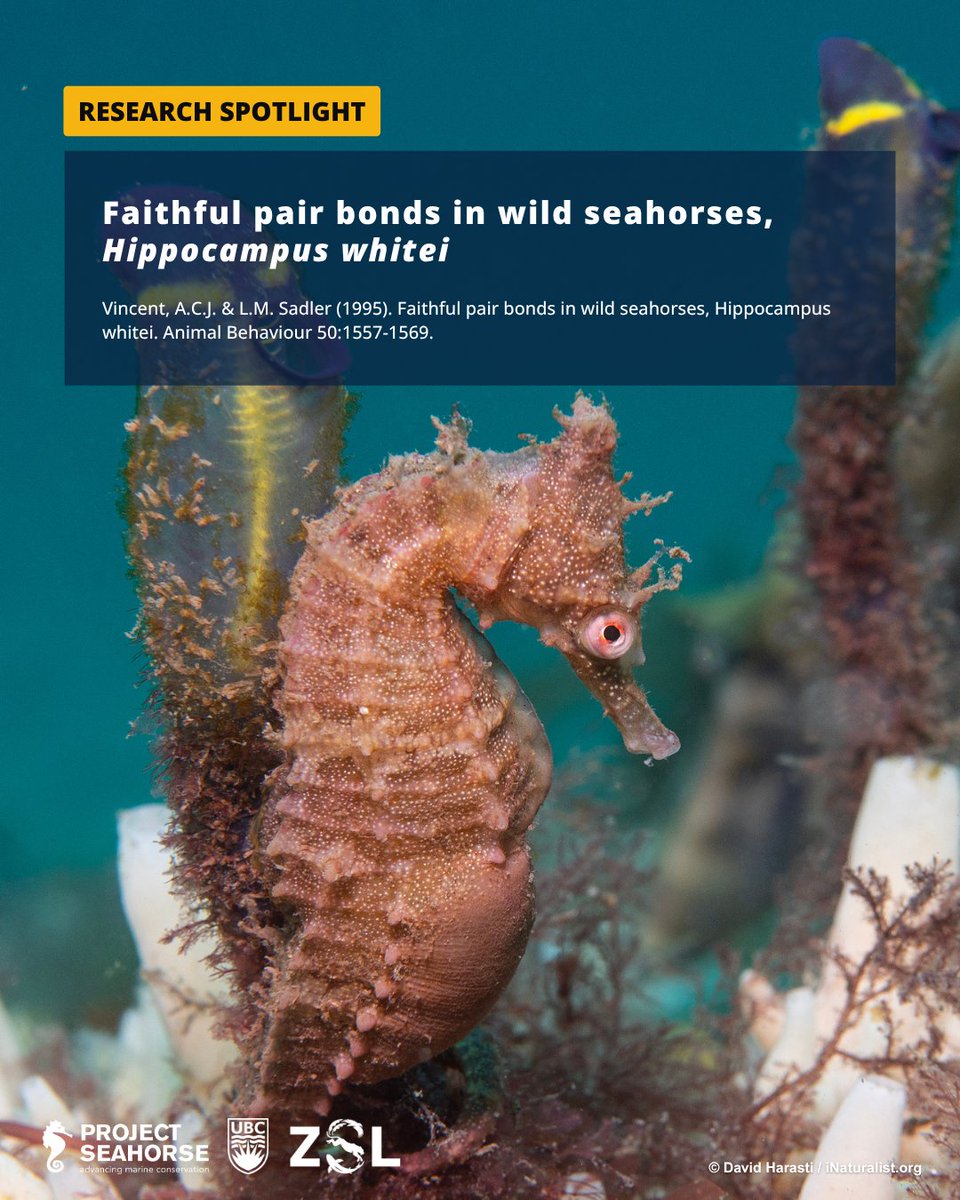
❤️ Meet Hippocampus whitei, the Australian species of seahorse that form faithful, lifetime bonds. This week’s #ThrowbackThursday study delves into the rare, strictly monogamous bonds that these special creatures form. Read more: https://t.co/rg1eKfZ4hW
#ProjectSeahorse
🌊 A look inside from our 2025 Achievements report! From the Philippines to Peru, we worked with partners around the world to turn science into real-world conservation for seahorses and their seas! Full report here: https://t.co/gehB8dhXys
#ProjectSeahorse#SavingSeahorses
🌊 Meet the Bigbelly seahorse, or Hippocampus abdominalis! Use these identifying features to spot one in the wild, then snap a photo and report your sighting to the iSeahorse project on iNaturalist. Learn more here: https://t.co/4ufvOvX22S
#ThrowbackThursday Marine protected areas (MPAs) aim to protect marine ecosystems, but male and female fishers experience them differently. This study highlights the gender differences behind MPAs and the need for gender-inclusive participation. Read more: https://t.co/SP60xJ0Zbn
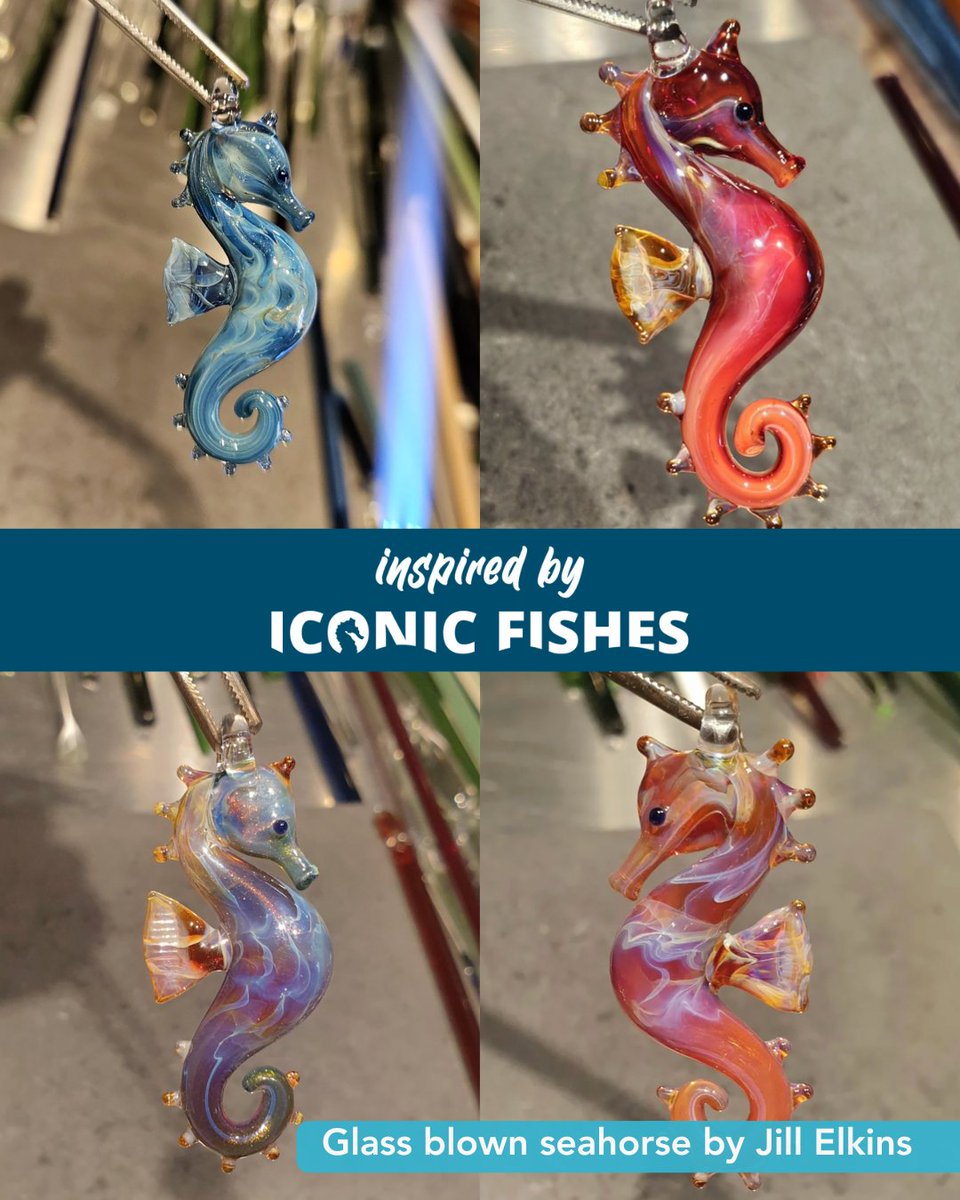
We’re delighted to spotlight these stunning glass-blown seahorses, crafted by the talented Jill Elkins! Inspired by #IconicFishes is our global arts movement, open to everyone, everywhere, using creativity to inspire awe for these magical fishes! Take part https://t.co/QQDttAzBB1
Hidden parasites can devastate captive marine wildlife – a case study where a hidden parasite caused the death of all but two seahorses from a colony from Florida revealed the importance of quarantine and deep screenings for captive marine life. Read more: https://t.co/FFlvvGGhgp