Новости, влияющие на нашу жизнь - события в мире и в странах, образующих "Санитарный кордон" - границу между правом и бесправием, между честью и бесчестьем
Rustaveli avenue is completely packed on 25th day of the non-interrupted protest. President of Georgia Salome Zourabichvili who was threatened earlier with an arrest by Irakli Kobakhidze is set to speak at the rally.
Our commander, Mamuka Mamulashvili, gives a powerful interview on the war in Ukraine and the crisis in Georgia.
Hear his firsthand insights on the battles we face and the fight for our nations’ future.
📹 Watch the full interview here:
https://t.co/y79M56QRNM
"Freedom" is the name of our National Anthem.
Freedom is also something we've been learned to fight for:
"Freedom we have learnt to follow
Makes our future spirits stronger"
📍Tbilisi 🇬🇪
22.12.2024
A surreal photo. Some Tituskho (regime thug) was casually taken down President Zourabichvili’s stage - the stage that we had to set up after the regime prevented the original one from being delivered and set up. #GeorgiaProtests#terrorinGeorgia
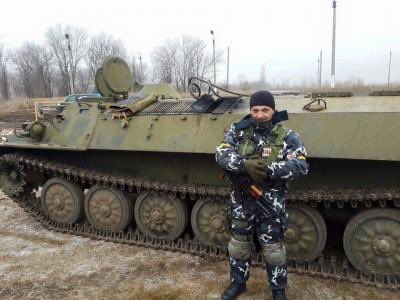
Koba Khabazi, a member of the Georgian Legion and a patriot who was brutally beaten during the protests in Georgia: “Georgians are fighting in Ukraine so that there can be peace in Georgia. The time will come when I will publish a book or create posters depicting how these men live. If you were to see their situation, you would be overwhelmed with emotion, brought to tears. Near their beds, they have Georgian flags, poems about Georgia… I know what they breathe, what they live for. Each of their hearts beats for Georgia. These men are writing an epic of battle in Ukraine and for Georgia”.
Ветераны и отставные военные собираются начать свой марш от площади Героев, в то время как люди отдают дань уважения героям, павшим в борьбе за независимость Грузии. #GeorgiaProtests
Veterans and retired military personnel are about to begin their march from Heroes Square, while people pay tribute to the heroes who fell fighting for Georgia’s independence. #GeorgiaProtests
Вчерашняя проевропейская акция на проспекте Руставели в центре Тбилиси собрала около 200 тысяч человек, подсчитал Visioner.
По их данным, в момент пика на акции находились 186 835 человек.
Расчеты проводили с помощью платформы Mapchecking.
https://t.co/3QOjM1lFqO
Большинство протестующих чувствуют, что мы рождаем новую, гражданскую, ответственную, свободную нацию, и ничто не может искоренить это чувство - чем более жестокими они становятся, тем ху��е для них.
I do not and cannot know how exactly things unfold. But what I know is that Georgians have been out since early April, only went home in hopes of elections; now we have no anticipation of anything but breaking the regime, our determination is more fierce, and our scales are larger than ever.
Most protesters have the sense that we are giving birth to a new, civic, responsible, free nation, and nothing can really uproot this sentiment - the more violent they get the worse it is for them. Even IF these protesters go home, and I don’t think they will, there will be something else again that brings them out, endlessly.
The new elections is the only outcome. Support us in this!
On Nov 28, Georgians, without any coordination, completely unorganized and spontaneously, rushed out of their homes and gathered on Rustaveli Avenue. We came to find others as outraged as we were by Kobakhidze’s statement that the regime had suspended negotiations with the European Union.
Today marks the 24th day of Georgians standing in the streets. Just look at the numbers and the spirit.
Until victory, Sakartvelo! 🇬🇪🇪🇺
#GeorgiaProtests
Неприемлемо, чтобы Генсек Совета Европы @alain_berset свел экзистенциальный кризис Грузии к переговорам о законах с нелегитимным режимом Речь идет не о законах, а об украденных выборах Никакие переговоры до новых, справедливых выборов не приведут к созданию легитимного парламента
🇬🇪It is utterly unacceptable for the Secretary General of the Council of Europe @alain_berset to reduce Georgia's existential crisis to negotiating laws with an illegitimate regime. This is not about laws—it’s about a stolen election.
No negotiation before new, free, and fair elections deliver a legitimate parliament. Anything else is aiding repression and betraying the Georgian people. The regime tortures, represses, and has abandoned even the pretense of democracy.
Stop saving their face. Stand with the people.
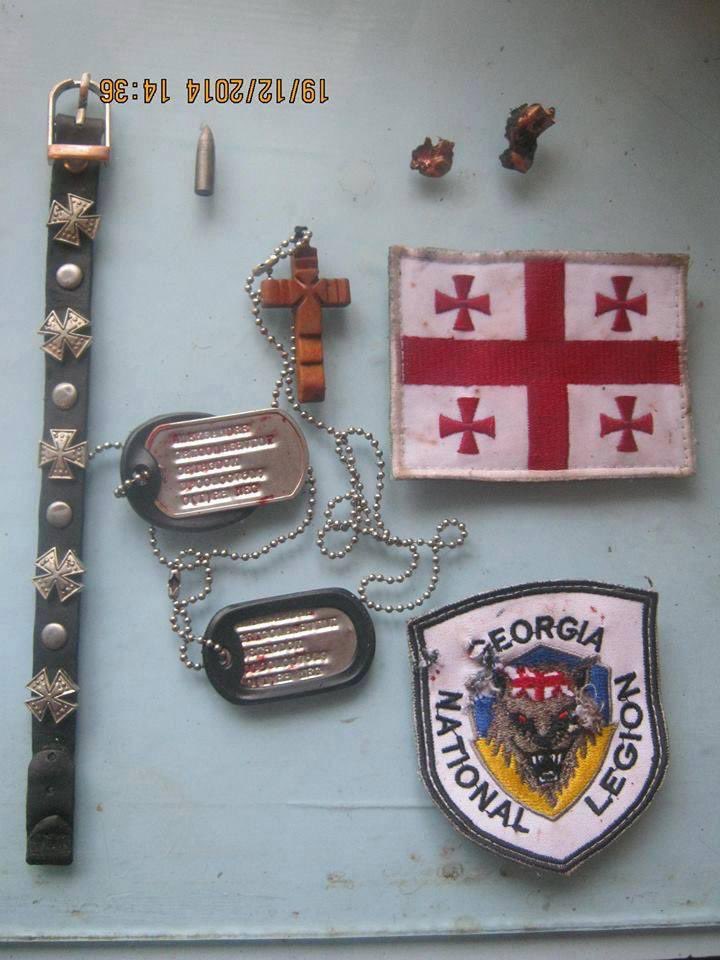
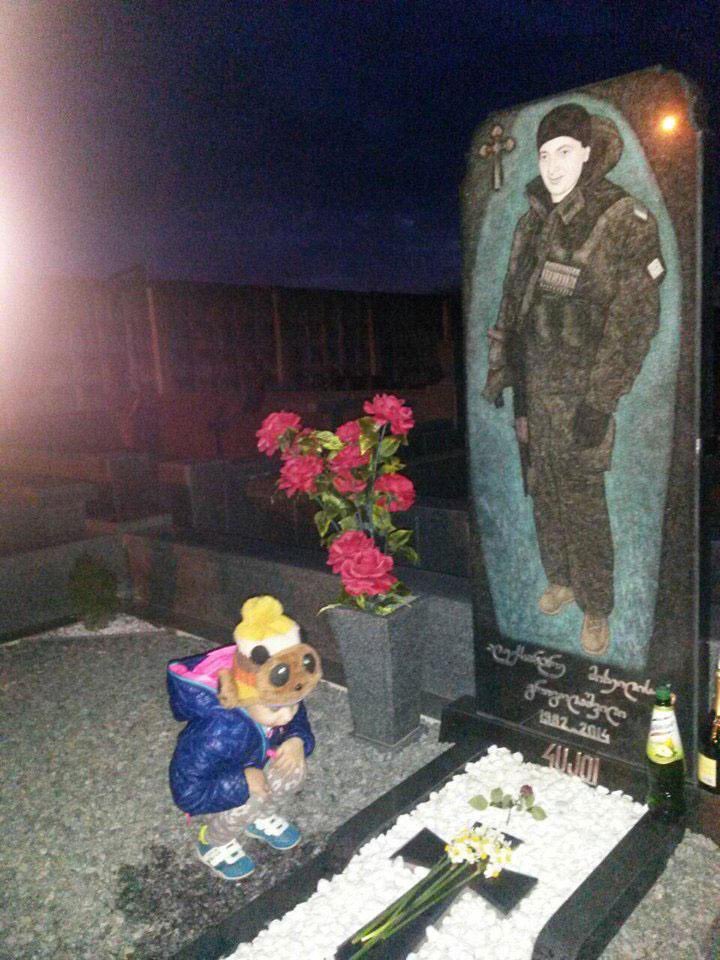
10 лет назадГрузинский легион потерял на поле боя своего первого солдата — Александра Григолашвили, известного как «Алеко» и «Чужой». В этот день мы чтим его жертву и все, за что он боролся, напоминая себе, что каждый герой будет жить до тех пор, пока он остается в нашей памяти
Ten years ago, in April, the Georgian Legion stood shoulder to shoulder with Ukrainians to defend freedom against tyranny.
Today marks 10 years since the Georgian Legion lost its first soldier, Aleksandre Grigolashvili, known as “Aleko” and “Chuzhoi,” on the battlefield.
On this day, we honor his sacrifice and all that he stood for, reminding ourselves that every hero lives on as long as they remain in our memories.
Glory to the heroes! 🫡
«Наши страны солидарны с грузинским н��родом» — Совместное заявление США, Великобритании, Бельгии, Канады, Дании, Эстонии, Финляндии, Франции, Германии, Латвии, Литвы, Люксембурга, Норвегии, Польши, Румынии, Швеции, Нидерландов о ситуации с правами человека в Грузии
текст👇
NEW! "Our countries stand in solidarity with the Georgian people" — Joint Statement by the U.S, UK, Belgium, Canada, Denmark, Estonia, Finland, France, Germany, Latvia, Lithuania, Luxemburg, Norway, Poland, Romania, Sweden, Netherlands on the Human Rights Situation in Georgia
Full Text 👇
"Our countries have been committed to partnership with Georgia and the Georgian people for more than three decades. Between us we have worked with successive Georgian governments to support Georgia’s democratic institutions, develop Georgia’s economy and improve education for Georgian children. While our ongoing commitment to Georgian sovereignty and territorial integrity remains unbroken, we strongly condemn Georgian Dream’s brutal and unjustified violence against Georgian citizens exercising their rights to peaceful assembly and freedom of expression.
We are dismayed that Georgian Dream continues to use repressive tactics, including arbitrary detention and physical violence, to silence its critics. In line with our shared OSCE commitments to strengthen civil society and respect the rights of peaceful assembly and freedom from arbitrary arrest, we call on Georgia to stop the use of repressive, excessively violent tactics by law enforcement agencies. We also urge Georgia to immediately release protestors, members of the media, opposition figures, and others detained for peacefully exercising their rights and supporting Georgia’s Euro-Atlantic aspirations. Individuals responsible for the unlawful use of force must also be held accountable.
As fellow OSCE participating States, we will explore all mechanisms in the OSCE context going forward. We encourage Georgia to return to the path of EU integration that the vast majority of Georgians desire.
Our countries stand in solidarity with the Georgian people and their democratic and Euro-Atlantic aspirations. We continue our unwavering support for Georgia’s sovereignty and territorial integrity within its internationally recognized borders."
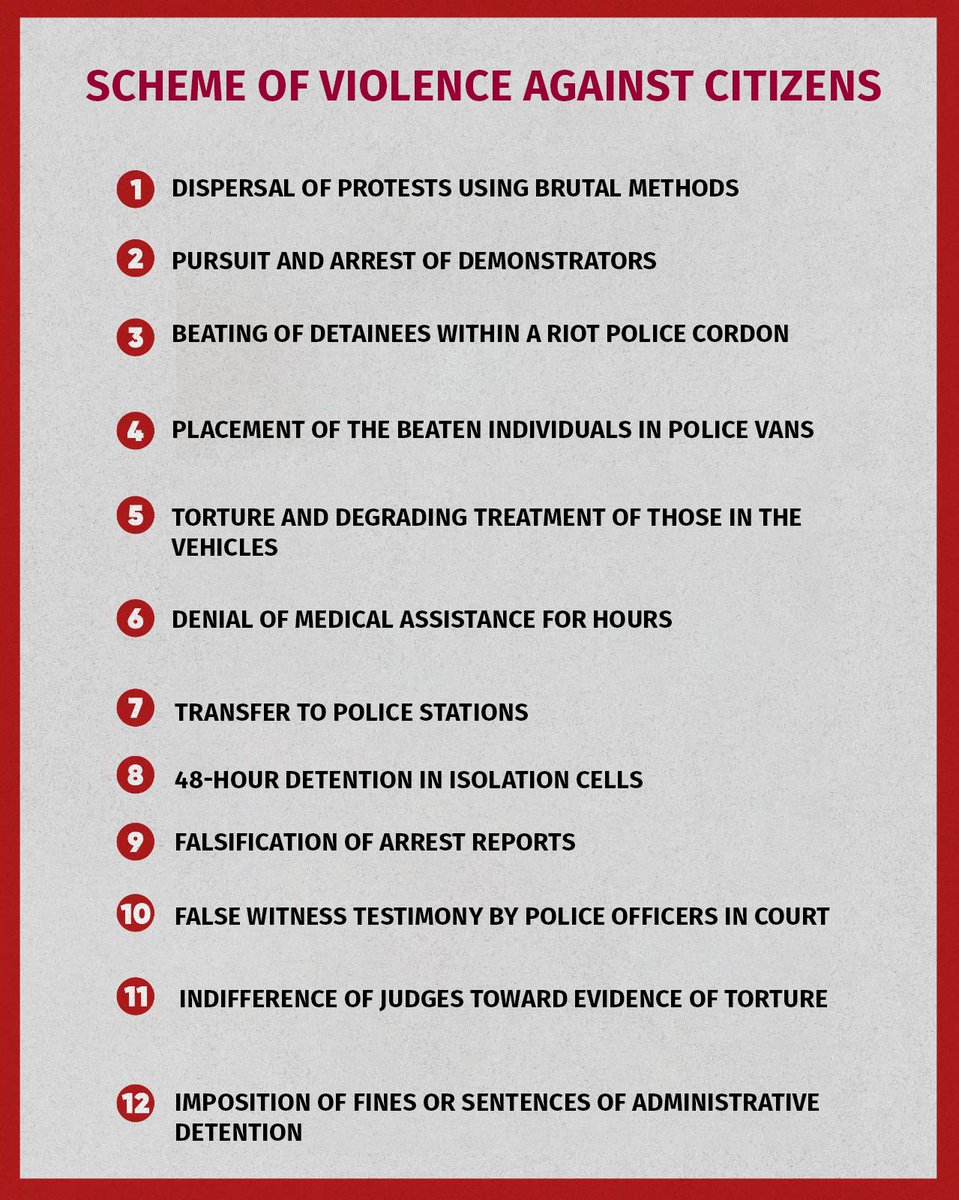
Based on analyzed information from victims' testimonies to lawyers and publicly available sources, we note that Georgia’s Ministry of Internal Affairs employed premeditated brutal methods and systemic torture to suppress peaceful protests that began on November 28.
Excessive use of force in dispersing protests
The Ministry of Internal Affairs used various special measures to disperse tens of thousands of peaceful demonstrators, including water cannons mixed with unknown substances, pepper spray, tear gas of uncertain composition, and other tactics.
In some instances, water cannons were deployed following warnings to disperse, while in other cases, riot police initiated chasing and capturing protesters, while warnings were issued after.
After using water cannons, riot police launched large quantities of tear gas, which made breathing and visibility impossible, induced panic, and created a significant risk of stampedes and chaos.
To apprehend protesters engulfed in tear gas, special forces deployed strike teams that indiscriminately captured anyone unable to leave the area in time.
In some cases, peaceful demonstrators who complied with dispersal orders were ambushed, surrounded, and detained by special forces.
Torture, Inhumane, and Degrading Treatment of arrestees
During arrests, special forces physically abused arrestees, continuing the violence after they were brought into police cordons and into minivans, which were reserved for beatings. Groups of officers would periodically enter these vehicles to assault arrestees, particularly in sensitive areas such as the face, head, and ribs. The violence and torture were directed by a supervisor who gave instructions on the intensity and location of the beatings. Along with physical abuse, arrestees were robbed of their personal belongings.
Other reports describe arrestees, beaten and robbed, being doused with cold water. In some instances, injured arrestees were handed items like socks to clean their blood. The arrestees were subjected to verbal abuse, humiliation, and threats of death, rape, or severe bodily harm.
One lawyer reported that their client was taken to the Lisi area by law enforcement officers after their arrest and threatened with execution and burial on the spot.
Efforts to degrade and humiliate arrestees included taking photos and videos that documented their mockery and mistreatment. Arrestees were forced to recite humiliating phrases about themselves or chant the name of Zviad Kharazishvili (known as "Khareba"). In some cases, the videos were personally recorded by Zviad Kharazishvili, the head of MIA’s Special Task Department.
Transfer of beaten and tortured arrestees to police stations and detention facilities
After the physical abuse, arrestees were handed over to the patrol police, who transported them to various police departments and then to detention centers after 3-4 hours. Due to overcrowding, arrestees, severely beaten and in torn, wet clothes, had to wait in detention vehicles for several hours (typically 3 or more). In some cases, arrestees were transferred to detention centers in other cities. Most arrest records, created by the police before arrestees were placed in detention, contained false information. Despite clear signs of torture and physical abuse, arrestees were not provided with timely or adequate medical care, and when necessary, were not transferred to proper medical facilities. Before being placed in detention, arrestees were denied access to lawyers and the ability to contact their families. After the 48-hour detention period, most arrestees presented before the court were denied their right to a fair trial.
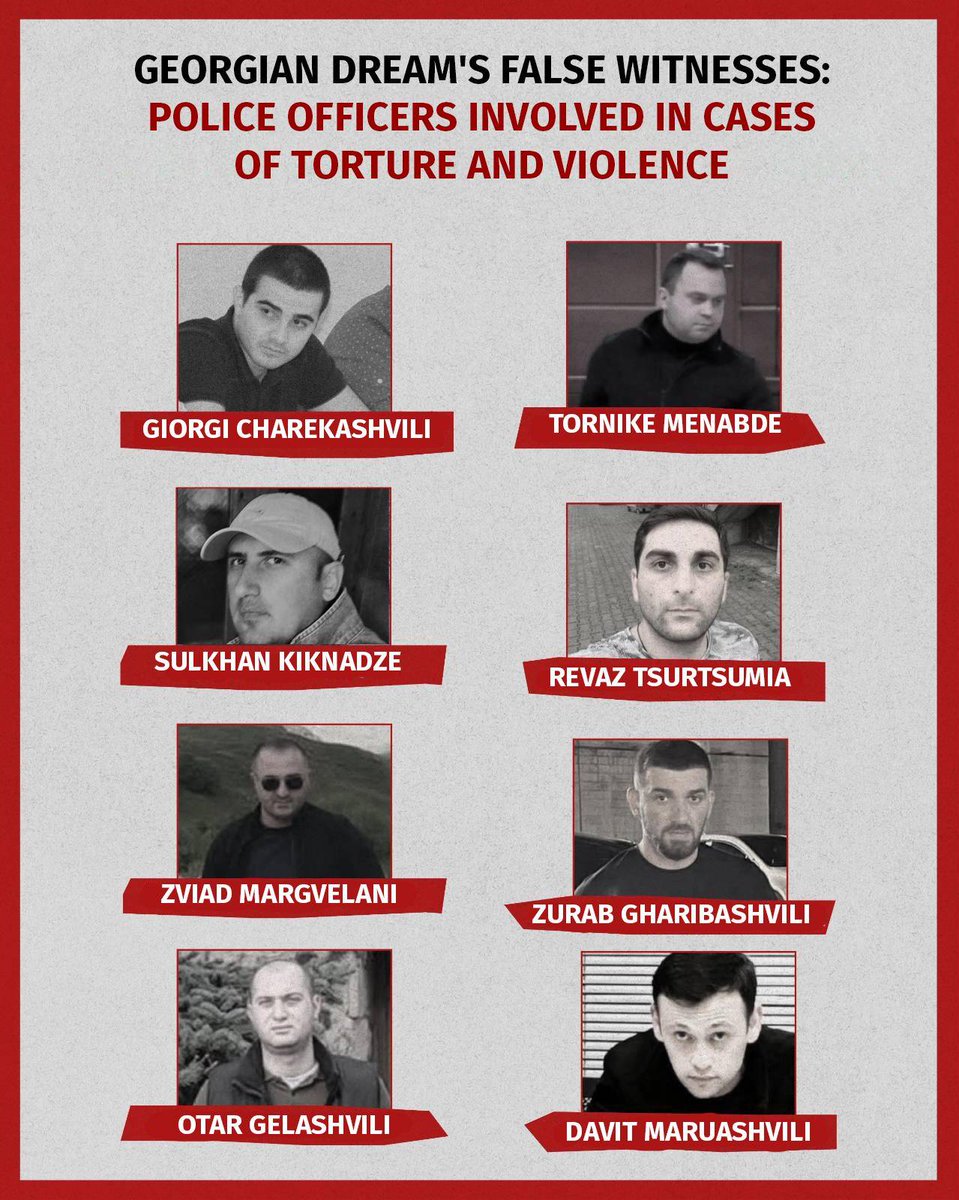
False Testimonies by Police Officers
Police administrative offense records are often standardized and contain false information. They describe arrestees' alleged actions in identical terms, such as "cursing" or "insulting," and fail to specify the time or precise location of the offenses. Police witnesses frequently provide vague or contradictory testimonies in court, and many cannot confirm the legal basis for their actions. They also fail to provide relevant video evidence, claiming cameras were off or damaged. In some cases, police witnesses cannot explain their involvement or the orders they followed during arrests. Judges and state representatives often work together to shield police witnesses from critical questions by the defense, assisting them with suggestive comments. Additionally, arrest records often contain inaccurate details about the officers involved, and police do not investigate injuries sustained by arrestees during their arrest.