My PhD research is framed by the effectual logic developed by the scholar Saras Sarasvathy. She set out to study a very particular and fascinating group of people.
She wanted to understand how genuinely expert entrepreneurs actually behave, those who had successfully built thriving ventures not just once, which could simply be attributed to luck, but repeatedly, which points instead to mastery and skill.
What she discovered surprised a great many people in the business world because it challenged much of what traditional business education had long been teaching. These seasoned entrepreneurs did not behave like forecasters at all. They did not begin by trying to predict the future and then work backwards from their predictions.
Instead, they behaved like resourceful builders, creatively working with whatever resources, relationships, and opportunities were already within their reach. She gave this distinctive way of thinking and acting a name. She called it effectuation, a slightly technical term, and she distilled the entire approach into five clear, practical, and remarkably simple principles. I am going to introduce all five briefly here, and then devote an entire section to each of them later, because together they form the very backbone of everything I want to teach you.
The first principle is simply this: start with what you hold. Do not sit around waiting for ideal conditions, perfect funding, or a flawless plan. Begin today with who you already are, what you already know, and the people you already know.
The second principle is: risk only what you can afford to lose. Instead of asking the gambler's question, "How much might I gain?" the wise builder asks a steadier and more disciplined question, "How much could I genuinely afford to lose?" and then refuses to risk anything beyond that.
The third principle is: build through partnership. Grow your venture by patiently weaving together a patchwork of people who are willing to commit themselves to the journey alongside you.
The fourth principle is: turn your surprises into opportunities. When the unexpected happens, and it certainly will, treat it as raw material for something new rather than as a disaster to be mourned.
And the fifth principle is: shape the future rather than trying to predict it. Invest your limited energy in the things you can actually control, and then act with conviction, trusting that committed action shapes outcomes in ways that anxious forecasting never can.
Now here is what struck me most powerfully in my own research, and it is genuinely the hinge upon which this entire work turns, so I want to slow down and make sure you see it clearly. Long before this way of building ever received a sophisticated academic label like effectuation, the Scriptures had already described precisely the same posture toward life. The Bible had already captured this way of thinking, living, and acting centuries before modern entrepreneurship gave it a name. And the Scriptures had a name for it too. It is called faith.
One of the most underrated economic assets in the Kingdom of God is speaking in tongues.
Most people think speaking in tongues belongs only in prayer meetings, conferences, and church services. They fail to realise that the same Holy Spirit who empowers prayer is the Spirit who inspired creation, innovation, wisdom, strategy, governance, and productivity.
The world runs on information. Markets reward insight. Industries reward innovation. Organisations reward problem-solvers.
But when a believer prays in tongues, he is not merely making spiritual sounds. He is engaging the Spirit who knows all things, sees all things, and understands opportunities long before they become visible to everyone else.
"He that speaketh in an unknown tongue edifieth himself."
The word edify means to build up.
And here is the reality: economies are built by people before they are built by money.
A strengthened man will always outperform a weakened man.
A man full of divine wisdom will often outperform a man with superior resources but inferior insight.
Many people are looking for financial breakthroughs when what they really need is spiritual capacity. Because when capacity grows, opportunities that once looked impossible suddenly become manageable.
The greatest economic advantage is not money.
It is insight.
It is knowing what others do not know.
It is seeing what others cannot yet see.
It is discerning what others overlook.
It is having the courage to act when others hesitate.
Speaking in tongues strengthens the inner man, sharpens spiritual perception, aligns the heart with divine wisdom, and positions the believer to become a carrier of solutions.
No wonder Scripture says we speak mysteries.
Mysteries are hidden things.
And hidden things are where opportunities live.
The next business idea, the next innovation, the next strategy, the next solution to a complex problem may not come from panic, noise, or endless scrolling. It may come while praying in the Spirit.
Never underestimate the economic value of spiritual intelligence.
Tongues may not put money directly into your account, but they develop the person who creates value, solves problems, builds organisations, leads people, generates wealth, and changes nations.
The believer who prays in the Spirit is not escaping reality.
He is connecting to the highest intelligence available in reality.
And when divine intelligence meets diligent labour, extraordinary outcomes become inevitable.
The purpose for Salvation is Discipleship. The call to become like Jesus and make people become like him Him is our responsibility.
He that wins a soul is wise.
God's mercies are new everyday. He is merciful and compassionate. How much of it do you enjoy each day?
Lamentations 3:23 TPT
New, fresh mercies greet me with every sunrise. So wonderfully great is your faithfulness!
Written by @MatAshimolowo .official
WE WILL NOT BE SILENT
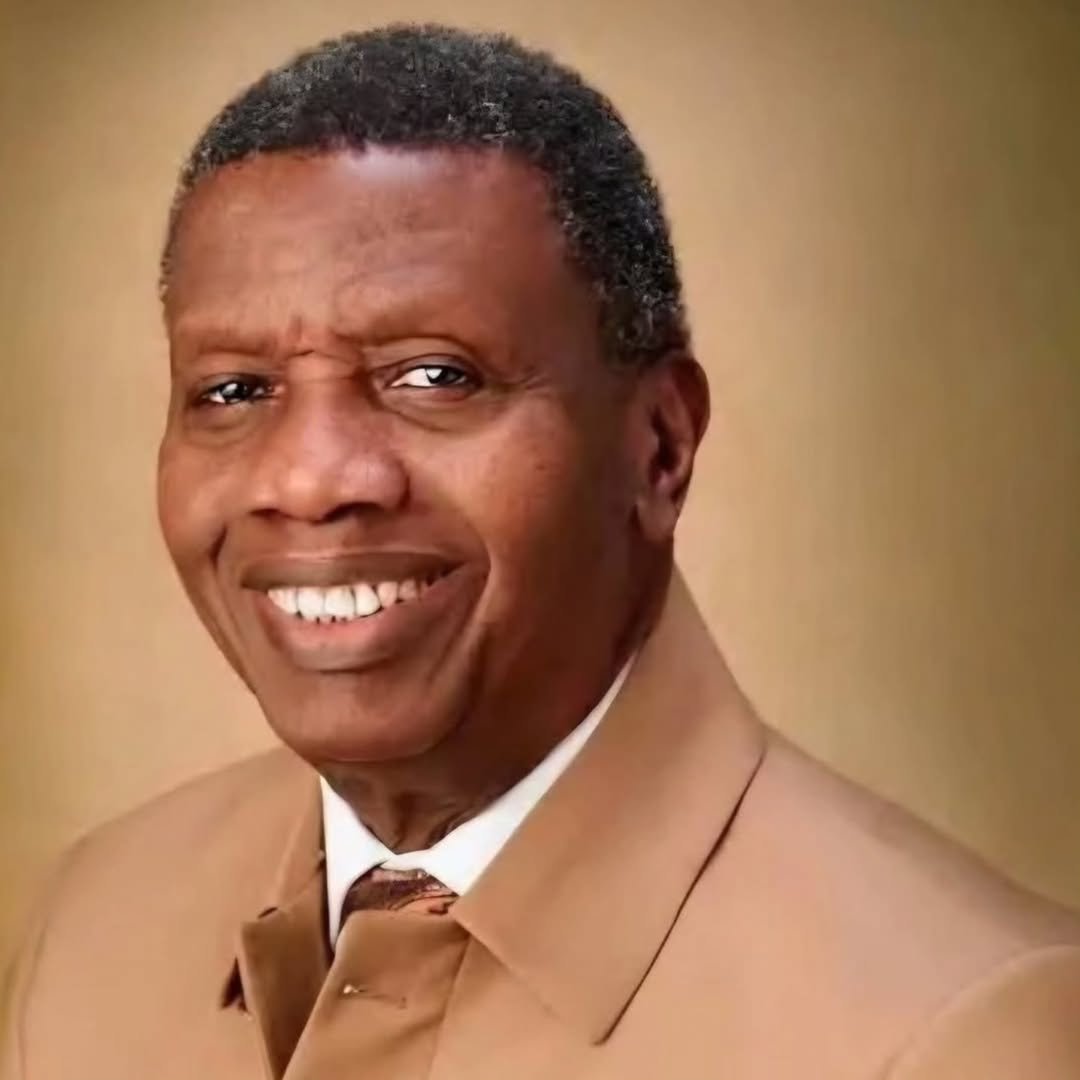
A Celebration of Pastor Enoch Adejare Adeboye
There comes a time when silence becomes ingratitude.
There comes a time when honour becomes a sacred duty.
There comes a time when sons and daughters must rise to celebrate the gifts that God has given to a generation.
This is such a time.
We refuse to be silent while men and women of eternal significance are reduced to headlines, controversies, and social media trends.
We refuse to stand by while those who have sacrificed decades in service to God and humanity are casually criticized by people who have built nothing, fathered nobody, planted no churches, and transformed no nations.
The sons and daughters of prophets must never be silent while cheap publicity seekers use great men as instruments for attention.
A generation that does not honour its fathers has no future.
A people who cannot recognize greatness in their midst will eventually suffer the tragedy of its absence.
Pastor Enoch Adejare Adeboye is not merely a church leader.
He is not merely a denomination head.
He is not merely a respected minister.
He is one of the most significant Christian leaders of our generation and one of the greatest spiritual gifts God has given to Africa and the global Church.
We should never allow a man who chose humility to become the chewing stick of the uninformed.
We should never permit the noise of critics to drown out the voice of history.
We should never watch while modern-day Sauls seek to intimidate, discredit, or silence God's servants.
Scripture records how King Saul pursued David.
Scripture records how Doeg the Edomite became an instrument of destruction against the priests of God.
Throughout history, political power has often sought to suppress prophetic voices.
Yet God has always preserved His servants and vindicated His purpose.
The Church must never become indifferent when its fathers are unfairly attacked.
Nor should we wait until our prophets cross into eternity before we begin to celebrate them.
Too often, flowers are sent to funerals when they should have been delivered while the recipient was still alive.
You were created to create good things. You are designed to design.
There are seeds inside you. You are created to be fruitful. What are you producing?