I'm looking forward to this new era in which anything that someone doesn't have absolute ontological control of is force majeure. "The delivery person dropped a carton of eggs at your door from shoulder height. Because gravity is out of a person's direct control..."
According to @Lyft, if your driver is listening to music that’s sexually explicit, it’s impossible for the driver to do anything about it. Evidently, they can’t, say, turn off the radio, turn down the sound, or change the station.
Who knew? Are children safe in Lyft cars?
@JeremyBRoberts@lyft "Our investigation confirmed that the car your driver ran into was traveling on a public road rather than someone's driveway. Because public roads are out of a driver's direct control, and your driver kept going after hitting someone, we are unable to issue a full refund."
Bluespotted fantail rays basically run on the tide clock. When the water comes up, they move in small groups onto shallow sandy areas to feed, then as the tide falls they tuck back into reef crevasses and rocky ledges to shelter.
One of the biggest stingrays on Earth lives in rivers, not the open ocean. The giant freshwater whipray (Urogymnus polylepis) is listed as Endangered, and it depends on large, connected river systems like the Mekong and Chao Phraya basins. Yes, it really is this huge.
The porcupine ray is a great reminder that “stingray” doesn’t always mean “stinger.” It’s built like a little armored tank, with thorny dermal denticles and a thick tail that lacks a venomous barb, which is a very different defensive strategy.
The body and swimming pattern look surprisingly similar to a ray or a skate, but as @oceaiii explains, this is a Peacock Flounder. Another example of how nature sometimes lets animals share their homework on evolutionary strategies.
Stingray fossil fragments like teeth and dermal denticles first appear in the fossil record in the Early Cretaceous, about 145 million years ago. Near complete, recognizable stingray fossils date from about 49 million years ago, like this famous find in Bolca, Italy.
Stingrays swim by sending smooth waves along their broad pectoral fins. It’s an energy-efficient glide that matches their niche: cruising low over the seafloor, staying quiet and stable in currents, and dropping to feed without wasting motion.
Stingrays’ eye and mouth layout is an adaptation to bottom-feeding life. Eyes on top help them spot predators and navigate while staying low and partially buried. The underside mouth is positioned to suction and crush prey from sand and mud with their body still in cover.
Rays and skates are built like living gliders, and their skeletons are made of cartilage instead of bone. Cartilage is lighter, which helps them stay buoyant and move efficiently through the water.
The Moche civilization in ancient Peru produced artwork depicting a deity with the head of a human and the body of a stingray. The pendant in this photo is dated between 100 and 300 CE. I'm not ready to really worship stingrays-yet-but admiration for these animals goes way back.
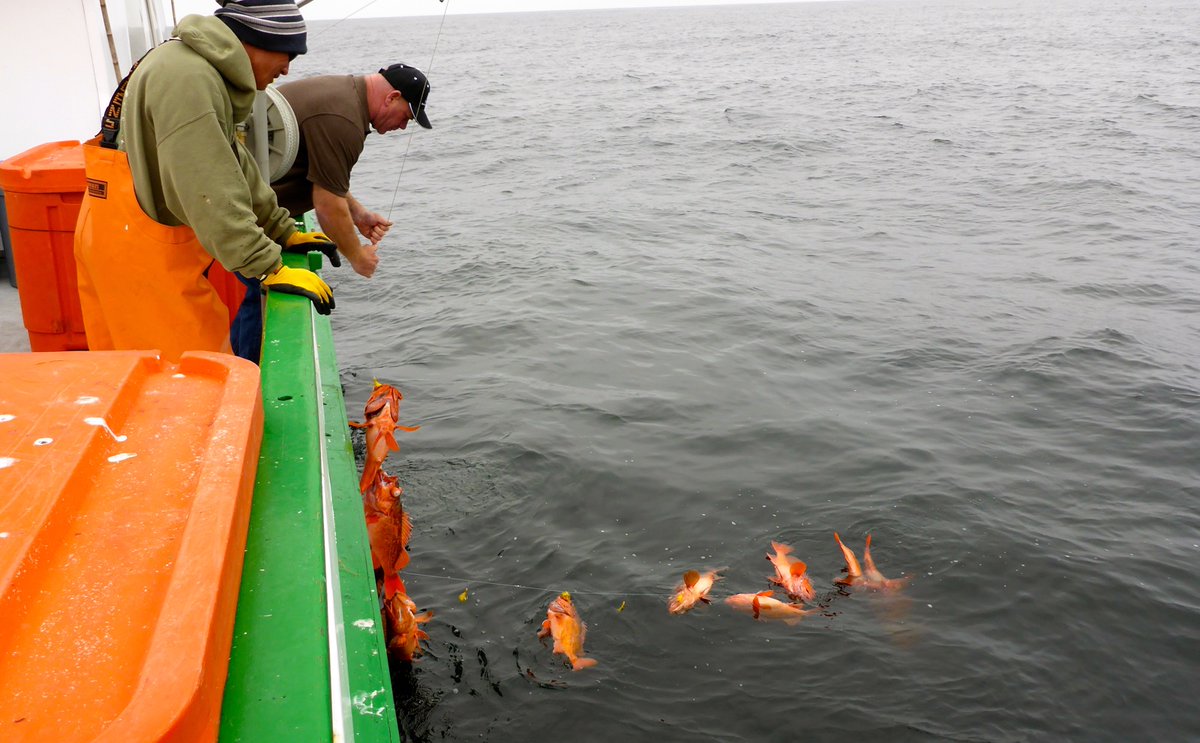
Stingrays are vulnerable for a simple reason: they tend to grow slowly and have relatively few young. Losses from fishing, often as accidental bycatch, add up fast. Reducing bycatch is crucial for rays as well as numerous other marine animals. https://t.co/12NzJVT4LK
Stingray venom isn’t injected through a hollow spine like a syringe. The barb is a serrated spine covered by a thin skin sheath with venom glands along it. When the barb punctures, that sheath can tear and the venom gets rubbed into the wound.
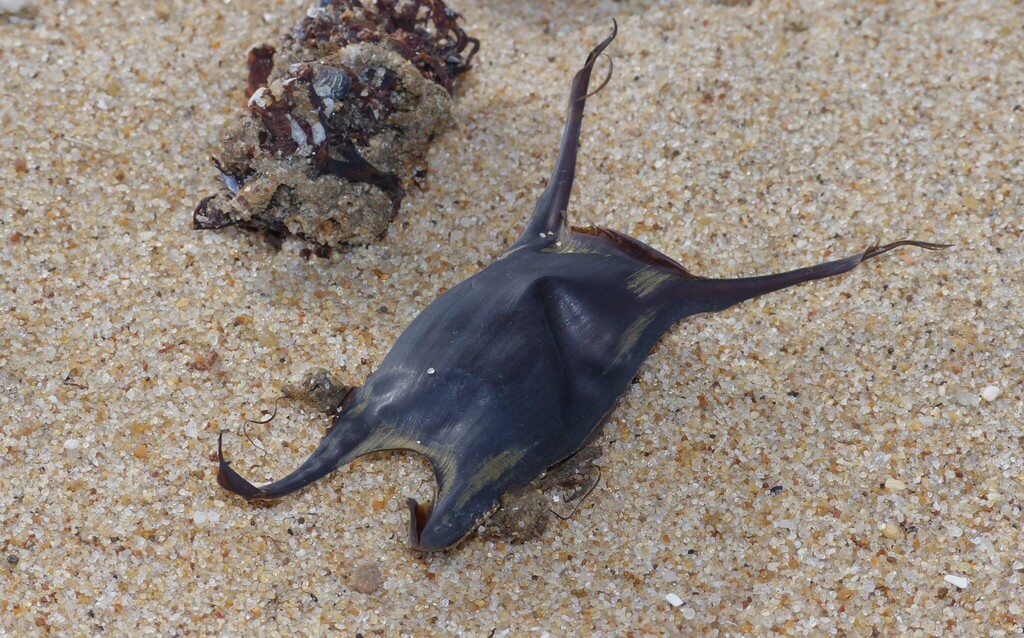
If you find a “mermaid’s purse” on the beach, it’s a skate egg case. It’s a leathery pouch with little horns/tendrils at the corners that skates lay on the seafloor. A baby skate develops inside for months and then hatches. By contrast, most stingrays give live birth.
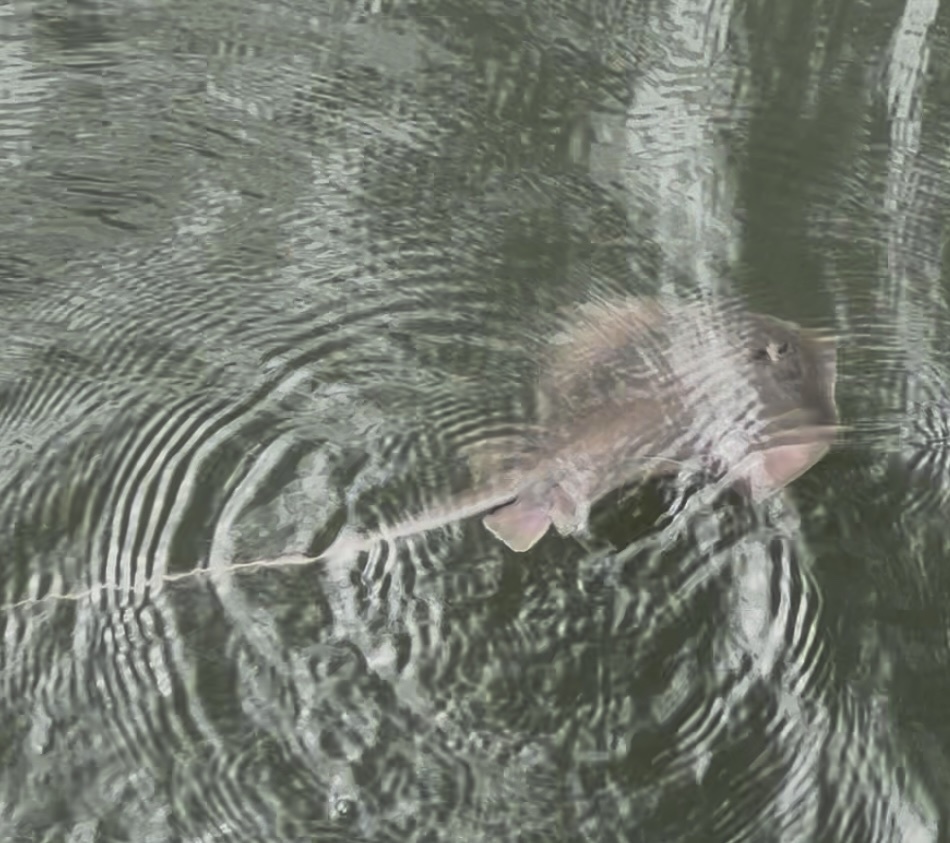
Wild fact: the Atlantic stingray can handle brackish and even fresh water. So depending on where you are, “stingray habitat” can mean coastal shallows, estuaries, and even rivers and lakes.
Those “horns” on a manta ray aren’t horns at all. They’re cephalic lobes, and the ray unfurls them to help channel water into its mouth while it filter-feeds. Watching it work feels like watching a living kite that eats.