PLEASE SHARE DONATE AGAIN AND AGAIN!!!
There are 4 days left till Thanksgiving. They have over 22,000 requests for Thanksgiving Day bundles at an average cost of $55. As of Saturday morning 18,344 meals for 10 to 12 individuals are filled WITH ALITTLE OVER 4K LEFT TO PURCHASE. You can do the math for yourself to see how much is needed by Monday morning. https://t.co/FqfARA80Rl (donate on the website or @protectourveteransUS on Paypal ) needs to raise these funds to make sure every veteran and their families receive a great holiday meal.
Call Protect Our Veterans at 202-202-4551 Or call me on my personal cell phone, 508-762-2679, if you have any questions. This is how much this fundraiser means to me.
The Thanksgiving food bundle for a veteran family, includes a 20‑pound turkey, fresh produce, and pantry staples and a pumpkin pie.
Protect Our Veterans is a completely volunteer organization. Every dollar that comes in goes back out. Let me repeat that: every single dollar that comes in goes back out. We have no permanent staff. We are just veterans helping veterans. We are a 401(c
Visit their store at: https://t.co/9eZnk6kx2g
There is some great merchandise to support veterans and promote their brand.
@CalanHunterPhD
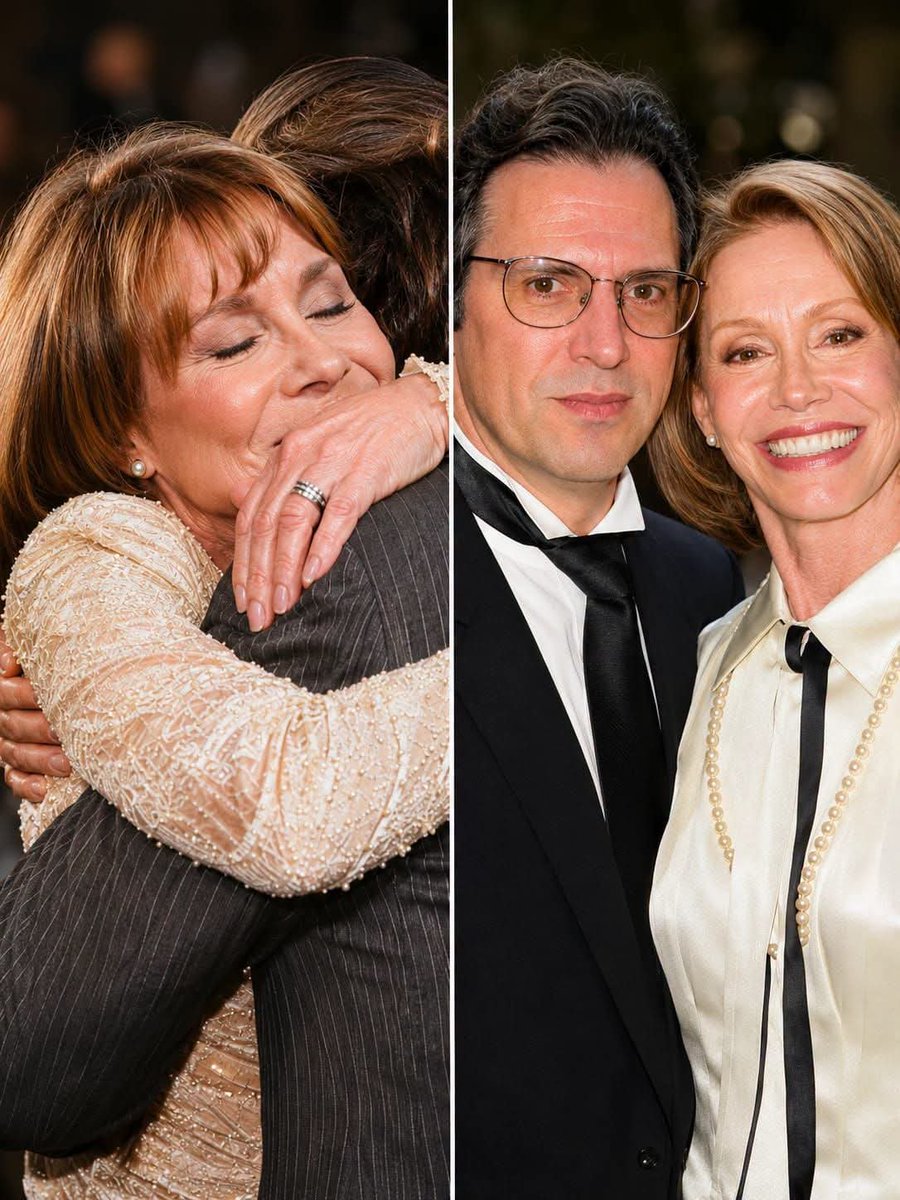
On January 25, 2017, Mary Tyler Moore spent her final hours at Greenwich Hospital in Connecticut, no longer the woman tossing a knit cap into a Minneapolis sky, but an 80-year-old patient whose body had carried diabetes for nearly five decades.
Her husband, Dr. Robert Levine, remained nearby.
Pneumonia and its complications had overwhelmed her weakened body.
The woman who once made America smile was slipping away.
For years, diabetes had slowly stolen her eyesight.
Reading became difficult. Moving around became uncertain.
Yet Mary fiercely protected her independence.
Robert understood how painful accepting help could be.
Their love story began in 1982, when he treated her mother for bronchitis.
Mary was twice divorced.
Robert was a young cardiologist.
They married in November 1983, building a partnership that lasted more than thirty-three years.
But Mary carried heartbreak long before their wedding.
In 1980, her only son, Richie, died at 24 after a gun accidentally discharged.
The loss devastated her.
She later scattered his ashes into California's Owens River.
Alcohol became another struggle.
In 1984, Mary entered the Betty Ford Center.
Robert later said she never drank again.
But recovery couldn't erase the grief.
Instead, she learned to live alongside it.
Diabetes had entered her life in 1969.
Rather than hiding her condition, Mary became a passionate advocate for research and treatment.
She served as JDRF's international chairman, raised funds, and spoke publicly about the disease.
Her compassion extended to animals.
With Bernadette Peters, she co-founded Broadway Barks in 1998, helping shelter animals find homes.
Meanwhile, television preserved another Mary.
Laura Petrie on *The Dick Van Dyke Show*.
Mary Richards on *The Mary Tyler Moore Show*.
And a heartbreaking dramatic performance in *Ordinary People*.
She made audiences laugh, think, and sometimes cry.
But behind those performances lived a woman confronting losses no television script could resolve.
When Mary died, Robert's grief was overwhelming.
“Mary was my life, my light, my love.”
He continued supporting research into diabetic retinal disease.
The world remembered her unforgettable smile.
Robert remembered the woman who kept fighting when smiling became difficult.
And the love that remained when the cameras were gone.
A mother and her two young children were struck by a car in a Utah school parking lot, leaving her and her 2-year-old son pinned underneath. Her 3-year-old daughter managed to crawl free, but her mom and little brother were still trapped.
A school administrator witnessed the crash and ran inside screaming for help. Within seconds, more than 20 high school students came sprinting outside.
The teenagers surrounded the car and began lifting one side of it together, raising it just enough for an Air Force serviceman to crawl underneath and pull the mother and her little boy free.
The mother had been shielding her son with her own body. When rescuers reached him, his face was purple, and he was barely responsive.
The boy was airlifted to a hospital and later released. His sister was unharmed, and their mother survived after undergoing surgery.
More than 20 teenagers dropped everything to lift a car off a mother and her child. Those are the young people who deserve to be recognized.
She lost her brother when she was still a teenager.
Years later she said that grief changed the direction of her entire life. It didn’t make her afraid. It took the fear away.
In 1967, in the small Texas town of Quitman, leukemia took her older brother Robbie. He was still a teenager himself. Sissy Spacek later said the loss became a kind of rocket fuel. After that, there was very little left that could frighten her.
So she left Texas and went to New York.
People told her she needed to lose her Texas accent if she wanted to succeed. She refused.
That accent became part of what made her unforgettable.
She modeled to pay the bills, worked as an extra at Andy Warhol’s Factory, and got into the Actors Studio with help from her cousin, Rip Torn. Her big break came with *Badlands* in 1973. The entire film was narrated in her natural Southern voice—the accent she had been told to erase.
On the set she met art director Jack Fisk. They married the next year.
Then came *Carrie*.
Sissy was already 25. She needed to look like a bullied high school girl. So she wore an old sailor dress her mother had made for her in junior high, didn’t wash her face, rubbed Vaseline in her hair to make it look dirty, and walked into the audition. She got the part.
Later, Loretta Lynn chose her to play her in *Coal Miner’s Daughter*. Sissy didn’t just act the part. She sang the songs herself and studied Lynn’s voice until she could speak and sing like her. She said one of the hardest parts was having to stop being Loretta when filming ended.
She won the Oscar for Best Actress.
Then, at the height of her success, she and Jack moved to a farm in Virginia to raise their two daughters away from Hollywood.
She never stopped working. She earned more Oscar nominations, gave a powerful performance in *In the Bedroom*, and later appeared in *The Help*. More than fifty years after meeting on the set of *Badlands*, she and Jack Fisk are still married.
Sissy Spacek got what so many people chase in Hollywood. The Oscar. The stardom. The respect.
Then she went home.
On December 5, 1960, a taxi struck a baby carriage at the corner of 85th Street and Madison Avenue in New York. The carriage was thrown forty feet into the air. Inside was four-month-old Theo Dahl, the youngest son of writer Roald Dahl.
Theo survived, but his skull was fractured. Fluid began building up in his brain. Doctors inserted a shunt to drain it, but the valve kept blocking. Every blockage meant another emergency surgery.
Dahl had survived a plane crash as a fighter pilot in World War II. Nothing had prepared him for watching his baby suffer while the medical device meant to save him kept failing.
He was not a doctor. He had never designed medical equipment. But he refused to accept that nothing better existed.
He remembered Stanley Wade, a retired toymaker who built tiny hydraulic pumps for model aircraft. Dahl asked if he could design a small, reliable valve that wouldn’t block. They brought in Theo’s neurosurgeon, Kenneth Till.
Together they created the Wade-Dahl-Till valve. Stainless steel. A two-disc mechanism designed to resist blockages. Durable enough to stay inside a child’s body for years.
By early 1962 it was ready.
By then Theo had improved. He no longer needed it.
Dahl could have walked away. Instead he thought about the other children still lying in hospital beds with the same problem.
He, Wade, and Till took no royalties. No licensing fees. The valve was supplied at cost—around twenty-one dollars—through a nonprofit connected to Great Ormond Street Hospital.
It was eventually used in roughly three thousand children.
Most of those families never knew a famous children’s author had helped invent the device that gave their child a better chance. They only knew the valve worked.
Dahl went on to write *James and the Giant Peach*, *Charlie and the Chocolate Factory*, *The BFG*, and *Matilda*. Millions of children grew up with his stories. Most never learned that the man behind them had once helped build a medical valve because his own son was suffering—and then made sure other people’s children could have it too.
He started the project for one little boy. When that boy no longer needed it, he kept going for everyone else’s.
She was told the children were dying from a disease doctors already understood.
Cicely Williams wasn’t convinced.
In 1929 the young Jamaican doctor arrived on the Gold Coast of West Africa. She saw toddlers with swollen bellies, pale patches on their skin, and brittle hair. The official diagnosis was pellagra. Treatment was given. The children kept dying.
She listened to the mothers and grandmothers. They already had a name for it: kwashiorkor—“the disease the child gets when the new baby comes.”
These weren’t simply starving children. They were toddlers weaned too early when a sibling was born and given maize pap that filled their stomachs but gave them almost no protein. Without the amino acids their bodies needed, they broke down.
By 1931 she had recognized the pattern. In 1933 she published her findings, describing kwashiorkor as a distinct condition caused by protein deficiency.
The medical establishment dismissed her. A leading authority accused her of carelessness and deceit. She was ignored again when she published more detailed evidence. Then she was transferred to Malaya—widely understood as professional punishment.
In Malaya she saw something else. Companies, including Nestlé, were sending women in white coats into homes and maternity wards, telling poor mothers that sweetened condensed milk from a tin was better and more modern than their own breast milk. Many of those families had no clean water. Formula mixed with contaminated water was killing babies.
In 1939 she was invited to speak to the Singapore Rotary Club. The chairman was the president of Nestlé. She titled her speech “Milk and Murder.” She told the room that promoting infant formula this way among vulnerable families was negligence, and the deaths that followed should be regarded as murder.
Then the war came. When Japan invaded, she fled on foot through the jungle. She was captured and spent three and a half years as a prisoner of war—starved, tortured, held in cages. She developed dysentery and beriberi that permanently damaged her feet. When the war ended she was close to death in a hospital bed.
She survived. And she went back to work.
Three years later the newly formed World Health Organization needed someone to lead its first Department of Maternal and Child Health. They chose Cicely Williams.
She spent the rest of her career training local health workers, advising governments, and insisting that the health of mothers and children was not a minor branch of medicine—it was one of its foundations.
In 1981, forty-eight years after her paper on kwashiorkor and forty-two years after her “Milk and Murder” speech, the World Health Assembly adopted the International Code of Marketing of Breast-milk Substitutes. The vote was 118 to 1.
Much of what she had warned about since the 1930s had finally become international policy.
She lived long enough to see it. Cicely Williams died in 1992 at 98.
She began with a notebook, a stethoscope, and the willingness to listen to people others had ignored. It took the world decades to catch up with what she had seen.