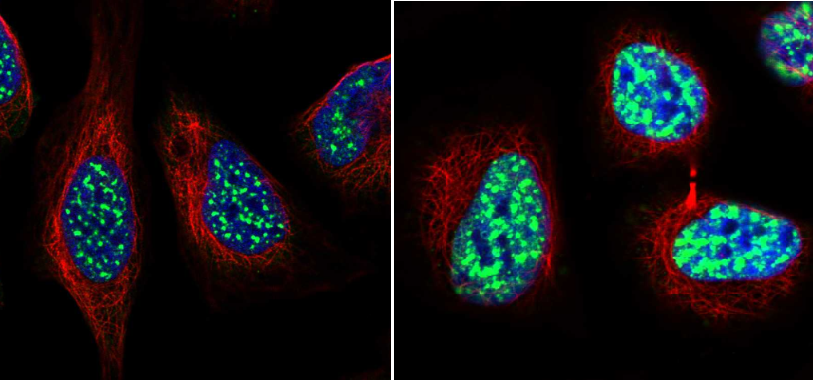
5/5 All data is integrated into @ProteinAtlas alongside matched RNA: https://t.co/bfac0bJcd0
Shout out to Mathias Uhlen, @CarolineWeiss30 & a wonderful Munich–Stockholm collaboration 🇩🇪🇸🇪
In version 25.1 of the Human Protein Atlas, a dataset based on Deep Visual Proteomics has been integrated in the Single Cell resource to provide mass-spectrometry based proteomics at an unprecedented resolution across cell types and tissues.
https://t.co/SOTHISiB9t
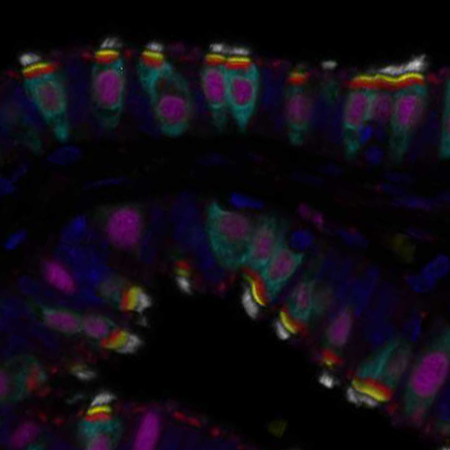
A study by HPA researchers in Nature Communications presents a high-resolution spatial map of proteins associated with motile cilia in the human fallopian tube, providing new insights into reproductive biology, infertility and cilia-related disease.
https://t.co/uMRmYcLjdB
The Human Protein Atlas welcomes GeneTex’s recent announcement formalizing a collaborative relationship with the Human Protein Atlas. Collaborations with Atlas Antibodies, NCI-CPTC, Thermo Fisher Scientific, and Absea Biotech are also acknowledged.
https://t.co/e9FyVbFpuC
The differences in blood protein levels during childhood and early adulthood were recently explored in an article published in Nature Communications, which highlighted the importance of accounting for age and sex when analysing protein levels in children.
https://t.co/2fPsb4onze
SON and SRRM2 are essential for forming nuclear speckles and in a study in Cell it was shown that their simultaneous depletion resulted in complete dissolution of speckles, disturbing 3D-genome organization and H3 isochore gene expression.
https://t.co/B8qTmtqEi2
In a review article published in Pharmacological reviews the current knowledge regarding structure, function, opportunities for therapeutic targeting and distribution in tissues and cells of human and mammalian aGPCRs is summarised.
https://t.co/tzkETa4DzL
A mIHC/IF panel is used to identify proteins expressed at specific stages of spermatogenesis. BEND2 is shown in the nucleus of cell state 2 spermatocytes (green) together with state 3 spermatocytes (magenta) and early (white) and late (red) spermatids.
https://t.co/5yyl10GraJ
What would it look like to see all ~13,000 proteins inside a single human cell at once?
We share ProtiCelli — a generative model that makes this possible. Besides benchmarking, we demonstrate utility in many tasks.
Preprint: https://t.co/faBevXiBBa
A thread 🧵👇
In the episode 102 of the Proteomics show podcast series, "All the parts", neuroscientist at KI and HPA researcher Jan Mulder talks about different aspects of the brain and brain research together with the hosts Benjamin Neely and Ben Orsburn.
https://t.co/MuZ7qqpstv
Easter celebration is very tightly linked to eggs and therefore we will take this opportunity to have a closer look at the zona pellucida proteins, some of the most important genes in the human oocyte.
https://t.co/IyE1KvjMKK
Using mIHC/IF the adaptor protein SHC2 involved in cell signaling is shown in green in the cytoplasm of glucagon-producing alpha cells in the islets of Langerhans in pancreas . Other visualized cell types are beta cells (magenta) and delta cells (yellow).
https://t.co/knKkOKCBC7
At a recent high-level international meeting in Mexico City, 600 international delegated discussed trends in education, health and research. Mathias Uhlén shared a practical perspective on what universities must do as innovation cycles accelerate.
https://t.co/UDhhrfIPHV
In a study in J.Proteome Res >180 proteins have been spatially mapped to specific subcellular compartments in cells with motile cilia using multiplex IHC. The high-resolution data aids in further functional mapping of proteins with limited evidence.
https://t.co/F0rJlpcMHV
A study in Science demonstrate that STING acts as a molecular barrier to bird flu and that a single substitution in the viral M1 protein leads to human IAVs evading activation of human STING, demonstrating the significance of this antiviral barrier.
https://t.co/yJnsU6fE9M
February is the gallbladder and bile duct cancer awareness month, and also features the international World Cancer Day. This year's theme was "United by Unique" to raise awareness of the disease and request a cancer care more focusing on individuals.
https://t.co/QGM1tub7qt
In a report published in the Journal of Proteome Research last years advances and efforts within the HUPO coordinated Human Proteome Project (HPP) to define the human proteome and make proteomics an integral part of functional multiomics are presented.
https://t.co/G4kdtVqxc9
The spatial expression pattern of TMEM213 in ductal structures of the salivary gland, based on mIHC/IF, show localization (green) to the apical part of the membrane of large ducts (red) but not to small ducts (magenta) or serous acini (cyan).
https://t.co/7Ruugjmf4H
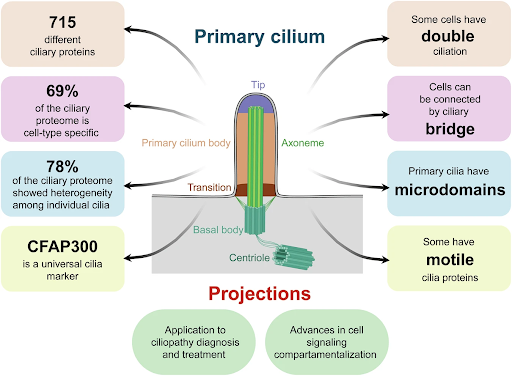
The HPA primary cilia study by Hansen published in Cell was recognized as setting a new standard for understanding ciliary function and its role in health and disease in a research highlight published in Nature Signal Transduction and Targeted Therapy.
https://t.co/S29lyWQs0y
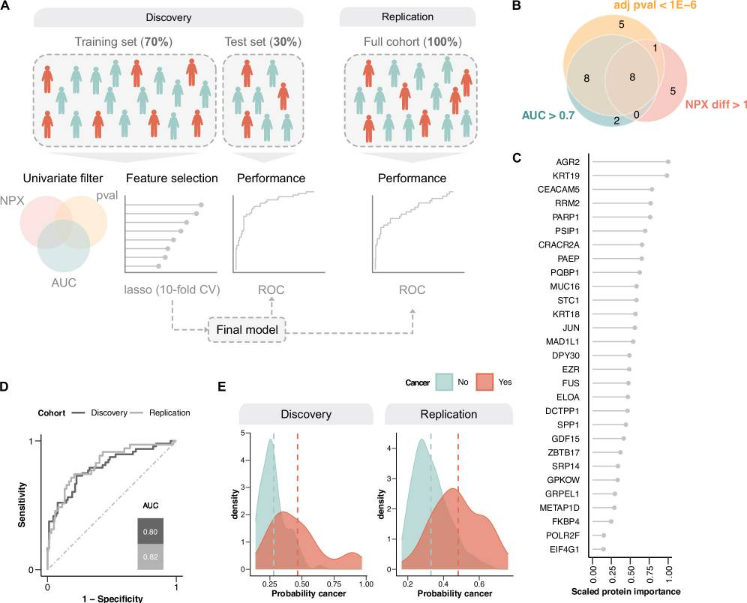
Detection of cancer is challenging, especially since many common diffuse symptoms overlap with non-malignant conditions. In an article in Nat. Commun. plasma protein signatures were used to identify cancer among patients with non-specific symptoms.
https://t.co/5o7IocsKQf