A computationally designed high-affinity hIL-4Rα mini-protein antagonist prevents assembly of hIL-4/hIL-13-mediated receptor complexes and potently suppresses downstream signaling. https://t.co/zqWaUU76r0
A computationally designed high-affinity hIL-4Rα mini-protein antagonist prevents assembly of hIL-4/hIL-13-mediated receptor complexes and potently suppresses downstream signaling. https://t.co/zqWaUU76r0
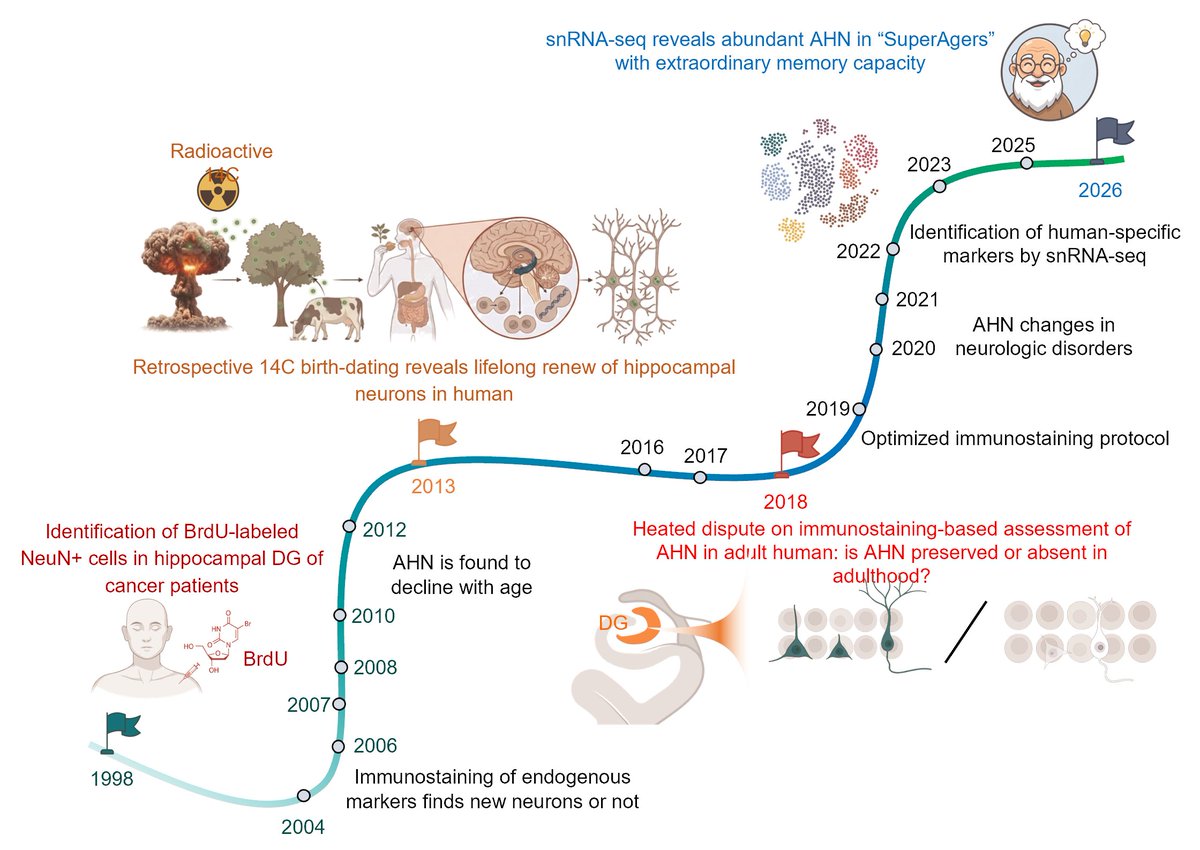
The existence of neurogenesis in the adult human hippocampus has been shaped by methodological advances. Despite lingering skepticism, current evidence indicates a functional neurogenic niche, with newborn neurons closely linked to cognitive and emotional regulation. https://t.co/OBpydXGRyd
This review summarizes gut organoid construction strategies, their promoting role in IBD pathophysiology research, applications in IBD modelling, organoid transplantation therapy, and drug screening, highlighting current prospects and limitations. https://t.co/c4WOuZbYz9
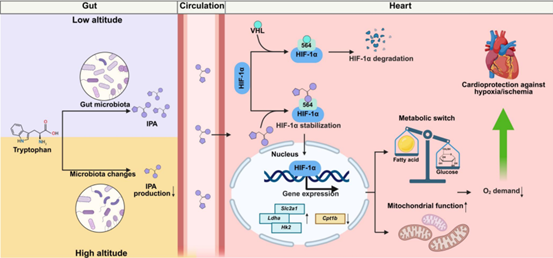
The gut microbial tryptophan metabolite IPA acts as an endogenous agonist of HIF-1α to protect the heart against hypoxia/ischemia. https://t.co/SLk1LRzLsi
The 2025 Guangdong chikungunya outbreak, associated with an imported ECSA genotype lineage, was characterized by a short transmission period, typical febrile-arthralgic manifestations, and age-dependent hospitalization duration, highlighting the need for sustained genomic and epidemiological surveillance. https://t.co/CGwDvjFTsE
The dual role of alveolar macrophage. This study explores the phenotype transition of tissue-resident alveolar macrophage (AM_0, CD11b⁻) in hvAB-infected lung. AM_0 is essential for protective immunity. AM_0 transforms into IL-1β-producing subset (AM_1, CD11b⁺). IL-1β activates ILC3 to release IL‑17A, which recruits massive neutrophils and induces NETosis, causing alveolar damage. https://t.co/ESkwRNrB7q
Structural analyses reveal that YghJ is regulated by zymogen-like autoinhibition, in which proteolytic N-terminal processing triggers linker rearrangement, exposes the catalytic center, and converts the enzyme into a substrate-accessible state. https://t.co/SKAY8dYmpP
This study establishes H2A.Z deposition as an epigenetic checkpoint that integrates host genetic susceptibility and microbial metabolite signals to control macrophage inflammatory resolution. The GAS41/TIP60 module translates butyrate‑driven acylation into H2A.Z deposition, enforcing transcriptional braking. https://t.co/bomFqXD43n
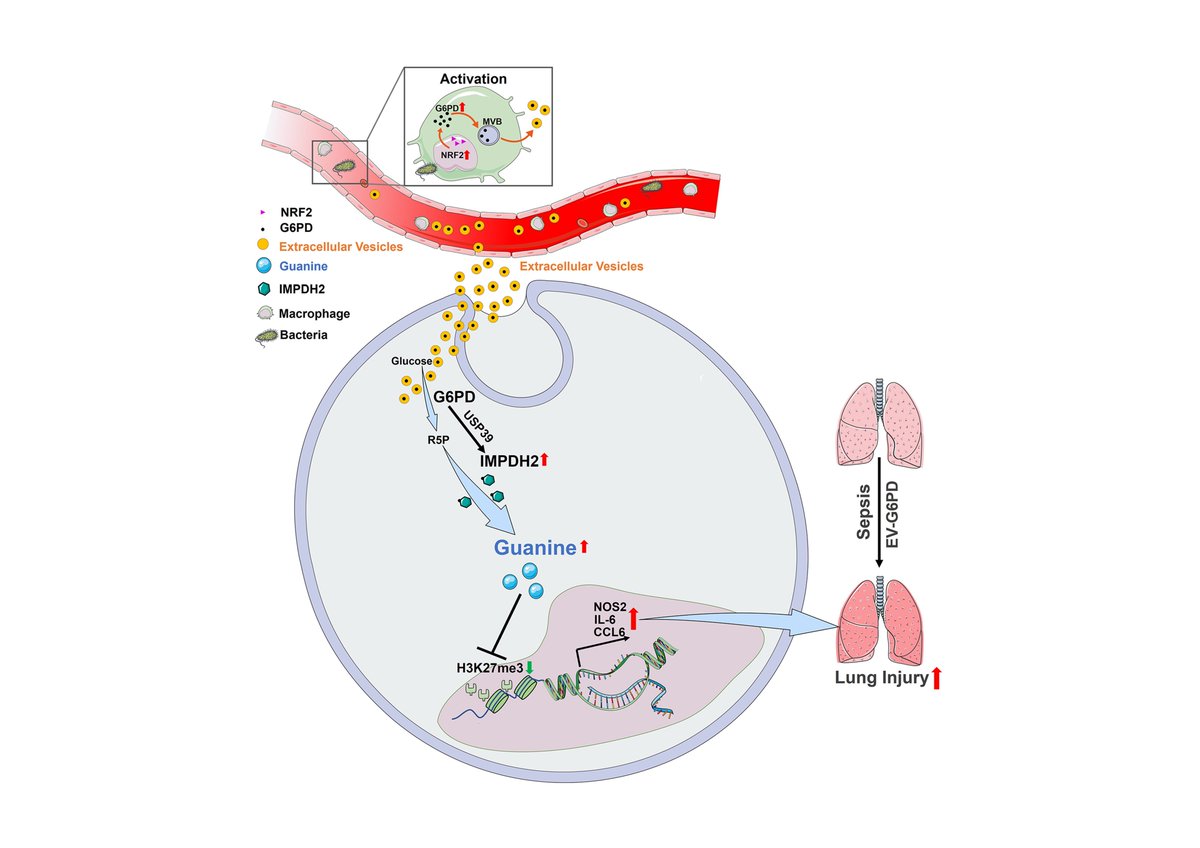
Schematic illustration of theSEV-G6PD-USP39-IMPDH2 axis driving sepsis-induced acute lung injury. upon bacterial infection, peripheral macrophages secreted SEVs highly enriched with G6PD. once reaching the lung, delivered G6PD recruitedUSP39 to deubiquitinate and stabilizeIMPDH2, thereby enhancing guanine biosynthesis. The accumulated guanine diminished H3K27ME3 epigenetic repression, releasing the expression of pro-inflammatory mediators includingNOS2, CCL6 and IL-6, which ultimately promoted pulmonary injury. This schematic summarized how circulatingG6PD-carrying SEVs remodeled lung inflammatory responses through purine metabolic reprogramming and epigenetic regulation. https://t.co/KvVn5UIjlH
LMNA R527C disrupts lamin A–DNA association by impairing BAF and LAP2α binding. This drives abnormal aggregation of LMNA and DNA damage, activates cGAS–STING and AIM2, and causes inflammation-driven segmental progeroid syndrome. https://t.co/lPNNLLBeP9
In this review, Leendert A Trouw et al. provide an overview of the complement system and outline its relative role in the clearance of apoptotic cells, pathogens, cancer, myelin and synapses in the central nervous system. https://t.co/q4mbN6okFI