Pendant l’été 1871, George Sand avait eu très chaud 🥵.
Elle témoigne :
“Une grande fatigue, le travail en retard, un effort désespéré pour reprendre ma tâche au milieu d’un été que je n’ai jamais vu, que je ne croyais pas possible dans nos climats tempérés : des journées où le thermomètre à l’ombre montait à 45 degrés, plus un brin d’herbe, plus une fleur au 1er juillet, les arbres jaunis perdant leurs feuilles, la terre fendue s’ouvrant comme pour nous ensevelir, l’effroi de manquer d’eau d’un jour à l’autre, l’effroi des maladies et de la misère pour tout ce pauvre monde découragé de demander à la terre ce qu’elle refusait obstinément à son travail, la consternation de sa fauchaison à peu près nulle, la consternation de sa moisson misérable, terrible sous cette chaleur d’Afrique qui prenait un aspect de fin du monde ! Et puis des fléaux que la science croyait avoir conjurés et devant lesquels elle se déclare impuissante, des varioles foudroyantes, horribles, l’incendie des bois environnants élevant ses fanaux sinistres autour de l’horizon, des loups effarés venant se réfugier le soir dans nos maisons ! Et puis des orages furieux brisant tout, et la grêle meurtrière achevant l’œuvre de la sécheresse !”
[George Sand, extrait du “Journal d'un voyageur pendant la guerre”, chapitre I, édition
Michel Lévy Frères, 1871.]
🚨 #AlerteExcision | L’excision ne doit jamais faire partie du voyage
À l’approche des vacances d’été, restons vigilants et agissons. Chaque année, des jeunes filles peuvent être exposées au risque de mutilations sexuelles féminines (MSF) lors de séjours à l’étranger.
🌍 Dans le monde, plus de 230 millions de femmes et de filles ont subi ces violences. En France, on estime à 139 000 le nombre de femmes vivant avec les conséquences d’une excision.
Les MSF sont une grave violation des droits humains et constituent un crime puni par la loi française, y compris lorsqu’elles sont pratiquées à l’étranger sur une personne résidant habituellement en France.
📢 Vous aussi, relayez la nouvelle campagne portée par l’association @excisionparlons et soutenez la prévention et la lutte contre les mutilations féminines.
📞En cas de danger, de risque ou de doute :
• Besoin de soutien ou de conseil, appelez le 119 – Enfance en danger
• Urgence immédiate ou risque de départ imminent, appelez le 17 – Police / Gendarmerie
• Depuis un autre pays de l’Union européenne, appelez le112 – Urgences européennes
📍Pour en savoir plus sur les mutilations sexuelles : https://t.co/X7YVjrPbl1
@auroreberge
l’UE a reçu une délégation talibane à Bruxelles : un signal politique de facto à un régime qui opprime les femmes et écrase toute opposition. Pendant que les taliban gagnent en légitimité, la résistance afghane et les victimes restent ignorées. Bravo les champions…#Afghanistan
Fou l’absence de mobilisation pour la libération de Betty Lachgar qui croupit dans les geôles marocaines pour avoir porté un tee-shirt « Allah is lesbian ». Peur que ce soit vrai ?
La diplomatie française pourrait s’activer !
#BettyLachgar@jnbarrot
https://t.co/eUaBoHV44s?
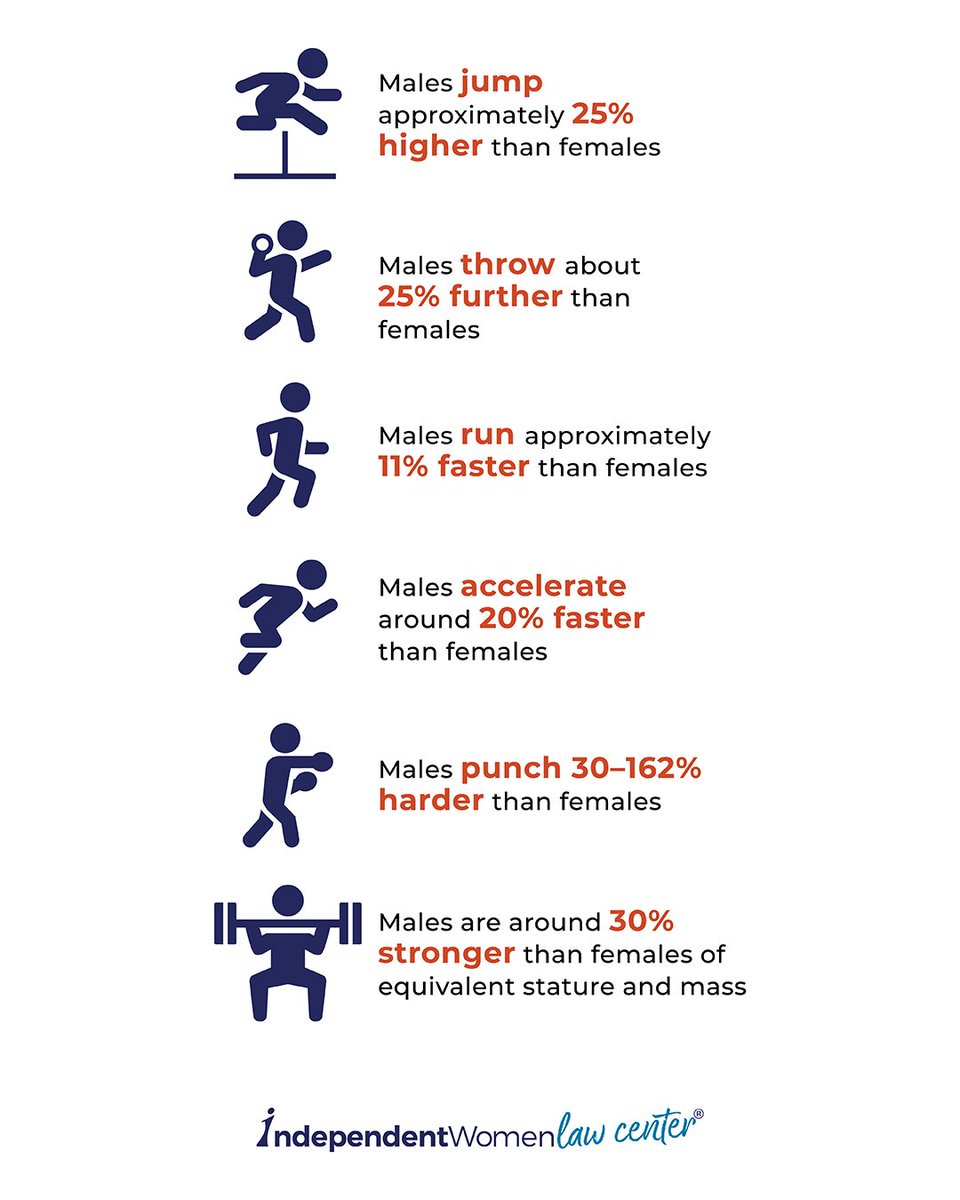
The science is clear.
Males run faster, jump higher, throw farther, hit harder, & are stronger than females.
That's why women's sports exist. Fairness isn't discrimination, it's reality. #WomensSportsWeek
"Les jeunes qui consomment de la pornographie voient les femmes comme des objets à la disposition de leur fantasme"
En France, depuis 1994, il est interdit d’exposer des mineurs à du contenu pornographique. Un principe évidemment piétiné par l’arrivée d’Internet et des réseaux sociaux. Aujourd’hui, 10% des enfants de moins de 11 ans ont déjà consulté ce type de contenus. Leur vision du sexe est de fait déformée et traumatisante.
#Pedocriminels 🤬 En France, des victimes doivent croiser le regard de leur agresseur après sa sortie de prison. Un pédocriminel condamné revient s’installer à 2 km de chez elles. La justice ne s’arrête pas au verdict : elle doit aussi protéger les victimes. Cette situation est insoutenable. 🤬
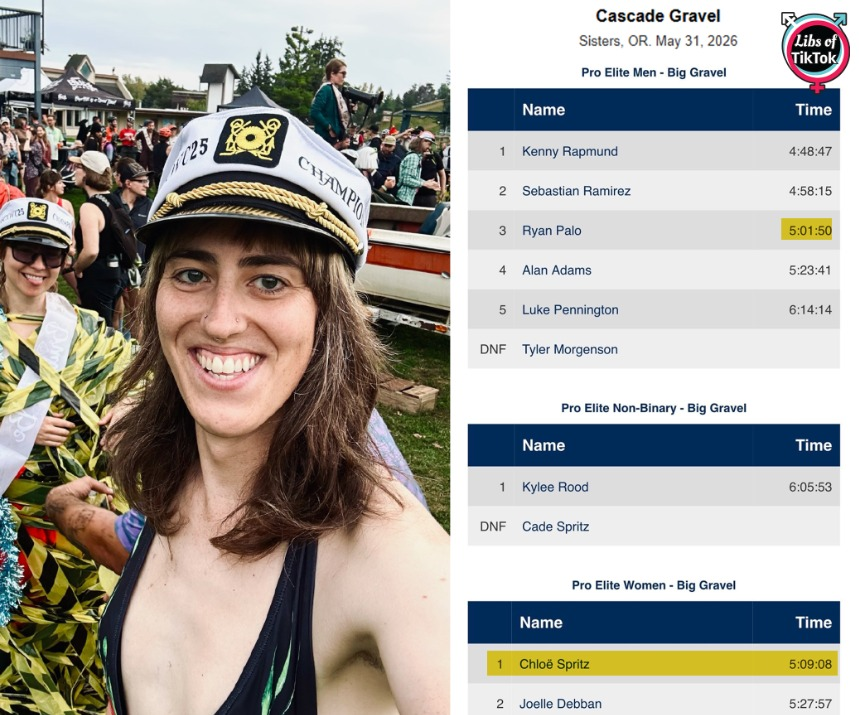
Chloe Spritz, a man pretending to be a woman, took FIRST PLACE at the "Cascade Gravel" WOMEN's biking race, finishing more than 20 min FASTER than 2nd place.
If he raced in the male category where he belonged, he wouldn't even have made the top 3.
Chloe Spritz is a CHEATER
Supprimée des cours des facs de médecine dans les années 80, la gynécologie médicale manque aujourd'hui de praticiens. Une situation de pénurie qui inquiète les élus, les professionnels de santé, mais aussi les femmes, premières victimes de cet abandon
https://t.co/flelxUN41B
136 kilos de cheveux de femmes iraniennes retrouvés dans des camions en provenance d’Iran par la douane arménienne depuis janvier 2026.
Cela fait des mois que nous alertons sur la disparition des corps de femmes iraniennes massacrées en janvier, que nous dénonçons les utérus prélevés sur certains cadavres… Aujourd’hui, l’horreur atteint un nouveau degré avec ces images de cheveux saisis par centaines de kilos.
Pourquoi un tel silence de la communauté internationale face à ce régime barbare ?
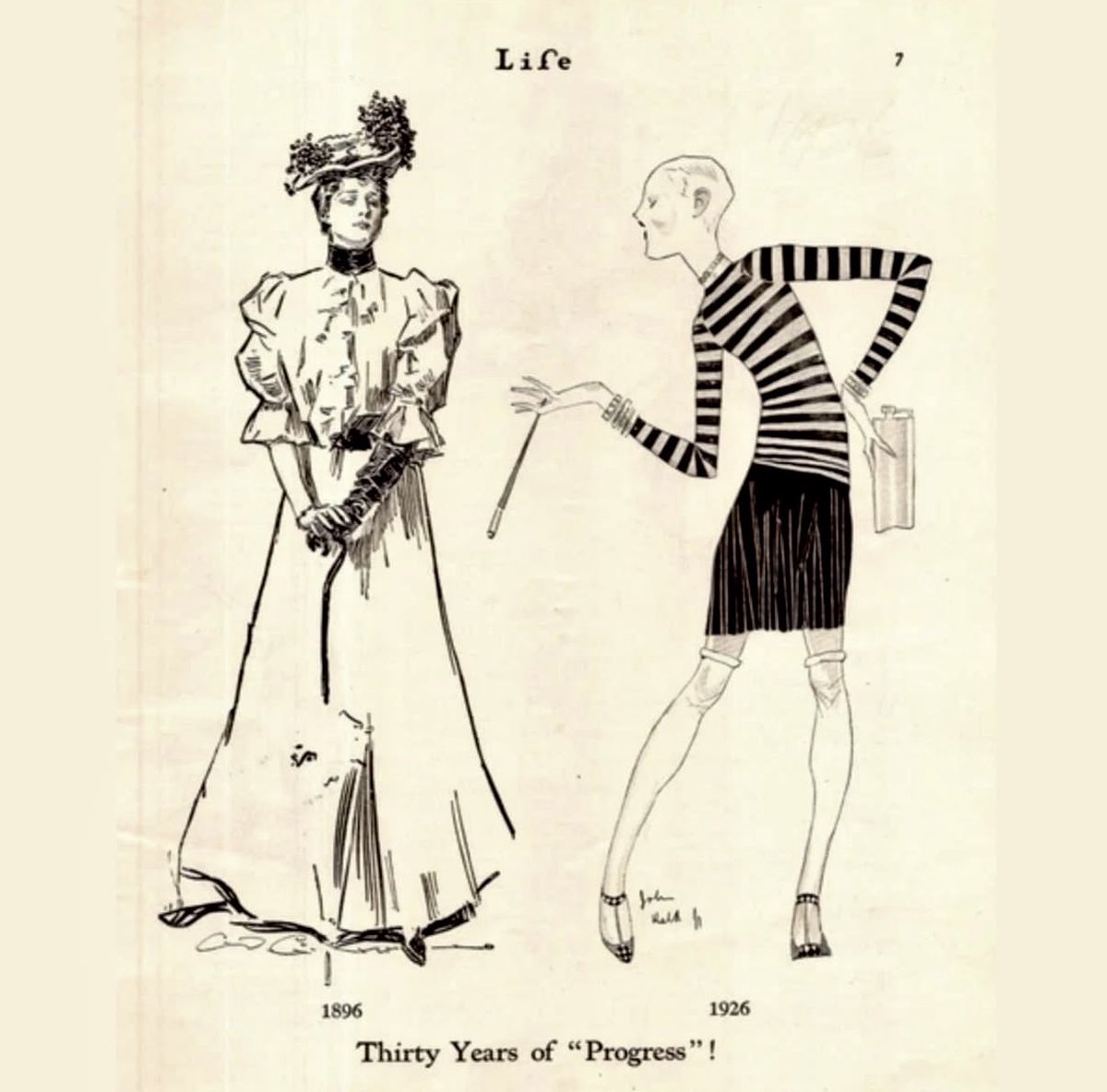
A century-old cartoon satirizing the flapper fashion of the 1920s.
Published in Life magazine in 1926, this satirical illustration contrasts women’s fashion from 1896 and 1926. On the left is the Gibson Girl, the late 19th and early 20th century ideal of femininity, characterized by high collars, long skirts, and a tightly structured silhouette.
On the right is the flapper, whose shorter skirts and more exposed form signaled a sharp departure from Victorian and Edwardian norms. She represented the “New Woman” of the era—independent, modern, and more visible in public life. While many saw the flapper as a symbol of freedom and progress, others criticized it as improper or reflective of moral decline.
Though often set in contrast, both figures reflect the shifting ideals of femininity and independence, as well as the broader cultural changes tied to women’s rights and evolving social roles, with fashion serving as a visible expression of that transformation.
📚11 juin « Laïcité et droits des femmes L'autonomie en question », Laure Caille, Annie Sugier et @MicheleVianes @HarmattanParis Pour l'autonomie des femmes pas de pressions religieuses ou de relativisme culturel. Laïcité garante de l’égalité réelle! https://t.co/vhiOESfIpb
RIP Marjane Satrapi, Author of the Legendary ‘Persepolis’
The Franco-Iranian comic book author, film director and painter "died of sadness just over a year after the death of Mattias Ripa, her husband and love of her life", her family wrote in a statement. She was 56.
In November 1912, sixty women in Sydney were jailed.... Not for theft. Not for violence. For the length of their hatpins.
A municipal bylaw had been passed restricting how far a hatpin could protrude from a woman's hat. The stated reason was public safety. A sharp pin, the argument went, was a hazard to others in a crowd.
The women who wore them knew exactly what that argument was leaving out.
For years, hatpins had served a purpose the authorities preferred not to name. Women traveling alone on streetcars and omnibuses, navigating crowded markets and busy pavements, had learned that a long pin worn through the hat was also, when needed, a means of discouraging men who pressed too close, grabbed, or refused to stop. The hatpin was not just a fastener. It was a boundary, made physical.
The bylaw threatened to take that away.
When the sixty women appeared before the Sydney court and were offered the standard option, pay a fine and go home, they refused.
They called the law iniquitous. Several said so directly, on the record. None of them paid.
So they went to jail instead.
The tactic was not accidental. Refusing the fine and accepting imprisonment was a form of protest that women in the suffrage movement had used elsewhere to expose the absurdity of a law by forcing authorities to enforce it in full view of the public. A woman in a jail cell for the length of her hatpin was a harder image to dismiss than a woman who quietly paid a small fee and walked away.
The story had been building for some years on both sides of the world. In Chicago, a woman named Nan Davis had become one of the more prominent voices arguing that hatpins were a legitimate tool of self-defense and that legislation against them was, at its root, an effort to leave women more vulnerable in public space rather than less. Davis had made the case plainly: if men in public conducted themselves appropriately, the pins would never need to be used as anything other than hat fasteners. The problem being regulated, she argued, was not the pin.
The Sydney case carried the same logic into a courtroom and then into a jail.
The women who refused to pay were not fringe figures. They were ordinary residents of a modern city making a deliberate choice about which laws they considered legitimate and which they did not. They understood that paying the fine would have made the protest disappear. Jail kept it visible.
What happened to most of the sixty afterward is not fully recorded. The historical trace is thinner than the event deserves. But the refusal itself was noted at the time, reported in the press, and placed in a broader international conversation about women's safety, women's rights in public space, and the habit of regulating women's bodies in the name of other people's comfort.
The hatpin restriction did not survive long as a serious enforcement priority. Whether that owed to protests like the one in Sydney, to shifting public opinion, or simply to the arrival of new hat fashions that made the question moot, is hard to say with certainty.
What is certain is this: sixty women were offered a door and chose not to take it.
They called the law unjust. They said so out loud. And they sat in jail to prove they meant it.
An everyday object. A small municipal bylaw. Sixty women who understood that the details are rarely just details.
The hatpin debates of the early 1910s were genuinely international. Cities in the United States, Britain, and Australia all saw versions of this argument play out around the same years, which suggests the question of women's safety in public space was pressing on a lot of people at once. If you want to read further, the contemporaneous newspaper coverage of the Sydney case and Nan Davis's Chicago advocacy are both worth tracking down in digitized archives.
#archaeohistories
#Chine Le Nüshu, une langue millénaire inventée par les femmes et utilisée juste en elles, risque de disparaître avec le décès de sa dernière utilisatrice 😞 Elle se transmettait entre femmes qui vivaient sous le joug des hommes #Langue#Nüshu https://t.co/BfT2q8JiFN
Marjane Satrapi (1969-2026) artiste Franco-iranienne est morte. Elle a réalisé le film d'animation "Persepolis", primé à Cannes 2007. Ce film racontait la victoire de l'islamisme en 1979 en Iran et la nature totalitaire du régime islamique. Un autre film "Poulet aux prunes".
Elle est morte de tristesse après le décès de son mari Mathias Ripa.
Marjane était très engagée dans le mouvement "Femme vie liberté".
Elle était une grande artiste. Une amie artiste nous a quitté.
(Didier IDJADI) @2idjadi



![jeromegodefroy's tweet photo. Pendant l’été 1871, George Sand avait eu très chaud 🥵.
Elle témoigne :
“Une grande fatigue, le travail en retard, un effort désespéré pour reprendre ma tâche au milieu d’un été que je n’ai jamais vu, que je ne croyais pas possible dans nos climats tempérés : des journées où le thermomètre à l’ombre montait à 45 degrés, plus un brin d’herbe, plus une fleur au 1er juillet, les arbres jaunis perdant leurs feuilles, la terre fendue s’ouvrant comme pour nous ensevelir, l’effroi de manquer d’eau d’un jour à l’autre, l’effroi des maladies et de la misère pour tout ce pauvre monde découragé de demander à la terre ce qu’elle refusait obstinément à son travail, la consternation de sa fauchaison à peu près nulle, la consternation de sa moisson misérable, terrible sous cette chaleur d’Afrique qui prenait un aspect de fin du monde ! Et puis des fléaux que la science croyait avoir conjurés et devant lesquels elle se déclare impuissante, des varioles foudroyantes, horribles, l’incendie des bois environnants élevant ses fanaux sinistres autour de l’horizon, des loups effarés venant se réfugier le soir dans nos maisons ! Et puis des orages furieux brisant tout, et la grêle meurtrière achevant l’œuvre de la sécheresse !”
[George Sand, extrait du “Journal d'un voyageur pendant la guerre”, chapitre I, édition
Michel Lévy Frères, 1871.]](https://pbs.twimg.com/media/HLqpQdSXQAMHMLM.jpg)