One idea behind everything we post: before an agent pays a seller, it should know who else has.
Market notes, method and the check itself:
https://t.co/HEUah19cIV
Run an x402 seller on Base and want to see your own numbers: payers, repeat payers, concentration?
DM us. Your first report is free and stays private unless you choose otherwise.
Payer depth in one sentence:
how many different wallets paid this seller, how many came back, and how much of it came from just a few.
Counted from public Base data, so anyone can check it against any dashboard.
A valid paywall today says little about tomorrow. Endpoints go down, change price, change wallets.
We keep every endpoint on our list after it stops answering, so churn shows up instead of disappearing.
Every day since Oct 12, ProvenPaid has sent one unpaid request to each x402 endpoint we know of.
On-chain history can always be re-read. Yesterday's paywall can't. A month of daily checks is a record that can't be rebuilt after the fact.
ProvenPaid doesn't charge when the URL is invalid or unsafe, isn't an x402 endpoint, or doesn't offer USDC on Base.
We validate before we charge. A trust check shouldn't be a trap either.
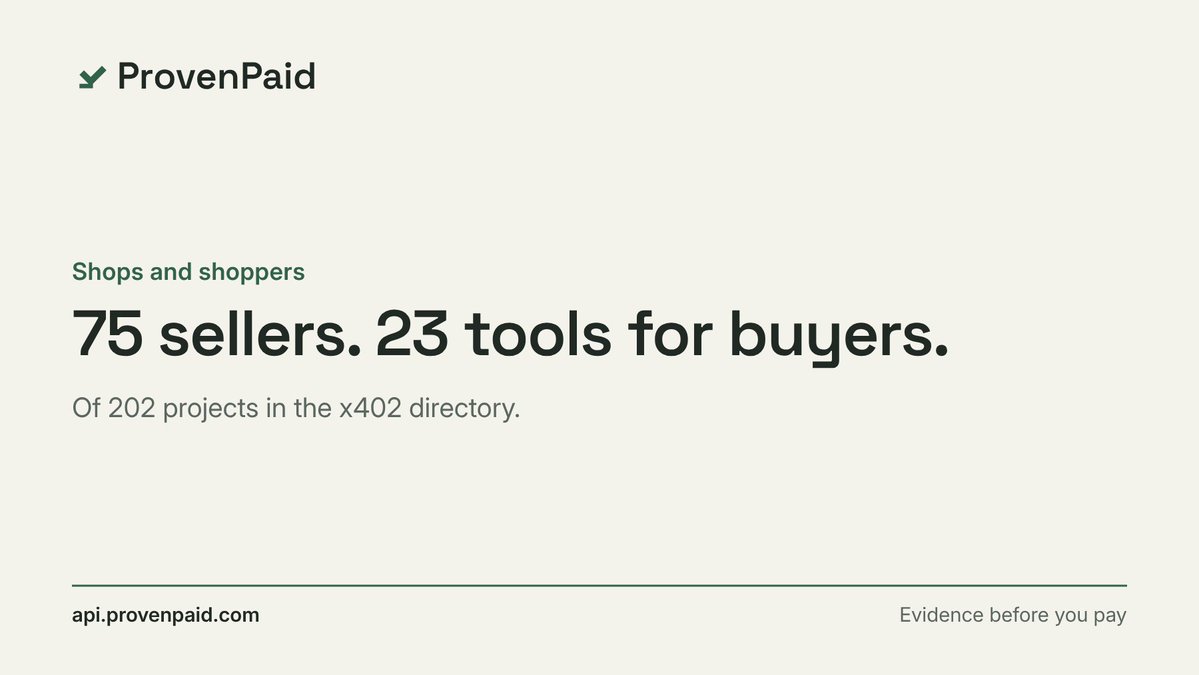
Of 202 projects in the x402 directory, only 23 were client-side tools that help an agent pay. 75 were services selling.
The ecosystem built a lot of shops before it built many shoppers.
Our first note: 3 wallets made two thirds of 80,587 x402-style payments to 4 sellers on Base over 30 days. 394 wallets paid in total.
Early markets are concentrated. That's normal. It's also worth knowing before you pay.
Where to put the check: once, before the first payment to a new receiving wallet. Not before every call.
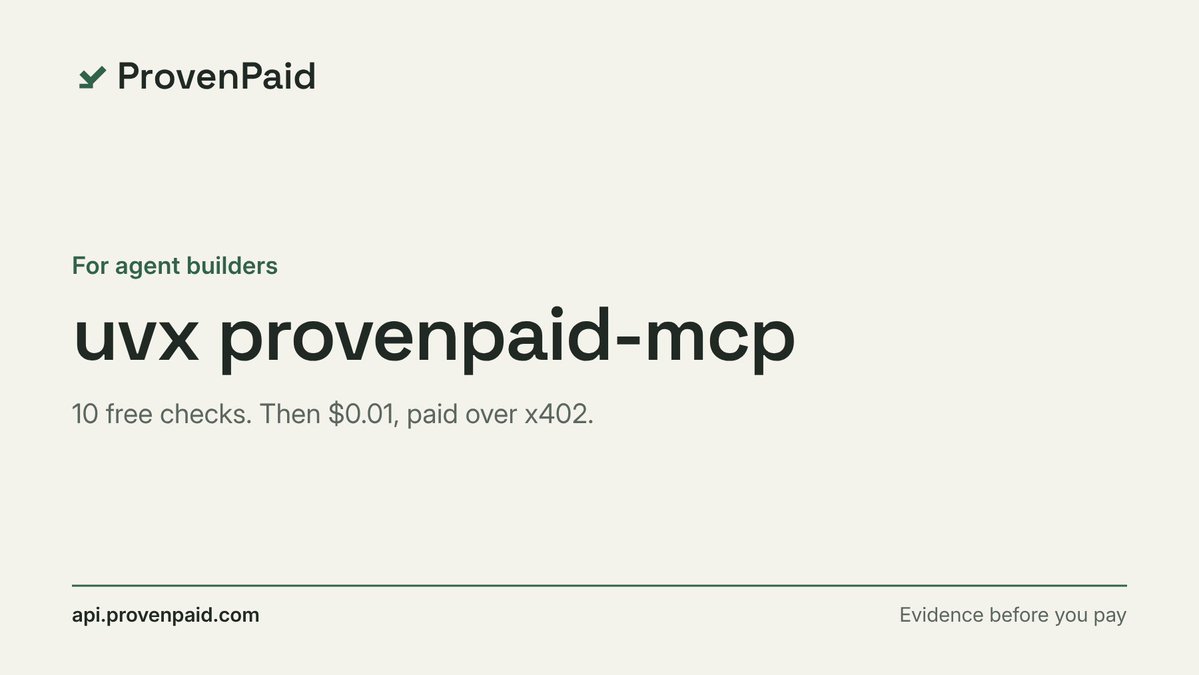
A payer-depth lookup per new seller costs a cent. Paying a seller nobody else pays can cost more.
x402 makes paying easy. That's the point.
It also means an agent can pay a seller with zero history in seconds.
The faster payment gets, the more a check before the first payment is worth.
Where ProvenPaid's numbers come from: live probes of endpoints and public Base USDC logs.
No marketplace or facilitator data. No IP addresses. No record of which URLs you check.
https://t.co/gMtuX6NHkI
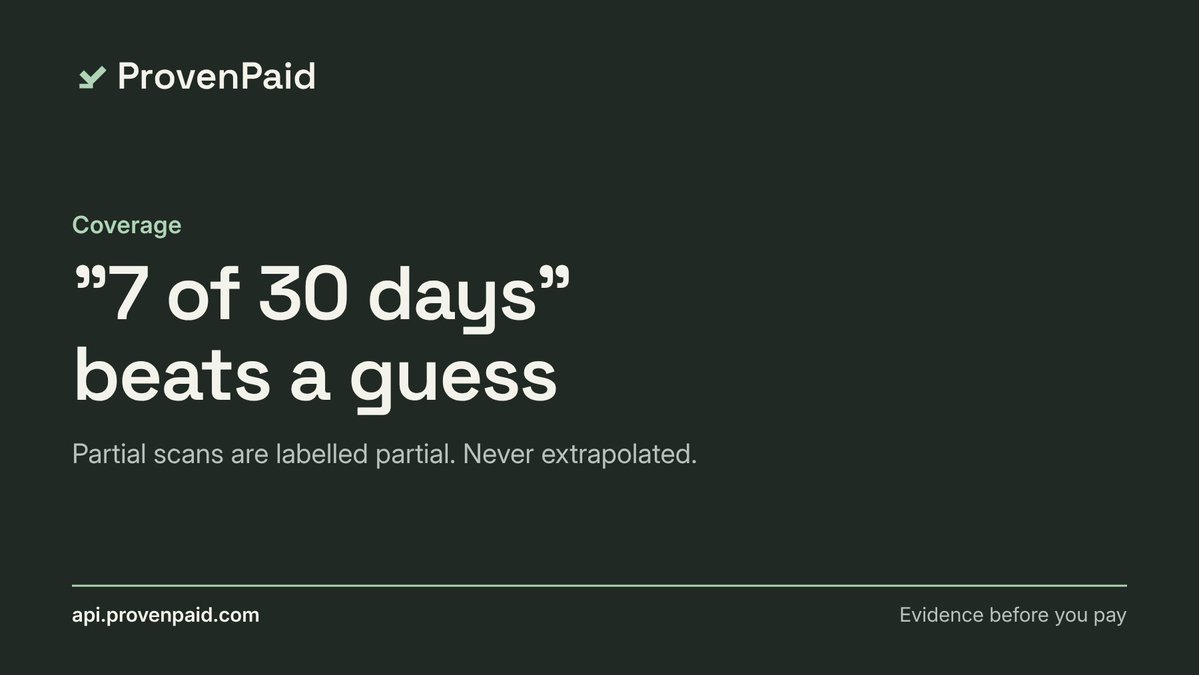
Coverage is part of the answer.
When a seller is too busy for our node provider's limits, the report says partial and how much of the 30 days it covered.
We'd rather say "7 of 30 days" than guess the rest.
What ProvenPaid doesn't do: ratings, scores, "scam" labels.
Every result is a count with a source, a timestamp and how much of the window we scanned. You decide what it means.
A seller asked us to check its revenue against the chain.
The chain showed 58 settlements from outside payers. Its own counters showed 47.
That's what an independent count is for: a second source next to the seller's books and any platform's dashboard.
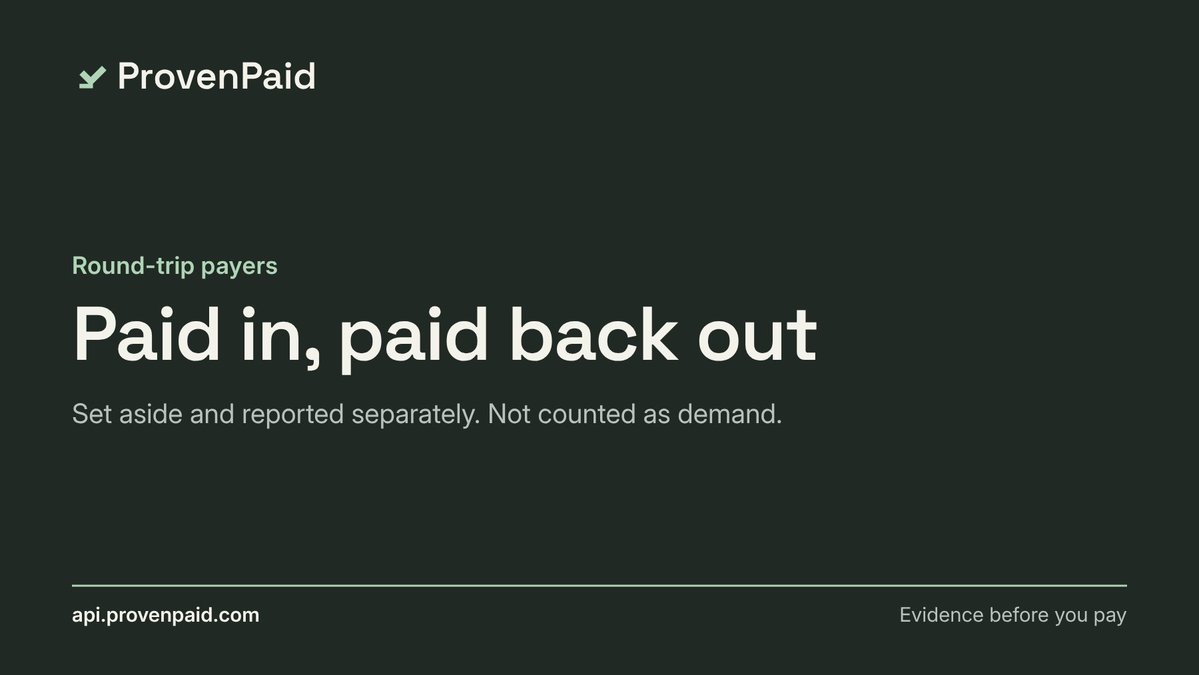
Round-trip payers: wallets that paid a seller and also got USDC back from that seller in the same window.
We set them aside and report them separately. They might be refunds. They might be the seller's own wallets. Either way, they aren't demand.
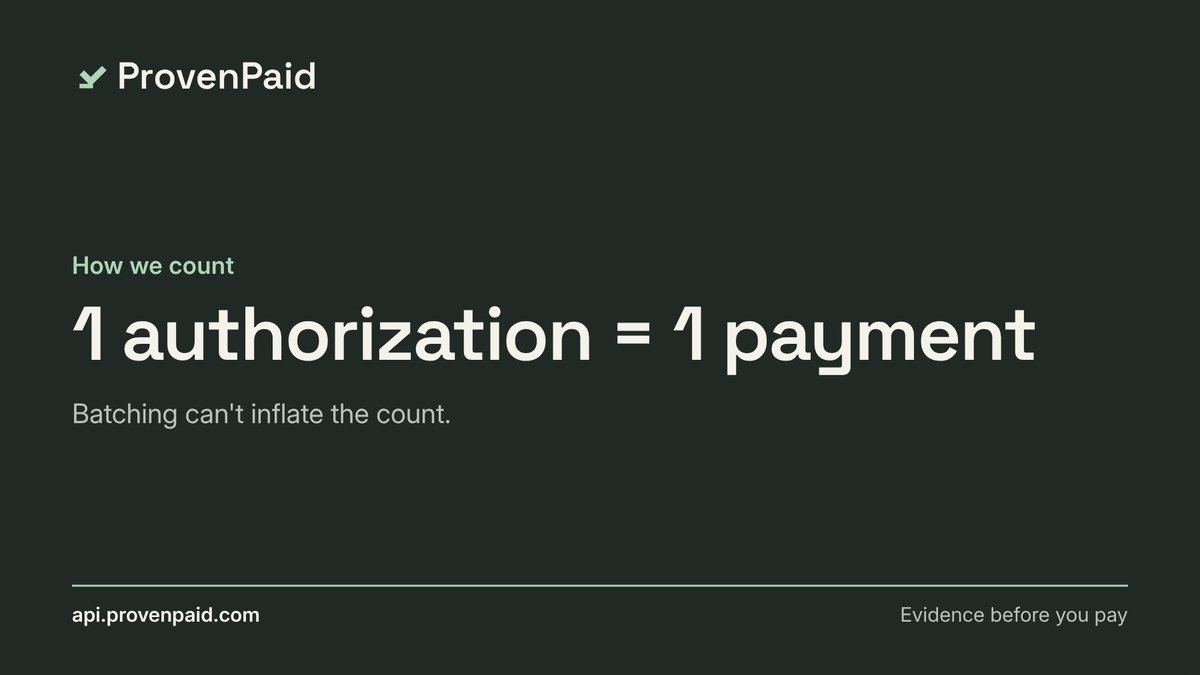
How ProvenPaid counts a payment: one settlement per signed EIP-3009 authorization in Base USDC.
Not per transfer. Not per transaction. Batching can't inflate the count.