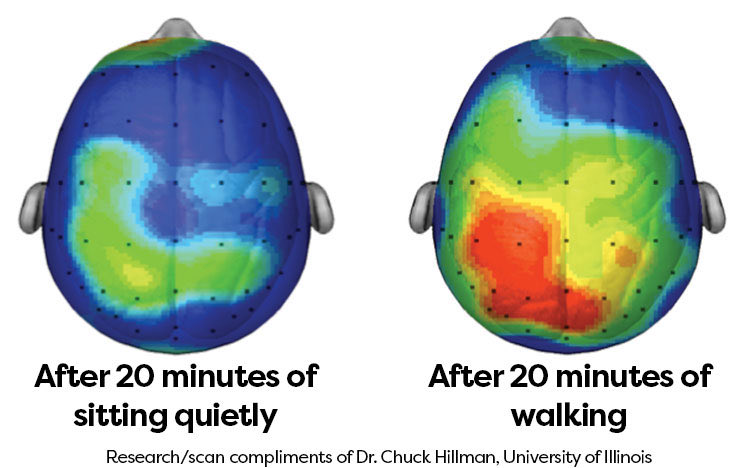
I was having a conversation with my daughter last night that made me realize I’ve been living in a completely different reality than the rest of my family for 52 years. It’s the ultimate proof that we have no idea what’s actually happening inside someone else's head.
We were talking about a book we’d both read, and she said, “I didn’t like the movie because the main character didn’t look anything like the person in my head.”
I asked her what she meant. She looked at me confused and said, “You know, when you read, you ‘see’ the characters and the rooms they’re in. Like a movie playing in your mind.”
I sat there in total silence, I thought she was being metaphorical.
I asked my wife, I asked my son. They all said the same thing: when they close their eyes, they can "see" a red apple, or their childhood home, or a loved one's face.
I don’t see anything, I never have.
When I close my eyes, it’s just a black screen. I have Aphantasia, a total lack of a “mind’s eye.” If you tell me to visualize a beach, I can give you a list of facts about a beach (sand, water, sun), but I can’t actually see a picture of one.
I’m in my 50s. I’ve had a successful career in a high level field, I’ve raised a family, and I’ve navigated the world just fine. I always thought phrases like “picture this” or “visualize your goals” were just figures of speech. I thought everyone was just "thinking" in facts and data like I was.
It’s a bizarre feeling to realize at this stage of life that your brain is missing a "feature" everyone else considers standard equipment.
But it’s also a massive lesson in empathy.
We walk around assuming that if we’re looking at the same thing, we’re seeing the same thing. But we aren’t. Some people are thinking in high-definition video, some in still photos, and some of us are just reading the raw code in the dark.
Next time you’re frustrated that someone “just doesn’t get it,” remember: they might not even be using the same operating system as you.
Prof Tyrer’s talk on Personality disorders in ICD -11 #WCP25#WCP2025 🚨
‘Why is it important to get rid of borderline’
His view published previously in Tyrer and Mulder 2024 👇
“In conclusion, borderline personality disorder may best be seen as a transitional diagnosis which drew attention to patients suffering from moderate to severe personality disorders and encouraged structured psychotherapies to be tested.
However, it has now emerged that the diagnosis is not related to specific personality traits, is overinclusive, and does not lead to specific treatments beyond structured clinical care.
Its domineering presence in the field means that assessment and treatment of other personality pathology is discouraged, and the whole concept of personality dysfunction is stigmatized.
It is time for borderline personality disorder to lie down and die.
[Tyrer and Mulder, 2024]
85 years ago Chaplin decided to speak in one of his films for the first time in his career. It was to deliver this message that rings true today. #NoKingsDay
In 1938, Harvard began the world’s longest happiness study.
They tracked 724 teenagers for their entire lives.
85 years later, the results are in.
Here’s what actually makes people happy (backed by science):
🧵
Up to 80% of individuals with Autism Spectrum Disorder (ASD) show ADHD symptoms, and up to 50% of those with ADHD meet ASD criteria (Lau-Zhu et al., 2019).
DSM-5 formally recognised co-diagnosis, reshaping how we assess, manage, and support neurodevelopmental overlap.
Let’s examine the neurobiological overlap, diagnostic complexities, and treatment considerations driving clinical care. 🧵👇
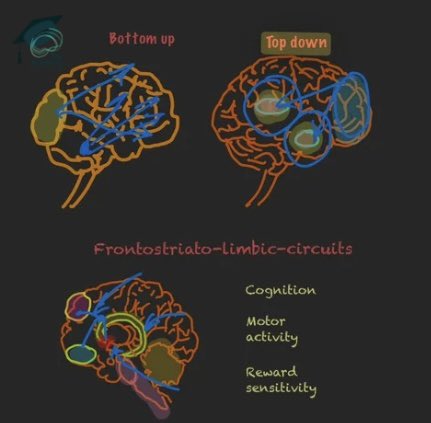
The Rise in ADHD Diagnoses - A Neurobiological ( and analytical) Understanding 🚀🧠
👉For decades, the focus in psychiatry was on subcortical and limbic domains, leading to an exploration and a focus on diagnoses like bipolar disorder, ‘neuroses’, schizophrenia etc.
🧠The current trend of ADHD is a reflection of the recognition of the role of frontostriatal circuits in modulating limbic areas. This has shifted our understanding, reflected in the ADHD label.
This shift is the move towards Top-Down Modulation ✅
ADHD can be a conceptualised as a label that showcases this collective recognition.
This evolution is akin to psychodynamics, where the unconscious (subcortical) is raised to the conscious (cognitive dimensions) for change.
However, the importance of cognition is not unique to ADHD - it’s in focus in depression (cognitive biotype) and schizophrenia (D1 receptor ( PFC dominant) modulation vs. D2) - this has gone unrecognised or is underplayed yet is underpinned by a focus on cognition
👉Cognition is not just memory and not just executive function either.
It involves top down modulation and finer functions such as impulse control, emotional regulation, cognitive-affective appraisal etc. ✅
The key is that in treatment it can't be one or the other; as the frontostriatolimbic systems are connected.
i.e cognitive at the expense of the affective or vice versa misses the interconnected nature of key functions - the harms arise from favoring or focussing on one over the other. ❌
IMO, By combining both perspectives, clinical outcomes improve.✅
Some people believe things that sound implausible to us, and the things we believe may sound implausible to other people. Why does it matter? Finally an affordable book that answers this very question 😉 if you read it, let me know what you think and leave a review! 🤩
This is a 3,200-year-old attendance sheet taken at work in Ancient Egypt. The New Egyptian hieratic script was written on limestone in red and black ink, and provided information such as the date (season and number), name of the worker, and the reason for being absent.
For example, on month 4 of Winter, day 24, a worker by the name of Pennub was absent from work because his mother was sick, and he had to take care of her.
Here are some of the other reasons provided for work absence:
1. Drinking with Khonsu
2. His daughter was bleeding
3. Libating to his father
4. Brewing beer
5. Building his house
6. Fetching stone for the scribe
7. With Khons making remedies
8. Making remedies for the scribe's wife
9. Suffering with his eye
10. Embalming Hormose
11. Strengthening the door
12. Embalming his brother
13. His wife is bleeding
14. The scorpion bit him
15. His feast
16. Offering to the god
#Postpartum psychosis & PPD related to increased risks of schizophrenia, bipolar disorder, and depression in mothers; their children more likely to develop ADHD.
Review this JCP study @CMEInstitute for free #CME credit: https://t.co/OST55XqnBq
Take your time to check out the Cognitive Disorder Atlas! A useful tool to understand some clinically relevant relationships between brain structure and focal neuropsychological syndromes
ETHICS CORNER | A patient’s assault on a psychiatrist is not a trivial matter. Psychiatrists may not fully appreciate the impact of the assault when it occurs and may need a few days to process their feelings and reactions. https://t.co/MSMnyXO3rA #MentalHealth#PsychTwitter


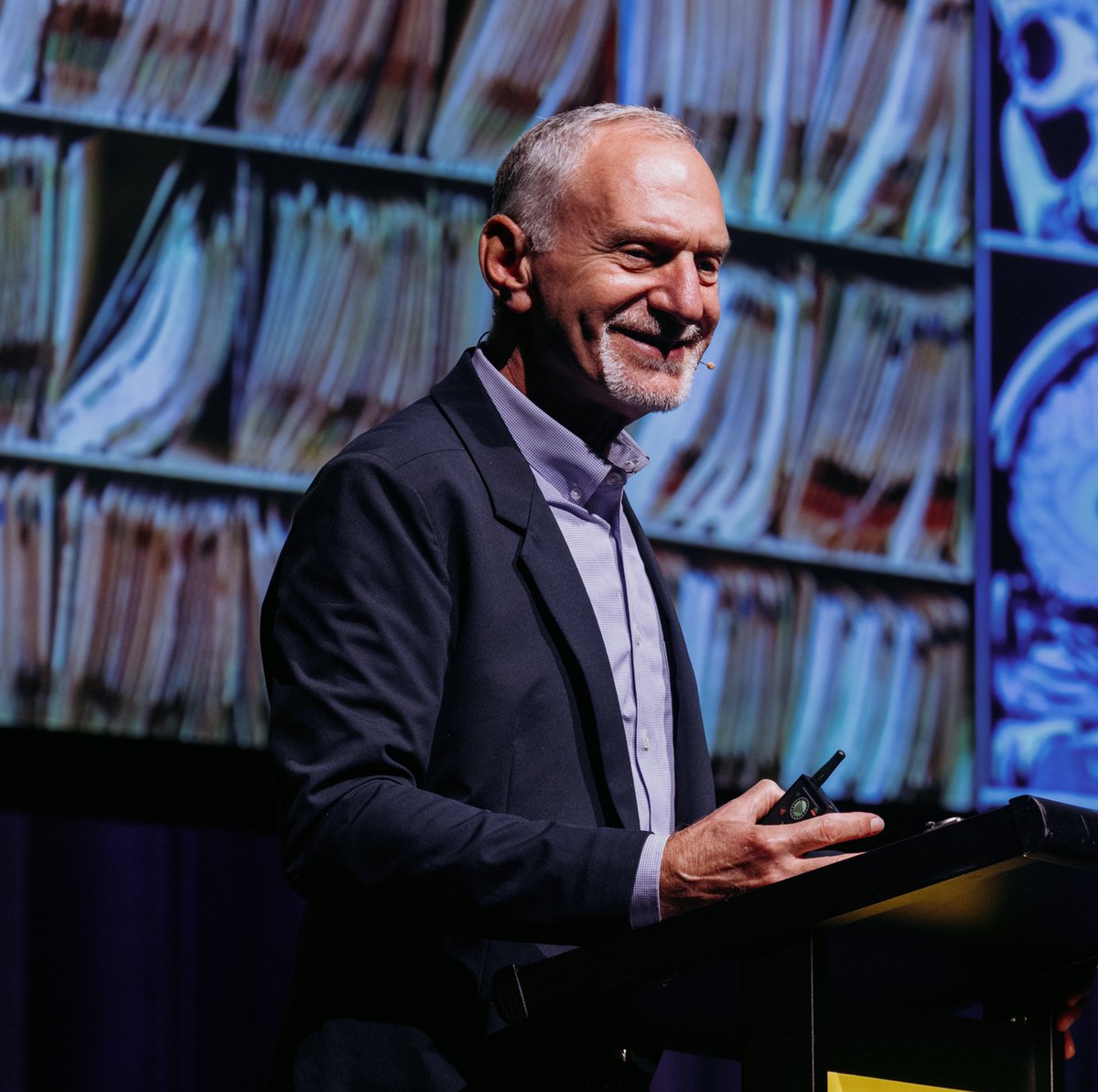


![sanilrege's tweet photo. Prof Tyrer’s talk on Personality disorders in ICD -11 #WCP25 #WCP2025 🚨
‘Why is it important to get rid of borderline’
His view published previously in Tyrer and Mulder 2024 👇
“In conclusion, borderline personality disorder may best be seen as a transitional diagnosis which drew attention to patients suffering from moderate to severe personality disorders and encouraged structured psychotherapies to be tested.
However, it has now emerged that the diagnosis is not related to specific personality traits, is overinclusive, and does not lead to specific treatments beyond structured clinical care.
Its domineering presence in the field means that assessment and treatment of other personality pathology is discouraged, and the whole concept of personality dysfunction is stigmatized.
It is time for borderline personality disorder to lie down and die.
[Tyrer and Mulder, 2024]](https://pbs.twimg.com/media/G2vqgjHWoAAt2Fz.jpg)