Plymouth High's Psychology Twitter feed: Mainly re-tweeting research of interest with a hint of exam orientated content too. (All opinions are the authors)
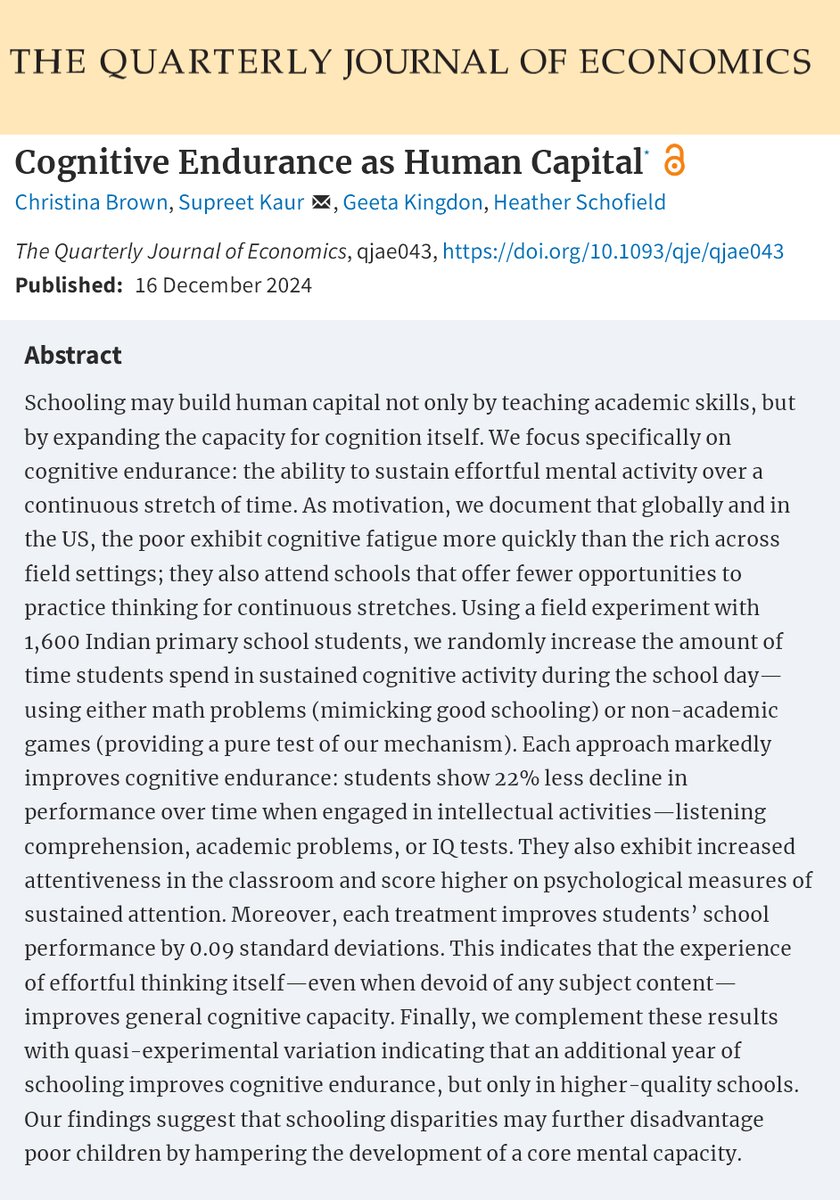
Your attention span isn’t fixed. It increases with practice.
Evidence: After 20min sessions solving cognitively challenging problems (10-20hrs total), students show significant gains in sustained focus and test scores.
Like physical stamina, mental stamina requires exercise.
" lucid dreams, eg immersed in an experience, then something seems “off,” and you realize you are actually dreaming. Often people wake up right after they become lucid, but with practice you can learn how to remain lucid and try to direct what happens."
https://t.co/aDnmZSs4nf
The San peoples, aka the "Bushmen", are various indigenous hunter-gatherer groups of Southern Africa
Two of them, with only a stick, demonstrate how humans can keep wildlife under control even without technology.
Want to learn something new FASTER? 🤔 Research shows that quizzing yourself BEFORE learning can actually improve memory! 🤯 This "pre-testing effect" helps your brain focus on the right answers. Thoughts? #brainhacks#learningtips
VR-based biofeedback effectively reduces depression and anxiety symptoms, matching conventional methods while enhancing user engagement through immersive environments, with potential for broader psychological and therapeutic benefits. https://t.co/KnI77tjEWf
New randomised control trial illustrates the effects of vitamin D supplementation on Major Depressive Disorder, and finds possible neural explanation: https://t.co/6KJDj9u9Um
Adrian North has repeatedly shown that playing classical music in store boosts average spend
This is just one of the studies I look at in my latest @MediaCatMag article - it's about all the ways marketers can use music to their advantage
https://t.co/9xASv9Vn7h
"Our results reveal that whenever handwriting movements are included as a learning strategy, more of the brain gets stimulated, resulting in the formation of more complex neural network connectivity...typewriting do[es] not activate...networks the same way that handwriting does."
Students who feel they don’t grasp material are often more hesitant to use certain highly effective learning strategies - but the right framing could help them overcome those nerves: https://t.co/vJaOy0Qpg4
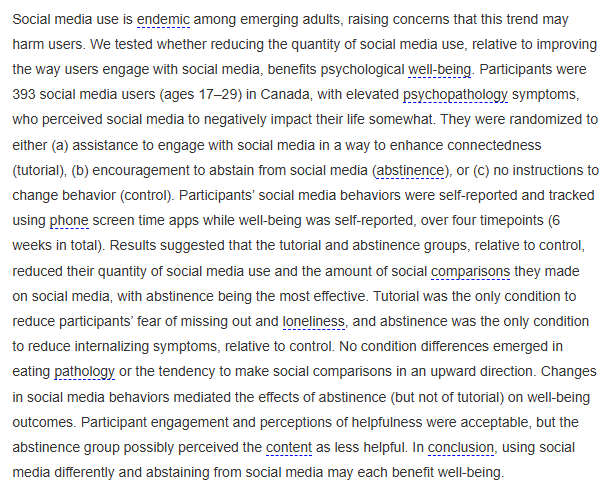
New intervention study in 17-29 year olds with elevated psychopathology symptoms : "Using social media differently and abstaining from social media may each benefit well-being." https://t.co/qWVvRPhARC
Recent research found a significant decline over 20 years in people’s willingness to stand out, defend beliefs publicly, and break social norms, suggesting increased self-censorship and concern about social judgment. https://t.co/qHCM4uV12Y
I need one final push to defeat Marjorie Taylor Greene.
She doesn't want people in Georgia to know that she's about to lose.
Our tweets are being throttled, so if you see this tweet, please:
🔵 RT
🔵 FOLLOW
🔵 COMMENT
🔵 DONATE (Link in bio)
Help us get to 200,000 followers.
🏗️ Scaffolding Think, Pair, Share can help facilitate deep discussions and drive thinking from ALL students. This handy resource is designed to help students master the WHAT, WHY, and HOW of the process.
👊 Support my work by tapping REPOST and grab a FREE high-quality copy here: https://t.co/Xj2XpPGvnu
One thing we hear over and over again is that we should be teaching creativity in schools. We also often assume that certain people are just more creative than others. What is the evidence for this? A new paper examined fifty years of research. Thread ⬇️ 🧵
This paper asks a basic question: are some people simply born more creative, regardless of the subject or field and if so, what does this mean for education? this idea, known as the "domain-general hypothesis", suggests that a person with a high level of general creativity could excel in any creative task they pursue.
The article questions whether we should be testing for this general creative ability, if we should teach it and whether "general creativity" is even a thing.






![parmita's tweet photo. "Our results reveal that whenever handwriting movements are included as a learning strategy, more of the brain gets stimulated, resulting in the formation of more complex neural network connectivity...typewriting do[es] not activate...networks the same way that handwriting does." https://t.co/euuHp4KlSU](https://pbs.twimg.com/media/GdkK_TjboAQ-7dE.jpg)