@JonathanShedler Lots of emphasis on "setting concrete goals and coming up with a plan to reach them" these days. While making a straw man of psychodynamic treatment. Jonathan Alpert: "Everything’s a Disorder" Therapy Culture Is Doing More Harm Than Help | https://t.co/AyeNYJp3mY
@awaisaftab Some kind of self-opacity may be needed for self-awareness and reflective ability. When reflective ability collapses people become overwhelmed by the immediacy of affect, interpersonal struggles and the present moment, and that underlies other kinds of psychopathology.
@evolutionarypsy Thi is particularly striking to me because in real-world practice LAIs are often used in patients with poorer adherence and more severe illness, factors that should bias comparisons against LAIs.
@evolutionarypsy I really liked this one and I am thinking of trying to do a book club for psychiatrists on it one day: Fires in the Dark: Healing the Unquiet Mind https://t.co/VAZhR4ikXf
We let communists, psychiatrists, and academics (but I repeat myself) take over the justice system. People who have no understanding of human nature. Godless pervert heathens who reject natural law and the very concept of justice. We need to get all of these freaks out of the system, reject everything they say on the topic of crime and punishment, and get back to arresting evil people and making them suffer for their crimes.
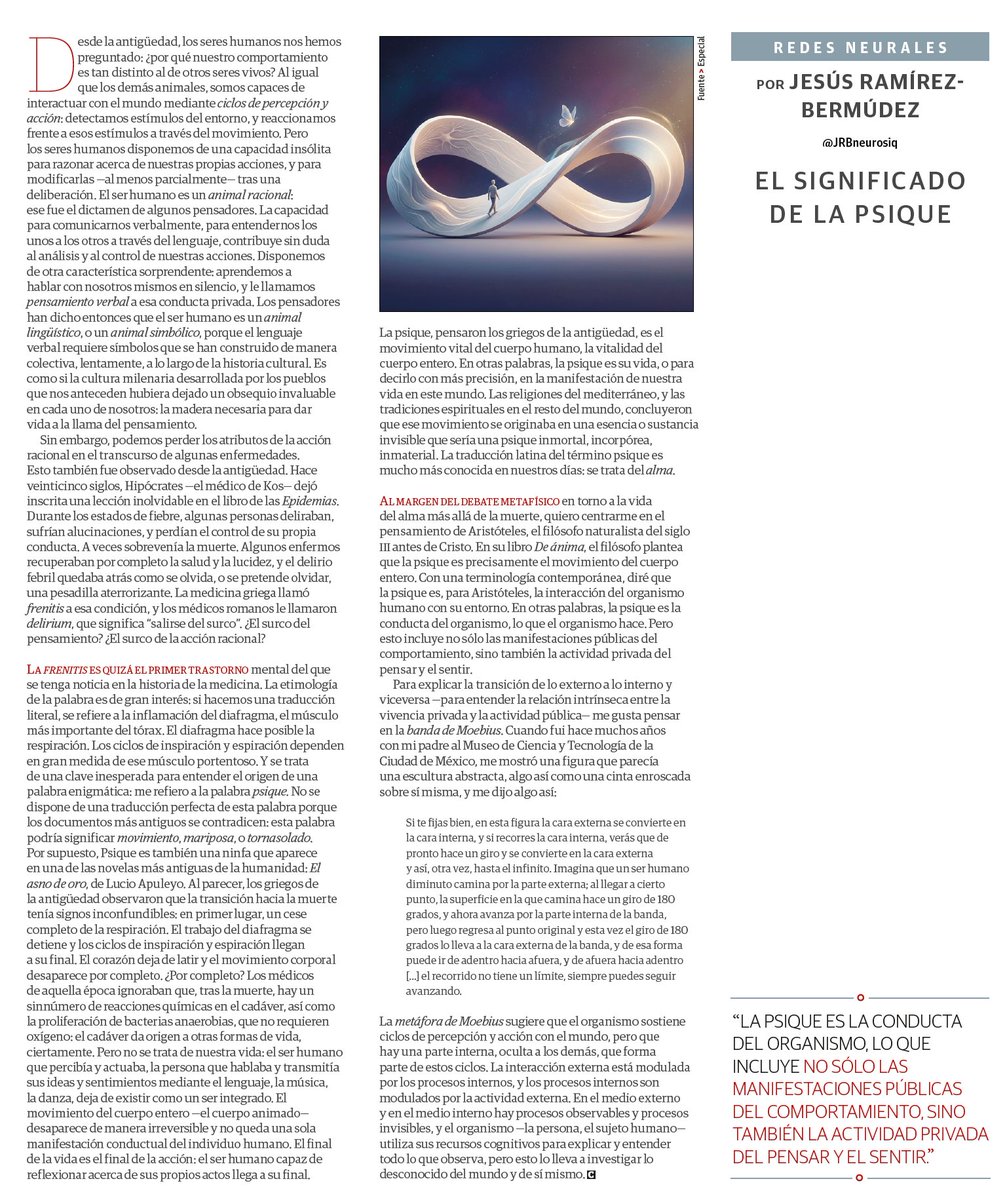
Hace veinticinco siglos, Hipócrates —el médico de Kos— dejó inscrita una lección inolvidable en el libro de las Epidemias. Durante los estados de fiebre, algunas personas deliraban, sufrían alucinaciones, y perdían el control de su propia conducta. A veces sobrevenía (1/11)
@GrantHBrennerMD@JonathanShedler Agree 💯. Need to get right model, use the paid version, get the prompt right. Given that nobody is 'absolutely not going to use it' in the future, everybody needs to learn.
Case in point, this interview with the co-founder of Netscape. I'd be curious to see what @JonathanShedler thinks about this segment. https://t.co/PAnmeXBUe6
Great men of history had little to no introspection.
The personality that builds empires is not the same personality that sits around quietly questioning itself.
@pmarca and I discuss what we both noticed but no one talks about:
David: You don't have any levels of introspection?
Marc: Yes, zero. As little as possible.
David: Why?
Marc: Move forward. Go!
I found people who dwell in the past get stuck in the past. It's a real problem and it's a problem at work and it's a problem at home.
David: So I've read 400 biographies of history’s greatest entrepreneurs and someone asked me what the most surprising thing I’ve learned from this was [and I answered] they have little or zero introspection.
Sam Walton didn't wake up thinking about his internal self.
He just woke up and was like:
I like building Walmart. I'm going to keep building Walmart. I'm going to make more Walmarts. And he just kept doing it over and over again.
Marc: If you go back 400 years ago it never would've occurred to anybody to be introspective.
All of the modern conceptions around introspection and therapy, and all the things that kind of result from that are, a kind of a manufacture of the 1910s, 1920s.
Great men of history didn't sit around doing this stuff.
The individual runs and does all these things and builds things and builds empires and builds companies and builds technology.
And then this kind of this kind of guilt based whammy kind of showed up from Europe. A lot of it from Vienna in 1910, 1920s, Freud and all that entire movement. And kind of turned all that inward and basically said, okay, now we need to basically second guess the individual.
We need to criticize the individual.
The individual needs to self criticize.
The individual needs to feel guilt, needs to look backwards, needs to dwell in the past.
It never resonated with me.
The current zeitgeist is averse to introspection; efforts to understand unconscious mental life run against the prevailing mentality. Academic Psychology follows to the spirit of the age.
Too bad the the “experts”interviewed for this piece don’t understand unconscious mental life, displacement, and overdetermination.
Skilled therapists focus on underlying psychology, not just surface complaints.
Embarassing that @APA promoted it.
https://t.co/BxJCRKTVrl
Seems very reasonable when you think about it, but I wonder what that could look like in the real world, where treatment has to be standardized, rationed (no 25-year treatment for sure) and adapted to models of health care constrained by all sorts of external factors.
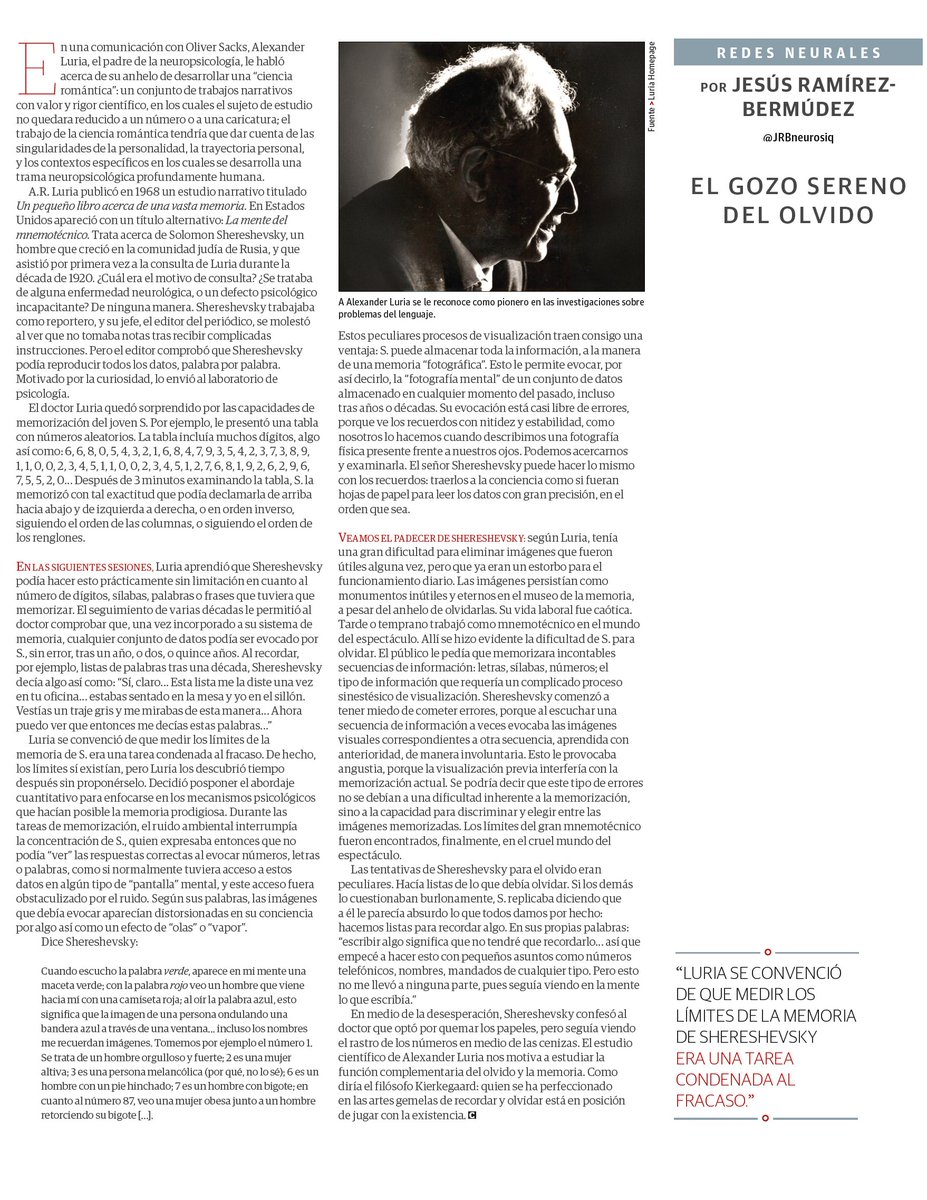
Alexander Luria, el padre de la neuropsicología, escribió acerca de su anhelo de desarrollar una “ciencia romántica”: un conjunto de trabajos narrativos con valor y rigor científico, en los cuales el sujeto de estudio no quedara reducido a un número o a una caricatura; el trabajo
Critics of psychopharmacology call for an acknowledgement of lived experience, but they systematically forget to listen to the lived experience of people who improves with medication 🤔
@JRBneuropsiq Statements like this always make me wonder whether he is ignorant (e.g. no professional knowledge or expertise in severe mental illness), or a charlatan (knows better but says this stuff to support his narrative and market himself) or both.
Imagine the nerve of presenting this basic fact of life as hubris on the part of psychiatrists.
It is an exercise in ideological rhetoric that can only be taken seriously in an antipsychiatry echo-chamber.
People can have a pathologically impaired grasp on reality. All adults know it/have had experience of it. Probably Justin knows it too, but it is more convenient for him to ignore it, and so he does.
@KemtrupTweets I share that view. I think that since psychiatrists have potentially a broader skillset (can wear their 'medical hat') and are more in demand, they can feel less pressured to train in the models that are predominant today (CBT) and more free to choose what resonates with them.
@Foreman1David Yep. Reminds me the scene after Zosima's death in The Brothers Karamazov, where the community is expecting an "odor of sanctity" after his death, but he starts to decompose instead.
Recognizing, addressing, and preventing psychotropic withdrawal is a matter of competent psychiatric practice, and we should not cede this issue to extremists, crackpots, and contrarians who are more interested in ideological warfare and polarization than relief of suffering.