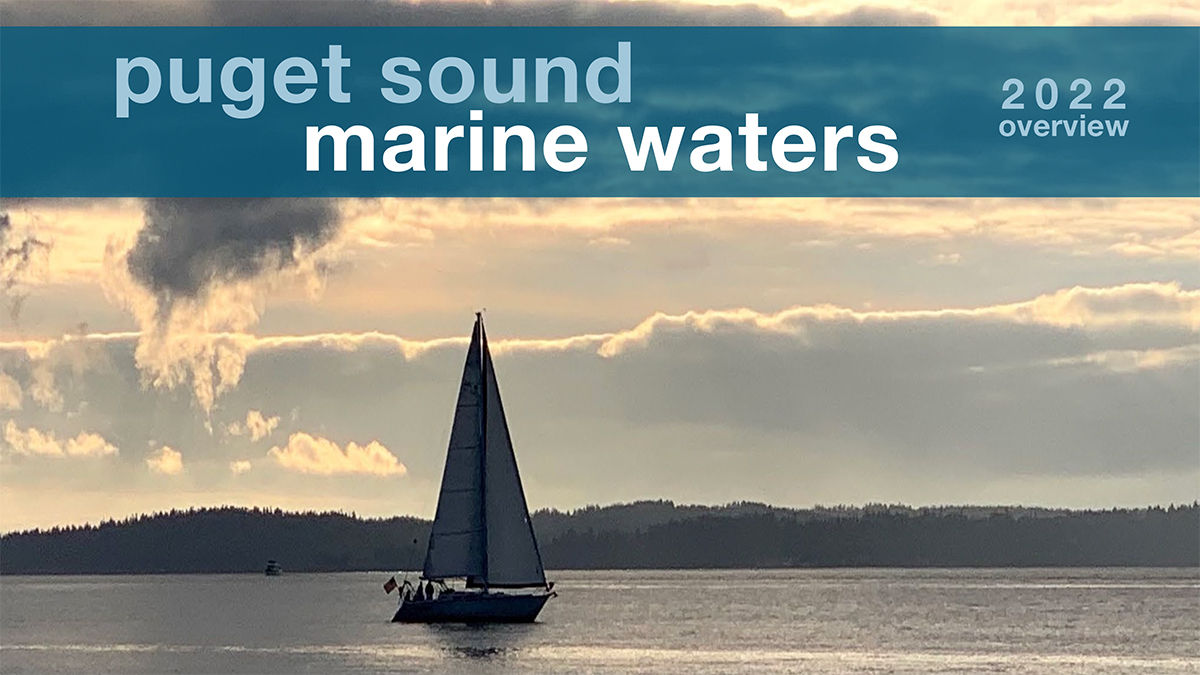
We don’t always know what’s going on under the surface of Puget Sound, but a new report released today by the Puget Sound Ecosystem Monitoring Program’s Marine Waters Work Group gives us a comprehensive look at marine conditions in 2022. Read more at: https://t.co/aTrrcXkR96
Join the Next Salish Sea Science Roundtable on December 5th from 12:30 - 1:30 PM (PST) for an update on the Salish Sea Marine Survival Project. Liz Duffy of Long Live the Kings and Isobel Pearsall of Pacific Salmon Foundation will present. Register at: https://t.co/XMIquy26zn
Efforts to restore ecological health to Puget Sound have largely failed to meet recovery goals, yet fish and wildlife populations are still hanging on, according to the latest State of the Sound report from @PSPartnership. Christopher Dunagan reports. https://t.co/wSwzmgJdmn
A reminder that avian influenza is still circulating in Washington state and could become more prevalent this fall with the annual wild bird migration underway. If you encounter a sick or dead wild bird, please report it at https://t.co/UugQJCRzbW.
Despite their ban in the U.S. in 1979, PCBs remain a stubborn contaminant in Puget Sound and throughout the world. On Wednesday, 11/1, the Puget Sound Institute hosts an online symposium to discuss the occurrence & management of PCBs in building materials. https://t.co/VAYiynhtmU
The Puget Sound Partnership's Ecosystem Coordination Board will meet in Seattle on Oct. 26. Find meeting highlights, links to the agenda, and other meeting materials here: https://t.co/QcNewgf7Wu
The Salish Sea Science Roundtable continues on 11/7 with a look at emerging science related to the health of coho salmon in Canadian waters. The virtual seminar focuses on coho #'s and 6PPDQ hotspots in B.C. Featuring speakers from DFO. 12:30-1:30 pm PT. https://t.co/LSsH1Is6dA
Southern resident orcas chase and sometimes kill porpoises. Why don’t they eat them? “Part of me really wants them to take a bite...and be less hungry,” says researcher Deborah Giles. Read the article from @DeWeerdt_Sarah in our mag. Salish Sea Currents. https://t.co/glpo8H28di
Avian flu (H5N1) has been found in birds & seals in the Salish Sea. Human cases are very rare — mostly related to workers in contact w/sickened poultry. "Even so, the mortality rate for H5N1 in humans is over 50%," reports Eric Wagner in our magazine. https://t.co/aGz6HaztCd
This past summer, avian flu arrived at a colony of Caspian terns on Rat Island in the Salish Sea. The results were catastrophic for the colony and raised concerns for humans as well. Eric Wagner reports from the island for our magazine Salish Sea Currents. https://t.co/P0GljTGSRv
Puget Sound is big, but is it really the largest estuary by volume in the United States? That has become a popular claim, but it doesn't take into account Alaska's Cook Inlet. Christopher Dunagan provides the numbers for the Puget Sound Institute blog. https://t.co/S1Dy9VyFBo
There has been a long-running debate over who gets to claim the title of 'the nation's largest estuary.' Some argue for Puget Sound (by volume). Others say it is Chesapeake Bay. The answer may surprise you. (Hint: Consider looking further north.) https://t.co/S1Dy9VzdqW
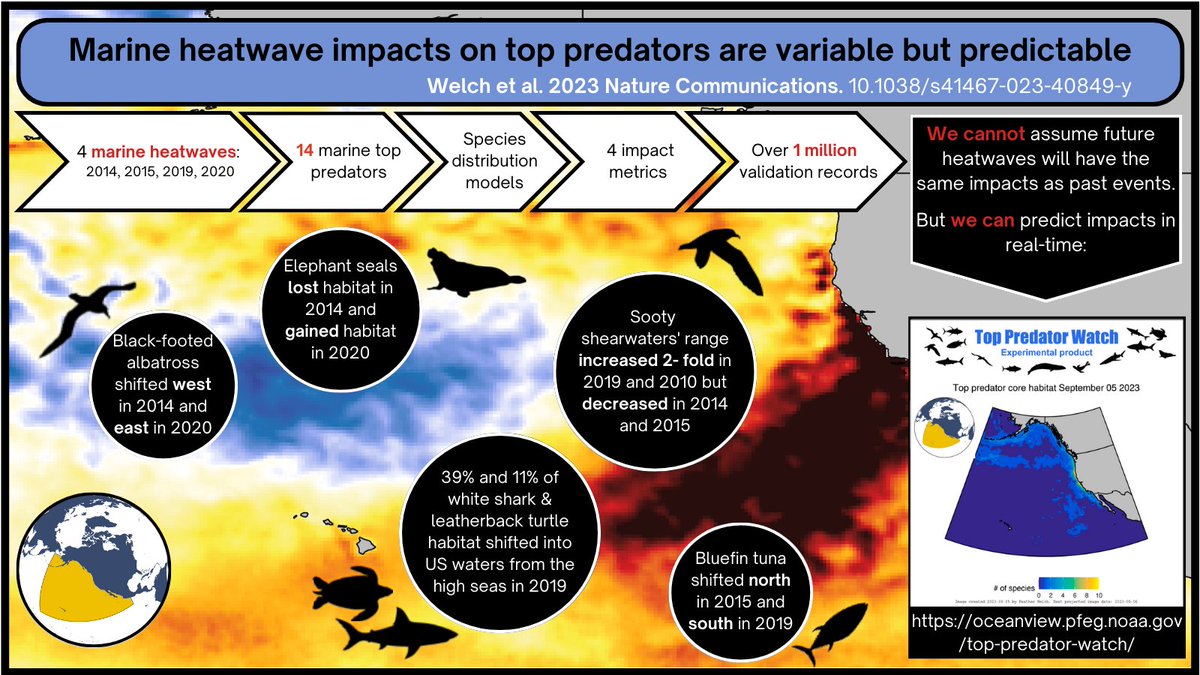
Thanks to @Heather_M_Welch of UCSC/NOAA for speaking about marine heatwaves at today's Salish Sea Science Roundtable. She is lead author of a new paper that models heatwave impacts on top predators in the N.E. Pacific. Links & more info are on our website. https://t.co/LSsH1Is6dA
As marine heatwaves become more widespread, scientists are calling for better tools to predict the ecological impacts. A new paper in Nature Communications models potential effects on the distributions of 14 top predator species in the Northeast Pacific. https://t.co/OiNLNJ8RJY
There is a popular saying that “beavers taught salmon to jump.” Can the age-old affinity between beavers and salmon be restored? Sarah DeWeerdt reports for our magazine Salish Sea Currents. https://t.co/PGJNGQa0is
Oceanographers are seeing unusually warm waters in the Pacific Ocean. Are we on the cusp of another 'blob'? Scientists in Puget Sound are watching closely. https://t.co/wbzWUsvN9d
Interested in the impacts of marine heatwaves #mhws on top predators? I'll be giving a public webinar on Oct. 3rd with @PugetSoundInst. Registration details here -> https://t.co/00T5D8yOET