What does leadership look like in an age, increasingly shaped by Artificial Intelligence?
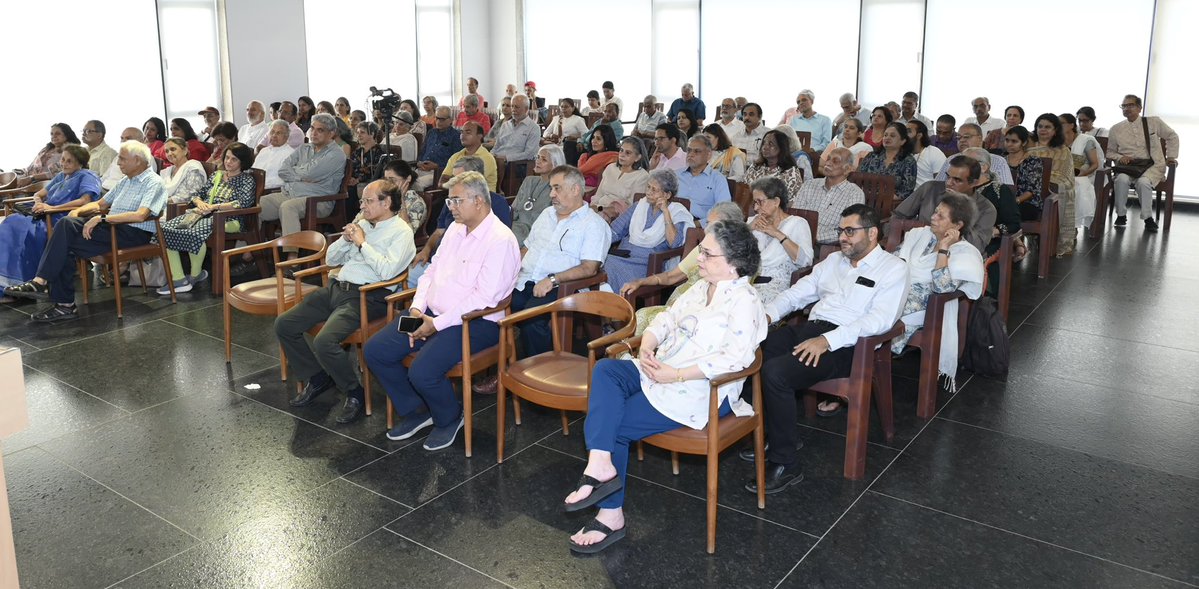
Last evening’s discussion at PIC on ‘AI Took Your Org Chart: The Rise of Responsive Leadership in the Age of Machines’ brought together authors, academics, industry leaders and technology experts for a thought-provoking exchange of ideas.
The conversation explored the opportunities and challenges AI presents for organisations, the changing nature of leadership, and the importance of balancing technological advancement with human judgment, ethics and accountability.
Featuring Dr. Ganesh Natarajan, Uma Ganesh, Dr. Rajesh Ingle, Ravindra Naik, and Dhanashree Bhat, the session sparked meaningful reflections on how individuals and institutions can prepare for a rapidly evolving future.
Thank you to all who joined us for an engaging evening of dialogue and learning.
@rameshmashelkar@dinakholkar@GaneshNatarajan@Girbane
Today at PIC (Monday, 1st June):
📓Book Review & Panel Discussion on "AI Took Your Org Chart: The Rise of Responsive Leadership in the Age of Machines", centred on the theme "AI and the Future of Jobs."
5 pm onwards, @ PIC, Pashan, #Pune
Register at https://t.co/J9592IY8WL
@rameshmashelkar@dinakholkar@Girbane@GaneshNatarajan@aparanjape
Dr. Vijay Kelkar writes on energy security... do read -
"India's vulnerability is structural. We have built an economy that requires large and growing volumes of imported hydrocarbons, while domestic production has not kept pace."
"If domestic oil and gas production has languished, we should not treat it as fate. It reflects incentives, stability, contracting confidence and state's ability to carry an long-term programme beyond political cycles."
@PuneIntCentre
🎙️ Episode 7 | PIC’s Global Compass
Is China reshaping the international order? What does its rise mean for the future of global power, institutions, technology, & geopolitics?
In this episode, Dr. @koenalahiri speaks with Manoj Kewalramani (@theChinaDude), one of India’s leading China scholars, on the forces driving China’s global ambitions & the implications for the world—& for India.
@rameshmashelkar@dinakholkar@Girbane@aparanjape@TakshashilaInst
https://t.co/sUsQbhnzYn
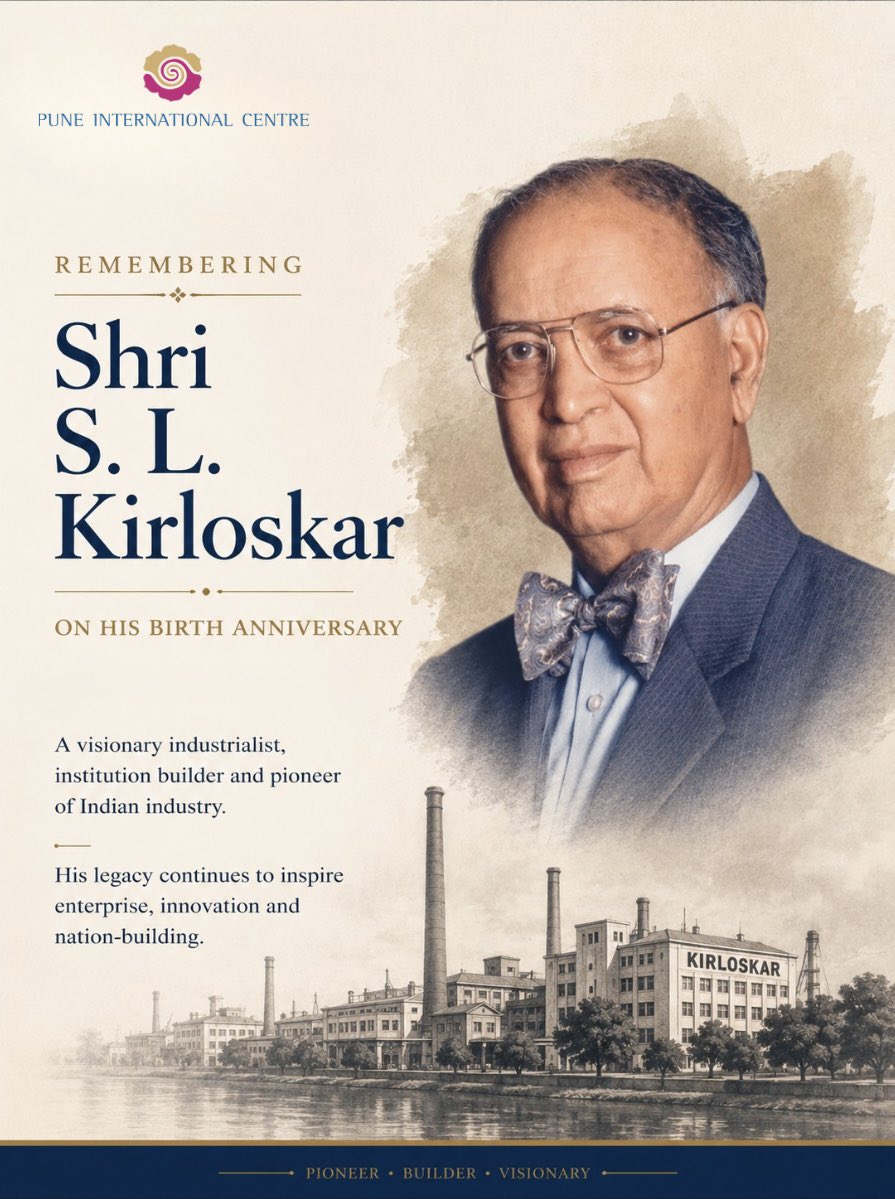
Remembering Shri S. L. Kirloskar on his birth anniversary.
A visionary industrialist and institution builder, his contributions played a significant role in shaping India’s industrial growth and entrepreneurial spirit. His legacy continues to remain deeply connected with Pune’s journey as a centre of industry, innovation, and enterprise.
His work continues to inspire generations of entrepreneurs and changemakers.
How should India engage with China in a rapidly changing world order?
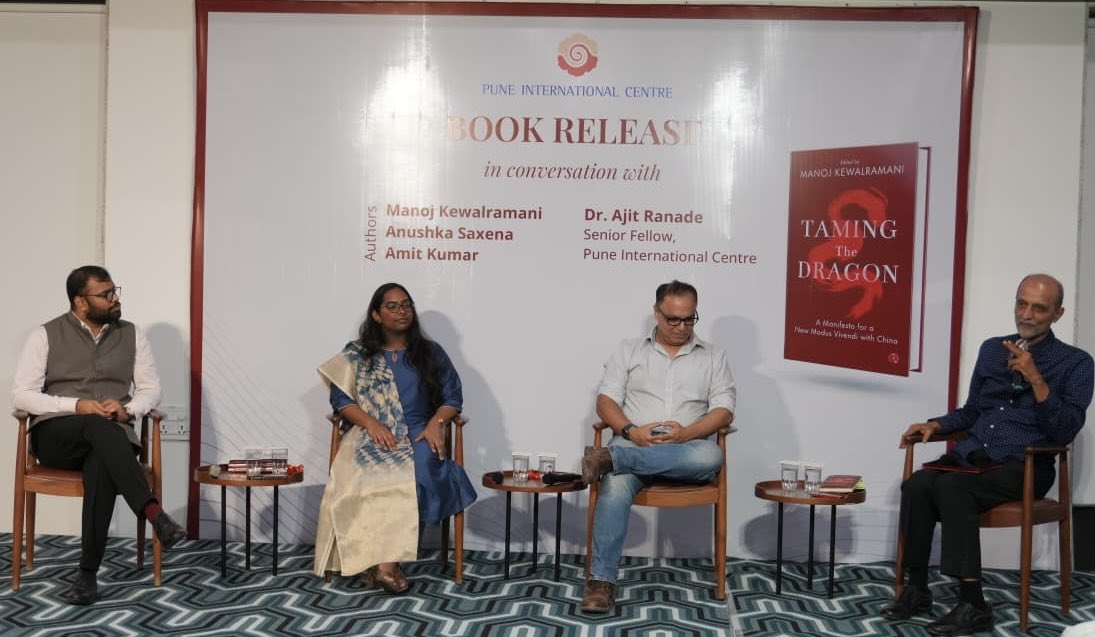
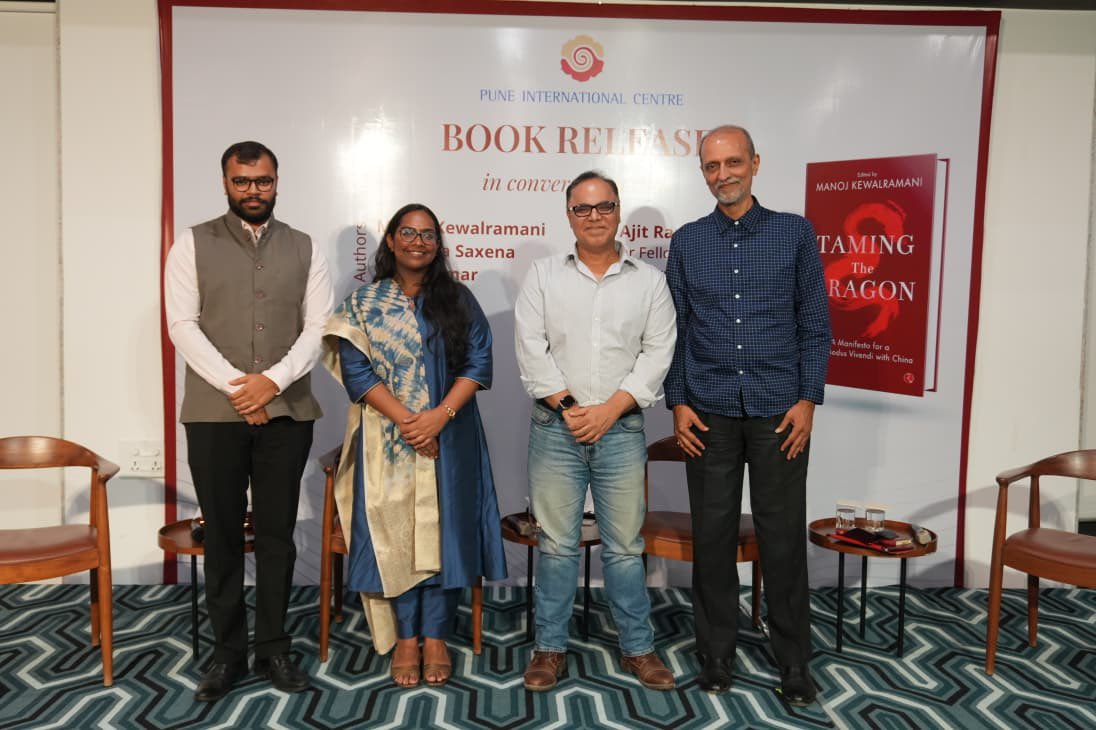
At PIC, the release and discussion of ‘Taming the Dragon: A Manifesto for a New Modus Vivendi with China’ brought together Manoj Kewalramani (@theChinaDude), Anushka Saxena (@SaxenaAnushka_), Amit Kumar (@am_i_t_kumar), and Dr. Ajit Ranade for a nuanced and deeply strategic conversation on one of India’s most consequential geopolitical relationships.
The discussion explored the need for India to engage China from a position of strength—balancing deterrence with dialogue, economic realism with strategic clarity, and competition with calibrated engagement. From border tensions and trade asymmetries to maritime strategy, defence preparedness, technological competition, and the evolving China–Pakistan dynamic, the conversation underscored the importance of long-term institutional thinking and national capability building.
The panel also reflected on how China perceives India, the widening economic and military gaps, and why India must move beyond reactive policymaking toward sustained strategic planning across defence, diplomacy, trade, and innovation.
A timely and thought-provoking discussion on power, preparedness, and India’s place in an increasingly contested global order.
@rameshmashelkar@dinakholkar@Girbane@Rupa_Books@TakshashilaInst
Can India and China find a new equilibrium in an increasingly uncertain world?
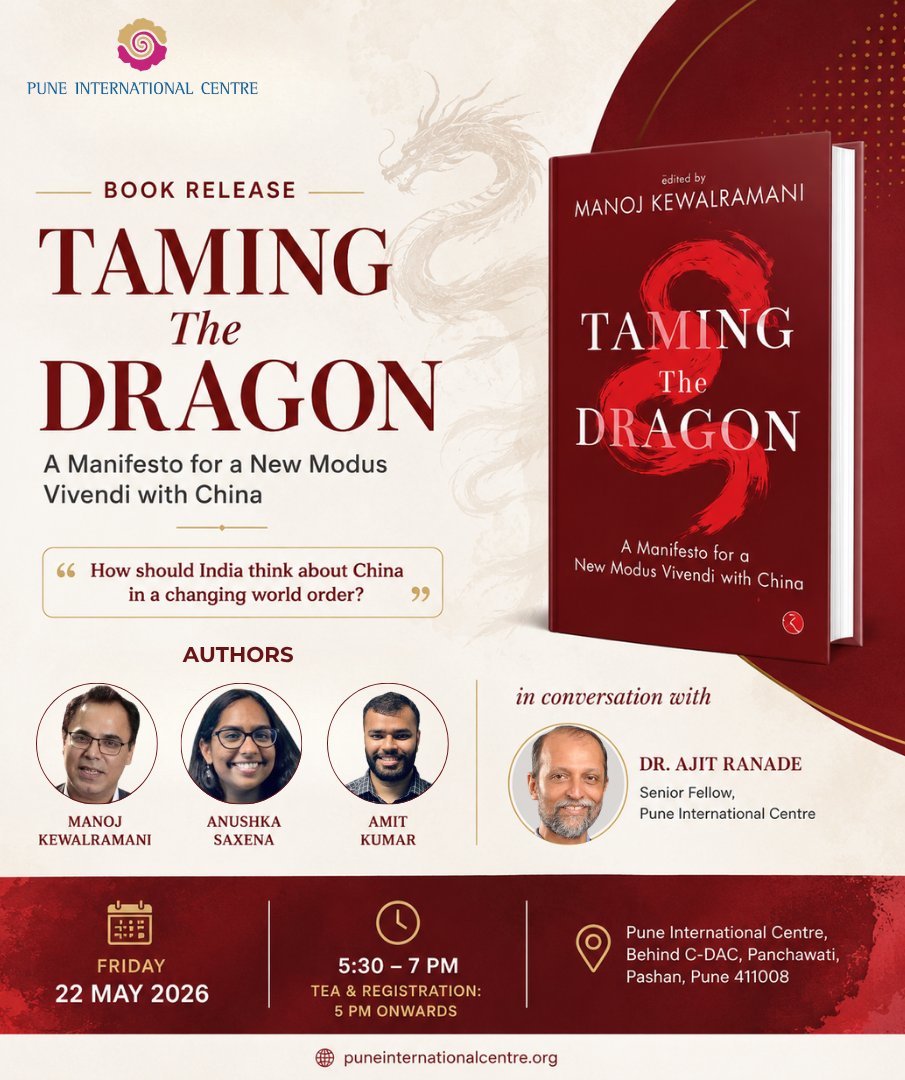
Join us for the release & discussion of 'Taming the Dragon: A Manifesto for a New Modus Vivendi with China' — a timely and thought-provoking new book that explores what India’s long-term approach to China should look like in a rapidly changing global order.
🗓️ Friday, 22 May
5:30 PM – 7:00 PM
📍 Pune International Centre, Pashan, #Pune
🔗Register https://t.co/NUe9kp46hw
@rameshmashelkar@dinakholkar@Girbane@TakshashilaInst@theChinaDude@SaxenaAnushka_@am_i_t_kumar@Rupa_Books
As Asia’s geopolitical balance shifts and India–China relations enter a fragile new phase, the questions facing India today are larger than diplomacy alone — they concern strategy, security, technology, trade, and national strength.
Join us tomorrow (22nd May) at PIC, for the release and discussion of ‘Taming the Dragon: A Manifesto for a New Modus Vivendi with China’ — a timely and thought-provoking new book that explores what India’s long-term approach to China should look like in a rapidly changing global order.
From the aftermath of the 2020 border crisis to evolving global power equations, the book argues that India’s China policy must be anchored in atma-shakti — self-strengthening across economic, technological, military, and diplomatic domains.
🎙️Authors Manoj Kewalramani, Anushka Saxena, and Amit Kumar will be in conversation with Dr. Ajit Ranade.
🗓️ Friday, 22 May 2026
5:00 PM – 7:00 PM
📍 Pune International Centre, Pashan, Pune
🔗 Register Here: https://t.co/NUe9kp46hw
@rameshmashelkar@dinakholkar@Girbane@TakshashilaInst@theChinaDude@SaxenaAnushka_@am_i_t_kumar@Rupa_Books
What does responsible business truly look like beyond boardroom buzzwords and sustainability slogans?
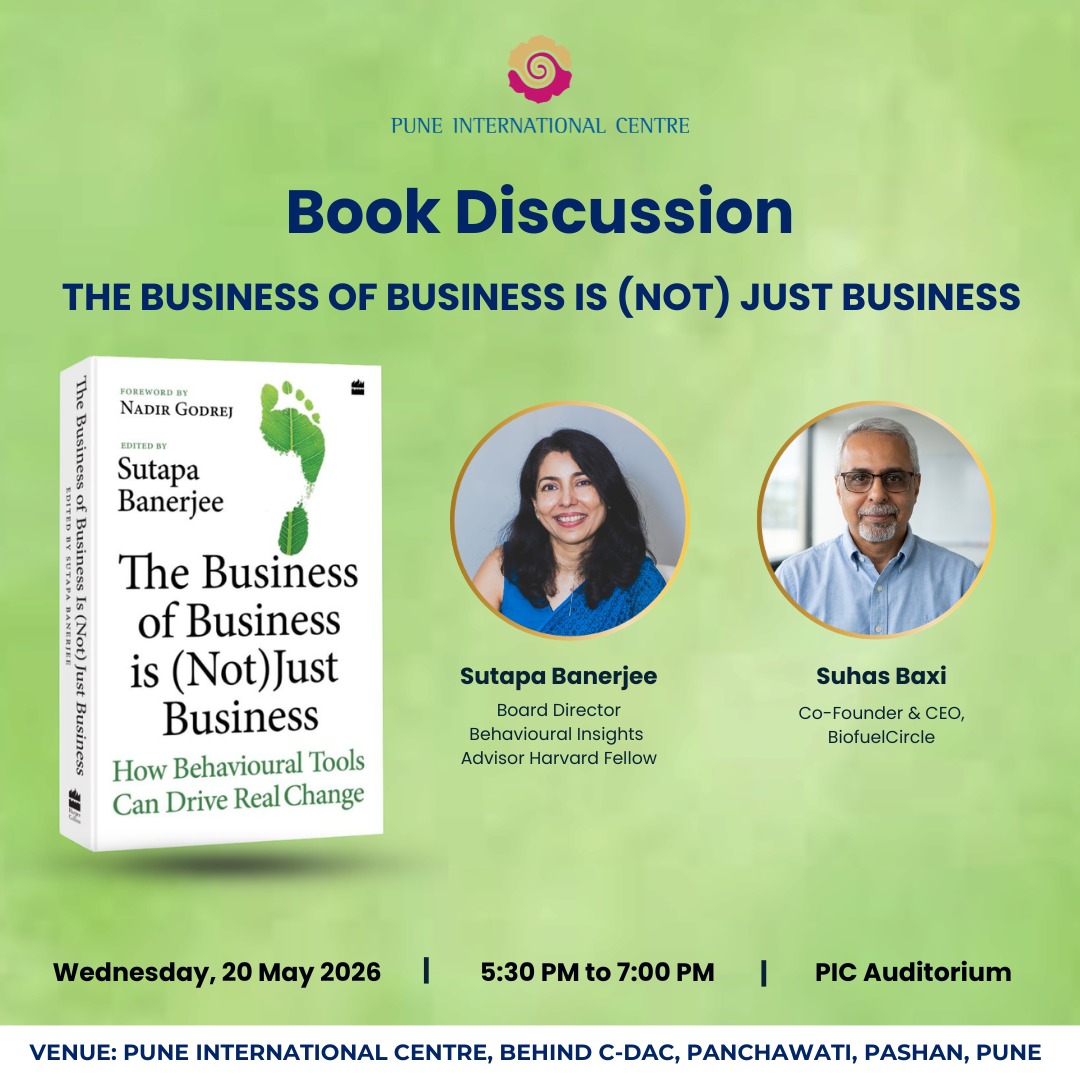
At PIC, an engaging conversation around ‘The Business of Business Is (Not) Just Business’ brought together editor Sutapa Banerjee (@sutapaban) & Suhas Baxi (@bsuhas) to explore the deeper forces shaping corporate behaviour, public purpose, and economic participation.
The discussion moved beyond the book itself into larger questions of behavioural change, gender perspectives, social norms, inclusion, sustainability, and the evolving role of business in society—offering thoughtful insights on how meaningful change requires more than intent; it demands structural and behavioural shifts.
A stimulating exchange on ideas, responsibility, and the future of business in a rapidly changing world.
@rameshmashelkar@dinakholkar@Girbane@HarperCollinsIN
Happening today at PIC (Wednesday, 20th May)
5:30 PM to 7:00 PM
Book Discussion on “The Business of Business is (Not) Just Business” – How Behavioural Tools Can Drive Real Change
This is a rare book using a behavioural insights lens on business decisions that shape society - not just markets. Through an accessible thought experiment approach it examines the deeper incentives, regulations, ecosystem readiness and behavioural insights that drive such decisions.
Be a part of this insightful discussion featuring:
🎙️Sutapa Banerjee – Board Director, Behavioural Insights; Advisor, Harvard Fellow
🎙️Suhas Baxi @bsuhas) (– Co-Founder & CEO, BiofuelCircle
📍Venue: PIC Auditorium
Register here: https://t.co/RKmjayZYAJ
@rameshmashelkar@dinakholkar@Girbane@aparanjape
The RBI is India’s monetary authority — but in recent years, it has also emerged as a significant source of fiscal support. Its dividend transfer to the Union government is expected to reach a record high this year, accounting for over 8% of total revenue receipts.
These profits arise from dollar sales and interest earned on foreign and domestic bonds. While this strengthens fiscal buffers in the short term, excessive dependence on the central bank can create distorted incentives and institutional pressures.
Monetary credibility rests on restraint, independence, and long-term stability. Senior Fellow Dr. Ajit Ranade writes in @livemint on why safeguarding the RBI’s core role remains critical for India’s macroeconomic future.
@rameshmashelkar@dinakholkar@Girbane
Can India and China find a new equilibrium in an increasingly uncertain world?
Join us for the release & discussion of 'Taming the Dragon: A Manifesto for a New Modus Vivendi with China' — a timely and thought-provoking new book that explores what India’s long-term approach to China should look like in a rapidly changing global order.
🗓️ Friday, 22 May
5:30 PM – 7:00 PM
📍 Pune International Centre, Pashan, #Pune
🔗Register https://t.co/NUe9kp46hw
@rameshmashelkar@dinakholkar@Girbane@TakshashilaInst@theChinaDude@SaxenaAnushka_@am_i_t_kumar@Rupa_Books
“This is the place where enlightened minds will meet; that is extremely energizing. I think what is more energizing, is the journey we can see going hereafter”
- Ravi Pandit, talking about Pune International Centre.
In a conversation with #PIC Vice President Dr. Vijay Kelkar, #RaviPandit very passionately talks about the journey of PIC, an important chapter in his life of #purpose and #impact.
@rameshmashelkar@dinakholkar@Girbane@aparanjape@KPIT #PICPune
Former Indian Ambassador to China, Bhutan and Pakistan, Amb. Gautam Bambawale (Trustee, PIC), joined CNBC for a wide-ranging discussion on the evolving geopolitical landscape —
from US–China relations and Iran to the Strait of Hormuz, BRICS, technology partnerships, and India’s strategic positioning in a changing world order.
This video features an excerpt from CNBC’s interview focused on Amb. Bambawale’s perspectives and analysis.
Credit to CNBC for the original interview and broadcast.
Full video at: https://t.co/XtYSVI4yw3
https://t.co/iDRleoTE8y
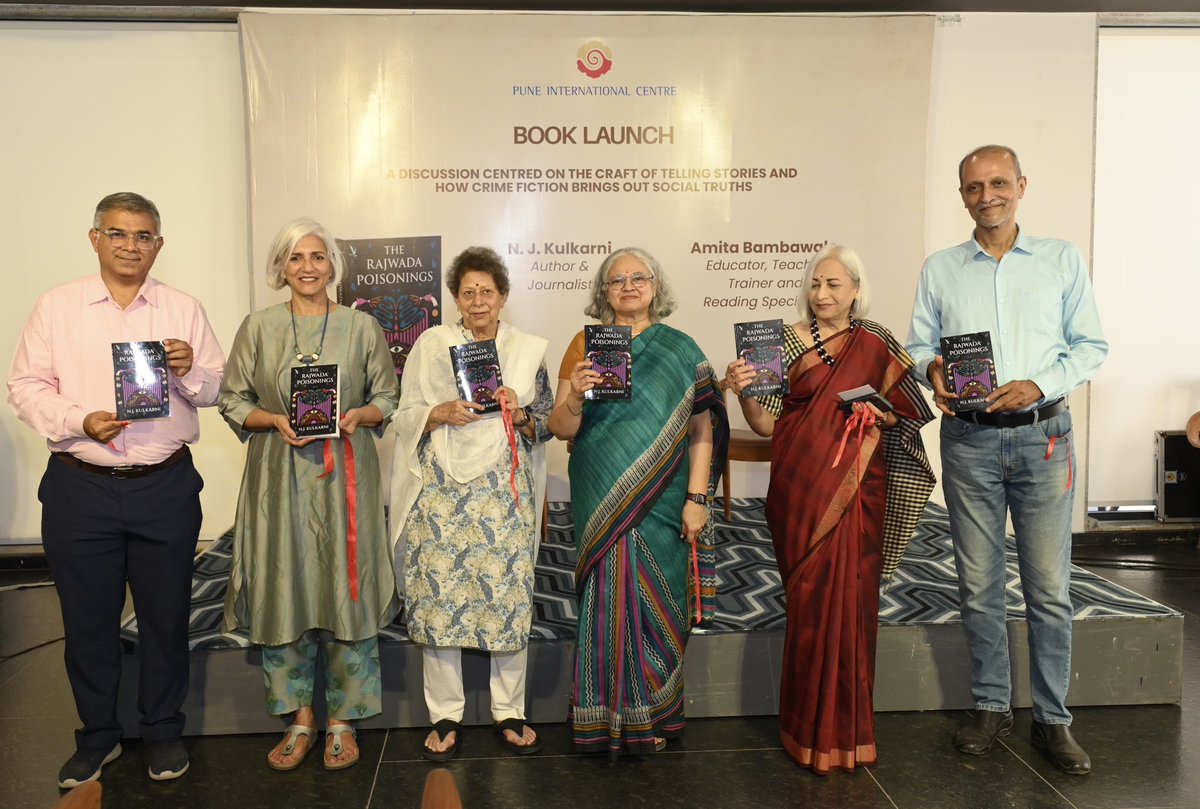
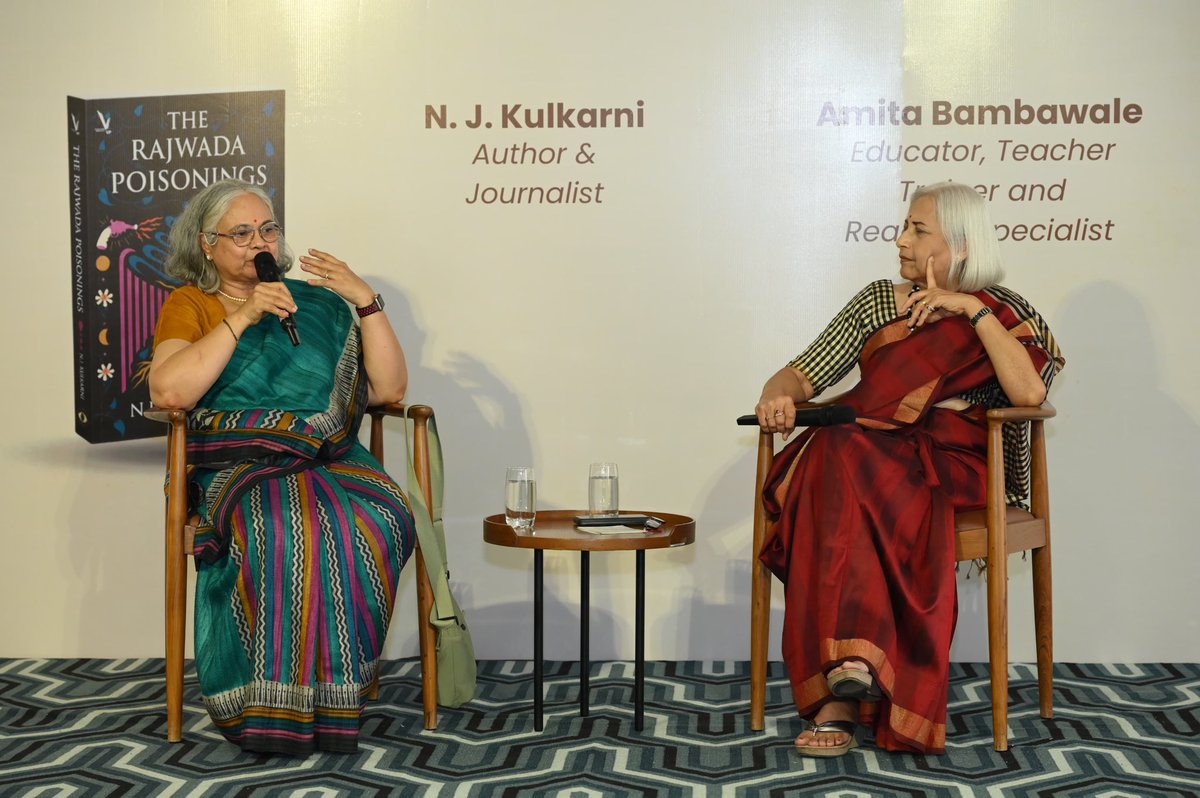
𝐁𝐨𝐨𝐤 𝐋𝐚𝐮𝐧𝐜𝐡 & 𝐃𝐢𝐬𝐜𝐮𝐬𝐬𝐢𝐨𝐧 | The Rajwada Poisonings
Pune International Centre hosted an engaging conversation around crime fiction, storytelling, and the art of crafting suspenseful narratives.
Crime novelist Nita Jatar Kulkarni and educator-author Amita Bambawale explored the nuances of writing, the power of imagination, and how crime fiction can often become an indictment of society itself.
The discussion offered fascinating insights into the creative process behind building compelling characters, layered narratives, and gripping mysteries—making for a thoughtful and engaging literary session.
@rameshmashelkar@dinakholkar@Girbane@aparanjape