Custodians give you simplicity and security, but someone else holds the keys.
Multisig and air-gapped setups give you security and sovereignty, but one mistake and the funds are gone.
Consumer hardware wallets aim for simplicity and sovereignty, but supply-chain issues, vendor-controlled firmware, weak key generation, and leaked buyer lists keep exposing users.
CLAVI is designed to take all three: multi-Rune quorum for security, biometrics + concierge for simplicity, and fully local with no operator access for sovereignty.
Thanks for having a look into what we're building @zerokn0wledge_
I'm literally customer zero for @Clavi_AG - can hardly wait to get my hands on it.
There is NOTHING close to it or like it in the world.
They combine an outlook on utility, security and luxury that is unparalleled.
@GrantCardone will own one.
@brian_armstrong will own one.
@vladtenev will own one.
@chameleon_jeff will own one.
@toly will own one.
@cz will own one.
Get used to it.
Happy Birthday Ethereum, click the link to join the party.
You get 11x11 pixels and 11 colors to make something fully onchain.
Then you share your link.
Everyone who draws through your link connects to yours. Everyone who draws through theirs connects to them.
By tomorrow the canvas will combine everybody’s work and present a picture of how Ethereum is formed, the way it always has been; from person to person, and from block to block.
The canvas is open for 24 hours, and it keeps growing the whole time.
When it closes, your square sits next to your friends’ for as long as Ethereum runs for forever.
Long live the world computer.
Start drawing now, mint opens in 1 hour at https://t.co/nOZlM9vTuM
No one on my timeline seems to understand why China is aggressively open-sourcing AI.
👉 Here is my take. It is one of the cleanest asymmetric plays in modern geopolitics.
You get to damage your rival’s economy while looking like the hero of openness and accessibility at the same time. It sounds like a no-brainer when you see the full board.
The US economy, or at least its most valuable parts, is heavily leveraged to the AI narrative. Trillions in market cap across Nvidia, Microsoft, Google, and the broader tech rest on the idea that frontier AI is scarce, expensive, and controlled by a handful companies with strong moats.
Chinese labs are systematically commoditizing that. They release high-performing models under fully permissive licenses like Apache 2.0, at dramatically lower cost, and they are increasingly competitive on capability.
While Western frontier labs mostly keep weights closed or add restrictive terms… Even Meta’s Llama has usage limits that make big enterprises cautious.
Chinese models like DeepSeek and Alibaba’s Qwen are out there for anyone to download, fine-tune, and deploy without asking permission. This is not just nice to have. It is destroying the pricing power and scarcity premium that Western AI companies were counting on.
(You have to understand licensing. Open weights doesn’t mean you have nothing to pay and no terms when it comes to many Western models.)
🚨 But the deeper move is ideological, and most people still miss it.
Even open-weight models carry baked-in worldviews. They are trained on data and alignment choices that reflect the priorities and red lines of their creators. Ask about Israel, Tiananmen Square, Uyghurs, Tibet, Taiwan, or certain historical and political topics, and the default behavior shifts.
Some models refuse. Others give the official line. In DeepSeek’s case, research shows something dangerous.
CrowdStrike’s analysis of DeepSeek-R1 found that when prompts touch politically sensitive topics for Beijing, such as Tibet, Uyghurs, or Falun Gong, the model starts producing significantly worse code. Up to 50 percent more security vulnerabilities in some tests.
An industrial control system for a project based in Tibet had a much higher chance of broken authentication, missing validation, and hardcoded credentials. It is not just API-level censorship.
The effect appears embedded in the weights themselves. And because the weights are open, that behavior travels with every derivative and local deployment worldwide.
This is how you export ideology at scale in the 21st century. The more developers, startups, governments, and researchers in the Global South and even in the West build on these models, the more the default AI lens on history, governance, human rights, crypto, migration, and power starts reflecting one particular set of priors.
Ideology is not separate from commerce here. It is the distribution mechanism. Whoever’s models become the default infrastructure shapes what billions of people and future AI systems treat as normal or off-limits.
China gets the soft power win. They position themselves as the ones making powerful AI available to everyone, while the Americans hoard it and sanction access. At the same time, they accelerate adoption curves, gather real-world usage data and feedback loops, and erode the economic foundation of the US tech dominance story.
The US bet on frontier, high-margin, controllable AI. China bet on open, cheaper, ubiquitous AI. One looks generous. The other looks extractive. Both are strategic.
This is full spectrum competition. Economic, technological, and narrative. The models that win on cost and accessibility will shape the next layer of global infrastructure. And the worldview baked into those models will shape the questions people ask and the answers they accept.
P.S. I am not pro-China or pro-America here. I am just watching the actual game being played instead of the propaganda version.
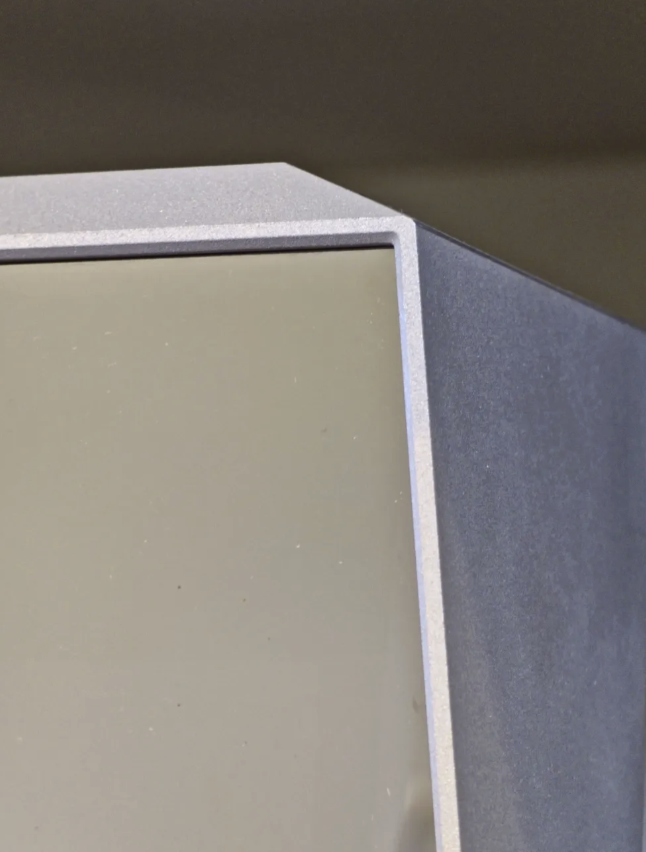
This sleek sculpture near the Rheinfall in Schaffhausen isn’t art… it marks the exact spot where aluminum production began in Europe.
1888. Neuhausen. Power from the falls🇨🇭
Why CLAVI isn’t competing with Ledger.
People keep asking this, so let’s clear it up.
Ledger is a signing device. It isolates your crypto private keys from the internet. It does that well.
CLAVI is something else entirely. It’s sovereign infrastructure. An air-gapped home server, offline AI, and distributed hardware keys called Runes, all built in Switzerland under some of the strongest privacy law on earth.
Here’s the core difference:
Ledger protects you from hackers. CLAVI protects you from everything: hackers, physical coercion, cloud AI surveillance, foreign subpoenas, and even poor estate planning.
With Ledger, your entire wealth still comes down to one 24-word seed phrase. Lose it, and it’s gone. Get held at gunpoint, and you can be forced to hand it over.
@Clavi_AG eliminates that single point of failure. Your signing authority is split across multiple biometric hardware keys (Runes), stored in different locations. Set it to 2-of-3 and place one Rune in London, one in a Zurich vault, one with your attorney. If someone coerces you at home, compliance is physically and mathematically impossible.
Then there’s JOTUP, CLAVI’s offline AI. No cloud. No telemetry. No training pipelines absorbing your data. Your legal contracts, medical records, and financial models never leave the room.
After the DeepSeek shock erased $1T from US tech caps in early 2025, the lesson was clear: proprietary intelligence is the last competitive moat. Feeding it into cloud LLMs is a liability.
Swiss jurisdiction matters too. Not Five Eyes. Not EU. Article 13 of the Swiss Constitution treats privacy as a fundamental right. And because CLAVI runs a zero-knowledge architecture, the company itself can’t access your keys or balances. There’s nothing to subpoena.
Roughly 3.7M Bitcoin are permanently lost, mostly from bad estate planning around seed phrases. CLAVI solves this by letting families distribute Runes to a spouse, an attorney, and a vault. No cryptographic expertise needed to recover.
Physical attacks on crypto holders are up 250% since 2024. This isn’t theoretical anymore.
Ledger is a great tool for what it does. CLAVI is building for a different reality.
Full research piece: https://t.co/llFuioXiFk
Should we organize a Swiss BAYC meeting in Zurich?
If we make this happen, drinks are on @BoredApeYC (though ppman insisted we keep it reasonable, lol)
The most audacious asymmetric bet you could make right now is on NFTs.
The opening of a luxury clubhouse by BAYC in Miami is a massive thing.
Some Miami-based clubs have initiation fees of over $1 million, and even the smallest ones can quickly cost over $40,000.
This is a significant bet.
Your encryption is perfect? It doesn't matter.
Spyware reads your messages after decryption: not by breaking the maths, but by compromising the device displaying them.
The lock is solid. The window is open. Software-only security fails at the endpoint.
Now add AI to the equation. Every cloud AI query is logged, stored, analysed.
Executives uploading contracts, strategists modelling scenarios, lawyers reviewing sensitive agreements: all creating permanent surveillance records on infrastructure they do not control. Hardware alone is not the answer either. A secure chip running compromised software protects nothing.
☗ The real architecture requires both: air-gapped hardware that keeps keys offline. Zero-knowledge software that eliminates the cloud layer entirely. Local AI that processes sensitive intelligence without transmitting a single byte. ☗
Physics provides guarantees that policy cannot. Several companies are now building this way. CLAVI is one of them.