The PurSec Lab focuses on System Security Research. We are actively looking for interns, PhD students, and Postdocs working in #SystemSecurity at Purdue.
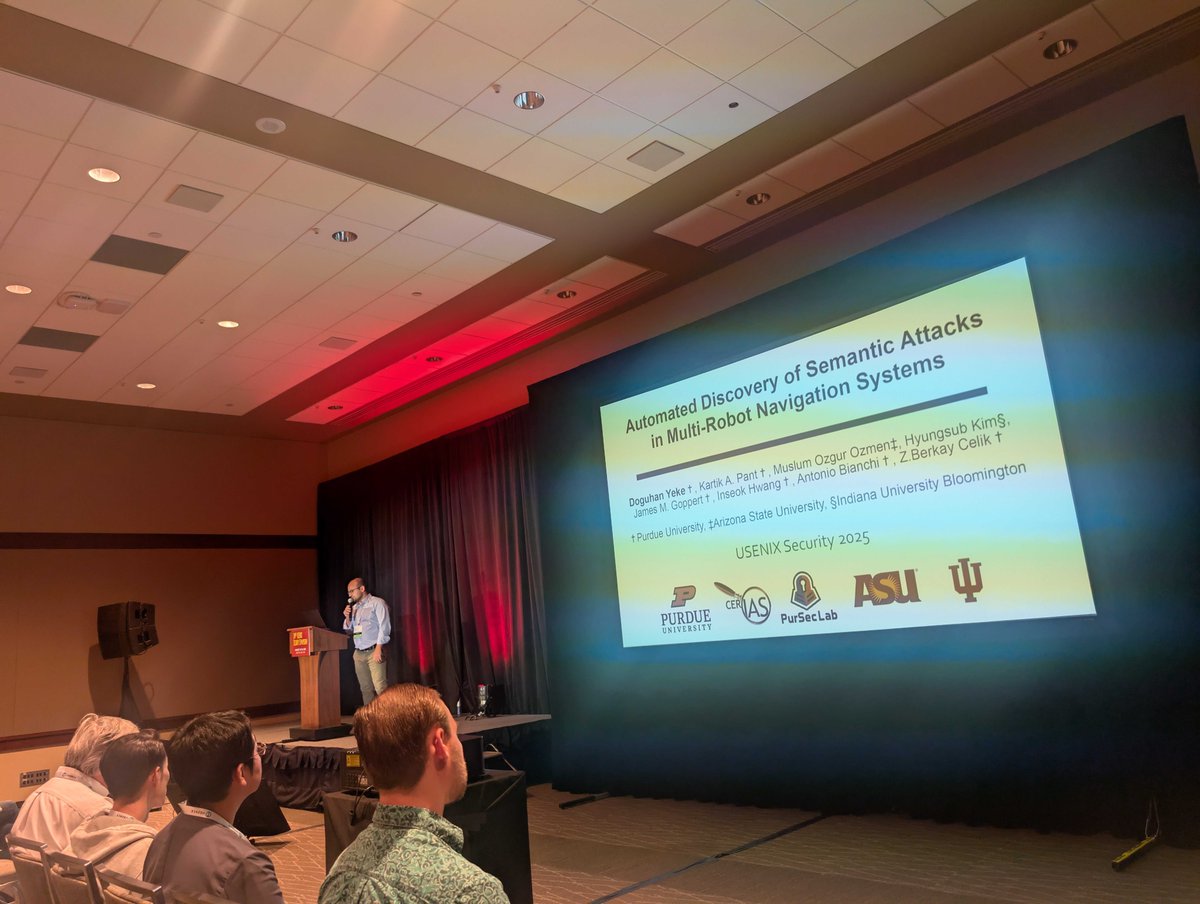
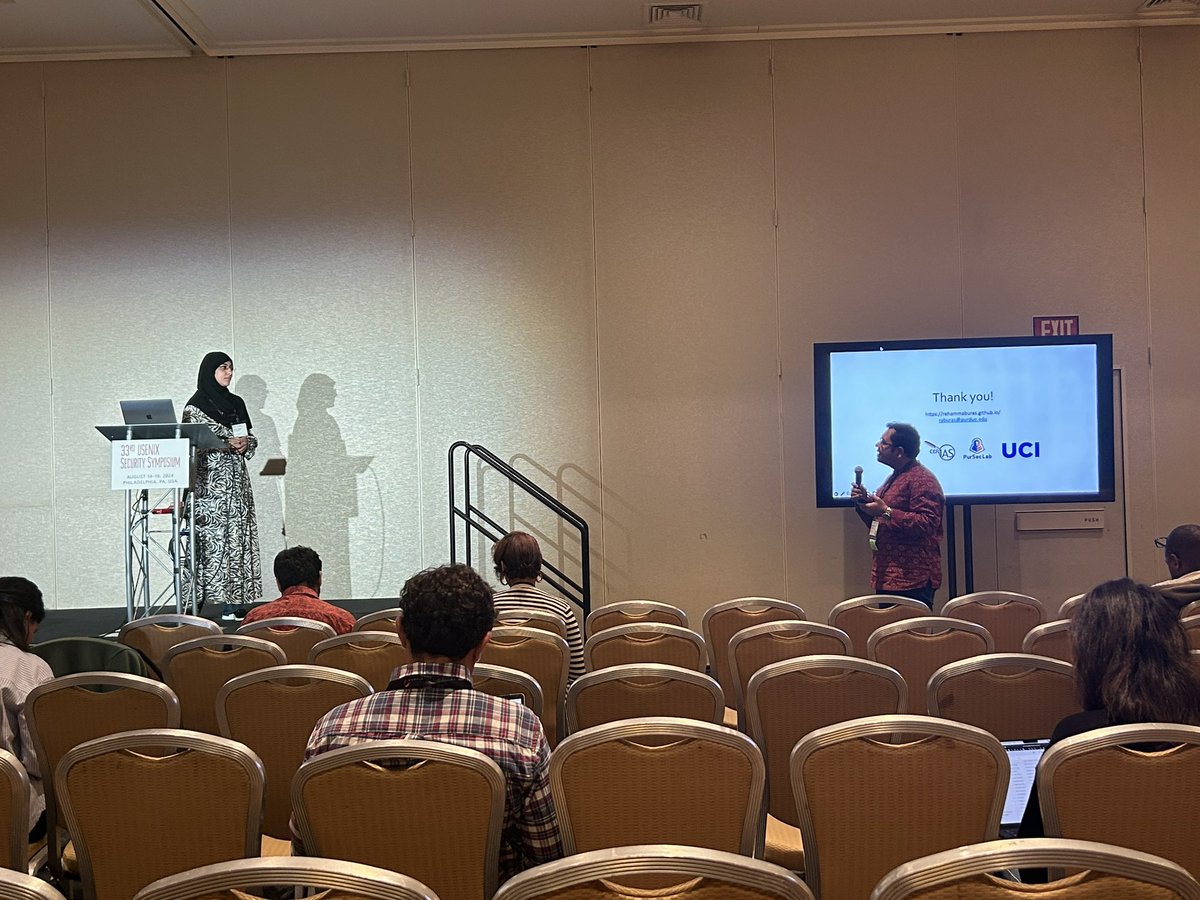
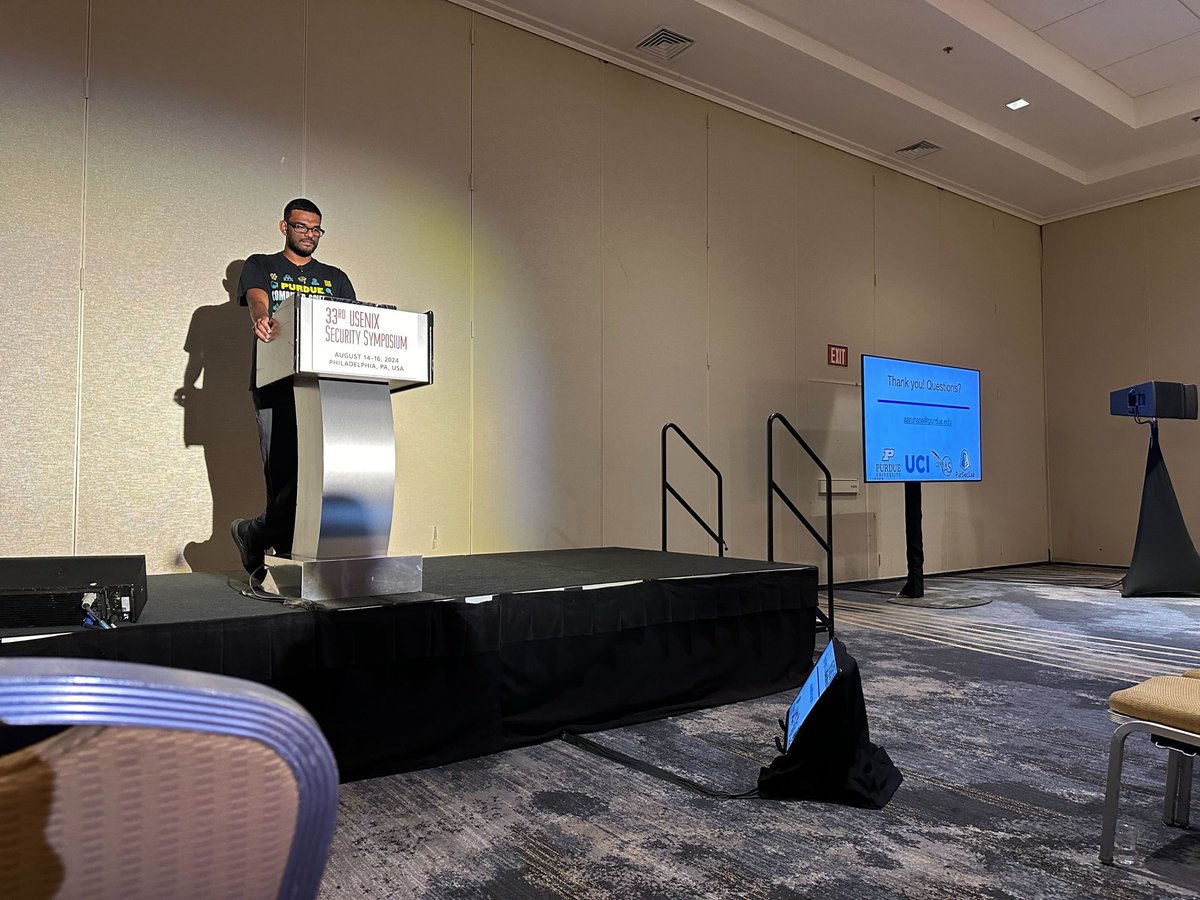
Doguhan Yeke presented his paper at @USENIXSecurity (#usesec25) - "Automated Discovery of Semantic Attacks in Multi-Robot Navigation Systems". This work identifies and analyzes vulnerabilities in MRCA algorithms and proposes practical countermeasures🤖
Congrats to all authors! 🙌
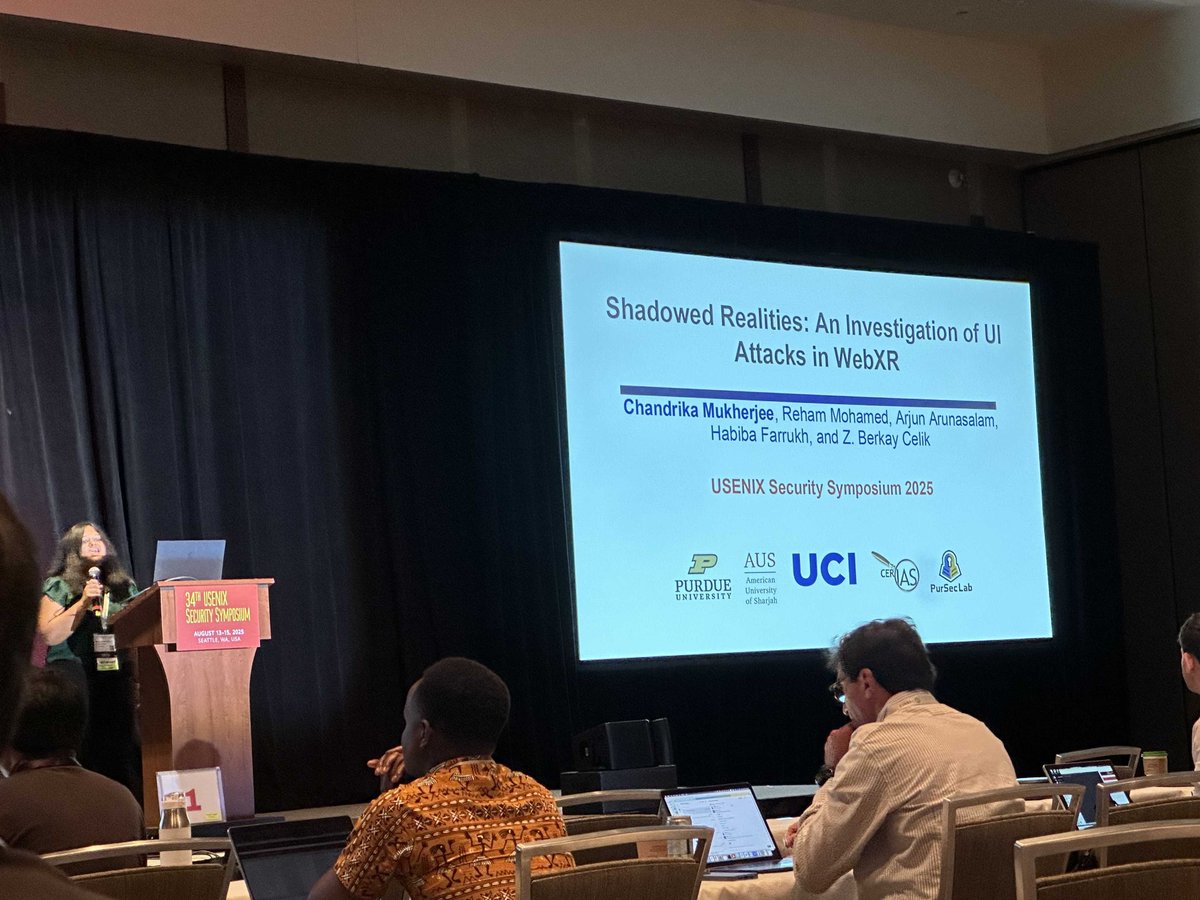
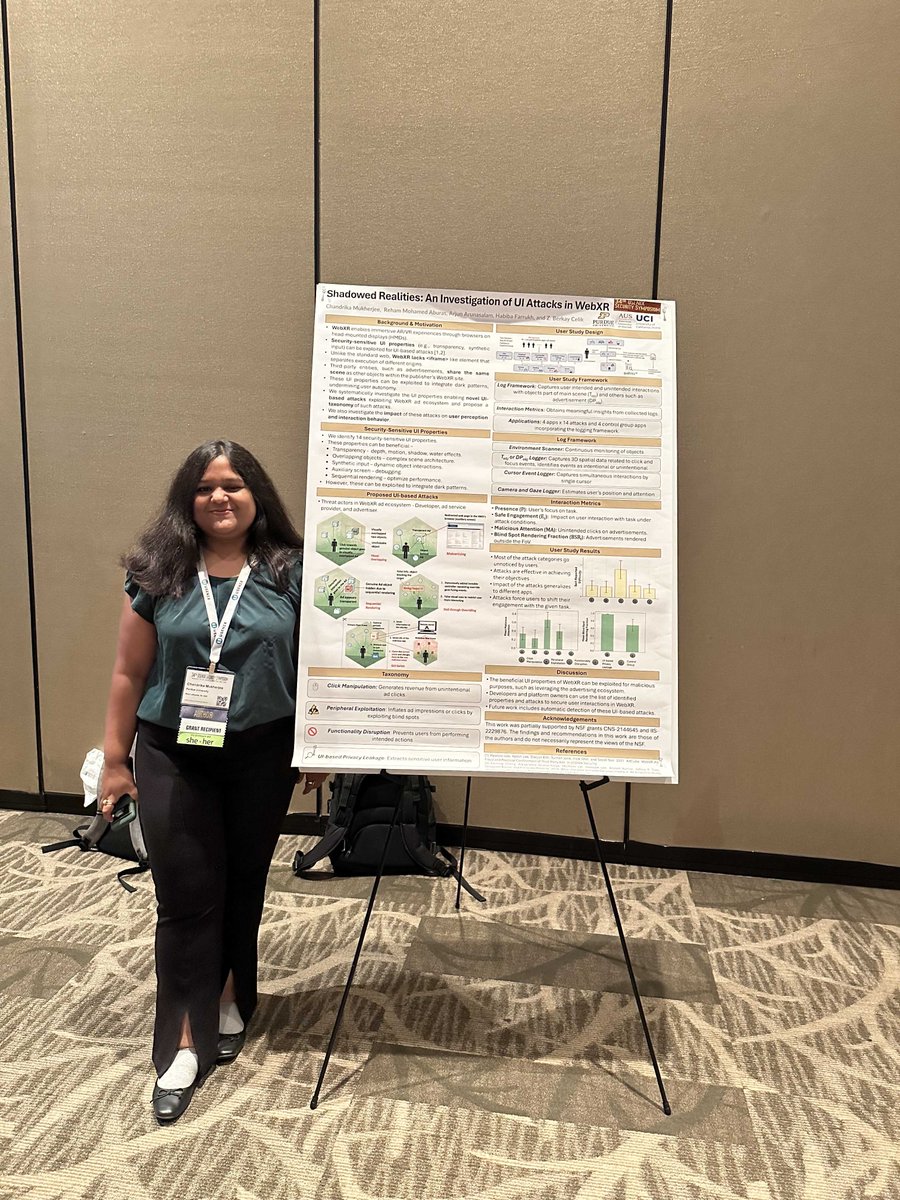
Chandrika Mukherjee presented her paper at @USENIXSecurity (#usesec25) - "Shadowed Realities: An Investigation of UI Attacks in WebXR". This study identifies UI-based vulnerabilities in WebXR and conducts a user study to measure users' perceptions 🏆
Congrats to all authors! 🙌
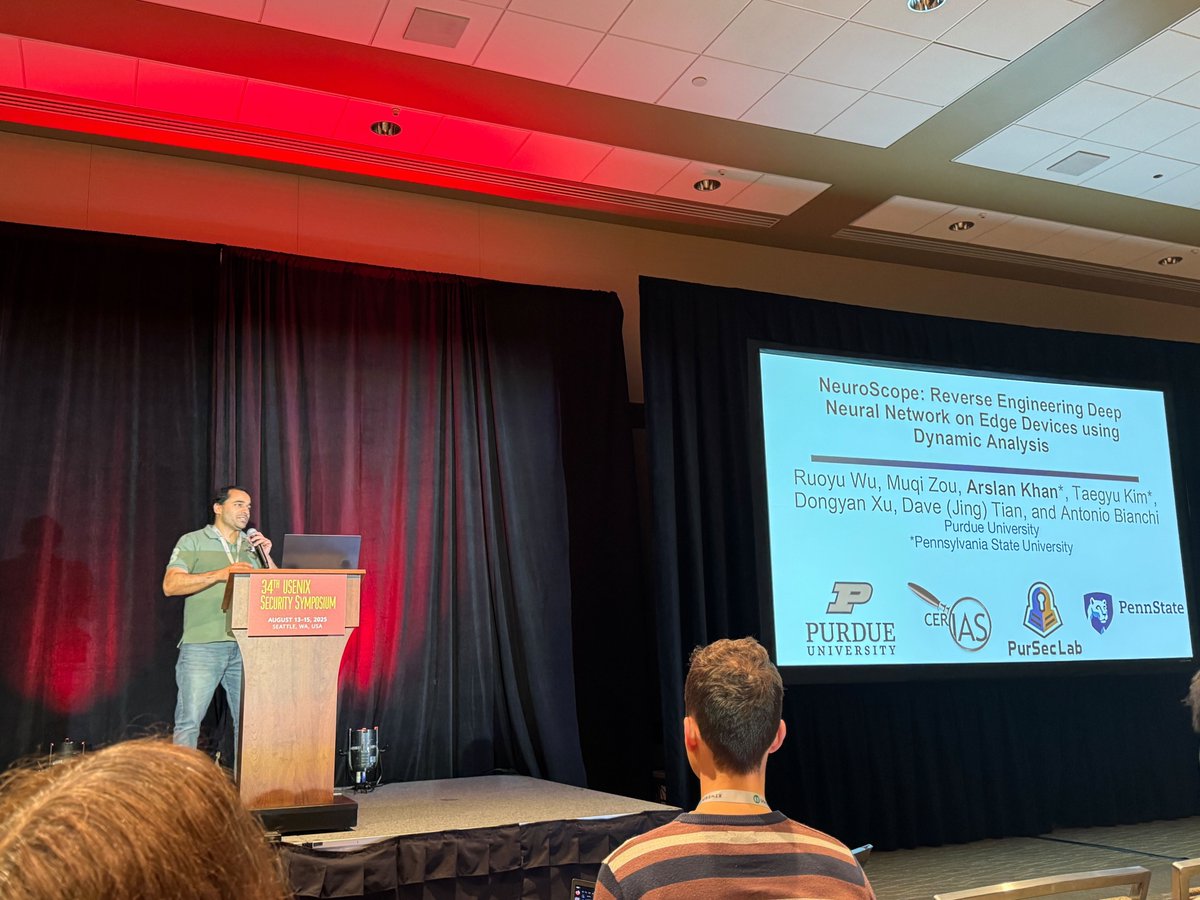
Arslan Khan (with Ruoyu Wu) presented his paper at @USENIXSecurity (#usesec25) - “NEUROSCOPE: Reverse Engineering Deep Neural Network on Edge Devices using Dynamic Analysis”, proposing a framework for reverse-engineering DNN binaries on edge devices🧠
Congrats to all authors! 🙌
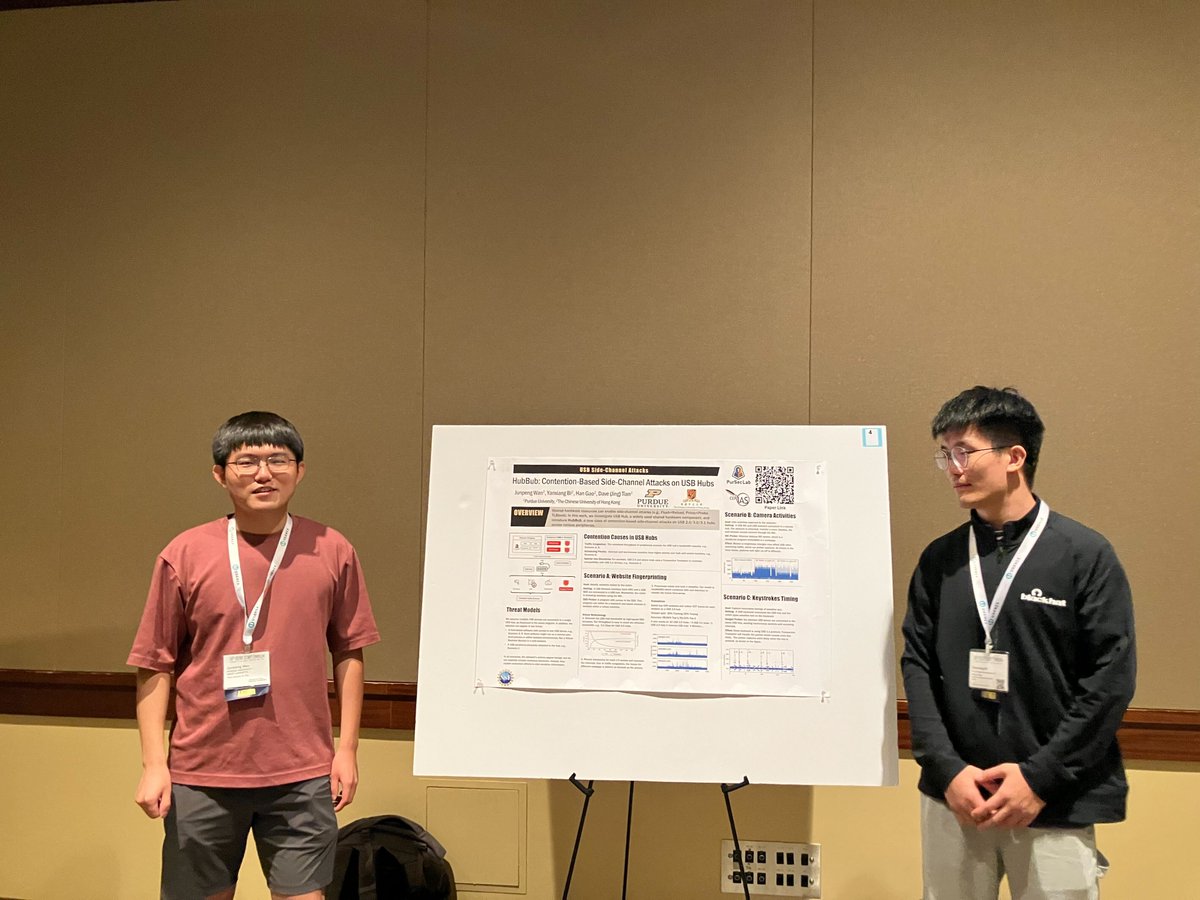
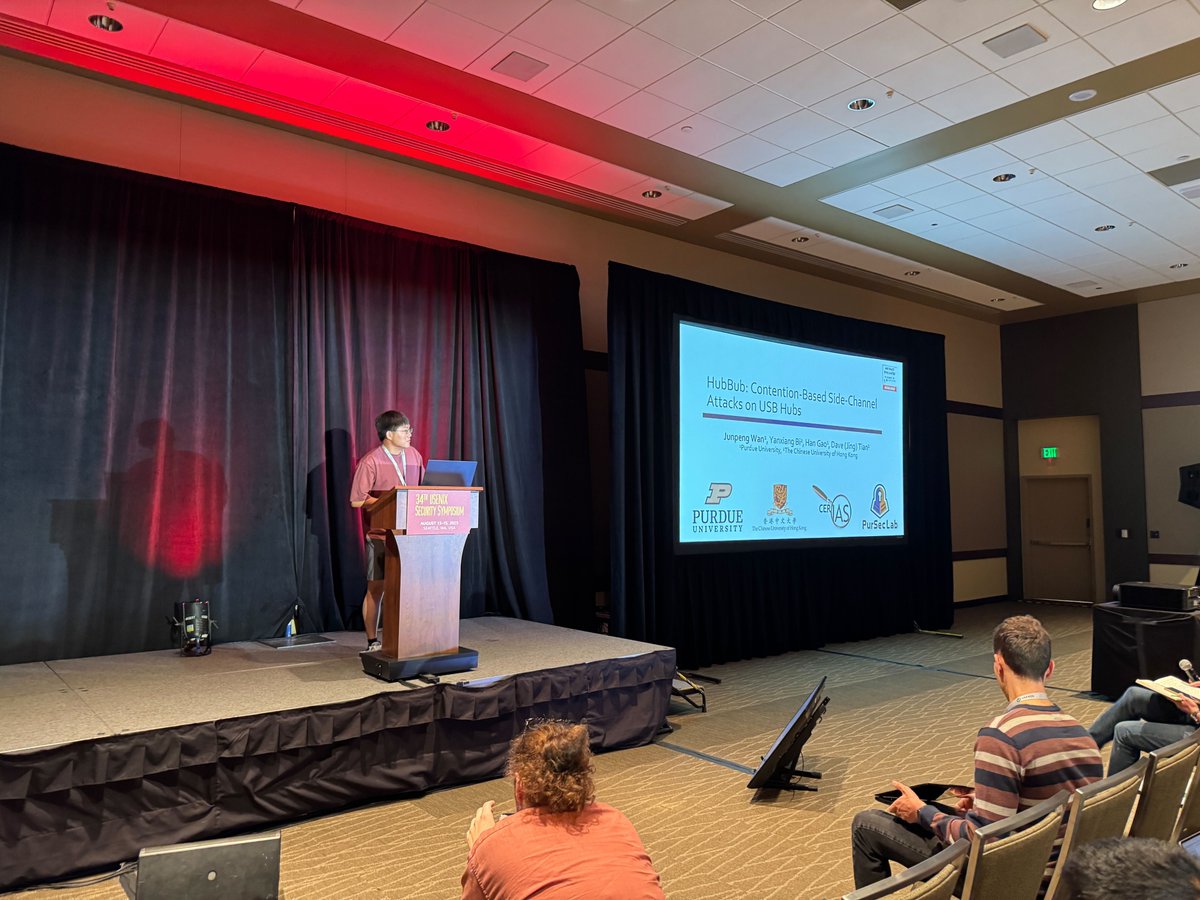
Junpeng Wan presented his paper at @USENIXSecurity (#usesec25) - “HubBub: Contention-Based Side-Channel Attacks on USB Hubs”. This work has several interesting attack scenarios and explores the potential side-channel risks of using USB hubs⚡️
Congrats to all authors! 🙌
I am currently looking for highly motivated students to join my research group. Reach out if you're interested in systems/software security technologies, such as software compartmentalization, fuzzing, or any domain of embedded systems, such as automotive, ICS, robotics, CPS...
I am thrilled to announce that I will join the School of Electrical Engineering and Computer Science (@PennStateEECS ) at @penn_state as an Assistant Professor starting this Fall. Huge thanks to my advisors and mentors: Dongyan Xu, @davejingtian, @anton00b, and @ZBerkayCelik.
We are excited to present our new tool Patcherex2. We designed it from the ground up to be a highly modular binary patching framework making it easier to add support for new architectures and maintain compared to the original Patcherex. Try it out for your future patching needs.
I am happy to announce Patcherex2 (https://t.co/8R3ygd5wOO), an easy-to-use, Python-based binary patching tool, designed to be extensible and compatible with multiple architectures.
The code was mainly written by my student @__Han_Dai__ at @PurdueCS, for the DARPA AMP program.
@PurSecLab is proud to lead the initiative to secure cyber physical systems under the DARPA firefly program. Stay tuned for exciting tools we’re baking in-house for this initiative!
#Purdue researchers in launch project to model, simulate and analyze cyber-physical systems (CPS) sponsored by Defense Advanced Research Projects Agency (DARPA)
@PurdueCS@cerias#science
https://t.co/wbKeEQ5EFV
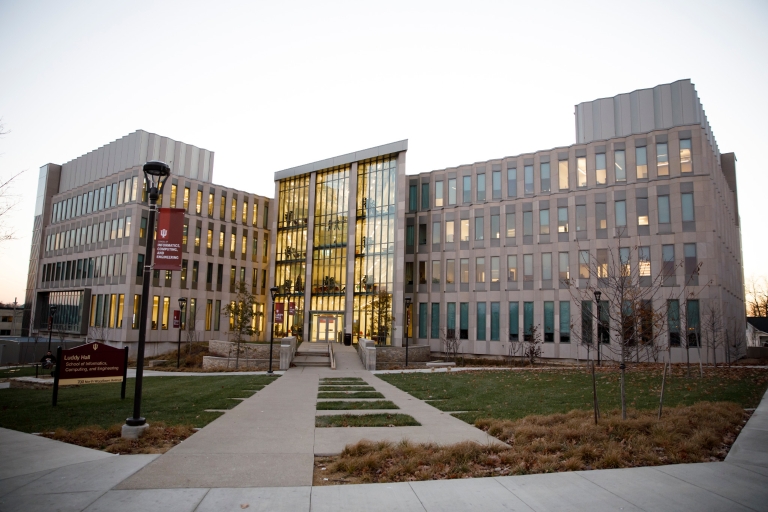
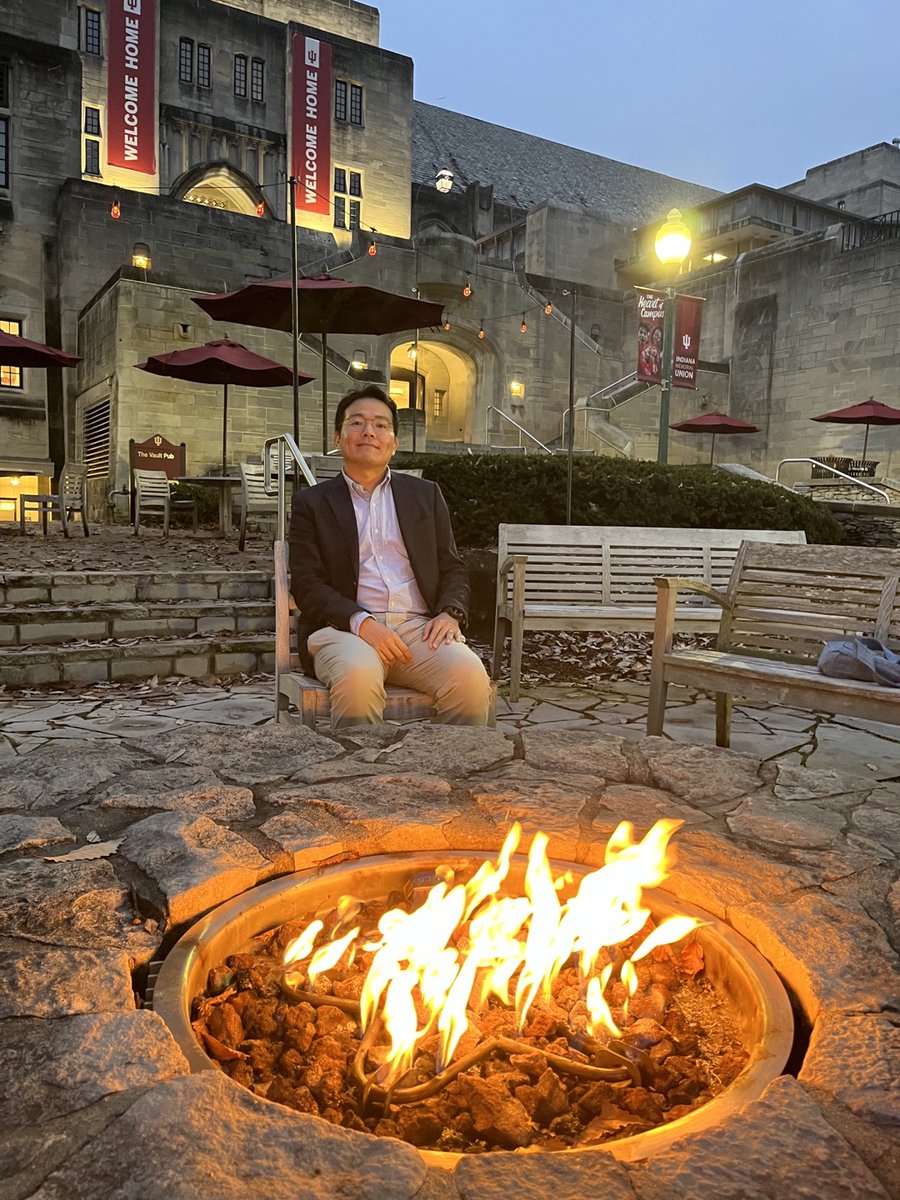
Thrilled to announce I'll be joining the CS Department at Indiana University, Bloomington (@IUBloomington, @IULuddy) as an Assistant Professor in Fall 2024. Huge thanks to my mentors and beloved family members for their unwavering support. Super excited about this new chapter!
I am honored to receive the Diamond Award from @cerias. I would like to thank all my mentors and collaborators, especially Dr. @ZBerkayCelik, for his guidance and support. Special thanks to the @cerias leadership, including Dr. Dongyan Xu, Dr. @TheRealSpaf, and @joel_rasmus!
“Overall, the most important part of patching is not automation but safety,” adds @davejingtian, an assistant professor at @PurdueCS. “It turns out that it’s non-trivial to prove that a patch does exactly what it should — nothing more or less."