Official tweets of Purdue Speech Perception and Cognitive Effort Lab. Psychophysiology, noise annoyance, listening effort. See @alexlfrancis for personal stuff.
Everyone moving from twitter to mastodon is very likely to fail because it is a collective action problem, benefits depend on others actions.
Here's how it can succeed. It will require your commitment for 1 month to do a few things. Read and retweet if you commit to do them.
@JeffSpies@ProfAnneLaura The journals I’ve edited for don’t pay for reviewer names that I know of. But once you’re in their database you’re in forever…
Doing research involving speech perception and acoustics? This new paper by me and @lingprof reconsidered some commonly used stimuli to show how they can be misinterpreted, misused, and lead to unreliable conclusions.
open-access paper⬇️
https://t.co/zde3mkPupM
REVIEW
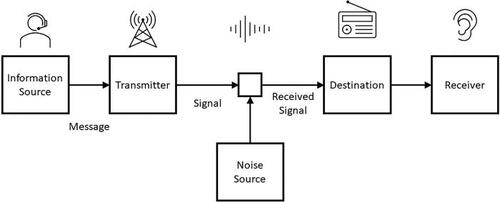
To fully understand the effects of an added #noise on #speech#perception, researchers must consider not just how much the noise affects task difficulty, but also how it affects all of the systems involved in understanding speech. https://t.co/AeguLb4XAA
@PurdueSPACELab
Please share stories of controversial IRB protocols/decisions! My students will be doing a “be the IRB” roleplay this week and I want to give them some tricky scenarios to chew on!
@yael_niv @metallicbranch @PeretzLange Great example for this discussion! I guarantee different IRBs will rule exactly opposite on this. And not just on mental health. We (not medically trained) do ECGs, have seen obvious arrhythmias. Also clear hearing loss. Have gotten diff rulings at diff times on inform or not.
Mentally repairing missing pieces of speech makes listening effortful. Super important for people who have hearing difficulty –including people who use cochlear implants.
We need to resist the temptation to think good clinical %correct = easy listening.
🌟Open-access paper here⬇️
@kbmcgowan Not sure how far I would take the “don’t care about” part, but there are many issues in speech research that are essentially physiological and/or acoustic and I can imagine a phonetician working quite productively for years w/out any need to consider sociolinguistics.
An excellent paper. I agree very strongly that the field needs more *good* theories, and that qualitative data and verbal/narrative theorizing are important for that. But I think far too little useful data gets published, hence data-focused work & open data remain essential.
Really impressed by @MyrtheVeenman 's tutorial on Bayesian multilevel models (https://t.co/nUm6fXA6le). I might have some comments later on, but it's not a mandatory reading for my multilevel modeling course!
The Dept. of Speech, Language, & Hearing Sciences at Purdue University, West Lafayette, IN is seeking applications for an assistant or associate level tenure-track faculty position in Hearing Science. Apply online today! https://t.co/SRtgihWlYu @PurdueSLHS@PurdueHHS
My department is hiring: Department of Speech, Language, and Hearing Sciences at Purdue University is seeking applications for an assistant or associate level tenure-track faculty position in Hearing Science/Audiology.
https://t.co/PIS0IFCj4b
@JamieReilly_cog @jpeelle We’ve been getting some interesting pauses in this part of the MOCA (words w/ F) with ages 65+. Folks are going fine, hit words in the relevant phon neighborhood, then … pause. Some never recover. Others don’t even pause, cruise right thru. With a chuckle.
@BethMGilleie @AcademicChatter@CouragePhD I love working with students, I love doing research on topics that interest me, and being able to work on them even when they don’t pay off immediately. I love the security to be able to tell my boss that their plans for doing something are wrong without fear of losing my job.
3-Year Postdoc in Auditory Neuroscience in Scotland🏴
Work with us in sunny Dundee☀️ We're looking for an enthusiastic and friendly individual to work on an amazing project on individual brain rhythms, speech comprehension and hearing loss.
https://t.co/8XLK9eBByZ
Please RT 💜