1)
Back in a time when the term “game center” didn’t even exist yet, a dimly lit coffee shop run by my father’s older sister received one of the early Space Invaders cocktail arcade cabinets—long before the game exploded into a nationwide phenomenon.
Inside that dark café, I can still remember the glowing CRT pixels floating beneath the glass tabletop, the mysterious low-frequency background music, and the unforgettable sound effects each time an invader was shot.
2)
When I was an elementary school student in the 1970s, video games were surrounded by prejudice and social stigma. Teachers and PTA members would patrol arcades looking for students. If you were caught, you could be forced to stand before all 600 students during the school’s morning assembly and publicly apologize in the schoolyard.
3)
There were classmates in college—people who happened to share classes with me, though they were never really my friends—who had already secured positions at major corporations. With smug smiles, they would say things like, “Turning your hobby into your job is foolish,” or “You were even captain of an athletic club at such a prestigious university, and you still want to work for a video game company? (laughs)”
More than the games themselves, it was the environment surrounding them that shaped who I became.
Living in that environment, I refused to be looked down upon by people who dismissed games—adults who judged students only by academic credentials or athletic achievements. So I proved myself by excelling in both. I made sure that those who looked down on games had nothing left to say, whether the measure was grades or sports.
People may not expect it, but I started yacht racing at fifteen. I reached the podium at Japan’s National Sports Festival, consistently ranked among the top five in the All Japan Championships, and even raced at the front of Japan–U.S. international competitions.
The desire to silence people who insisted that pursuing what you truly love as a career is somehow wrong—or who made bizarre claims such as, “Once you get your dream job, that’s the finish line, so you’ll stop trying��—became one of the fundamental inspirations behind the very theme of conflict itself.
As a matter of fact, I once had a manager who genuinely believed exactly that. He said, “If you put someone in the position they want most, they’ve already reached their goal, so they won’t grow anymore.” What nonsense.
Isn’t the real reason simply that you never truly loved what you were doing? Then again, for people who never genuinely loved games in the first place and only wanted promotions and social status, a job title really is the finish line.
Looking back, I can honestly say that today’s version of myself was forged through fighting against people who never grew, who suppressed what others genuinely loved, and who always chose to stand on the side that condemned video games.
I only wanted one thing: to be somewhere I could play games without anyone getting angry at me, and to live my own life by creating the games I loved. That was all I ever thought about.
And I can proudly say this: I have never once lost to the people who tried to pull me away from games by dressing up their arguments with one excuse after another.
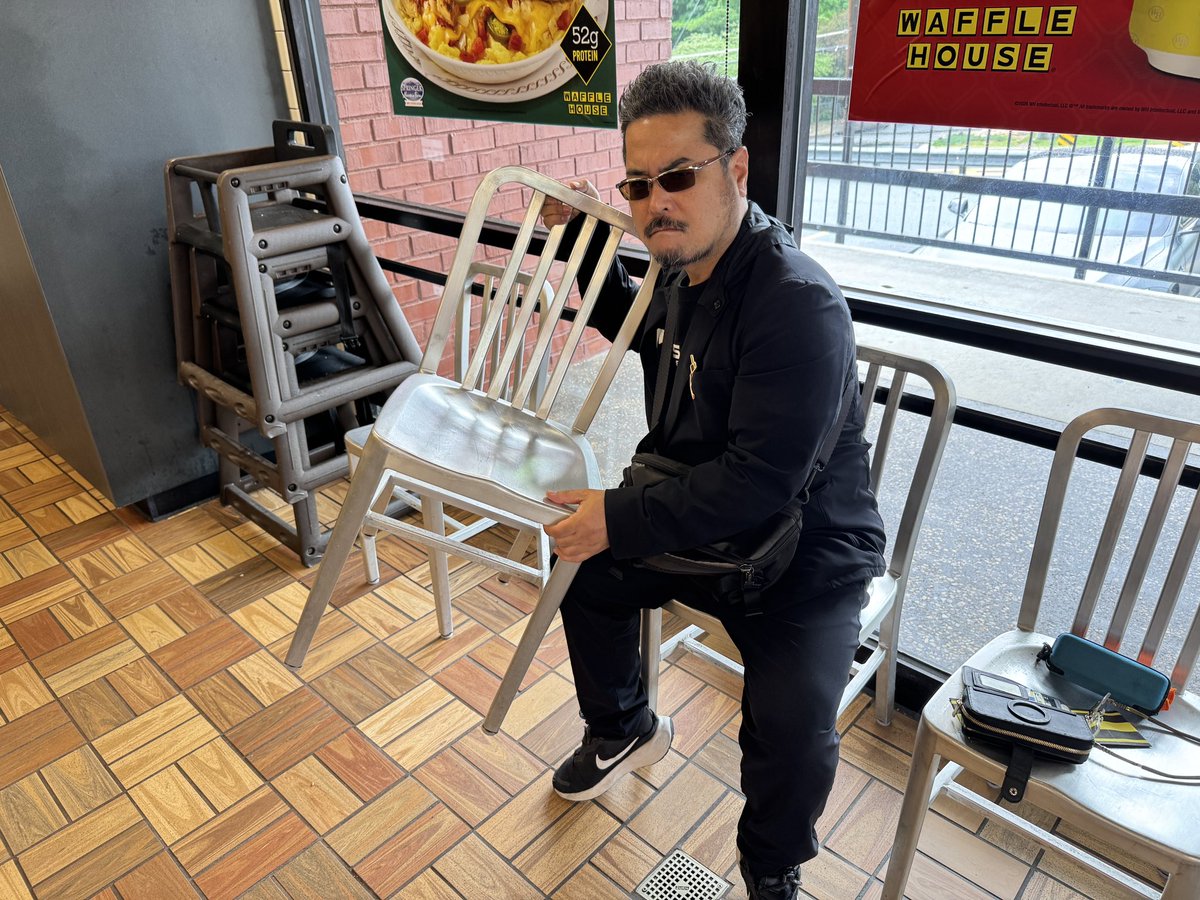
I finally made it to WAFFLE HOUSE.
The staff are always friendly, and when I asked if they would sell me a menu, they sold me one for $5.
Next time, I’ll be back at 3 a.m. for fight time.
#WAFFLEHOUSE
I have launched VS Studio.
Built on the knowledge and passion we have cultivated over many years on the front lines of game development, we are now beginning a new challenge.
VS Studio を立ち上げました。
私たちは、長年ゲ��ム開発の現場で培ってきた知見と情熱をもとに、新しい挑戦を始めます。
https://t.co/js8uZH5O7N