Vitamin D is the master hormone of the body - here's a cheat sheet for vitamin D:
- You need UVB radiation on the skin to make vitamin D, which you get from the sun
- It takes 10-30 minutes of sun exposure in the summer to get enough vitamin D for the day, but in the winter, it can take several hours
- Up north, it is not possible to make enough vitamin D during the winter unless you use UVB lamps
- The infrared light from the sun penetrates the body, providing systemic benefits to the brain, bones, and eyesight
- Optimal vitamin D levels for lowest mortality are 30-40 ng/mL (75-99 nmol/L). Below 20 ng/mL (49 nmol/L) is associated with a higher risk of all-cause mortality
- Sun avoidance has been seen to be a risk factor for increased risk of mortality
- Vitamin D supplements raise vitamin D levels, but don't have the other benefits of sunlight. But it's better to have a normal vitamin D status with supplements than to be deficient in vitamin D
- Vitamin D supplements have been seen to have some effects, such as raising glutathione, increasing testosterone, lowering triglycerides, and reducing insulin resistance
- Vitamin D supplements can cause hypercalcemia in the blood, which is not optimal for cardiovascular health
- If you take a vitamin D supplement, then pair it with vitamin K2 MK7 and magnesium (bonus: boron)
- Get enough sunlight when the sun is out, but don't get burned
Want to know what your health %-ile is? Take the quick assessment: https://t.co/6BrWir9dgl
@GauloiseEnExil@GuillaumeBarucq@ZatAwel Vous avez essayez d’augmenter le potassium et le magnésium ? Citrate de potassium et bisglycinate de magnésium.
Si vous manquez de potassium, les reins retiennent le potassium et éliminent le sodium.
🚨🚨🚨Permanent DST or permanent standard time? Two bills are now in play.
The House is voting next week on the Sunshine Protection Act — this locks us into permanent daylight saving time year-round.
A new bipartisan bill just introduced (Sunshine for Our Kids Act) would instead make permanent standard time the default, ending the twice-yearly clock changes while still giving states flexibility.
As I’ve said before: permanent DST is essentially the same as moving everyone to the western edge of their time zone. Morning sunlight arrives later on the clock. Multiple studies show higher rates of cancer and other health issues the farther west you live within a time zone — largely because morning light is far more important for setting our circadian rhythms than evening light.
Sleep medicine experts strongly prefer permanent standard time for this reason. It better aligns our clocks with biology, especially for kids, mood, and overall health.
We finally have a real choice. Which direction makes more sense to you?
#DaylightSavingTime #CircadianHealth
Le symbole est absolu. Larry Sanger, l'homme qui a inventé et cofondé Wikipédia, vient d'être banni définitivement de sa propre plateforme. Son crime ? Avoir tenté d'y restaurer la neutralité et la diversité intellectuelle via un projet de bon sens.
Dans le Washington Examiner, il démonte le hold-up de la matrice numérique :
La dictature de l'anonymat : L'encyclopédie libre est aujourd'hui verrouillée par une clique minoritaire de censeurs masqués et d'ONG militantes.
La guerre cognitive : Les pages géopolitiques et sociétales sont réécrites en coulisses pour s'aligner strictement sur les récits officiels de l'OTAN et de Bruxelles.
Ce piratage idéologique est le calque exact du "Ministère de la Vérité" que Sébastien Lecornu veut imposer pour 2027 ou du flicage de masse de Chat Control. Qu'il s'agisse de l'information en ligne ou de nos libertés quotidiennes, la Caste veut tout contrôler.
Schizophrénie et troubles bipolaires : 25 participants ont poursuivi avec un régime cétogène pendant un total de quatre mois. Des améliorations significatives ont été observées ⤵️
Results of the first-ever randomized controlled trial testing ketogenic therapy in people living with schizophrenia and bipolar disorder were just published in Schizophrenia Bulletin.
Here's what was found 🧵
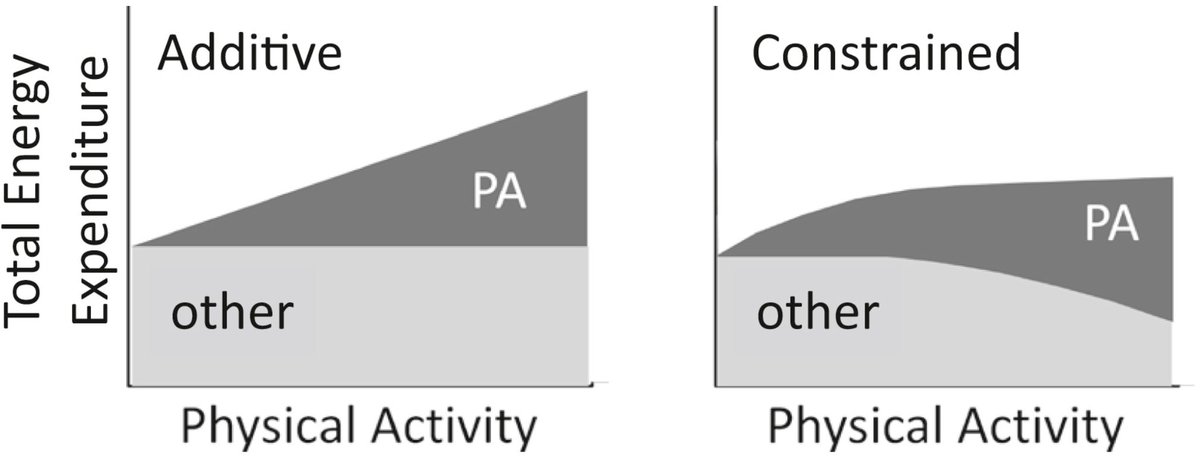
Exercise burns 500 extra calories. Your body compensates by spending 500 fewer. Net change: zero. A foundational study by @HermanPontzer measuring 332 adults across five populations proved the math behind weight loss doesn't work the way we've been told.
Ponzer and his team used doubly labeled water to measure total energy expenditure and accelerometry to track physical activity in adults from Ghana, South Africa, Seychelles, Jamaica, and the United States. This method captures actual metabolic rate over 7-10 days in free-living conditions, not lab-based estimates.
The standard additive model predicts that total energy expenditure increases linearly with physical activity. Burn 200 more calories moving, spend 200 more calories total. That's the assumption underlying most weight loss and obesity prevention strategies.
The data revealed something different. After adjusting for body size and composition, total energy expenditure was positively correlated with physical activity at low-to-moderate activity levels. But in subjects with higher physical activity levels, total energy expenditure plateaued. The relationship wasn't linear. It was constrained.
This supports a constrained total energy expenditure model: the body adapts metabolically to maintain total energy expenditure within a narrow range when physical activity increases beyond moderate levels. The metabolic response to activity isn't passive addition. It's active compensation.
Two variables appeared to modulate this response: body fat percentage and activity intensity. Higher body fat was positively related to total energy expenditure, while higher activity intensity was inversely related to total expenditure after controlling for activity volume. The body's adaptive mechanisms aren't uniform across metabolic phenotypes.
The compensation mechanisms likely involve reductions in basal metabolic rate, thermic effect of food, or non-exercise activity thermogenesis. When physical activity energy expenditure increases substantially, other components of daily energy expenditure decrease to keep total expenditure stable.
This has direct implications for weight loss interventions. Exercise programs that substantially increase physical activity may not produce the caloric deficits predicted by additive models because the body compensates by reducing energy expenditure elsewhere. The expected 1:1 relationship between activity and expenditure breaks down at higher activity levels.
The plateau doesn't mean exercise is ineffective. Physical activity produces metabolic benefits independent of energy balance, including improved insulin sensitivity, mitochondrial function, and cardiovascular health. But using exercise as the primary driver of caloric deficit faces a biological constraint that most public health models don't account for.
The constrained model also explains why cross-population studies consistently find that more active populations don't have proportionally higher total energy expenditure. If compensation occurs above moderate activity levels, highly active hunter-gatherer populations and sedentary Western populations can show similar total daily energy expenditure despite vastly different activity patterns.
The decisions about exercise intensity, volume, and metabolic context (body composition, dietary intake) interact with constrained energy expenditure in ways that aren't captured by simple calorie-counting models. The body regulates total energy expenditure as a managed system, not a passive ledger.
Public health strategies built on additive energy expenditure models assume a biological response that doesn't match observed physiology. The constrained total energy expenditure framework suggests that preventing weight gain requires addressing both sides of energy balance, and that increasing activity alone may not produce the metabolic effects predicted by conventional models.
🌌 History is about to be rewritten forever.
In world premiere at Castel San Pietro Terme, Filippo Biondi and Corrado Malanga unveil the groundbreaking results on the Second Sphinx of Giza. What was hidden for millennia beneath the sands is emerging — a perfect symmetrical twin of the Great Sphinx, rewriting ancient history.
As the ancient Greeks whispered: «Σφίγξ δὲ δίμορφος, φύλαξ τῶν μυστηρίων» — a bimorphic Sphinx, guardian of the mysteries. And «Ἐν τῷ σκότει κεῖται ἡ ἀλήθεια» — in the darkness lies the truth. Just as the Latin masters taught: «Ex umbris et imaginibus in veritatem» — from shadows and images into truth.
The HarmonicSAR technology has spoken. Sacred geometry does not lie. This is the millennium of space.
For discreet support to the Sphinx excavations and HarmonicSAR research, contact: [email protected]
The veil is falling. Watch the world premiere preview now → https://t.co/0IcAxQ1bKG
#SecondSphinx #Giza #AncientMysteries #SpaceMillennium #Mars #Awakening #RewritingHistory
Long post. Bottom line: Zero arterial plaque of any kind or stenosis at age 53 after nearly 30 years of almost exclusively low carb dieting, likely the vast majority of the time with extremely high LDL by the standards of a Western diet.
For the first time, I decided to do a heart scan—not because of any concern about plaque, but for two reasons:
1) I wanted to have a baseline measurement in case of problems later
2) As a public figure in the low carb/Carnivore diet space, my health is often on display, whether I want it to be or not. The state of my cardiovascular health may be considered informative.
Background:
As many of you know, I was sick for several years after a series of severe gut infections starting in 2018. With that I stopped absorbing fat and many nutrients for a time, gained weight in a very unhealthy way and suffered fatigue and other problems.
Prior to this I was very happy and healthy most of the time since starting low carb in 1997, although there was a period between about 2006 and 2009 where my depression had become severe and I had unexplained weight gain despite a low carb diet, that wasn't relieved until I stopped eating plants.
I did not get cholesterol tested that I recall or have records of until 2013, when I did for no particular reason except that someone had offered comprehensive tests at a bargain at my doctor's office and I thought it might be interesting. I'm very glad I did then, because I didn't start getting tests again until after the illness, and although I didn't call it this at the time, my initial tests both in 2013, and then again in 2018 after infection but before my health started visibly declining, I fit fairly closely to what is now described as the "lean-mass hyper-responder" pattern of very high LDL and HDL with very low triglycerides. As my health deteriorated my LDL came down. It's only come back up into the extremely high zone again recently, much to my relief. Yes, relief. My last LDL-C measurement, from last week, was 262.
I had already researched and written about this pattern on my own blog, arguing that high LDL is not a meaningful risk factor in heart disease, but that low HDL and high triglycerides are. So these measurements didn't bother me in the slightest. But the whole conversation got much larger after @realDaveFeldman started studying it formally.
I'll admit that I was slightly worried about this test, simply because I know that between 2018 and now I had some severe metabolic issues. If I had shown some plaque, I would likely have attributed it to the illness, but the Internet at large would have had a field day with it, using it as ammunition against the meat-based dietary pattern and against LDL. Fortunately for me, that's not what happened. My doctor's office called me today and the receptionist excitedly told me she'd never seen such excellent results. Presumably this is because most people getting heart scans had some unhappy reason to look.
After three decades of low carb dieting and very likely three decades of extremely high LDL cholesterol (again, only extreme from the context of a grain-based diet in which modem medical ranges are defined), I have perfectly clear arterial health. Zero sign of any plaque, soft or calcified. No stenosis.
I strongly believe that I am not an outlier, that LDL is not causal of heart disease in any significant sense, and that it's a distraction in the way of our understanding of the real causes. While my anecdote doesn't prove that, it definitely leaves something to be explained if high LDL were indeed a health hazard.
You are probably drinking too much water.
Dr. Laszlo Boros strongly warns against drinking water habitually or in large quantities without the natural cue of thirst.
This directly contradicts much of the conventional hydration advice that encourages people to drink three liters of water per day, a gallon per day, or hit a predetermined hydration target.
He considers environmental water one of the sneakiest sources of deuterium because it enters the body directly.
Unlike food, it arrives without carbon.
It absorbs into tissues and mixes directly with your cytoplasmic water.
This matters because the body is already designed to produce its own deuterium-depleted water.
Every day.
As mitochondria combine protons with oxygen, they create metabolic water inside the mitochondrial matrix.
According to Dr. Laszlo Boros — Hungarian medical biochemist, retired professor at UCLA School of Medicine, author of 100+ peer-reviewed papers and one of the world's leading deuterium researchers — this is the most important water in the body.
And the amount of metabolic water you produce depends heavily on the fuel you burn.
Approximately 100 grams of fat generate around 110 grams of metabolic water.
100 grams of carbohydrates produce only around 55 grams.
Nearly half as much.
Fat produces substantially more metabolic water per unit of food consumed.
This is one reason Boros spends so much time discussing fat metabolism and follows a carnivore ketogenic diet himself.
Excessive water intake creates a different problem.
According to Boros, drinking too much water — especially without salt — lowers blood osmolarity, which causes the brain to swell.
The pituitary gland sits inside a tight bony compartment at the base of the skull called the sella turcica.
When the brain swells from excess water, it physically compresses the pituitary gland inside this rigid bone.
That can shut down its ability to release crucial hormones.
Because the pituitary regulates sex hormones, fertility hormones, and thyroid-stimulating hormones, overdrinking can disrupt the entire endocrine system and contribute to chronic conditions like infertility and autoimmune thyroid issues.
The most critical hormone affected is antidiuretic hormone (ADH), also called vasopressin.
ADH normally signals the kidneys to reabsorb and preserve the body's own deuterium-depleted metabolic water.
Without ADH, your body cannot hold onto its clean water.
Boros points out that if you drink a liter of water in 30 minutes, you will simply pee it right back out.
Because people constantly suppress ADH by forcing themselves to drink water, Boros notes that the average American has an ADH level of about 0.6, compared to a normal level of 1.0.
In his view, the general population has essentially given itself a water-wasting disease called diabetes insipidus.
Diabetes insipidus is a condition where the body cannot properly balance fluid levels, leading to excessive production of large volumes of urine and intense thirst.
The downstream consequence is not just water loss.
The suppression of these metabolic regulators can contribute to the buildup of visceral and subcutaneous fat.
To show how dangerous overriding thirst can become, Boros gives an extreme example.
A mother in New Jersey took her kids on a mountain walk and drank approximately 1.5 liters of water in 15 minutes.
The rapid water influx caused severe brain swelling.
By the time she drove back to her garage, she fell into a coma and died.
Extreme case.
But the principle is clear.
More water is not always better.
Now, the natural objection arises:
"What about the studies showing performance drops before thirst kicks in? You can't rely on thirst — it lags behind the actual need."
Boros addresses this directly.
His argument:
Those studies were almost certainly run on subjects whose ADH system was already suppressed from years of chronic overdrinking.
If you have spent years forcing yourself to drink 3-4 liters a day whether thirsty or not, you have gradually damaged your hypothalamic cells' ability to produce ADH.
It takes approximately six months of gradually reducing water intake to restore ADH production to normal levels.
A subject with suppressed ADH entering a dehydration study will show impaired performance before thirst — not because thirst lags, but because their thirst signal itself is broken.
They lost the ability to produce sufficient ADH — the key hormone in the hypothalamic system that drives both water retention and thirst signaling.
Prime the subjects correctly — gradually restore their ADH production before the study begins — and Boros argues you would see a completely different result.
The studies are not wrong.
They are measuring the wrong population.
Boros does not see a reason to drink water when you are not thirsty.
Thirst is the signal.
It tells you when to drink.
It also tells you when to stop.
His argument is not that people should restrict water.
His argument is that people should stop overriding the signals that evolved to regulate it.
This is an important distinction.
Boros is not saying: Don't drink water.
He is saying: Drink when thirsty. Drink enough. Then stop.
Even Dr. Gabor Somlyai's deuterium-depleted water protocols in his book "Deuterium Depletion" recommend around 1.5–2 liters per day.
Not a gallon per day.
Not constant hydration.
This is the researcher who has followed 2,649 cancer patients over 32 years and whose company sells deuterium-depleted water.
If anyone had an incentive to recommend drinking more of it, it would be him.
Yet his protocols still recommend around 1.5–2 liters per day.
Thirst is a precise physiological signal.
Just like hunger.
Like sleepiness.
You don't go to sleep just because a bed is in the room.
The body already knows when it needs water.
The problem begins when we stop listening.