@microsoft, why can I not talk to a person? I cannot log in for support and the phone numbers will not let me speak to a real person. This is a major issue and you are failing big time!
@Office I need to speak to a person about my 0365 subscription. The support number sends me to the website, but the website will not let me talk to or chat to anybody without signing in and I cannot sign in because my last employer destroyed my MFA options.
@DJIGlobal I sent a drone back for repair months ago and it was lost in shipment. I was promised a replacement for it and all of my batteries and case that was sent back without. I am still waiting with no follow up or communications. I am out almost $600 with no drone.
@microsoft is so incompetent, they have locked me out of my account, threatened to delete all of my O365 data and now will not support me without signing in……see point #1!!!!!
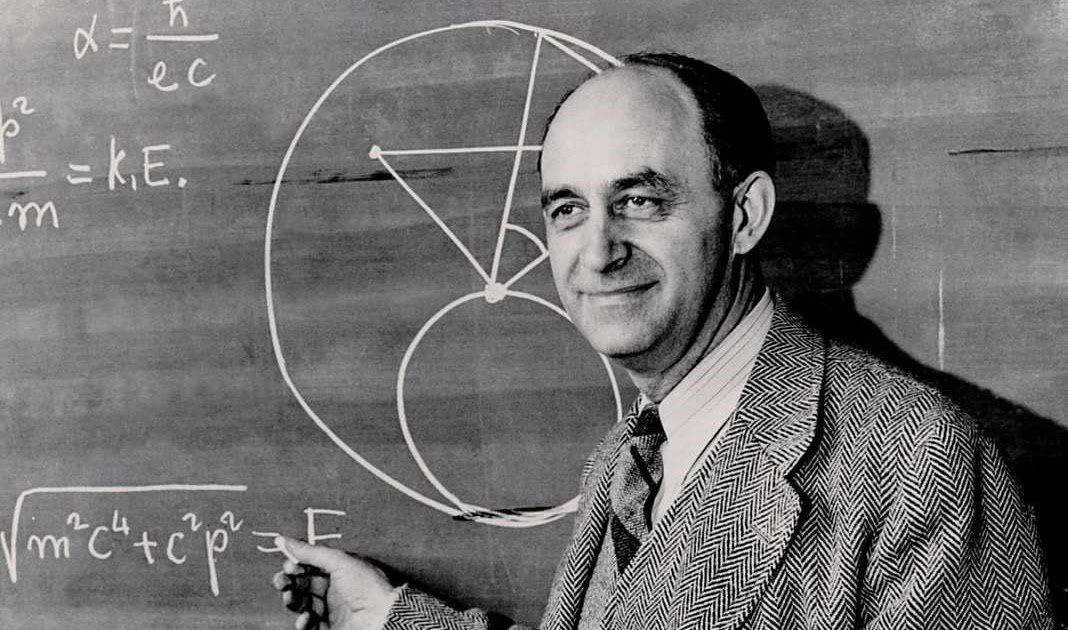
La Paradoja de Fermi es una pregunta famosa formulada por el físico Enrico Fermi en 1950 durante una conversación informal en Los Álamos. La idea es sencilla y devastadora:
- El universo es enorme (miles de millones de galaxias, cada una con miles de millones de estrellas).
- Muchas estrellas son antiguas y tienen planetas en la zona habitable.
- La vida apareció relativamente rápido en la Tierra.
- La inteligencia y la tecnología también (en escala cósmica).
Si existiera aunque sea una sola civilización capaz de viajar o enviar señales interestelares, debería haber colonizado o al menos dejado evidencia detectable en toda la galaxia en pocos millones de años (un parpadeo cósmico). Entonces… ¿dónde está todo el mundo?
Esta es la paradoja: según las probabilidades (ecuación de Drake), el cosmos debería estar rebosante de vida inteligente y evidencia de ella. Pero no vemos nada, ni señales de radio, ni megastructuras, ni sondas, ni colonias. Solo silencio.
Las principales respuestas son:
- Somos los primeros (o estamos muy solos).
- Las civilizaciones se autodestruyen antes de volverse interestelares (el "Gran Filtro").
- Se esconden, ya están aquí pero no las vemos, o usan tecnologías que no detectamos.
- O simplemente la vida inteligente es mucho más rara de lo que creemos.
Ahora viene la parte Fermi aplicada a la izquierda, especialmente al socialismo y al comunismo. Llevan más de 150 años prometiendo el paraíso terrenal:
"Esta vez sí va a funcionar"
"El verdadero socialismo no ha sido probado"
"Solo falta una buena implementación"
"Con más poder y más dinero público, esta vez alcanzaremos la utopía sin clases, sin pobreza, sin opresión..."
Es decir; teóricamente, debería haber funcionado ya decenas de veces. Tienen:
- Teorías elaboradísimas (Marx, Lenin, Gramsci, etc.).
- Millones de intelectuales, activistas y votantes convencidos.
- Oportunidades históricas incontables (Rusia 1917, China 1949, Cuba 1959, Vietnam, Camboya, Nicaragua, Venezuela, Bolivia, etc.).
- Control total del Estado en múltiples ocasiones.
- Apoyo masivo de medios, academia y cultura durante décadas.
Entonces… ¿dónde están los resultados? Si el socialismo/comunismo fuera tan superior como dicen, debería haber al menos un ejemplo claro, próspero, libre y exitoso que la gente quiera copiar voluntariamente. No uno fallido tras otro, sino un país que diga: "Miren, aquí lo logramos". Pero solo hay silencio… o excusas:
- "No era verdadero socialismo"
- "Fue sabotaje imperialista"
- "Faltó más radicalidad"
Exactamente como el silencio cósmico. La explicación más parsimoniosa (navaja de Occam) es que hay un Gran Filtro: el socialismo choca contra la naturaleza humana, la economía del incentivo, el cálculo económico y la realidad. No es que "no se haya intentado bien". Es que el modelo es incompatible con la realidad, igual que una civilización que nunca logra salir de su planeta porque siempre se autodestruye antes. Cada nuevo intento es como otra estrella donde "esta vez la vida inteligente va a evolucionar"… y vuelve el mismo silencio.
Si tu ideología de mierda lleva más de un siglo haciendo la misma promesa y solo produce miseria, éxodo, muertes y autoritarismo, quizás el problema no sea que "no se aplicó bien". Quizás el problema sea la ideología misma.
¿Dónde está todo el mundo, camarada?
Winston Churchill fought his depression with bricks. He'd lay them for hours at his country home in Kent. He joined the bricklayers' union. And in 1921 he wrote about why it worked. It took psychology another 75 years to catch up.
He called his depression the "Black Dog." It followed him for decades. His method for fighting it back was as basic as it sounds: laying brick after brick, hour after hour.
Churchill spelled out his theory in a long essay for The Strand Magazine. People who think for a living, he wrote, can't fix a tired brain just by resting it. They have to use a different part of themselves. The part that moves the eyes and the hands. Woodworking, chemistry, bookbinding, bricklaying, painting. Anything that drags the body into a problem the mind can't solve by itself.
Modern psychology now calls this behavioral activation. It's one of the most-studied depression treatments out there. Depression sets a behavior trap. You feel bad, so you stop doing things, and doing less means less to feel good about. Feeling worse makes you do even less. The loop tightens until you can't breathe inside it.
Behavioral activation breaks the loop from the action side. You schedule the activity first, even when every part of you doesn't want to. Doing it produces small rewards: a wall gets straighter, a painting fills in, a messy room gets clean. Those small rewards slowly rewire the brain. Action comes first, and the feeling follows.
Researchers at the University of Washington put this to the test in 2006. They studied 241 adults with major depression and compared three treatments: behavioral activation, regular talk therapy, and antidepressants. For the people who were most severely depressed, behavioral activation matched the drugs. It beat the talk therapy. A 2014 review of more than 1,500 patients across 26 trials backed up the result.
Physical work like bricklaying does something extra on top of this. It crowds out rumination, the looping bad thoughts that grind people down during the worst stretches of depression. Bricklaying needs both hands and gives feedback brick by brick: each one is straight or crooked. After an hour you can see exactly how much wall you built. No room left for the mental chewing.
The line George Mack used in his post, "depression hates a moving target," is good poetry. The science behind it is sharper. Depression hates a brain that has somewhere else to be.
Charles Schwab ran the largest steel company in the world.
He had access to every consultant, every system, every productivity tool available in 1918.
He said a 15-minute conversation with a man named Ivy Lee was the most valuable business advice he ever received.
He paid him $25,000 for it. The advice fit on an index card.
Ivy Lee was not famous. He was not a philosopher or a scientist or a professor at a prestigious institution. He was a productivity consultant who had spent years watching extremely capable people fail to do their most important work, and he had developed a precise theory about why.
The theory was not complicated. It was uncomfortable.
The reason most people never do their most important work is not that they lack time. It is that they never decide what their most important work actually is. They arrive each morning at a pile of tasks with roughly equal claim on their attention, choose based on whatever feels most urgent or easiest in that moment, and spend the day moving through a list that was never designed to move them forward. They are busy in a way that feels productive and accomplishes far less than it should.
Lee asked Schwab for 15 minutes with his executive team. Schwab agreed. Lee walked them through six steps. He asked them to try it for three months and pay him whatever they thought it was worth.
Here is the system.
At the end of every workday, write down the six most important things you need to accomplish tomorrow. Not ten. Not twenty. Six. If you cannot decide what matters enough to make that list, you have already identified the real problem.
Prioritize those six items in order of their true importance. Not urgency. Not ease. Importance. The thing that will matter most three months from now goes first, regardless of how uncomfortable it is to start.
When you arrive the next morning, begin immediately on item one. Work on it until it is finished. Do not touch item two until item one is complete. Do not check email. Do not attend to whatever walked through the door. Item one, until it is done.
Move through the list in order. If you reach the end of the day and items four, five, and six remain untouched, move them to the next day's list without guilt. They were not the most important things. The most important things got done.
Repeat this process every day for the rest of your working life.
That is the entire system. Six steps. Four minutes the night before. No app required. No morning ritual. No tracking software. An index card and a pen.
What Lee understood that most productivity systems miss entirely is that the bottleneck in human performance is almost never capacity. It is prioritization. The average knowledge worker has more than enough hours in the day to accomplish something significant. What they do not have is a forcing function that makes them decide, the night before, in a calm moment free from the noise of the incoming day, what significant actually means for them tomorrow.
The morning is the worst possible time to make this decision. The morning brings email and notifications and other people's priorities and the accumulated urgency of everything that did not get done yesterday. By the time most people have decided what to work on, an hour is gone and the decision was made by their inbox rather than by them.
Lee's method moves the decision to the evening, when the day's noise has settled and the mind can assess without distraction. The prioritization is done before the chaos begins. Which means the next morning, there is no decision to make. There is only execution.
The second insight embedded in the system is the single-tasking constraint. Item one, until it is finished. Not item one until something more urgent appears. Not item one until you have checked in on items two through six. Item one, finished, before anything else receives your attention.
This runs against every instinct that modern work has trained into people. The entire infrastructure of the contemporary workplace is designed to fragment attention. Email expects a response within hours. Slack expects a response within minutes. The open office assumes that any question is more important than whatever the person being asked is currently doing. The result is a workforce that is in constant motion and making almost no progress on anything that actually matters.
Lee's method is a direct refusal of this dynamic. It does not negotiate with urgency. It does not make exceptions for whoever shouts loudest. It asks you to decide, once, what matters most, and then protect that decision from everything that will try to override it the next morning.
Charles Schwab ran Bethlehem Steel. He had seven hundred employees. He had more operational complexity, more competing demands, more legitimate urgency than most people reading this will ever face.
He tried the system for three months.
Then he sent Ivy Lee a check for $25,000 and a note saying it was the most valuable business advice he had ever received.
The system has not changed. The morning has not gotten less chaotic. The inbox has not gotten smaller.
The only variable that was ever under your control was what you decided the night before.
Six things. In order. Starting with the first.
The most valuable productivity advice in history is still free.
Most people will read it, find it obvious, and go back to checking email.
As contagious as it is to watch Belushi, you just can't take your eyes off of Aykroyd.
The sheer amount of talent on that small stage is staggering.
The Blues Brothers performing 'Soul Man' live on SNL, in 1978.
48 years apart yet it is still incredibly impressive.
This scene in Miami Vice where "In the Air Tonight" by Phil Collins plays stands as one of TV's all time greatest cinematic sequences. It effortlessly establishes the mood and highlights just how far today's television industry has fallen. This authentic soul is gone.
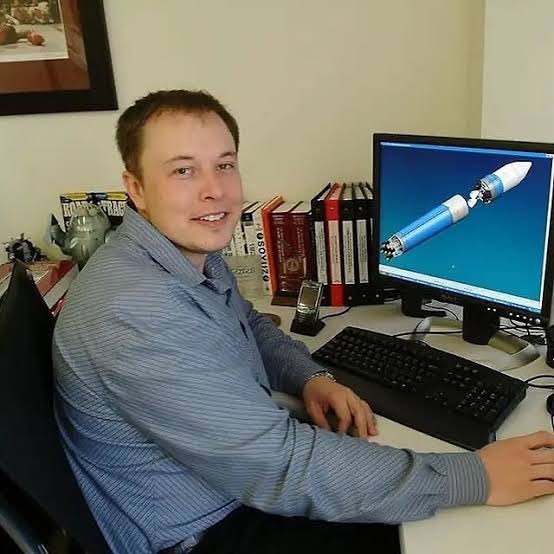
In late October 2001, a 30-year-old who had just been fired from his own company flew coach to Moscow to buy a nuclear missile.
Elon Musk brought two people. Jim Cantrell, an aerospace consultant who had worked on a joint Mars balloon mission for the French Space Agency and the Soviet Union. And Adeo Ressi, his college roommate, who had spent the previous month compiling videos of rockets exploding and staging interventions with Musk’s friends to convince him to stop.
The plan was to buy a refurbished intercontinental ballistic missile from a Russian company called ISC Kosmotras, gut it, fill it with seeds and nutrient gel, and land a greenhouse on Mars. The entire purpose was a publicity stunt to guilt NASA into funding a real mission. Musk had $180 million from selling PayPal and was willing to spend $20 to $30 million.
The Russians quoted $8 million per missile. Musk offered $8 million for two. They laughed. One reportedly spit on him.
He came back four months later, February 2002, bringing Michael Griffin, who would later become the head of NASA. Same result. The price kept climbing and the Russians wouldn’t close.
On the flight home, Cantrell and Griffin called over the drink cart and started celebrating the fact that they’d made it out of Moscow in winter. Musk sat in front of them, silent, typing on his laptop. After a while he turned around and showed them a spreadsheet.
He’d modeled the cost of manufacturing a rocket from scratch. Raw materials, he’d calculated, were about 3% of the typical launch price. The other 97% was margin, bureaucracy, and vertical integration that nobody had attempted.
SpaceX incorporated March 14, 2002. First office: a 3,000-square-foot warehouse in El Segundo with a few cubicles. Musk put in $100 million of his own money and personally interviewed the first 3,000 employees. First rocket: Falcon 1, named after the Millennium Falcon. Target price to orbit: $6.9 million when the going rate started at $30 million.
First launch, March 2006, failed 25 seconds in. Corroded fuel line nut. Second launch, March 2007, reached 180 miles altitude before the engine cut from fuel slosh. Third launch, August 2008, the first stage bumped the second stage after separation. Residual thrust. A fix that took one line of code.
Three failures. Tesla hemorrhaging cash at the same time. Divorce proceedings. Musk later said he was waking from nightmares screaming. 2008 was the worst year of his life.
The fourth rocket had no paying customer. Nobody wanted to fly on a vehicle that had exploded three times. The payload was a 364-pound aluminum dummy nicknamed RatSat, built from spare parts in the factory. Musk split his last $30 million between SpaceX and Tesla. If the rocket failed, both companies die.
September 28, 2008. Falcon 1 reached orbit. First privately developed liquid-fuel rocket to do so.
NASA called six weeks later with a $1.6 billion contract. Musk couldn’t hold the phone. He just said “I love you guys.”
SpaceX is now valued at $1.25 trillion after the xAI merger, filing for an IPO targeting $1.75 trillion. It launched over 160 rockets in 2025, more than half of all orbital launches on Earth. Starlink has 9 million subscribers across 150 countries from nearly 10,000 satellites.
Twenty-four years ago, his best friend made him watch compilation videos of rockets blowing up to convince him this was insane. He watched every one of them and flew to Moscow anyway.
Well... I was going to write something about Britain. However...
I think this amazing woman covered it better than I ever could.
This is absolutely fucking rightous...
🗡️💀🗡️