Archaeology postdoc @LeidenArchaeo. Burning desire to know more about #fire use/making by #Palaeolithic peoples. #Pyroarchaeology Also grants guy @ESSB_Erasmus
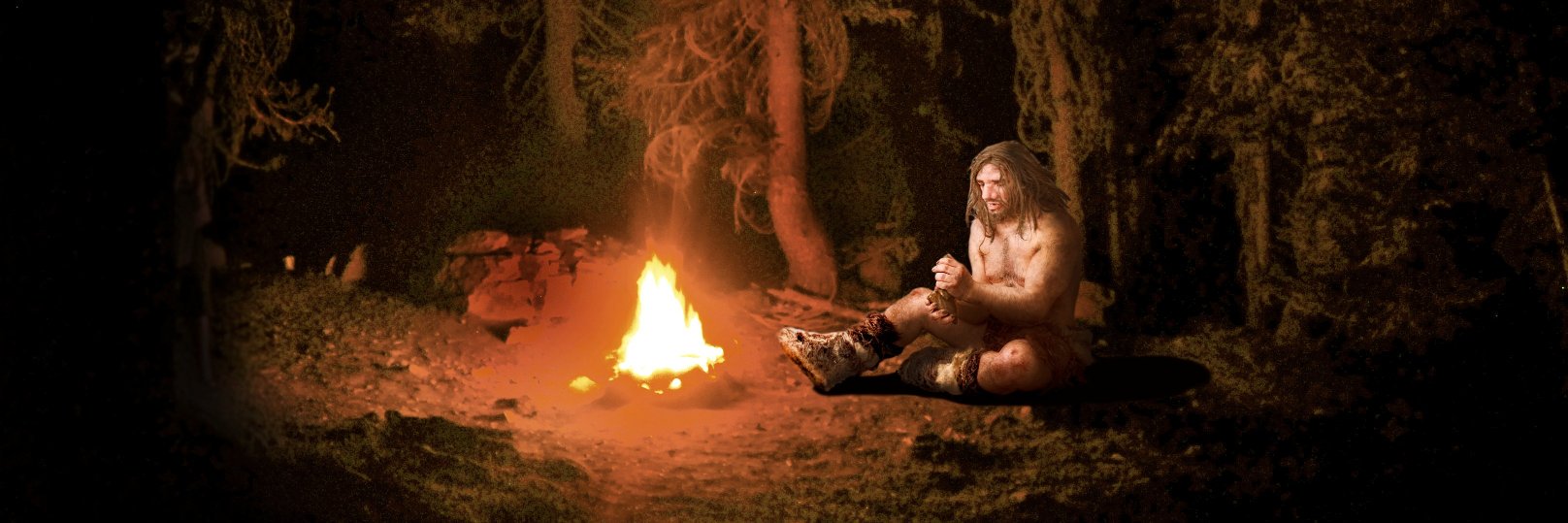
Neanderthal woodworking at Abric Romaní: Insights into the role of wood in a Middle Palaeolithic domestic context | Science Advances https://t.co/1ebBRETTvl
🚨New paper alert!🚨
Earliest known instance of pyrite ca. 400 kya at Barnham (UK), in layers with strong evidence of fire use, in an area with no naturally occurring pyrite nodules, together strongly suggest these pre-Neandertal peoples were making fire!
https://t.co/xnSYhqyltj
@RalphHassall@Graham__Hancock The most telling signs would be:
1. Geopolymer binder (amorphous/isotropic) looks different from natural calcite cement.
2. Lack of interlocking grain contacts; natural diagenetic features, stratification, and fossil orientation.
3. Unnatural distribution/size of voids.
@RalphHassall@Graham__Hancock Could ancient Egyptians do this? Sure, they were smart. Did they? Maybe to a limited degree, I don't really know. For ALL the blocks? I'm skeptical but happy to be proven wrong. Could geologists (now and in the future) tell the difference? I'm thin section, almost certainly!
@RalphHassall@Graham__Hancock Probably easier, cheaper, and safer (easy to break) to send samples to a petrographic thin section preparation service (Google it), rather than buy a couple of rock saws, epoxy, glass slides, polishing equipment, etc. You'll also need a petrographic 🔬 to look at them properly.
@YumiBod@Graham__Hancock U-Pb dating of inclusions, electron spin resonance (ESR), optically stimulated luminescence (OSL). Assuming quartz crystals would actually form under these conditions (unlikely), any these dating methods should be able to distinguish between modern and ancient quartz.
@Graham__Hancock Any geologist worth their salt (teehee, natron...salt...get it? 🤭) could tell the difference between real stone and artificial stone 💁
@Graham__Hancock Easy to prove: Make a thin section of a piece a stone you think is artificial and stick it under a petrographic microscope using cross polarized light. Turning the stage, quartz alternates black/gray/white (anisotropic), while amorphous glass will always appear black (isotropic).
@flyfin588445 @Graham__Hancock Weak stress birefringence in (hardened) glass can appear as a patchy pattern of bright or colored areas, often concentrated near edges, but since it's amorphous (i.e., no crystals), it will not exhibit the clean, systematic extinction typical of anisotropic minerals like quartz.
🔥🚨#NewPaperAlert!🚨🔥
After being buried on the editor's desk for over a year, my manuscript on experimentally testing the utility of manganese dioxide powder as a #fire-starting aid has seen the light of day! 😅 #Neanderthals#archeology https://t.co/L2oXwzIGXZ