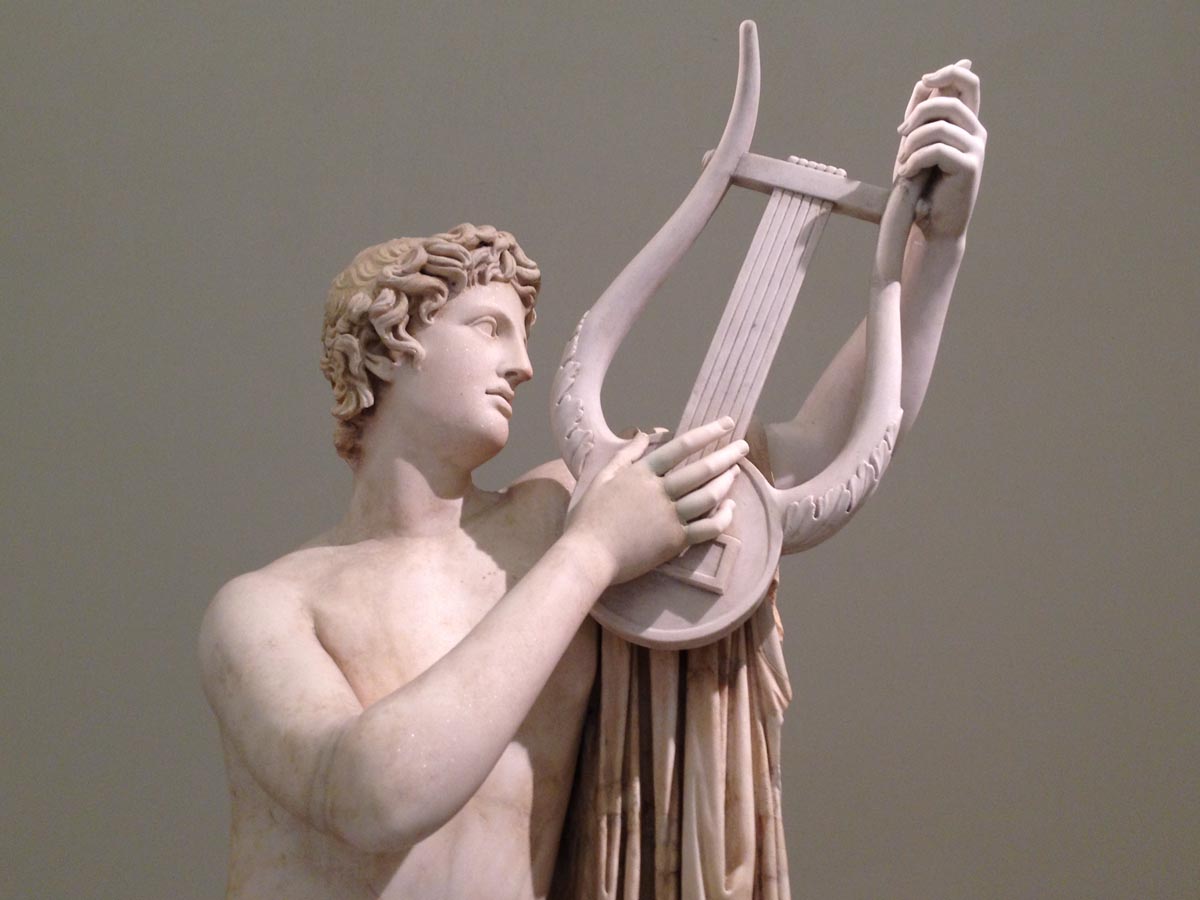
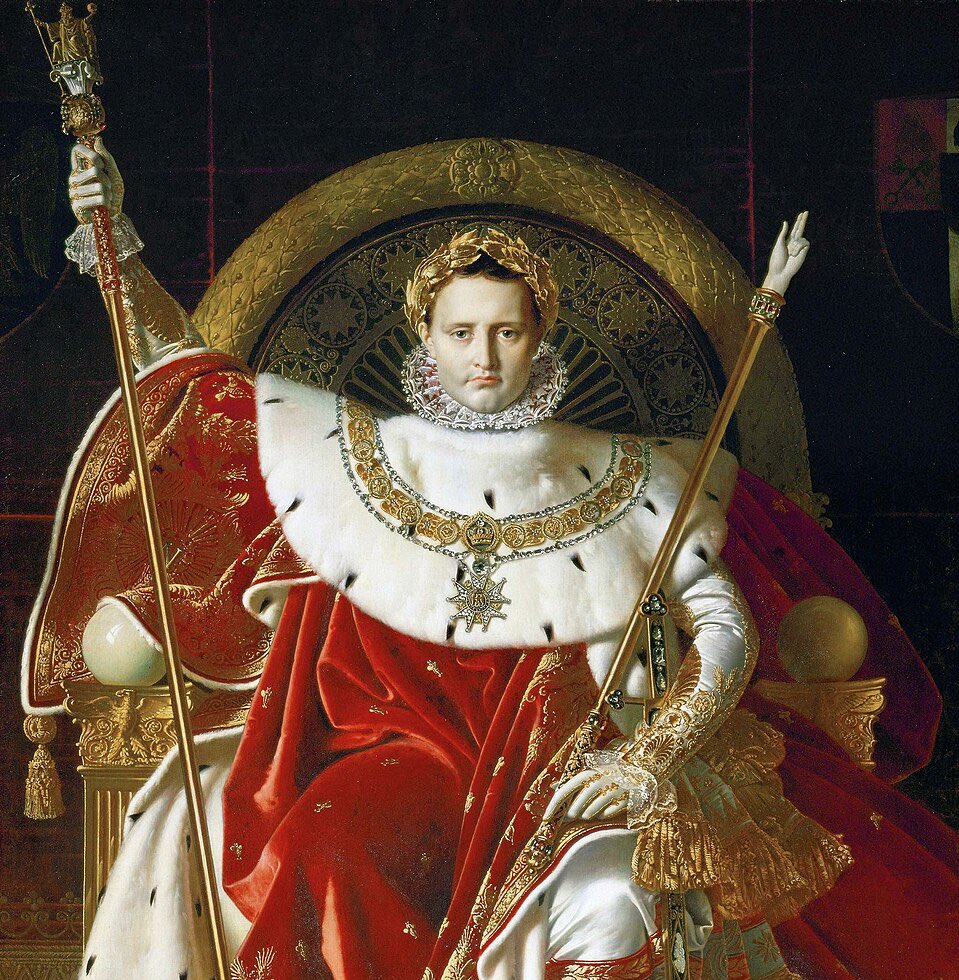
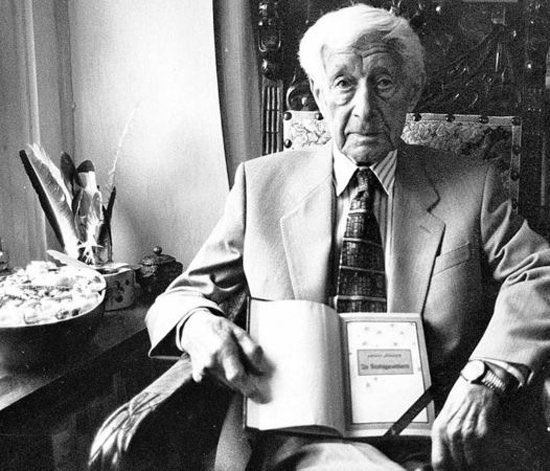
"Music, like dance, is the art of guiding earthly shadows back to celestial vibrations and divine archetypes."
— Frithjof Schuon, Gnosis: Divine Wisdom
"The daemonic element manifests itself in the individual without his consent, confronting him like some strange power from without... It can be of divine or diabolical nature, depending on the character of the individual it possesses."
Johann Wolfgang von Goethe, Conversations with Eckermann
The West tried to use media entertainment as a replacement for religion, made an idol of it, then it got shattered because a culture that worships only its own artistic output will inevitably fall to narcissism and propaganda.
Good news is it exposed a lot of people as frauds.
Elle naît en 1763 sur une île française, fille d'un planteur ruiné.
À 16 ans, on la marie à un vicomte qu'elle n'a pas choisi. Il la trompe et l'humilie.
La Révolution arrive. Son mari est guillotiné. Elle est emprisonnée dans une cellule maculée du sang de prêtres exécutés. Elle en sort veuve, à 31 ans, avec deux enfants et des dettes.
Pour survivre, elle s'attache aux puissants. En 1795, elle rencontre un jeune général corse sans fortune ni réputation.
Il l'aime d'une passion qui le dépasse.
Le 9 mars 1796, en soirée, dans une mairie de Paris. L'officier d'état civil s'est assoupi. Un commissaire non habilité procède illégalement au mariage. Le marié arrive avec deux heures de retard.
Sur l'acte, elle se rajeunit de quatre ans. Il se vieillit d'un an. Ils ont tous les deux 28 ans sur le papier.
La cérémonie dure trente minutes. Pas de fête. Pas de banquet. Il lui offre une bague. Deux mots gravés : "Au destin."
Deux jours plus tard, il repart pour l'Italie.
Elle s'appelait Rose. C'est lui qui la rebaptisa Joséphine.
Il la quitta en 1809 — elle ne lui avait pas donné d'héritier. Elle mourut à la Malmaison en 1814. Quand il apprit la nouvelle depuis son exil, il s'enferma seul dans une pièce pendant plusieurs heures.
Ce soir du 9 mars 1796, Napoléon Bonaparte épousait Marie-Josèphe Rose de Beauharnais.
Il y a 230 ans exactement.
A common hangup when reading older novels is the idea that there's something you "miss" if you don't parse every word, when the novel pre-teevee era was meant to be read to pass the time, even the difficult ones. Just like you don't fully pay attention to a sitcom, the enjoyable way to read the tomes is to let your eyes wash over the words and let your intuition ping you to focus. All of a sudden, attention focuses, and you realize the writing is good — *really* good, and poignant, and funny. And if something doesn't make sense, you can always go back.
Older literature was meant for repetitive reading, partially bc books were fairly expensive until commodified, and bc there wasn't any other form of mass entertainment. I've always felt the American school system teaches reading incorrectly for this reason. Being able to recite plot points and answer questions isn't a useful test of literary interpretation after it's obvious you have reading comprehension. Great literature is about timelessness, expanding an anecdote or a plot point into a generalist statement about the universe and its participants.
The quiz mentality induces pressure in people for no reason. They subconsciously assume they're supposed to be able to rattle off facts about the books the read, which makes reading stressful for no reason. I've read a ton of books where I would struggle to tell you what actually happens. But when a passage becomes relevant, or I discuss the ideas I remember from the experience described above, it's clear I "get" the ideas of the author. It's such a weird reading tip, but if you don't feel like reading a page, just go to the next! You never know if you'll find the right circumstances to get unstuck otherwise.
"Mysticism keeps men sane. As long as you have mystery you have health; when you destroy mystery you create morbidity. The ordinary man has always been sane because the ordinary man has always been a mystic. He has permitted the twilight. He has always had one foot in earth and the other in fairyland. He has always left himself free to doubt his gods; but (unlike the agnostic of to-day) free also to believe in them."
–G.K. Chesterton
"They came for religious freedom."
Right. Yes. Some of them. Partly.
Read the actual letters they sent back home. Not the ones that got turned into school textbooks. The ones written in the first winter, by people who'd survived the crossing and were now looking at a landscape so alien and so abundant that they didn't have the vocabulary for it.
They wrote about the meat.
Passenger pigeon flocks so vast that early settlers described the sky turning dark at midday. Not briefly. For three days. One flock. Continuous. The sound compared to thunder that refused to stop. Estimated population: three to five billion birds. A single hunter in a single afternoon could kill five hundred. No licence. No lord. No penalty. Just birds, endlessly, for the taking.
Deer walking into camp. Salmon running so thick in the Pacific Northwest rivers that witnesses said the water appeared to boil. Bison herds that took four hours to cross a ford. Oysters the size of dinner plates, piled in reefs along the Atlantic coast that you could harvest by reaching over the side of a boat.
Now understand what these people had come from.
England under the Forest Laws. Norman law. The forests, a third of England, legally defined as the king's personal hunting ground: where killing a deer carried the death penalty, and maiming one carried blinding and castration. Where a peasant could live on the edge of a wood teeming with game and starve legally while watching the lord's gamekeeper patrol past.
The Enclosure Acts were already beginning. Common land, the land that ordinary people had grazed animals on for generations, being fenced off and handed to private landlords one parliamentary act at a time. Six million acres would go this way eventually, and with it went the pig in the back garden, the cow on the common, the ability to keep yourself in protein without paying someone's rent for the privilege.
In the meantime: pottage. Bread. Turnips when you were lucky. A bit of lard if the week had gone well. Meat on feast days if the harvest hadn't failed and the price hadn't climbed and your teeth were still functional enough to manage it.
These were not people who had decided, in a detached philosophical way, that liberty was preferable to tyranny.
These were people who were hungry. Specifically for meat. Who had heard from sailors and merchants and adventurers that there was a place across the water where the game belonged to no one, where the forests had no keeper, where you could shoot a deer because you wanted to eat it and face no consequence beyond the satisfaction of having eaten it.
The New World wasn't a political idea to the average emigrant. It was a place where you could eat like a lord without owing a lord anything.
They crossed an ocean for a steak that didn't require someone else's permission.
And they ate it.
And not one of them, in all the letters, ever suggested they'd made the wrong call.
So much of modern day femininity feels so heavy
Achieve
Work
Produce
Provide
I miss the delight of femininity
Now everything must be efficient, everything has to make some type of statement
We have forgotten the ways of girlhood, the intoxicating ways of femininity and of the joy there is in simply being allowed to be just a girl
"Let us set aside the fact that Europeans reintroduced and maintained slavery up to the nineteenth century in their overseas colonies in such heinous forms as to be rarely found in the ancient world; what should be emphasized is that if there ever was a civilization of slaves on a grand scale, the one in which we are living is it. No traditional civilization ever saw such great masses of people condemned to perform shallow, impersonal, automatic jobs; in the contemporary slave system, the counterparts of figures such as lords or enlightened rulers are nowhere to be found."
— Julius Evola, Revolt Against the Modern World
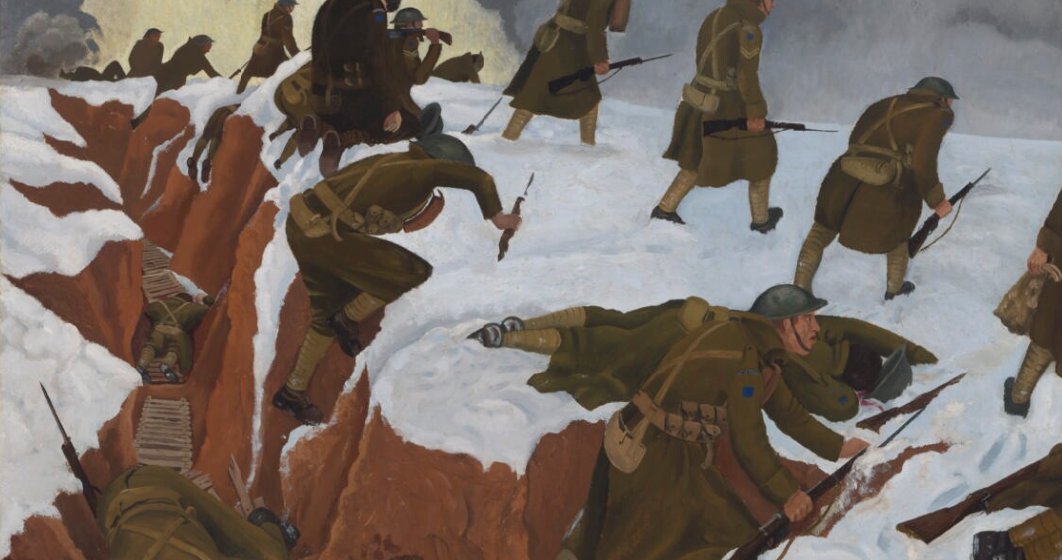
'War was return of earth to ugly earth,
War was foundering of sublimities,
Extinction of each happy art and faith
By which the world had still kept head in air.'
Robert Graves
One of the strangest realizations about the history of civilization is that every increment takes place on the same of scale of phenomena that you and I occupy.
Coronations happen in human-scale throne rooms occupied by human-scale people with human-scale cognition.
"Der Arzt sieht den Menschen in seiner ganzen Schwäche, der Advokat in seiner ganzen Schlechtigkeit und der Priester in seiner ganzen Dummheit."
Arthur Schopenhauer
22. Februar 1788 - 21. September 1860
"All beauties, like all possible phenomena, have something of the eternal and something of the ephemeral—of the absolute and the particular."
— Charles Baudelaire, 1846
"The war of the titans and the twilight of the gods are metahistorical - out of nature and the cosmos they intervene in history. From a chronological point of view, it is to be assumed that the Titans preceded the gods and managed the chaos. This complies with the myth of the gods having been begotten and taught by the Titans. Their uprising shakes Mount Olympus, they are subdued by Zeus and banished to the underworld. But they return - like Prometheus unleashed in the form of the Worker. The gods create out of timelessness; the Titans act and invent inside of time. They are related to technology rather than the arts. Therefore, Hölderlin advises the poet to dream and to take solace in Dionysus while the "iron ones" rule - but he knows that the gods will return." – Ernst Jünger, 1993