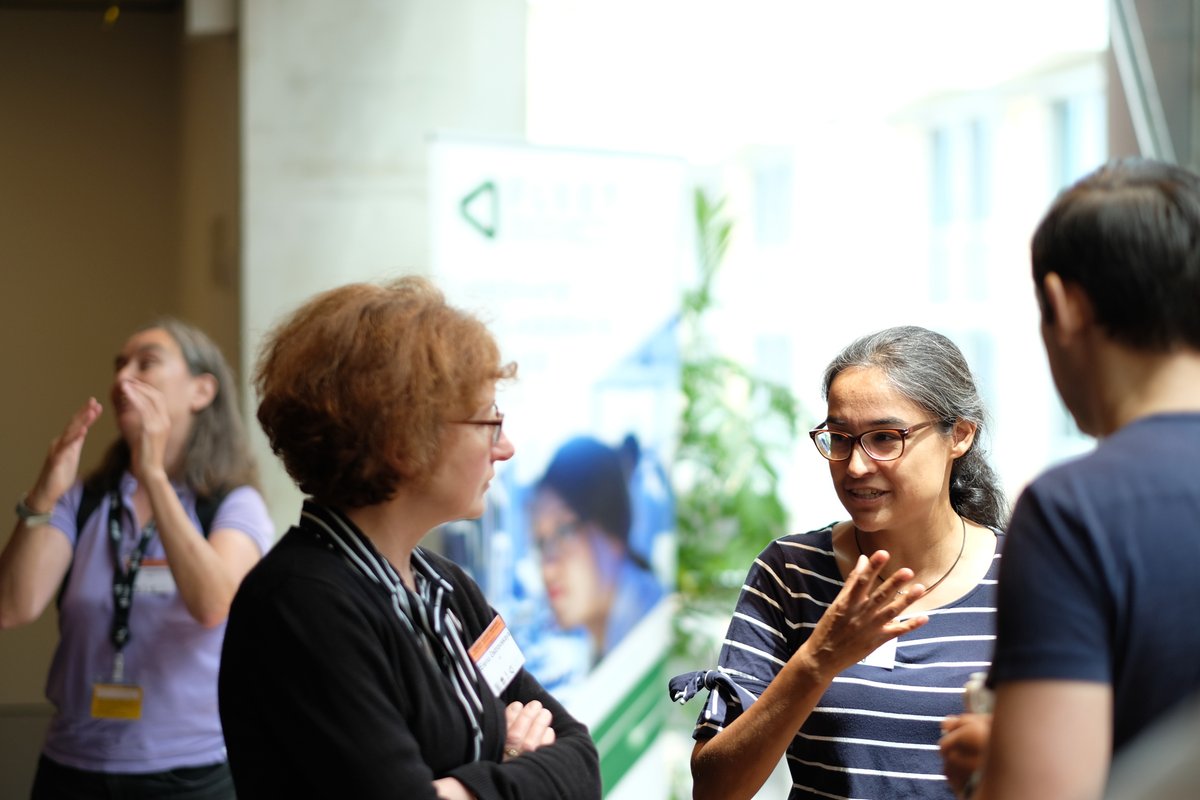
Congratulations to Daniel Halverson on winning a $15,000 CSIRO Honours scholarship to undertake a project on hole spin qubits in the QED group with Dr. Scott Liles and Prof. Alex Hamilton
Just published in Nano Letters: Dr. Feixiang Xiang, PhD student Abhay Gupta, and a great team of national & international collaborators report new and unexpected behaviour of quantum Hall states in bilayer graphene when large gate biases are applied. https://t.co/wRCDnSkGXN
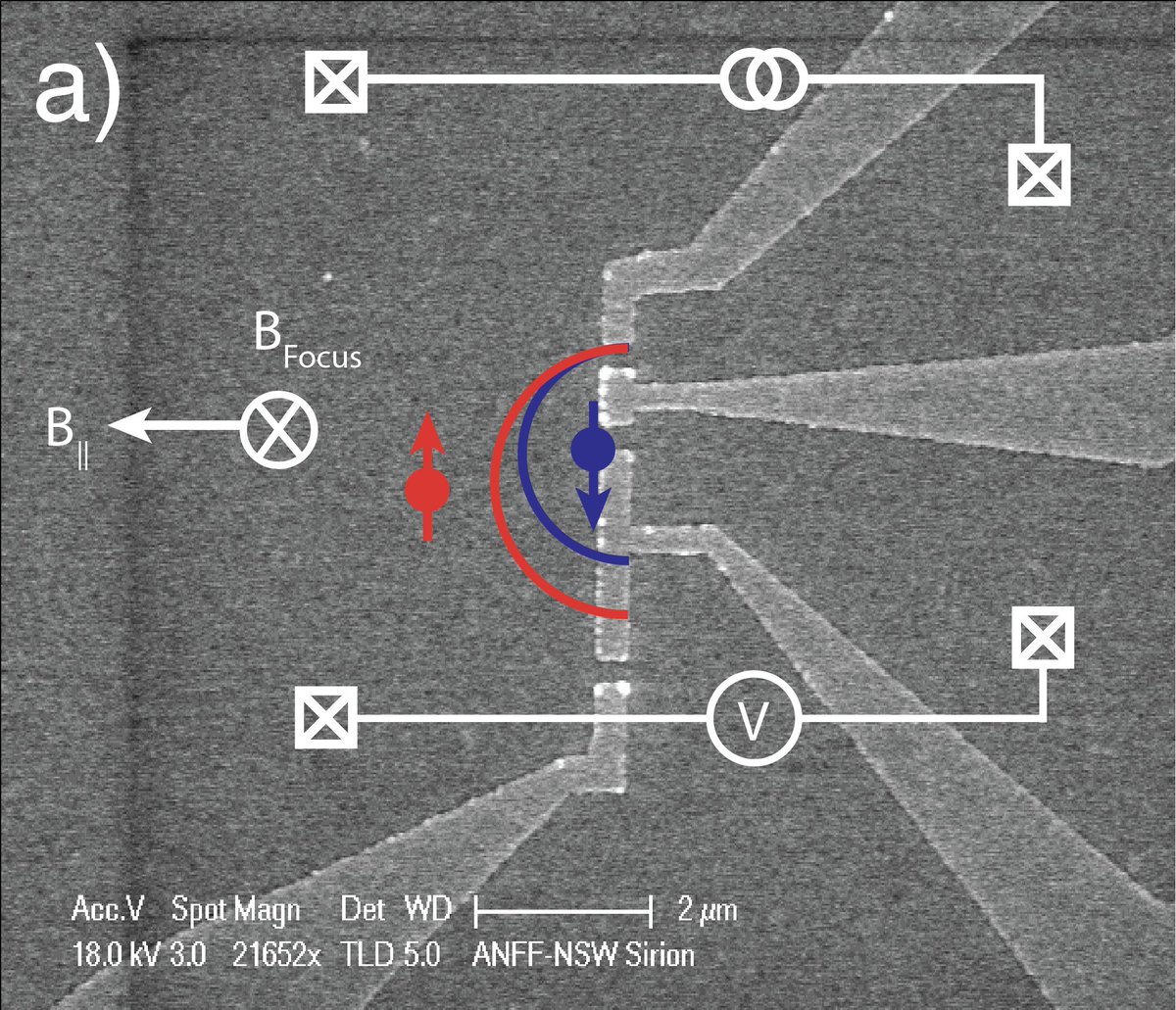
Matt and Scott’s latest paper on transverse magnetic focussing is out now on the arXiv (https://t.co/VAIRkxQP31). We use focussing to probe a section of the Fermi surface and observe non-adiabatic spin dynamics and a high sensitivity to spin dependent scattering.
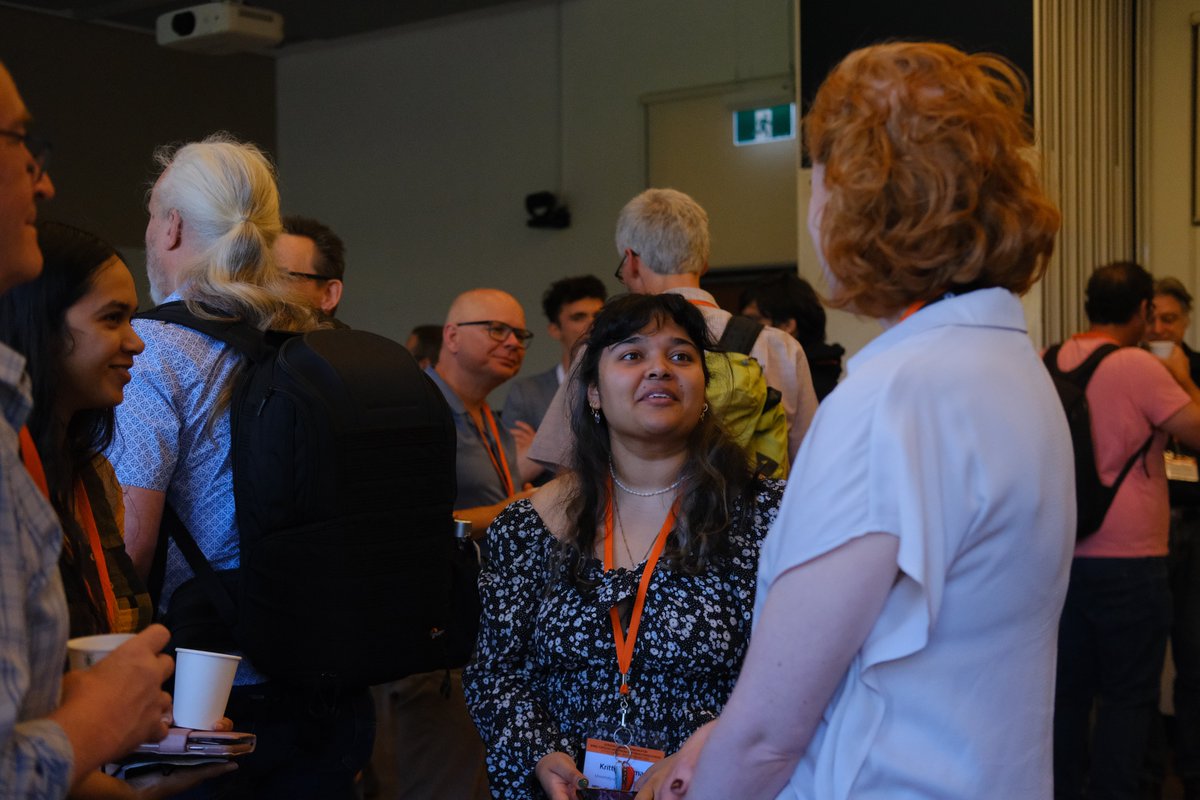
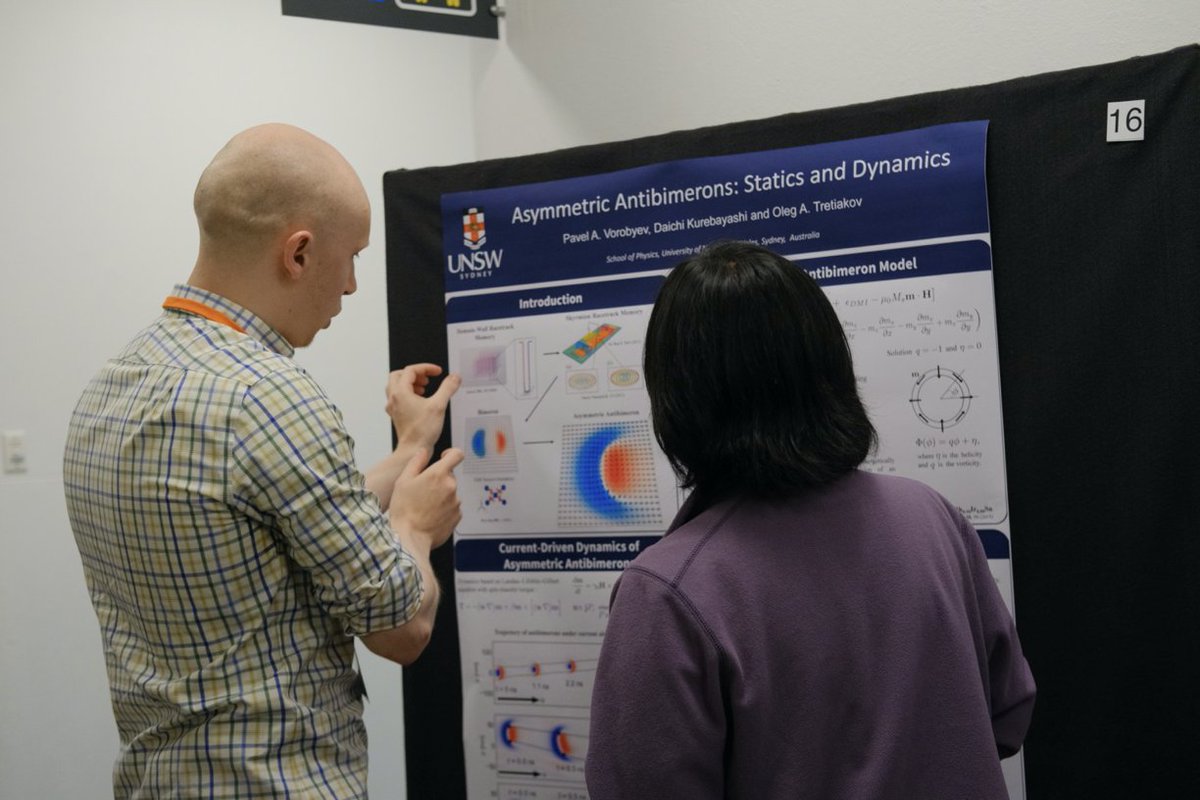
QED's Abhay Gupta attended the 2D Quantum Matter Summer School in Lucca, Italy in July.
His poster titled – "Theoretical modelling on new level crossings and electron-hole asymmetry in Landau Octet of bilayer graphene" was awarded one of the 3 top posters!
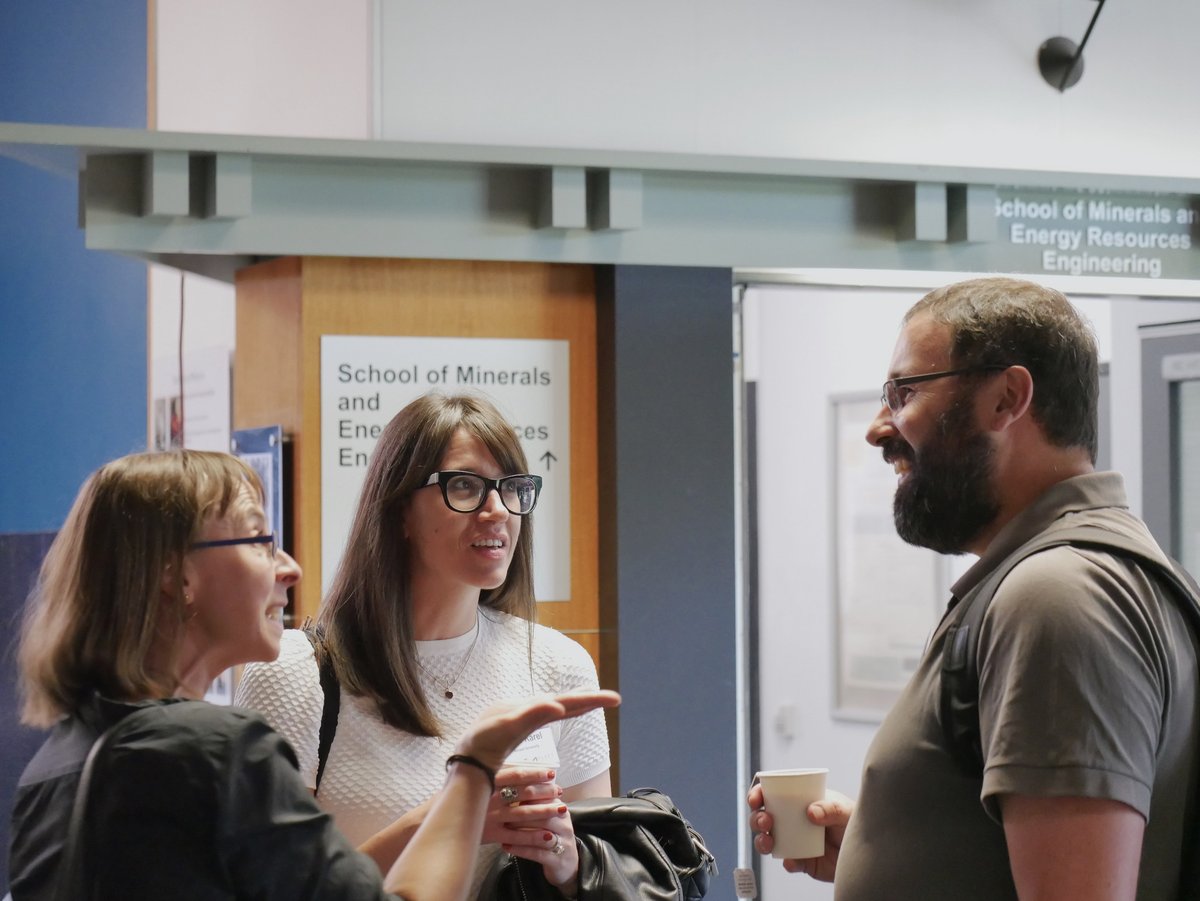
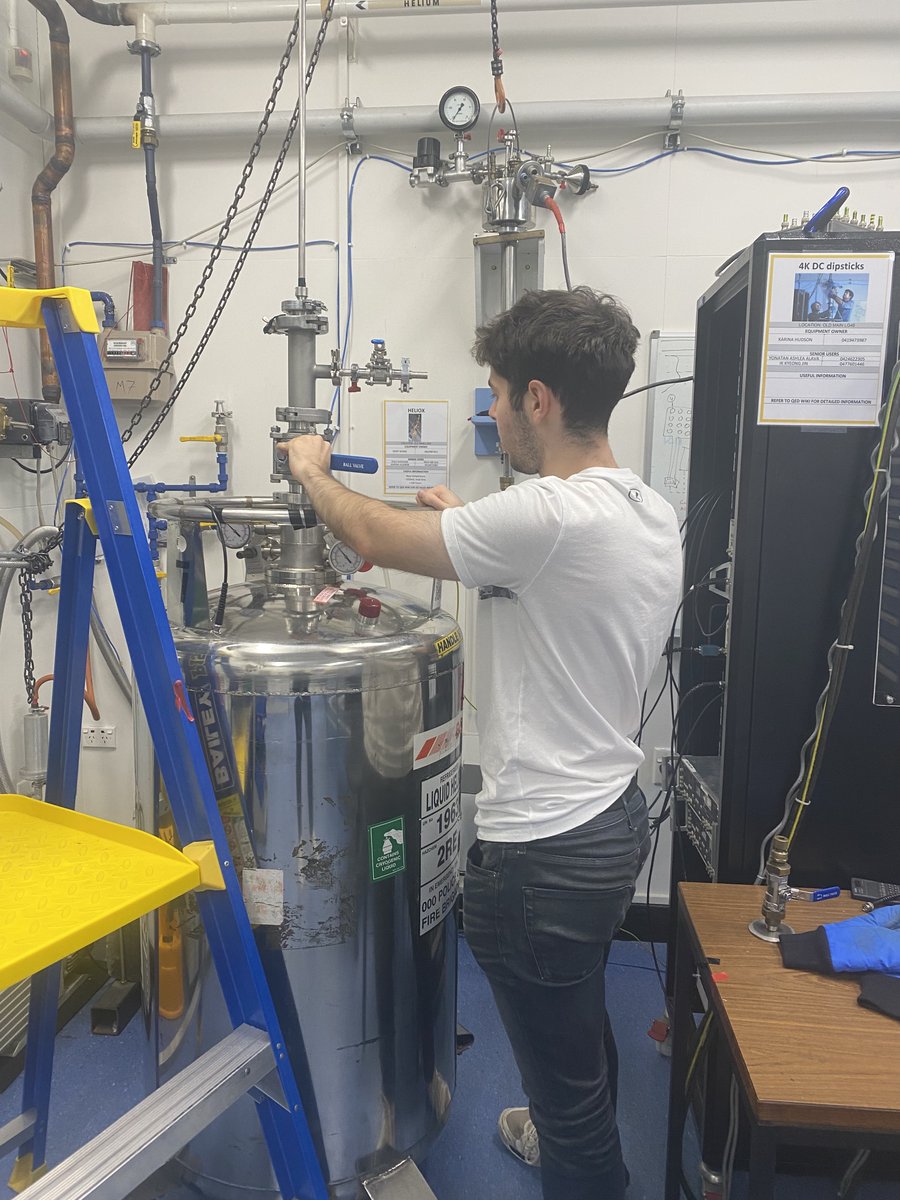
Today we say goodbye for now to visiting PHD Student Rafael Eggli from Quantum Coherence Lab Departement of Physics, University of Basel in Switzerland - Rafael and Isaac discussing design challenges for printed circuit boards used in high frequency hole spin qubit experiments
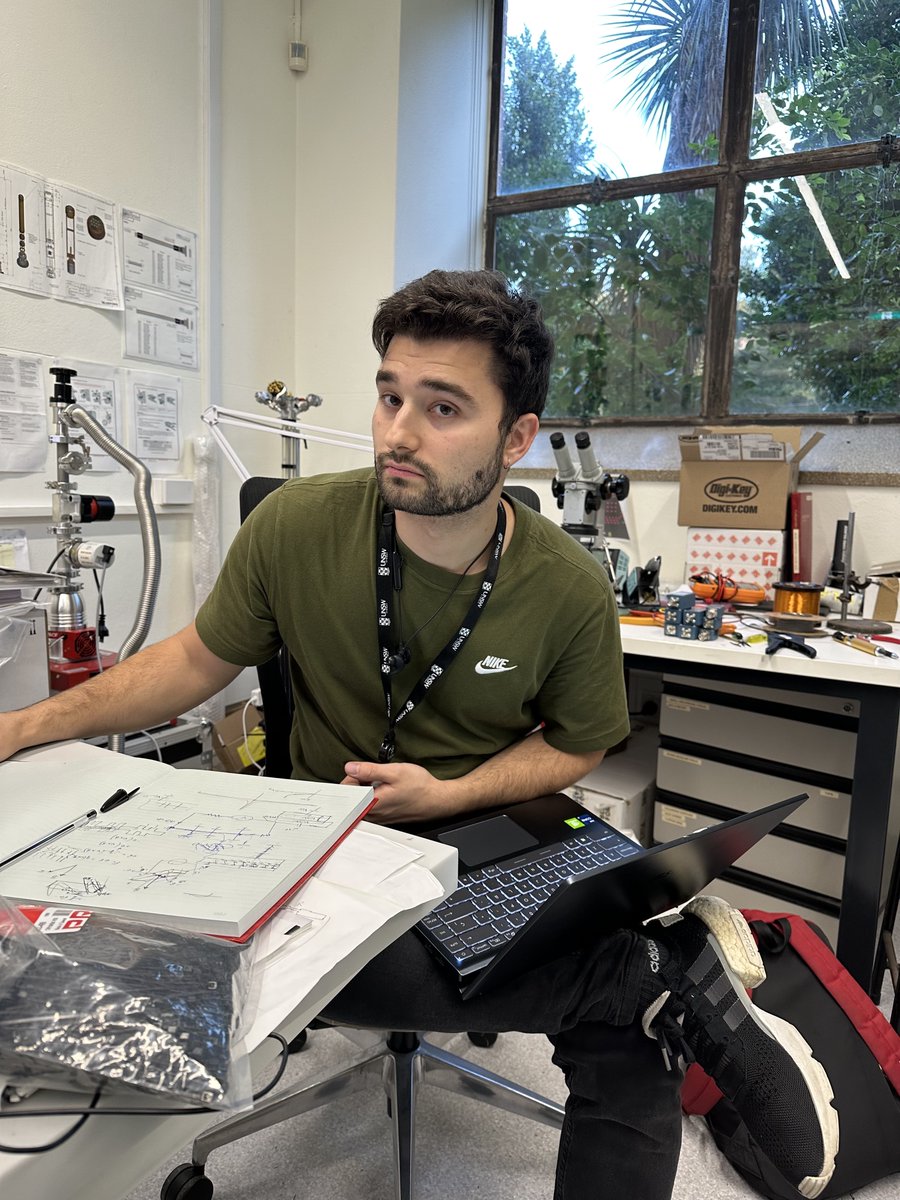
QED loved having Juan Salvador Sánchez, a visiting PhD student from the Nanotechnology group at Universidad de Salamanca here working with the team. He and Abhay Gupta and working on a graphene hydrodynamics project - Graphene Traffic Merge Control Equipment. @UNSWScience@usal
Amazing to see a quantum device go from an idea on a whiteboard to a real physical sample, in the skilled hands of Dr. Yonatan Ashlea-Alava. Gotta love ANFF’s new direct write lithography system…
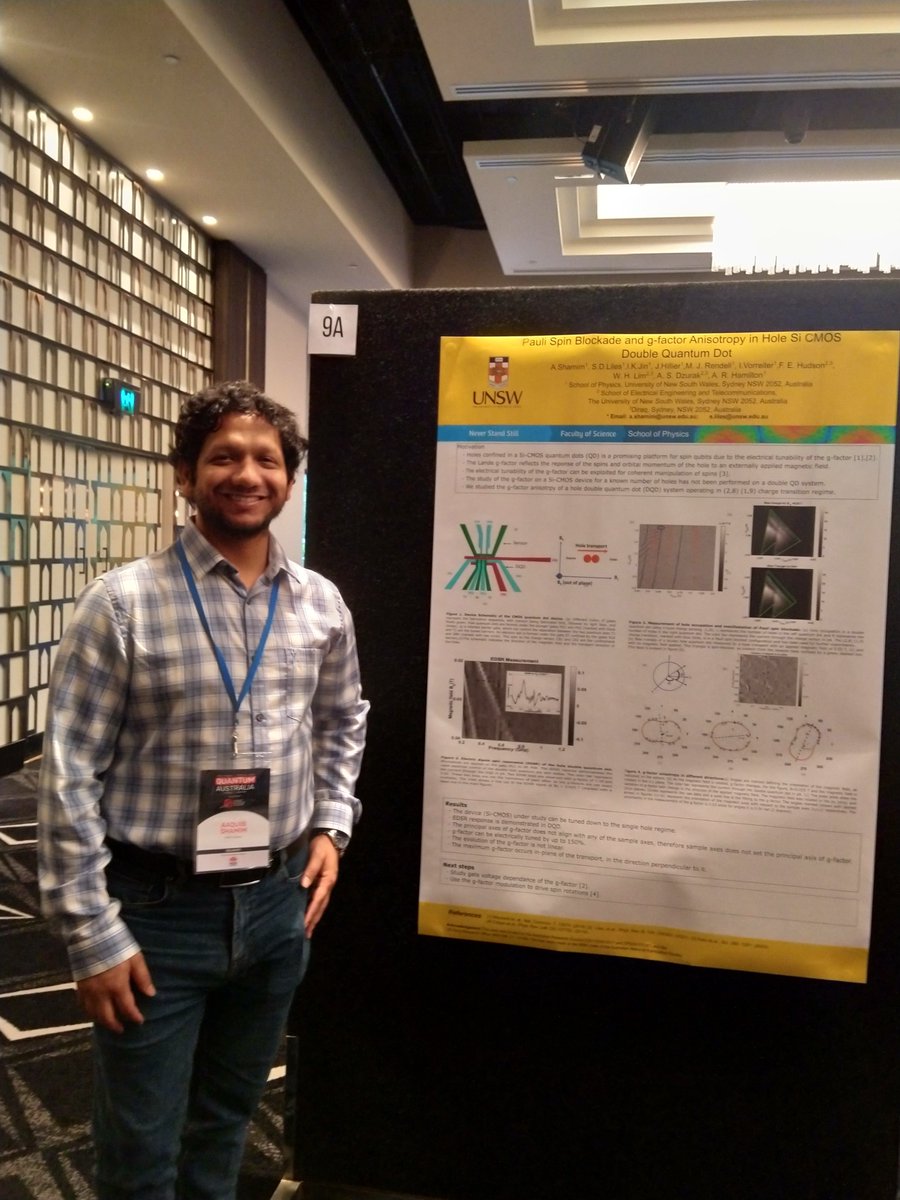
Congratulations to @AaquibShamim , winner of the $500 People’s Choice Award, for garnering the most votes from @SydneyQuantum Australia attendees for his poster Pauli Spin Blockade and g-factor Anisotropy in Hole Si CMOS Double Quantum Dot.
Our work with Diraq on Si CMOS hole double quantum dot was presented at SQA Conference by @AaquibShamim . We investigated the hole g-factor anisotropy and g-factor difference between the two quantum dots, which can be used to perform coherent spin manipulation in a qubit.
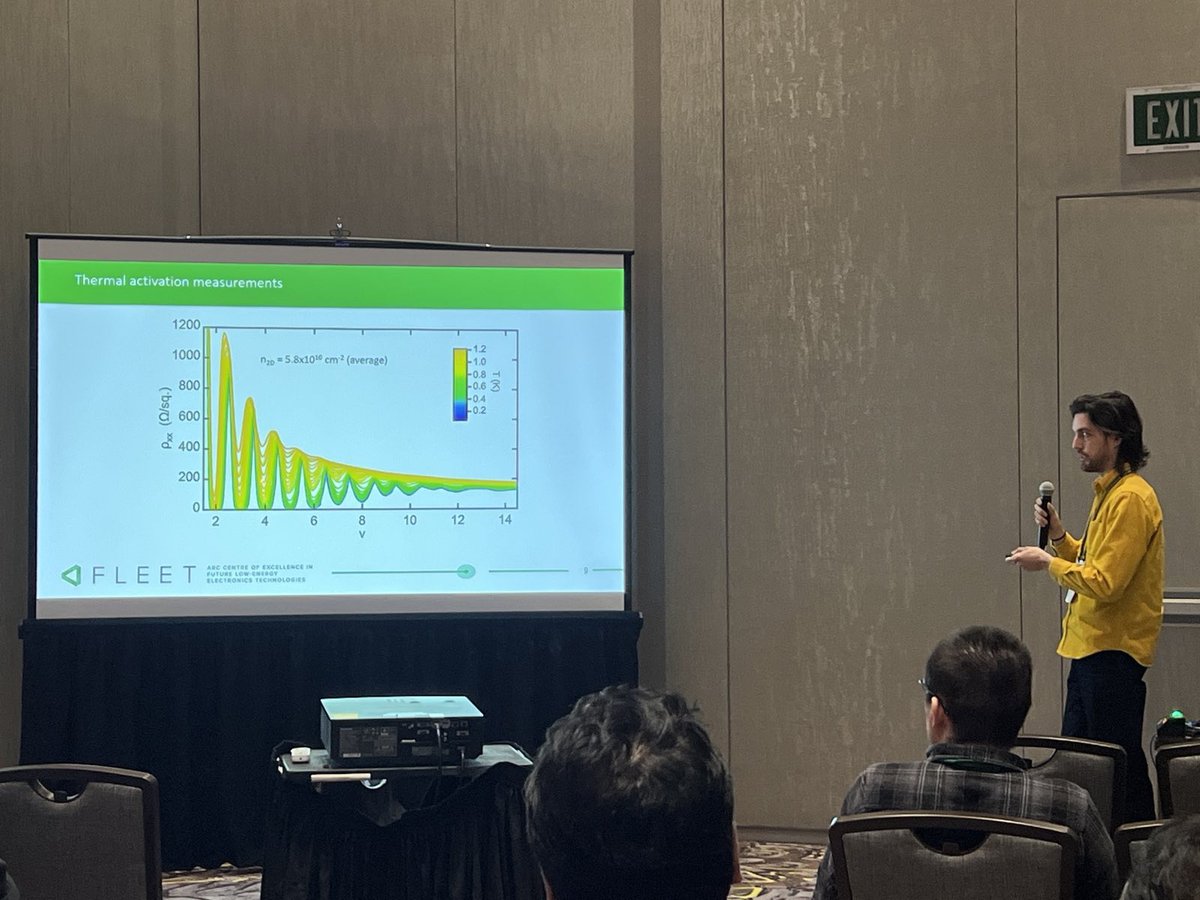
Matt Rendell giving a talk on holes in germanium at the first of 6 talks by QED group members on the opening day of the 2023 March meeting of the American Physical Society in Las Vegas #FLEETcentre#APSMarch#APS2023#AmericanPhysicalSociety
https://t.co/xObzmcLfR6
Congrats to Matthew Rendell and colleagues, whose work showing unexpected effects of scattering on spin-separation of holes in a solid state mass spectrometer has been published in a special collection of Physical Review B in honour of Emmanuel Rashba. https://t.co/JaNK2GikIY
Gordon Godfrey Workshop 2022 on "Spins, Topology and Strong Electron Correlations" has wrapped up. Great to be back together for this theoretical workshop, with strong participation from leading experimentalists – domestic and international @UNSWScience @FLEETCentre @UNSWScience
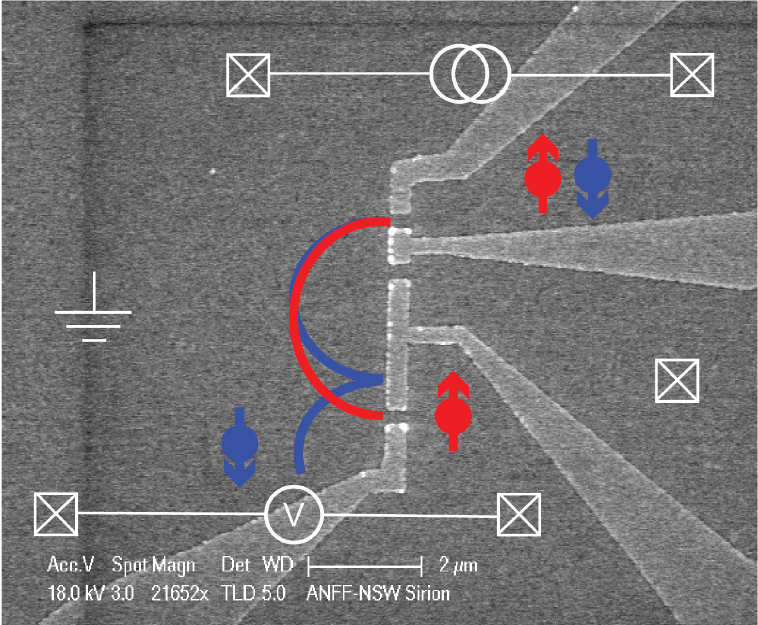
Another paper out on the ARXIV - All is not what it seems: Our preprint investigating spin dependent magnetic focussing in holes, showing a new understanding of apparent spin polarisation signals, is now on the server https://t.co/SfBsVAIQGb @RendellMatthew
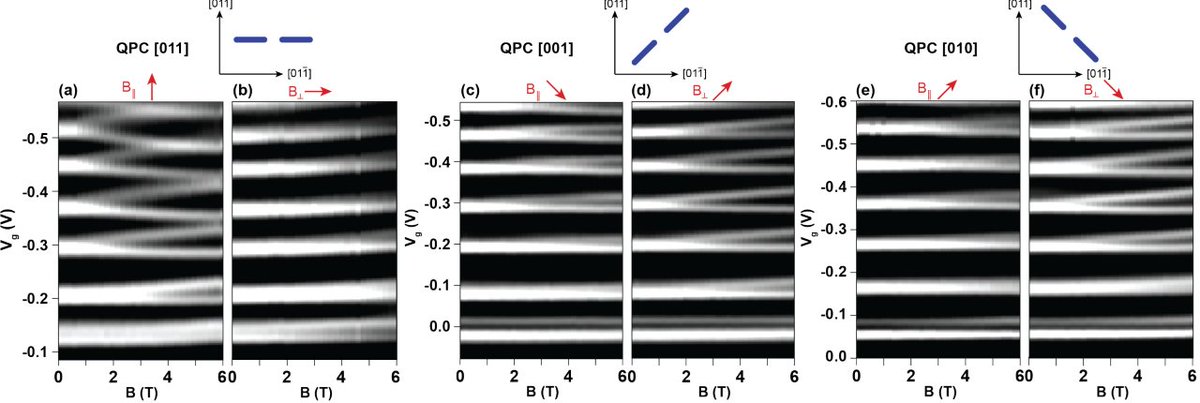
Our @FLEETCentre @SydneyQuantum study of how the orientation of hole devices on a wafer has a huge effect on their spin properties is now on the preprint server - a really nice combination of experiment and theory to find new terms in the Hamiltonian https://t.co/MOdDI1ksJ7
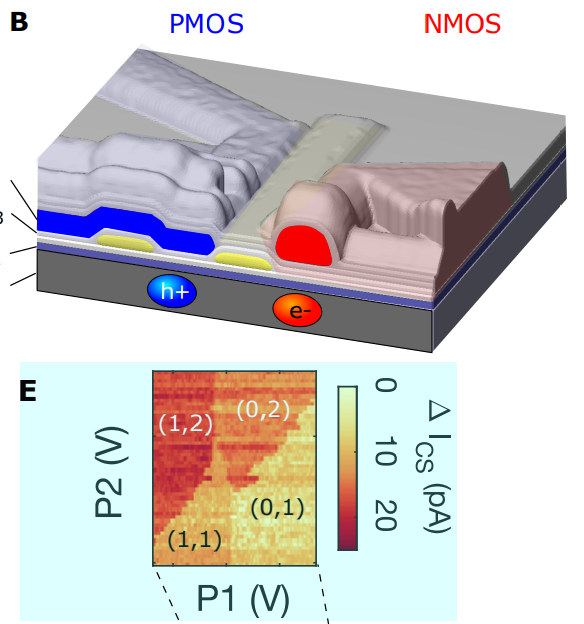
Our work with Andrew Dzurak's @UNSWEngineering team combining electron sensors and hole quantum dots for spin qubits has gone up on the arxiv https://t.co/8uV4YlDN2n
#unswscience
Apps open today for our latest round of PhD Scholarships.
We're looking for talented students to undertake research alongside top #quantum researchers, in a supportive community, with career development training. 📆 Apply by 26 Sept. #QuantumComputing https://t.co/NDTYtC7GEA
Apps open today for our latest round of PhD Scholarships.
We're looking for talented students to undertake research alongside top #quantum researchers, in a supportive community, with career development training. 📆 Apply by 26 Sept. #QuantumComputing https://t.co/NDTYtC7GEA
It was good to hear Dr Feixiang Xiang’s latest research findings; Dr Xiang’s research focuses on topological and strongly correlated physics in two-dimensional materials for low-energy electronics.