Our new paper using the QMOF Database is now online!
Please cite this work if you use the new MOF Explorer App on the Materials Project (https://t.co/5YHmrdkU2v).
https://t.co/NwMDIQXkIt
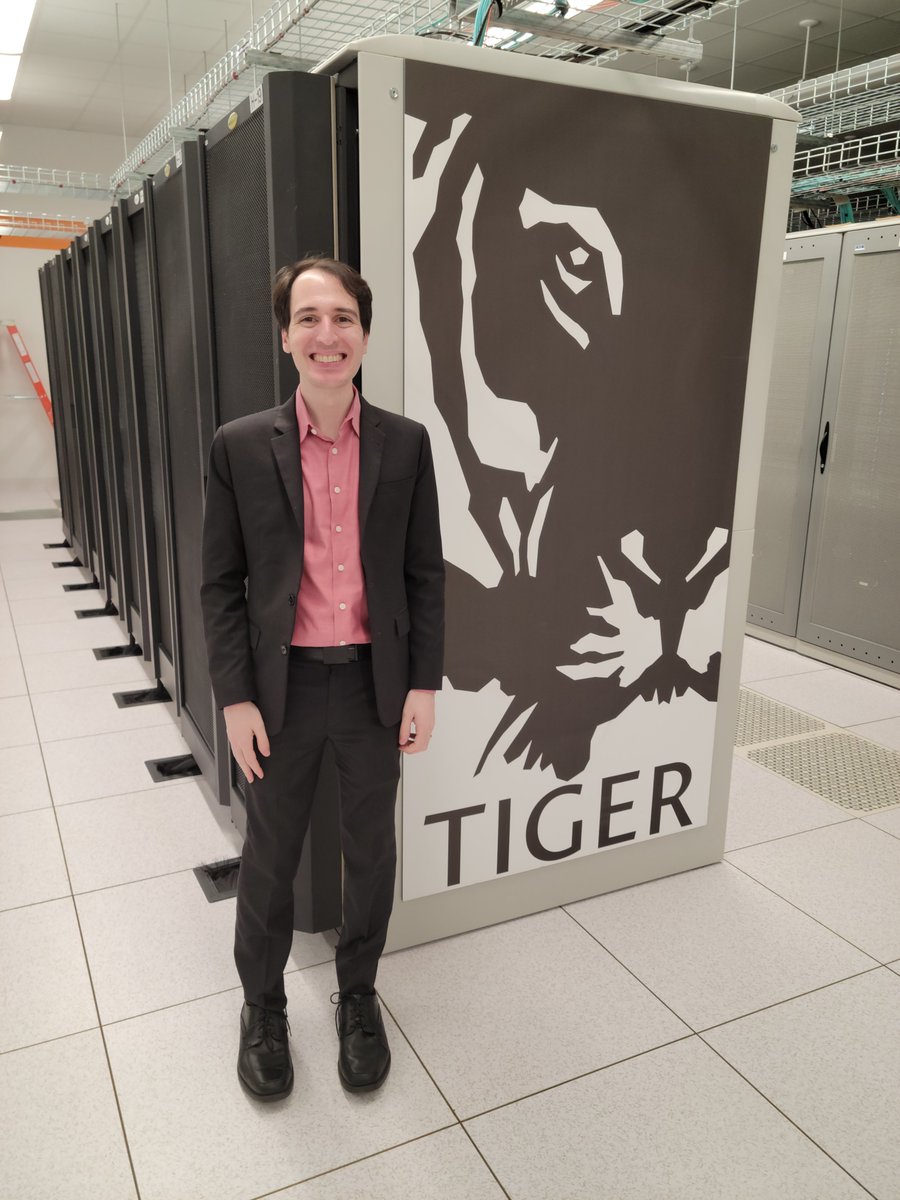
It's official! I'll be joining @Princeton as an Assistant Professor of Chemical and Biological Engineering starting in summer 2024, supported in part by a recent initiative in interdisciplinary data science! 🐅
Thank you so much to all who helped me get here! 😊🙏
And...
Our new PMTransformer outperforms MOFTransformer in predicting the properties of porous materials including MOFs, COFs, PPNs, and zeolites from @QMOF_Database, CoreMOF, and CURATED-COF database, etc.
Check out our work on universal transfer learning in porous materials.
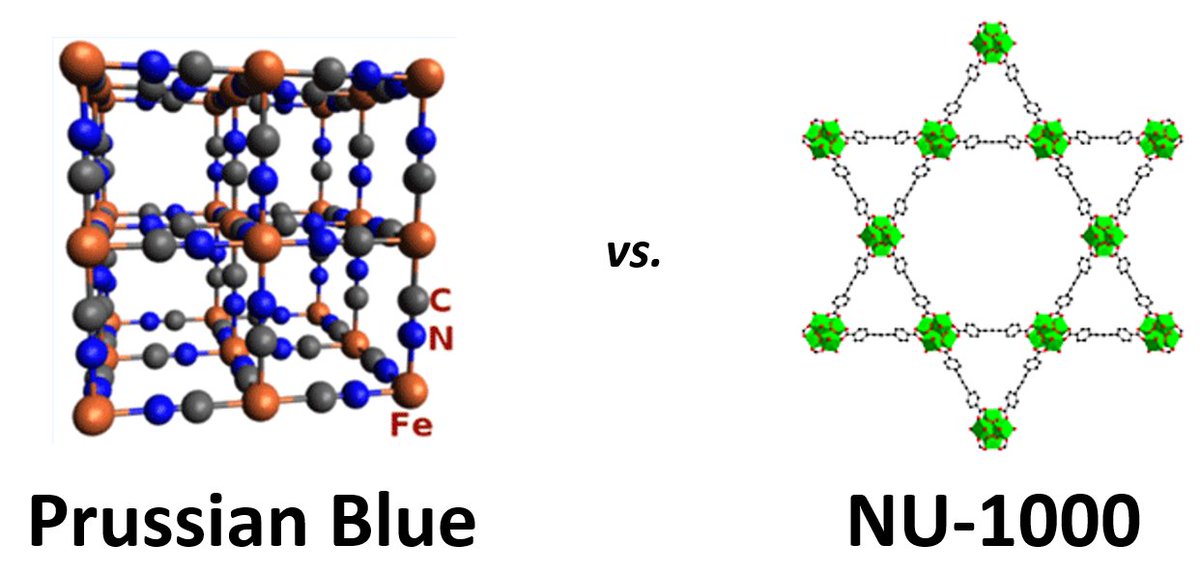
And that's a wrap! After 975 votes, the winner of #MOFMadness is... NU-1000!!! Cheers to @Farhomies, @OmarFarha5, and @NUChemistry!
For the third round in a row, NU-1000 turned the tides and gained massive ground in the final hours, this time to win it all! 1/4
Welcome to the grand finale of #MOFMadness (a collab w/ @KCarsch)!
You have 48 hrs to vote (and campaign) for the one true champion. Shall it be Prussian Blue or NU-1000? You decide!
The winner will formally be announced on Monday!
Round 4 of #MOFMadness (a collab w/ @KCarsch) is ready for your votes below!
It’s down to the “Functional Four” — decide who will make it to the final round tomorrow in the grand finale of MOF Madness! Vote, vote, vote!
Welcome back to another round of #MOFMadness, joint with @KCarsch!
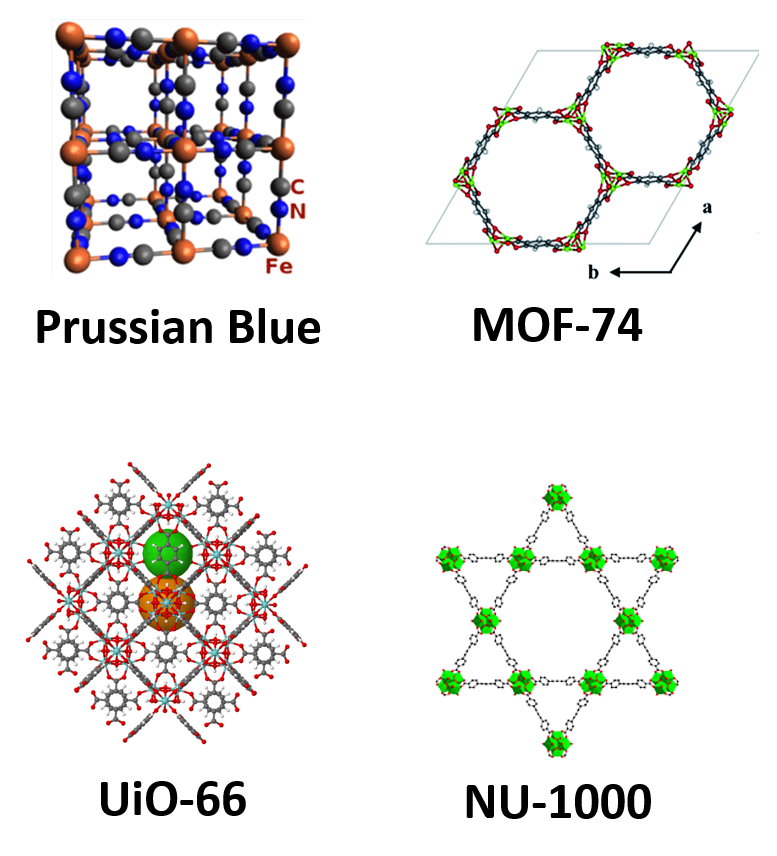
Round 2 features the “Synthetic 16” — the Top 16 MOFs voted by you (naming credit: @cranfordMATTER).
Cast those votes below and return tomorrow for Round 3! Share with all your MOF friends (and enemies).
In collaboration with @KCarsch, we present... #MOFMadness!
Vote below for the MOFs that you think should come out on top! What criteria, you might ask? Whatever you value most: beauty, brains, brawn — it's up to you!
Cast your ballots below! 🗳️ Winning MOF gets a proverbial $5.
The latest in #AI4Science:
✨Diffusion based antibody design
✨New NN architecture for tabular data modeling
✨Data driven stable crystalline hydrate prediction
✨@QMOF_Database
✨A new "Informatics Help Desk"
and more #AI/#ML/data for science!🤖🧵
Many thanks to @stama1_ for publishing this nice @MRSBulletin "Materials News" article on our recent @QMOF_Database paper originally published in @Nature_NPJ Computational Materials! Thank you to @lonepair for the quote as well 😊
https://t.co/vkIesqFKPm
@mersadkhan@ChemRxiv Thanks for your question. Yes, all structures were optimized but because the optimizations involved many restarts and a series of intermediate calculations, only the final single-points are on NOMAD. Send me an email (https://t.co/D9XavLoyvc) and I'll reply with the info you need
Exciting news! The @QMOF_Database is now available for you to explore on the #MaterialsProject!
Check it out here https://t.co/CmqweBZ7o4 and click the "Documentation" link at the top of the page for further details.
We provide a consistent API to commonly used datasets and add gas storage/separation and process labels to the @QMOF_Database - computed reproducibly using @aiidateam workflows (see the visualization of our immense provenance graph, rendered w/ @Gephi).
Thank you for the kind shoutout, @lonepair, as well as for the inspiration from the exciting research out of your group!
Check out "The Ground Truth is Out There" — A Materials Project Seminar by Prof. Aron Walsh. https://t.co/6cvyG7OzHN.
I would recommend taking a look at https://t.co/GtsvjFdB07 - it will not just give you a flat file but also organization, an API and exposure to the Materials Project users #materialsproject
This work is a natural follow-up of our @Matter_CP paper that first introduced the QMOF Database: https://t.co/e8cQZGtF1R. Hopefully, there is more to come! 😉
More formally, the #MaterialsProject web app is described (along with lots of juicy #compchem details about limitations of #DFT) in our new @ChemRxiv pre-print: https://t.co/o1A2xkPEJe