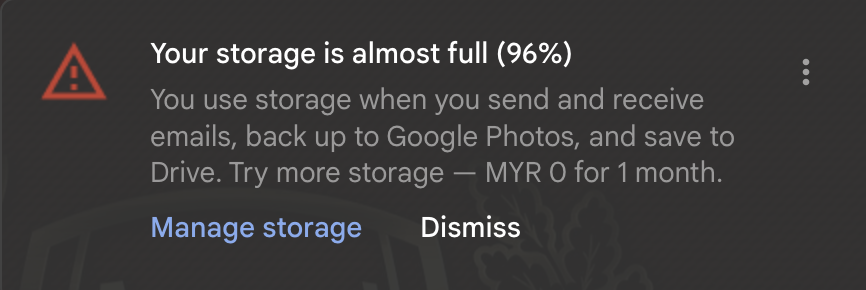
I menyirap juga dengan gmail ni la. storage memanjang full je.
Tapi nasib baik abang IT kat office i ni share cara nak settlekan masalah inbox full ni.
Kenapa rezeki dia lancar?
Kerana dalam setiap doa nya selalu membaca:
Ya Allah, Ya Rahman Yaa Rahim, Jadikanlah setiap langkahku adalah Ibadah,
setiap usahaku adalah rezeki,
setiap ujianku dijadikan sebagai penghapusan dosa,
karuniakan lah kepadaku rezeki yang melimpah ruah seperti air zam - zam yang senantiasa mengalir.
Dah lupa ke cara nak claim income tax? Meh sini aku share step-by-step dia.
Jangan lupa share, repost, like, komen "terima kasih"
So ini dia cara nak claim income tax for DUMMIES
MY HUSBAND STOPPED USING LINKEDIN TO FIND A JOB
Result? Landed a remote job in 5 days.
No LinkedIn. No Upwork.
Just strategy + internet.
Here are 12 remote job websites that took the search from frustrating to real opportunities:
Omgggg Lubna dah release baju raya dia!!!! Terkejut weh murah gilaaaaa semua harga rm100+ jeeee. Cantikkk dooh, tiap2 tahun brand ni tak pernah mengecewakan 💗✨
lancarkan rezekiku Ya Allah, sehingga orang di sekitarku juga bisa menikmati rezekiku. aku tak ingin jadi beban untuk siapapun, izinkanlah aku untuk bisa menjadi salah satu perantara rezeki bagi mereka.
Aamiin
Interview coming up?
Don’t stress! Here’s a special formula for you.
Use it to leave a strong, lasting impression—even under pressure.
1. Tell Me About Yourself
Formula : Present – Past – Future
- Present: "Currently, I’m leading..."
- Past: "I started my journey when..."
- Future: "I’m excited about..."
2. Why Are You Interested in This Role?
Formula : Problem – Solution – Impact
- Problem: Identify a challenge this role solves.
- Solution: Highlight your experience and how it fits.
- Impact: Show the big-picture contribution you can make.
3. What Are Your Strengths?
Formula : Story – Skill – Scale
- Story: Share a real example.
- Skill: Link your expertise to the role.
- Scale: Explain how this skill adds value over time.
4. What Is Your Weakness?
Formula : Real – Reflect – Resolve
- Real: Acknowledge an actual challenge.
- Reflect: Show self-awareness.
- Resolve: Explain the system you used to improve.
5. Tell Me About a Challenge You’ve Overcome
Formula : Challenge – Choice – Change
- Challenge: Describe the situation.
- Choice: Explain the decision-making process.
- Change: Highlight the positive transformation.
6. How Do You Handle Multiple Projects?
Formula : System – Scale – Success
- System: How you organize tasks.
- Scale: How you prioritize work.
- Success: The measurable results.
7. How Do You Motivate a Team?
Framework : Listen – Learn – Lead
- Listen: Understand team members’ needs.
- Learn: Adapt leadership styles accordingly.
- Lead: Create shared success.
8. How Do You Adapt to Change?
Formula : See – Shift – Strength
- See: Identify the opportunity in change.
- Shift: Adapt your approach.
- Strength: Build on past success.
9. How Do You Achieve Big Goals?
Formula : Start – Study – Shift
- Start: Take initiative.
- Study: Track progress and evaluate.
- Shift: Adjust based on feedback.
10. Any Questions for Us?
Formula : Ask – Solve – Launch
- Ask: About company challenges.
- Solve: Suggest possible solutions.
- Launch: Paint the vision of your contribution.
Final Tip : Structure your answers using these formula and you’ll stand out as a confident and prepared candidate!
No interview invitation in the last 6 weeks?
Let’s help you fix that CV and get you noticed. Email your CV to [email protected] with subject 'Revamp'.
Share this post to help someone in your TL crush their next interview!
HR : “We’ll get back to you soon.”
Most candidates respond with:
❌ “Okay, thank you.”
❌ “Alright.”
❌ Silence…
And anxiety later.
Let’s not do that.
Instead of walking away uncertain or over-reading the statement, try a smarter, more strategic approach.
Ask this one powerful question:
✅ “Thank you. Just to clarify, should I expect to hear from you regardless of the outcome, or only if I’m moving to the next stage?”
That’s it.
One calm question.
Why this works
With that single question, you uncover what “We’ll get back to you soon. ” actually means.
If they say: ‘We’ll update all candidates’
You now know:
- There is a defined process
- A response is coming either way
- Silence later has meaning
You can wait without guessing.
If they say: ‘We’ll reach out if you’re shortlisted’
You now know:
- No response = no progression
- You can move on proactively
- You avoid false hope
Clarity beats anxiety.
If they add a timeline
Even better.
You’ve turned a vague close into:
- A timeframe
- A process
- A signal of seriousness
Can you see the difference?
From:
“We’ll get back to you soon. …”
To:
“I know exactly what the next step looks like.”
The real lesson
This isn’t about pushing back.
It’s about:
- Asking the right question
- Reading signals
- Staying professional and composed
Strong candidates don’t chase reassurance.
They seek clarity.
Here are other powerful question you can ask the HR to break down this statement - 'We’ll get back to you soon. ' to a more definite timeline
1. “Would it be alright if I followed up with you if I haven’t heard back within the expected timeframe?”
2. “Could you briefly walk me through what the next stage of the process looks like from here?”
3. “That’s helpful, thank you. May I ask what the expected timeline looks like for the next steps?”
With such questions, you uncover what “We’ll get back to you soon. ” actually means.
Remain proactive in your job search instead of putting all hopes in one position !
No interview invitation in the last 6 weeks?
Let’s help you fix that CV and get you noticed. Email your CV to [email protected] with subject 'Revamp'.
SAVE THIS 👇
Jan–Feb = Peak hiring season
Mar–Apr = Hiring slows
Jun–Aug = Internship + PPO roles
Oct–Dec = Grad hiring resumes
Timing matters more than luck.
Don't go to an interview until you can answer these 5 questions:
1. Tell me about yourself
How: Make 30 to 60 sec when following this structure.
• Present + Past: "I'm currently [position + achievement], before that I [relevant experience]"
• Future: "I'm looking for [what you want] where I can contribute"
2. Why do you want this job
How: The research company is 30 minutes before the interview.
• Study the company's website, news articles, social media and job descriptions.
• Tell us about your skills that are relevant to what the company needs and show that you really want to work there.
3. What's your greatest weakness
How: Find a skill that is less relevant to the position you are applying for.
• The skill must be something you really want to improve.
• Talk about the weakness but close it with the fact that you are aware of the weakness and are in the process of fixing the weakness.
4. Tell me about a time you faced a challenge
How: Prepare 3 to 5 stories based on your experience
• Choose a challenge that is relevant to the position and the story of the problem → action → result.
• Enter specific numbers and the story must be under 2 minutes.
5. Do you have any questions for me?
How: Prepare 7 to 10 questions before the interview
• Specific questions about role success, challenges and company culture.
• Avoid asking questions about schedule-related and benefits that show that you are not interested in the job but only want benefits.
Don't forget to share this post so that others can learn too.
No interview invitation in the last 6 weeks?
Let’s help you fix that CV and get you noticed. Email your CV to [email protected] with subject 'Revamp'.